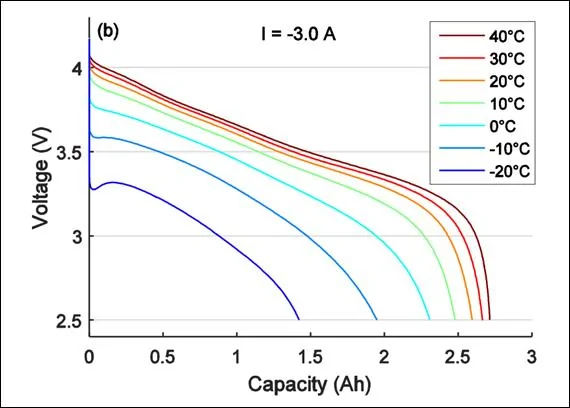

I read university study that lithium crystalline structure in the battery will start to deteriorate at 178° (soften up like jello) and at or above that temp the lithium atoms could start to migrate and possibly clump together forming an internal point harder to cool and easier to heat when charging/discharging. So in order to protect themselves and their lab from thermal runaway ceased heating the batteries at 150° the hotter the batteries got during their testing the more amperage charge or discharge was possible. They were then going to look further into adding impurities to possibly stabilize the internal structure at a higher temp. Do not remember exactly but at 150° the charge amps could be over 2.5 times that of a non liquid cooled battery. As to a larger battery or two batteries the Regen storage is between 40-70% of battery capacity so doubling battery capacity could allow more safe Regen storage due to less charge density of amperage. I suspect that AWD and tow package in hybrid would have required the second battery which could not be obtained for at least the 2022 model year.Maybe mines broke but it's brand new so I doubt it. I've noted the battery cooling system does not actively cool until 110'F internal battery temperature.
Ford says the HV battery can tolerate paint curing booths up to 140'F. "Anything hotter and the HV battery needs to be removed."
Via 30 second online search Looking at a GENERAL BMS for this type (not the one specifically in the Maverick) the BMS is set to turn off the battery if temperature exceeds 65'C (149'F) and turn the device back on after cooling to 45'C (113'F).
Thermal runaway (aka "fire") begins at 195'C (383'F).
Just some baseline info.
I also know electric drag racers HEAT their batteries before a race. I'm 100% sure this shortens life; but hey, gives you more performance in the short term.
So I guess in AZ you are saying you want two batteries so you can sit in the car and run the Air Conditioning twice as long between engine starts?
Sponsored