

Sponsored

Testing premium fuel in the hybrid

Ryom

2.5L Hybrid
Well-known member
Joined
Aug 15, 2024
Threads
6
Messages
606
Reaction score
1,084
Location
PA
Vehicle(s)
2025 Maverick Lariat 4K BAP Eruption Green
Engine
2.5L Hybrid
As I recall, the hybrid manual does specify using higher octanes for towing or high ambient temperatures. Now whether or not that's a holdover from the Ecoboost manual is another question entirely as the Ford website does not provide separate manuals, instead relying mainly on hybrid/ecoboost specific call-outs in a single manual.
Sponsored

 
Last edited:
Chops

2.0L EcoBoost
Well-known member
First Name
Gary
Joined
Jun 15, 2025
Threads
70
Messages
2,336
Reaction score
3,488
Location
USA
Vehicle(s)
Lobo
Engine
2.0L EcoBoost
Clubs
 
Are you still talking hybrid which this thread is about?
Yes - see my post #25 above. I now stand corrected on that post(#25) by post #27.
 

HeyBales

2.5L Hybrid
Well-known member
First Name
Mike
Joined
May 3, 2024
Threads
4
Messages
4,827
Reaction score
4,371
Location
KC Metro area
Vehicle(s)
2005 Toyota RAV4, 2024 XLT Hybrid
Engine
2.5L Hybrid
If someone can post the 22MY manual - you can actually see where the copy/paste for subsequent years fell apart with lack of attention to detail.

Prior thread had that, and you can see where the EB description was left out, and what was intended for what.
 

Chops

2.0L EcoBoost
Well-known member
First Name
Gary
Joined
Jun 15, 2025
Threads
70
Messages
2,336
Reaction score
3,488
Location
USA
Vehicle(s)
Lobo
Engine
2.0L EcoBoost
Clubs
 
As I recall, the hybrid manual does specify using higher octanes for towing or high ambient temperatures. Now whether or not that's a holdover from the Ecoboost manual is another question entirely as the Ford website does not provide separate manuals, instead relying mainly on hybrid specific callouts in one manual.
Probably an EB holdover since Atkinson Cycle engines are less prone to knocking & would not see the benefits of 91?
 

Master Blaster

2.5L Hybrid
Well-known member
First Name
Master
Joined
Feb 20, 2024
Threads
8
Messages
1,302
Reaction score
1,918
Location
Toronto
Vehicle(s)
23 Maverick Lariat Hybrid
Engine
2.5L Hybrid
The 2.5L Hybrid engine is technically running at 13:1 compression, but the Atkinson cycle drops that to an effective 9:1. At 9:1 anything higher than 87 octane is just a waste of money, offering zero benefits.
On the other hand, the 2.0L EcoBoost engine can get a small benefit from higher octane, although this does not justify the increased cost.
The Ford owner's manual states that higher octane is recommended for max towing and max temperature conditions on both engines, but its just bullshit cut/paste crap from other manuals. In real life it makes no difference even when doing hard lugging, as the knock sensors just back the timing off to stop any damage, and the torque difference is essentially not measurable.
Owners who claim that higher octane makes it run smoother and cooler are just fooling themselves or are comparing with running crap non-TopTier fuel.
 

Sponsored

dochawk

2.5L Hybrid
Well-known member
First Name
doc
Joined
Jul 17, 2024
Threads
34
Messages
1,679
Reaction score
1,571
Location
Las Vegas
Vehicle(s)
hybrid '25 lariat, 4 classic Cadillacs, Miata, mustang gt convertible
Engine
2.5L Hybrid
Clubs
 
So you’re saying when Ford recommends 91 octane under “severe” conditions - it does not “remap”, but instead has more of a “cushion” of octane as the 87 enough/not enough gets stressed?
Assuming that that paragraph is actually meant to apply to the hybrid as well as the ecoboost, yes. But it wouldn't be the first such sloppiness in those manuals if ford really meant it to apply to both. (see the flat towing hullabaloo a few months ago, and ford's response, which translated to "whoops!" :rolleyes: )

It's conceivable that heavy load and temperature could call for extra octane (by the load effectively passing more weight to the rising piston), but it seems unlikely to be enough to call for that kind of octane increase.

For best overall vehicle and engine​
performance, premium fuel with an octane​
rating of 91 or higher is recommended. The​
performance gained by using premium fuel​
is most noticeable in hot weather as well​
as other conditions, for example when​
towing a trailer.​
2025 manual, v2, p. 159​

However, the reference to "engine performance" strongly suggests the ability of advanced timing and increased boost to increase power, which wouldn't apply to the hybrid.
 

Chops

2.0L EcoBoost
Well-known member
First Name
Gary
Joined
Jun 15, 2025
Threads
70
Messages
2,336
Reaction score
3,488
Location
USA
Vehicle(s)
Lobo
Engine
2.0L EcoBoost
Clubs
 
Assuming that that paragraph is actually meant to apply to the hybrid as well as the ecoboost, yes. But it wouldn't be the first such sloppiness in those manuals if ford really meant it to apply to both. (see the flat towing hullabaloo a few months ago, and ford's response, which translated to "whoops!" :rolleyes: )

It's conceivable that heavy load and temperature could call for extra octane (by the load effectively passing more weight to the rising piston), but it seems unlikely to be enough to call for that kind of octane increase.

For best overall vehicle and engine​
performance, premium fuel with an octane​
rating of 91 or higher is recommended. The​
performance gained by using premium fuel​
is most noticeable in hot weather as well​
as other conditions, for example when​
towing a trailer.​
2025 manual, v2, p. 159​

However, the reference to "engine performance" strongly suggests the ability of advanced timing and increased boost to increase power, which wouldn't apply to the hybrid.
I have never driven a hybrid let alone lived with one. This forum has “opened my eyes” to the complexities and advances involved in a hybrid drivetrain. Thank you for your insights given patiently…and understandable!
 

AVC

2.5L Hybrid
Well-known member
Joined
Feb 27, 2024
Threads
5
Messages
230
Reaction score
189
Location
North Texas
Vehicle(s)
'23 Maverick Hybrid XLT, '02 Ranger, '20 Pilot
Engine
2.5L Hybrid
For any given compression (including from turbo) and timing, octane comes in two categories:
1) enough
2) not enough

You can also detect when you're getting to the edge between them(colloquially, "pre knock").

Once you're into "enough", all the extra octane in the world doesn't make a difference.

Now, you *could*, with variable timing and/or compression (variable displacement or adjustable turbo boost), start questing to more aggressive timing or higher boost, creeping up a bit at a time, but the engine would need to be designed to do this. However, every explanation of an engine that I've seen so far goes the other direction: start with what you would do with high octane (91 or 92 for Northstar, reportedly 97 for ecoboost), and go down from there.

anyway, to be clear again: if you have enough octane, there is no advantage to more at that boost/timing combination.

oh, and FWIW, in the final major overhaul of the Northstar (2000), they just plain gave up on premium and programmed for 97. Northstar's before that are quite happy on 87; they just lose something like 15 HP.


A Daimler engineer got to name the new model after figuring out ignition by spark. He named it for his niece, Mercedes.


To "remap" itself, it would need to be able to advance timing. AFAIK, there have been exactly zero reports suggesting this capacity on the maverick 2.5
Well, *every* engine in every car I've owned (mix of normal and induction) in the last 30 years that had a knock sensor or sensors DID adjust (+ and -) the ignition timing map based on an integrated (older vehicles) or moment by moment (newer vehicles) knock sensor feedback. Fuel type (E0, E10, E15, E85), octane, fuel temp, intake air temp, air density, engine temp, and of course load (at minimum) all contributed to where pre-ignition might occur on any given combustion cycle. My Mazda appeared to also vary the valve timing based on knock sensor input.

That even an Atkinson cycle hybrid ICE with a knock sensor wouldn't at least somewhat or significantly alter the ignition timing (maybe even valve timing?) in response to higher octane (raising the threshold point in the knock sensor feedback), would be SHOCKING. Thus cynical of *anyone* making off the cuff and confident statements, but who haven't monitored the salient PID's in at least first order variable controlled conditions (speed, load, ambient temp, octane).

Further, the reasons this knock sensor-timing optimization is important is that it optimizes fuel economy, torque and under many scenarios, maximum power, while keeping just below (or very slightly into) the fuel pre-ignition threshold.
 

Mavster Mechanic

2.5L Hybrid
Well-known member
First Name
David
Joined
Jul 29, 2025
Threads
20
Messages
1,672
Reaction score
2,927
Location
USA
Vehicle(s)
Hybrid
Engine
2.5L Hybrid
Well, *every* engine in every car I've owned (mix of normal and induction) in the last 30 years that had a knock sensor or sensors DID adjust (+ and -) the ignition timing map based on an integrated (older vehicles) or moment by moment (newer vehicles) knock sensor feedback. Fuel type (E0, E10, E15, E85), octane, fuel temp, intake air temp, air density, engine temp, and of course load (at minimum) all contributed to where pre-ignition might occur on any given combustion cycle. My Mazda appeared to also vary the valve timing based on knock sensor input.

That even an Atkinson cycle hybrid ICE with a knock sensor wouldn't at least somewhat or significantly alter the ignition timing (maybe even valve timing?) in response to higher octane (raising the threshold point in the knock sensor feedback), would be SHOCKING. Thus cynical of *anyone* making off the cuff and confident statements, but who haven't monitored the salient PID's in at least first order variable controlled conditions (speed, load, ambient temp, octane).

Further, the reasons this knock sensor-timing optimization is important is that it optimizes fuel economy, torque and under many scenarios, maximum power, while keeping just below (or very slightly into) the fuel pre-ignition threshold.
Well, I guess you are shocked.

Don't ask me. Ask your favorite A.I. that can summarize thousands of sources.

Here's Google A.I.

"Does a Prius run better on higher octane fuel?"

No, a Toyota Prius does not run better on higher octane fuel. Prius models are designed to run optimally on regular 87 octane gasoline. Using higher octane fuel will not improve performance or fuel economy.

Here's why:
  • Octane rating and engine design:
    Octane rating refers to a fuel's resistance to pre-ignition (knocking or pinging). Engines with higher compression ratios (like some high-performance or turbocharged engines) need higher octane fuel to prevent pre-ignition and ensure smooth combustion.

  • Prius engine specifics:
    Prius models have Atkinson cycle engines,which are designed for fuel efficiency rather than high power output. These engines have a relatively low compression ratio and are optimized for regular 87 octane fuel.

  • No performance benefit:
    Using higher octane fuel in a Prius will not provide any noticeable performance gains or improved fuel economy. It's essentially a waste of money, according to Toyota.

  • Manufacturer recommendations:
    Toyota's official recommendation for Prius models is to use regular 87 octane fuel

    "Does a Hybrid Ford Escape run better on premium fuel?

    The Ford Escape Hybrid is designed to run optimally on regular unleaded gasoline with an octane rating of 87. While premium fuel (91 octane or higher) is recommended for some 2.0L turbocharged engines in the Escape lineup for optimal performance, it is not required for the hybrid model. The hybrid powertrain is engineered to maximize fuel efficiency with regular gasoline.

    Here's why:
    • Regular vs. Premium:
      Regular unleaded gasoline (87 octane) is the standard fuel for most vehicles, including the Ford Escape Hybrid. Premium gasoline (91 octane or higher) is typically recommended for engines with a higher compression ratio or turbochargers, where it can help prevent detonation or pre-ignition.

    • Hybrid System:
      The Ford Escape Hybrid uses a gas-electric powertrain that is designed for efficiency. The hybrid system manages the fuel and electric power seamlessly, and it doesn't require higher-octane fuel to operate effectively.

    • Performance:
      The Escape Hybrid's performance is optimized for fuel economy, not necessarily for maximum horsepower or torque. While premium fuel might offer a slight performance boost in some scenarios (like towing or spirited driving), it won't significantly impact the hybrid system's overall efficiency or performance.

    • Cost:
      Using premium fuel in a vehicle that doesn't require it can be an unnecessary expense. Since the Escape Hybrid is designed for regular fuel, there's no real benefit to using a higher-octane option.

    • Owner's Manual:
      Ford recommends regular fuel. Refer to the owner's manual for specific fuel recommendations. The manual will indicate the recommended fuel type for your specific model year and engine.


      "Does a Hybrid Ford Maverick run better on premium fuel?
  • Consensus is no.
 
Last edited:

Mavster Mechanic

2.5L Hybrid
Well-known member
First Name
David
Joined
Jul 29, 2025
Threads
20
Messages
1,672
Reaction score
2,927
Location
USA
Vehicle(s)
Hybrid
Engine
2.5L Hybrid
The Hybrid will "detune" after knocking is detected. It will not "uptune" by simply adding premium fuel.

I not saying it couldn't.
I am saying it doesn't.

What Ford is saying is:

Using premium under very hot or very demanding conditions such as towing, premium "may" prevent the hybrid truck from having to detune at all.

It's a preventative measure.
It is not a "boost".

But if you believe in relativity, looking at it from another angle; some may call "not detuning" a performance gain.

Does that clear things up?
 
Sponsored

Chops

2.0L EcoBoost
Well-known member
First Name
Gary
Joined
Jun 15, 2025
Threads
70
Messages
2,336
Reaction score
3,488
Location
USA
Vehicle(s)
Lobo
Engine
2.0L EcoBoost
Clubs
 
What Ford is saying is:
Using premium under very hot or very demanding conditions such as towing, premium "may" prevent the hybrid truck from having to detune at all.
Why “may” instead of “may not”?

“May” encourages Premium
“May not” encourages Regular

I can take a hint, especially engine preserving hints.
 

DadJokesGalore

2.5L Hybrid
Active member
Joined
May 25, 2025
Threads
1
Messages
33
Reaction score
33
Location
usa
Vehicle(s)
2025 Maverick XL
Engine
2.5L Hybrid
I've read each comment, used AI to find trusted external sources, and carefully deliberated both sides. I've come to the conclusion that I should use diesel. Did I do this right?
 

AVC

2.5L Hybrid
Well-known member
Joined
Feb 27, 2024
Threads
5
Messages
230
Reaction score
189
Location
North Texas
Vehicle(s)
'23 Maverick Hybrid XLT, '02 Ranger, '20 Pilot
Engine
2.5L Hybrid
The Hybrid will "detune" after knocking is detected. It will not "uptune" by simply adding premium fuel.

I not saying it couldn't.
I am saying it doesn't.

What Ford is saying is:

Using premium under very hot or very demanding conditions such as towing, premium "may" prevent the hybrid truck from having to detune at all.

It's a preventative measure.
It is not a "boost".

But if you believe in relativity, looking at it from another angle; some may call "not detuning" a performance gain.

Does that clear things up?
Show us your scan tool data, rather than notoriously incorrect Google (AI) results...
 

AVC

2.5L Hybrid
Well-known member
Joined
Feb 27, 2024
Threads
5
Messages
230
Reaction score
189
Location
North Texas
Vehicle(s)
'23 Maverick Hybrid XLT, '02 Ranger, '20 Pilot
Engine
2.5L Hybrid
I've read each comment, used AI to find trusted external sources, and carefully deliberated both sides. I've come to the conclusion that I should use diesel. Did I do this right?
Yes, that would would be a typical AI "absolutely confidently stated" conclusion. :crazy:
 

Mavster Mechanic

2.5L Hybrid
Well-known member
First Name
David
Joined
Jul 29, 2025
Threads
20
Messages
1,672
Reaction score
2,927
Location
USA
Vehicle(s)
Hybrid
Engine
2.5L Hybrid
Show us your scan tool data, rather than notoriously incorrect Google (AI) results...
Surely you don't propose I disseminate my carefully curated data here on a free web site. 🤑

But yes, I've looked at timing with a scanner. No advance.
At least not in a 2022.


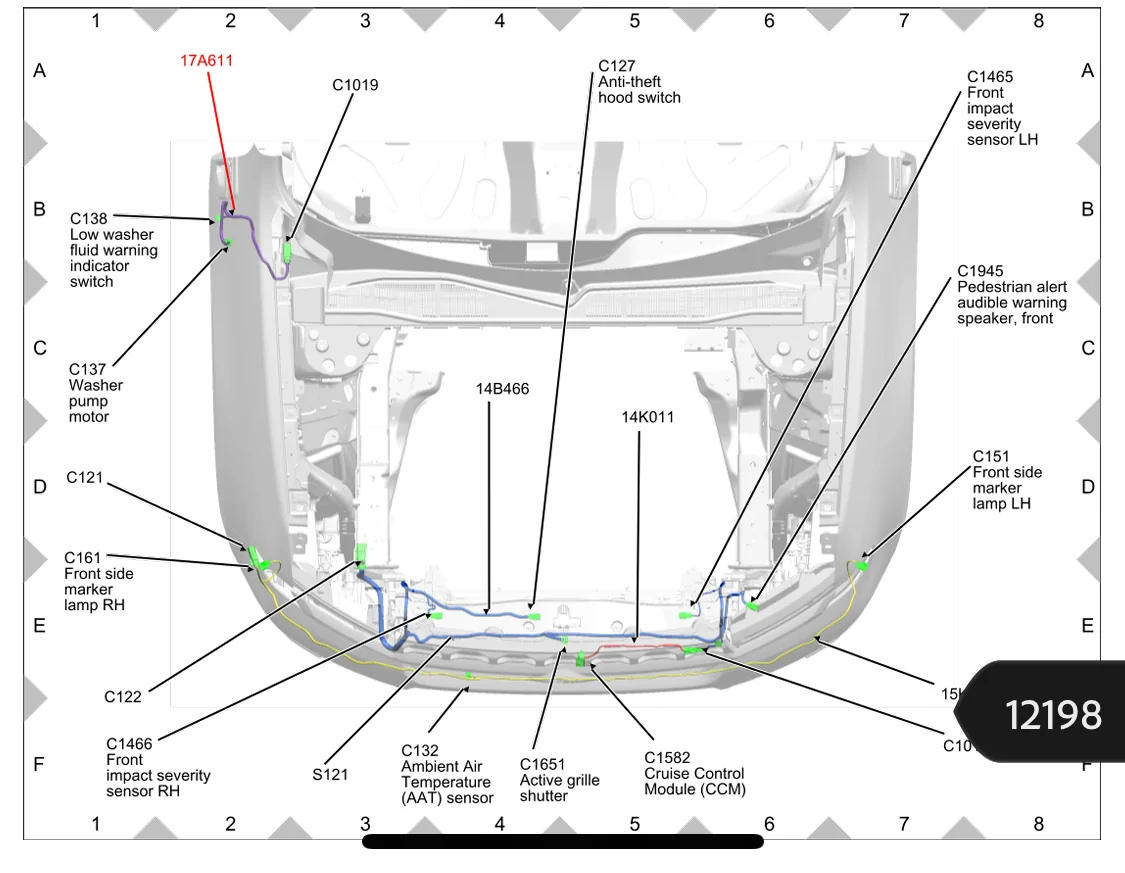
In the 12,198 page searchable technical manual that I paid for, there are zero hits for "octane sensor" and only four hits for "octane".

One was "knocking may occur if octane rating of fuel is too low".

Three places under spark plug fouling was "do not use octane enhancers".

Zero hits for timing advance, timing advanced, advanced timing, advance timing.

But a handful of hits conditions such as knocking and cold start that reduce or retard timing.


Ford Maverick Testing premium fuel in the hybrid 1755298295969-zv
Sponsored


Top