
Sponsored



- First Name
- J
- Joined
- Nov 15, 2021
- Threads
- 18
- Messages
- 375
- Reaction score
- 726
- Location
- Chicagoland
- Vehicle(s)
- Taurus X
- Engine
- 2.5L Hybrid
Drove past the $5.6 Billion Blue Oval SK plant being built off I-65 near Bowling Green KY on Tuesday, stated in company literature to be a “battery manufacturing and assembly plant”, in that specific sequence.
Lots of non-ICE chips being pushed into the center of the table…
Lots of non-ICE chips being pushed into the center of the table…


- Joined
- Jan 3, 2025
- Threads
- 51
- Messages
- 3,802
- Reaction score
- 7,205
- Location
- North Carolina
- Vehicle(s)
- 2004 Ford Escape Platinum, 2024 Ford Maverick Lariat 2.0L AWD
- Engine
- 2.0L EcoBoost
If we get to work on the grid right now to make it handle the load of charging EV’s It will take 30 Years. Most of us will be dead or hunting our teeth in the nursing home while trying to make it to the bathroom.
What kind of world do we want to actually leave behind for all these do nothing text all day incompetent kids ?
I say let’s get back in big V-8’s and burn the crap out of the remaking oil supplies !
They can eat tofu,
I want to kill something and eat it !
What kind of world do we want to actually leave behind for all these do nothing text all day incompetent kids ?
I say let’s get back in big V-8’s and burn the crap out of the remaking oil supplies !
They can eat tofu,
I want to kill something and eat it !
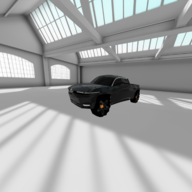
I know this is a radical, a VERY, VERY, radical idea. But I'd kinda like it if Ford made a new ranchero, a truck with car like styling, but instead of making it look like a muscle car like the original ranchero and El Camino, to make it more appealing and aspirational to today's younger buyers, taking styling from mid-engine supercars. The cab forward proportions of a supercar applied to a truck would make it practical, the low front end would make it aerodynamic and sleek, and the sail pillar, the angled pillars on the sides coming of the back of the cab, would make the aero even better, and could emulate the sloping fastback roofline of a supercar to sell the look even more.Ford should take a cue from the past. Cab forward, battery in the back maybe.
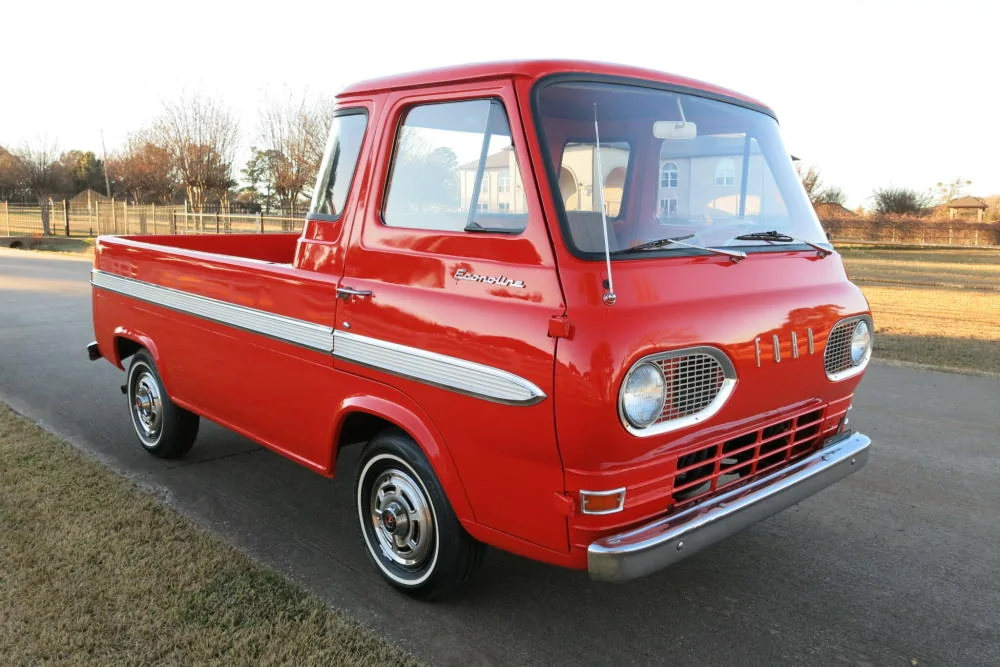
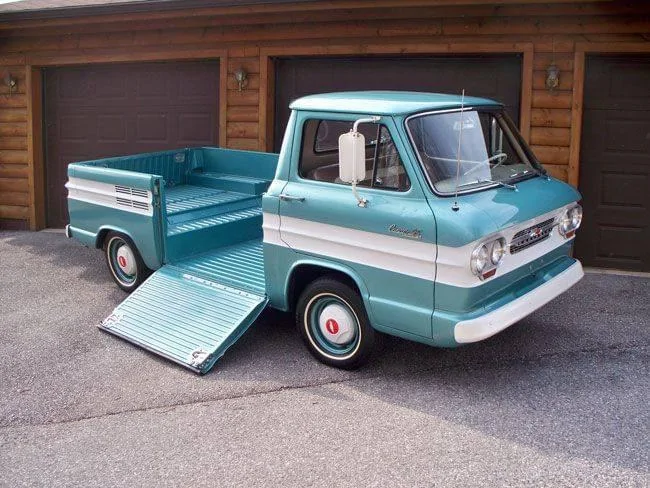
You can already make an EV handle and go like a sports car, so make it look like one too, and a truck to boot so it's super practical. That way, you're not only giving people a super practical truck, you're giving them something that looks like the car of their dreams, appealing to their heart and mind in one vehicle, and doing so in a way that's so different that it has no competition, and doesn't cannibalize the sales from Ford's more conventional looking trucks.
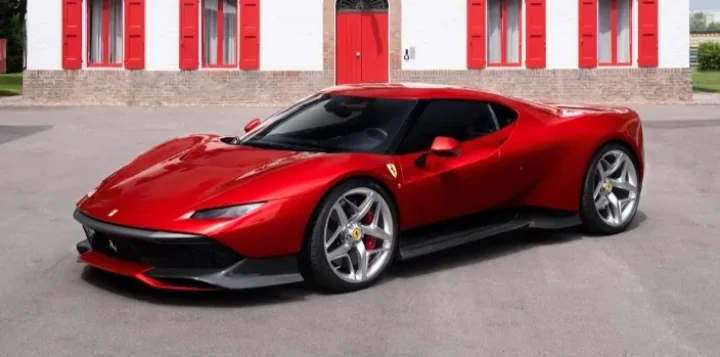
Basically take this design, lift it slightly to make it about the height of a sedan so it's easier to climb into, and then where the engine, and engine cover is, give it a bed. Will that appeal to everyone? No, but it'll make a hell of a splash, appeal to the enthusiasts crowd that Ford is chasing after, and adding instant appeal to Ford's EV platform by showing it's not gonna be used to create boring EVs like everyone else. A new ranchero, with more sex appeal than ever.
Ford could maybe make multiple trucks on this platform, a more lifestyle like 2 door sports car in this style, and a 4 door more conventional truck catering more towards fleets and commercial use.

Heck I have never even tried one of these damn horseless carriages. For thousands of years man needed nothing but a horse and the wind in his hair for transportation, and I ain't changing! My horse takes me everywhere I need to go. No need for expensive gasoline in scarce supply, or even these so called roads filled with every manor of scum and villainy. The horseless carriage fanboys will never convince me otherwise.It's a shame that most people who have little faith in EV's or complain about them have never tried them.
Sponsored
- First Name
- bill
- Joined
- Apr 30, 2025
- Threads
- 11
- Messages
- 820
- Reaction score
- 1,252
- Location
- Richmond, CA
- Vehicle(s)
- 2024 Maverick XL
- Engine
- 2.5L Hybrid
Sad but true. I had several Greenbriers and Rampsides. I can't see how a small cabover would meet crash tests these days. The Transit(not Connect) has a short sloping hood and is almost cabover, I think that's about as close as you could make it. BUT, cabover or short hood is very practical; you can see the road in front of you, and you can have a longer payload in a shorter vehicle for parking and whatnot. I can put 12' boards in my MR T250 and close the back doors. And it's only about 3' longer than my Mav.From the Land Before Crumple Zones. Such a design would never meet modern crash standards.
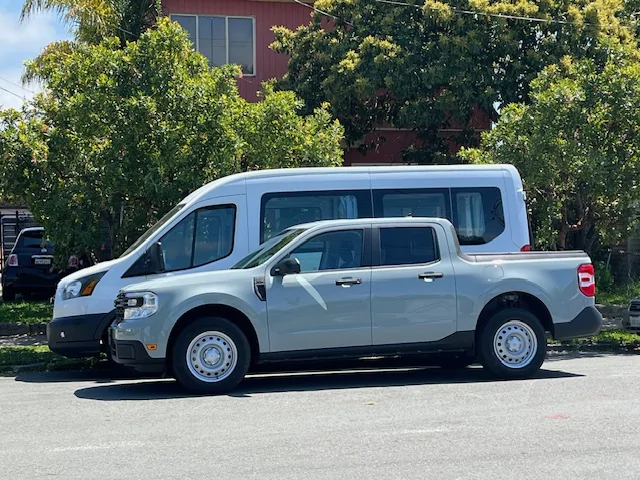

Law of averages.Well duh. But could be done with new engineering. It is amazing the human race didn't become extinct with the lack of safety features on older cars.
Darwinism.
Or something.

- Joined
- Jul 31, 2024
- Threads
- 11
- Messages
- 1,639
- Reaction score
- 4,031
- Location
- Orlando, FL
- Vehicle(s)
- 2024 Maverick XLT AWD, 2001 Crown Victoria Police Interceptor, 1995 Mustang GTS
- Engine
- 2.0L EcoBoost
They kept making more people. Also, those Econolines and Greenbriers and Rampsides (and A100s) didn't sell that well.Law of averages.
Darwinism.
Or something.

- First Name
- Jay
- Joined
- Aug 9, 2024
- Threads
- 48
- Messages
- 1,511
- Reaction score
- 2,124
- Location
- Castlegar B.C. Canada
- Vehicle(s)
- 2024 XLT 2.0 turbo
- Engine
- 2.0L EcoBoost
Top one reminds me of Marks “Little Dead wagon” on ‘Graveyard Carz’!Ford should take a cue from the past. Cab forward, battery in the back maybe.
- Joined
- Jul 31, 2024
- Threads
- 11
- Messages
- 1,639
- Reaction score
- 4,031
- Location
- Orlando, FL
- Vehicle(s)
- 2024 Maverick XLT AWD, 2001 Crown Victoria Police Interceptor, 1995 Mustang GTS
- Engine
- 2.0L EcoBoost
I haven't seen that, but by the name, I'm guessing it's a Dodge A100.Top one reminds me of Marks “Little Dead wagon” on ‘Graveyard Carz’!
https://www.hemmings.com/stories/af...-red-wagon-wheelstander-returns-to-the-track/
Sponsored
- First Name
- Jay
- Joined
- Aug 9, 2024
- Threads
- 48
- Messages
- 1,511
- Reaction score
- 2,124
- Location
- Castlegar B.C. Canada
- Vehicle(s)
- 2024 XLT 2.0 turbo
- Engine
- 2.0L EcoBoost
Yes but on GYC he did a play on the original and called it Little Dead Wagon, cause of the shows name. All older beautiful Mopars!I haven't seen that, but by the name, I'm guessing it's a Dodge A100.
https://www.hemmings.com/stories/af...-red-wagon-wheelstander-returns-to-the-track/
And lithium is not finite? What about infrastructure to charge these batteries? Your only options are petroleum or nuclear power and unfortunately the left are full speed on shutting down nuclearthe problem with gas/diesel is that it's a finite resource. Once it gets too expensive to extract and refine due to scarcity of easy to access deposits, the entire global economic system will have a panic attack. Currently, we just burn it up for convenience and entertainment, as well as mfg things and deliver them. And of course there's the whole land/air/sea pollution and environmental issue due to petrochemical waste from production and use, as well as discarded petrochemical based products themselves (read up on "microplastics").
The whole model of petrochemical reliance revolves around coming up with something to replace it before it becomes too scarce and expensive.
The current interest in electricity to replace some aspects of petrochemical burning is an expected symptom of trying to avoid painting ourselves into a corner of total reliance. It's gonna end, not immediately, but a gradual ramping up of prices as oil becomes harder to find, extract, and refine new deposits. Actually, it might be less gradual, since the HUGE populations of China and India are becoming more like the Western World, and everyone there wants to have a car. As for Merkuh. we're selling off our oil reserves to foreign countries as fast as we can pump it out, cuz companies LIKE money. Merkuh will likely run dry before other major countries because of this short-term-gain strategy. Then we're at the mercy of foreign oil supplies.
My point; Merkuh should strictly limit and reduce oil sales abroad, perhaps add a very steep export fee. This does two things: it lowers the cost of fuel in Merkuh, and extends the natural oil reserves, perhaps resulting in being the last large oil reserves left on the planet at some point in the not too distant future.
Of course, if a cheap, clean alternative is invented/discovered before that happens, it wouldn't be as important. You still need oil to make plastic stuff, though.
And since this is a long-term scenario that will take a few decades to occur, the average person has a hard time recognizing it as important. Most people have a hard time thinking more than a few months into the future, let alone years or decades (don't blame me, that's actual scientific observation of the cognitive capabilities of humans).
- First Name
- bill
- Joined
- Apr 30, 2025
- Threads
- 11
- Messages
- 820
- Reaction score
- 1,252
- Location
- Richmond, CA
- Vehicle(s)
- 2024 Maverick XL
- Engine
- 2.5L Hybrid
At least lithium can be re-used several times, unlike gasoline. Also, it's not the only element that can be used in batteries, there are dozens of combinations that can be used to make a battery, many are cheaper and more plentiful, and some are better at charging and capacity. In the current moment, lithium based batteries check the most boxes. FoMoCo is rolling out a different type of battery in the next couple years, that eliminates the most expensive and geographically problematic element, cobalt.And lithium is not finite? What about infrastructure to charge these batteries? Your only options are petroleum or nuclear power and unfortunately the left are full speed on shutting down nuclear
There are MANY ways to make electricity, but yes, in our current world, burning fossil fuels and using nuclear materials to power steam engines to generate electricity are the biggest commercial applications. That doesn't mean the door is shut and locked on other methods. We are always living in just a blip of time, and future people will laugh at our inept ways of making and distributing power. London was a toxic bell jar of coal smoke for a long time, and we currently laugh at them for doing that to themselves, or at the period of time when kitchen ovens were coal or wood fired before electricity became available.
Even dark Red Texas generates more and more electricity with renewables every year, currently over a third of electricity in the State is generated from wind and solar. Energy production and distribution should have no place in the dysfunctional Partisan Wars created out of thin air by the two political parties vying to be the ONLY political party by eliminating the other. There's no problem using several methods to commercially generate power; wind, natural gas, solar, nuclear, coal, etc. Let's just not rely on a SINGLE source. That would make the entire system vulnerable to failure due to equipment, distribution, or material supply problems.
Hopefully, in the not too distant future, electricity generation will be so localized that there won't be a need for power lines; every building or block would have it's own electricity generation source, same for farms and rural houses. And that source would only need to be "fueled" or serviced once a decade or more. And for redundancy, maybe there is also a community gasifier to get rid of organic waste while creating electricity. And it's not just generation; devices and practices that cut the demand for electricity also help a great deal. Going from incandescent lightbulbs to LEDs that use 90% less power to get the same amount of light is an example, and the mfg and disposal process of those is getting more and more refined to have even lower impact on resources and pollution. What if someone invents a heating method that uses 90% less power? Used for both HVAC and cooking, and your water heater, that would drastically reduce your power bill. No one of any political party affiliation would refuse that because the "other side" likes it.
IMHO a pretty close-minded statement.And lithium is not finite? What about infrastructure to charge these batteries? Your only options are petroleum or nuclear power and unfortunately the left are full speed on shutting down nuclear
Also lithium content per unit of battery is going down.
"When considering ‘lithium content’, this does not necessarily mean how much lithium metal is in the battery. Technological advances have come up with new alloys to substitute for lithium, making them a ‘lithium equivalent’, therefore falling under the same rules and guidelines as lithium for disposal requirements."
A common laptop battery will have about 4 grams of lithium equivalent.
An electric car will have about 12 kg (26 lbs) of lithium or lithium equivalent."
"The lithium market is facing oversupply and falling prices. This is due to higher global production, reduced demand from key markets like China, and uncertainties in major economies. Mar 4, 2025"
I don't know what you mean I don't think so, the people who engineered this vehicle know exactly how much material went into it, and how much they saved by being efficient. Vehicles have miles and miles of wiring in them so saving 4,000 ft isn't out of the realm of possibility.....and REDUCE the wiring harness by 4,000 feet ?
So ....if a vehicle is 20 feet long , that's 200 wires from bumper to bumper they're going to remove ..... I don't think so ....
Apparently it's one of several areas where Tesla vehicles are really efficient and the engineers who made this platform were the top engineers at Tesla who made the model 3 and Y.
Sponsored
Similar threads
- Replies
- 94
- Views
- 39,821


- Replies
- 423
- Views
- 36,060


