
Sponsored

2.0L - Ecoboost downgraded to 238/HP ?

Packer Bill

2.0L EcoBoost
Well-known member
First Name
Bill
Joined
Jun 21, 2021
Threads
10
Messages
1,928
Reaction score
2,586
Location
South Dakota
Vehicle(s)
2019 Mazda CX-5, 2025 Ford Maverick
Engine
2.0L EcoBoost
The new engine has dual port to reduce carbon build-up in the valves. I would say the 25 engine might be better...:unsure:.
 

Dueces

2.0L EcoBoost
Well-known member
First Name
John
Joined
Jun 29, 2021
Threads
18
Messages
521
Reaction score
1,313
Location
USA
Vehicle(s)
2022 AWD Maverick XL, 2004 Insight Turbo
Engine
2.0L EcoBoost
So far, the old one is better - 12 hp better. But we'll see.
They make the same power, but it's now reported differently, supposedly because of California standards. The 25+ engines will be better as far as performance is concerned, with the added port injection. Longevity shouldn't change.
 

gp1200x

2.0L EcoBoost
Well-known member
First Name
Paul
Joined
Apr 16, 2023
Threads
40
Messages
518
Reaction score
376
Location
NY
Vehicle(s)
GT500,C8-Z51, 2023 Lariat Lux 4K Co360
Engine
2.0L EcoBoost
As long as mileage didn't suffer I wouldn't care but I cannot get my mind around that ugly front end of the truck. That's enough to make me look elsewhere. There was no reason to put that bumper up into the grill area. Is that on all the new Maverick models or just a few of them??
 

Sponsored

ejouie

2.0L EcoBoost
Well-known member
First Name
Evan
Joined
Sep 21, 2022
Threads
10
Messages
379
Reaction score
475
Location
Newnan, GA
Vehicle(s)
'23 Ford Maverick, Atlas Blue, FWD, EcoBoost, XLT
Engine
2.0L EcoBoost
Clubs
 
Looks like the new engine has on oil catch above the valve cover and an integrated intake manifold.
 

The Real Maverick

2.5L Hybrid
Banned
Banned
First Name
Jack
Joined
Jan 13, 2024
Threads
31
Messages
2,999
Reaction score
4,144
Location
USA
Vehicle(s)
Maverick Hybrid
Engine
2.5L Hybrid
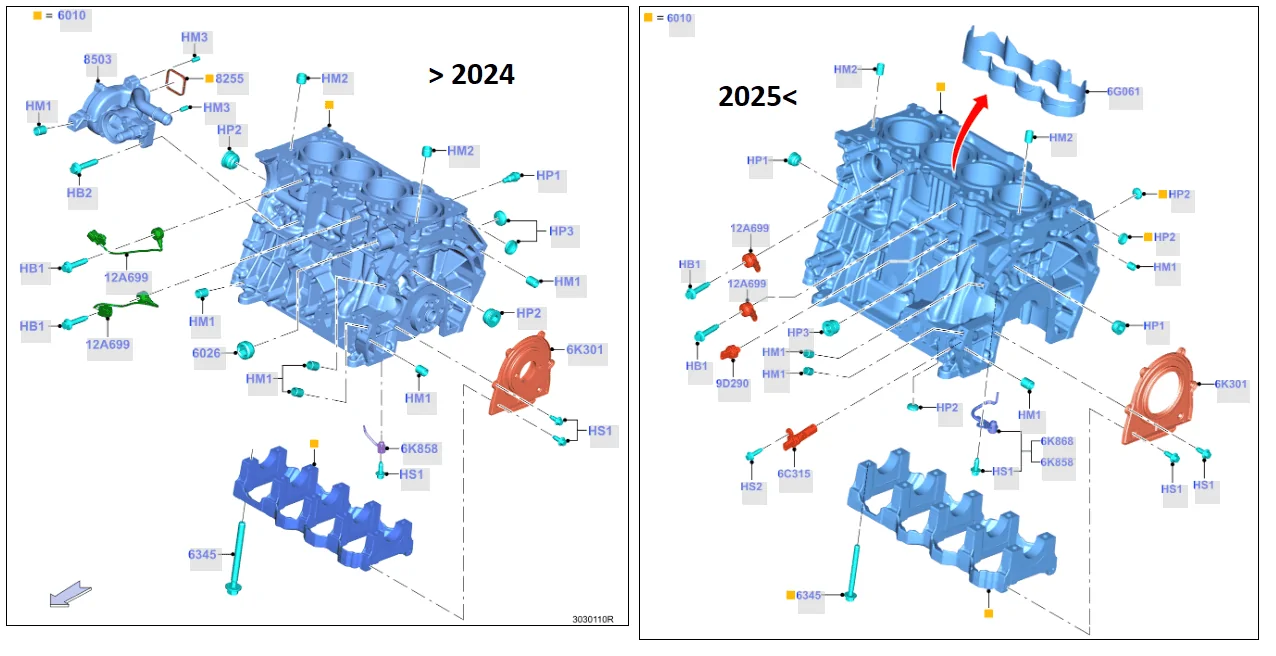
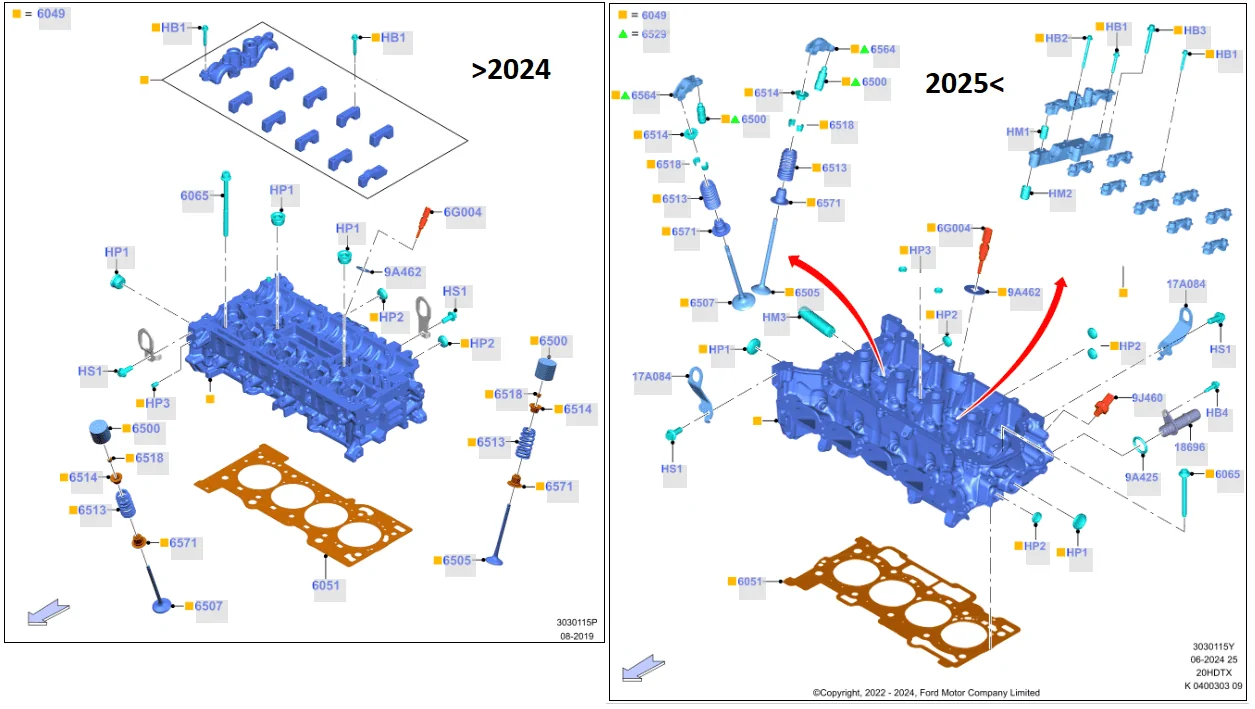
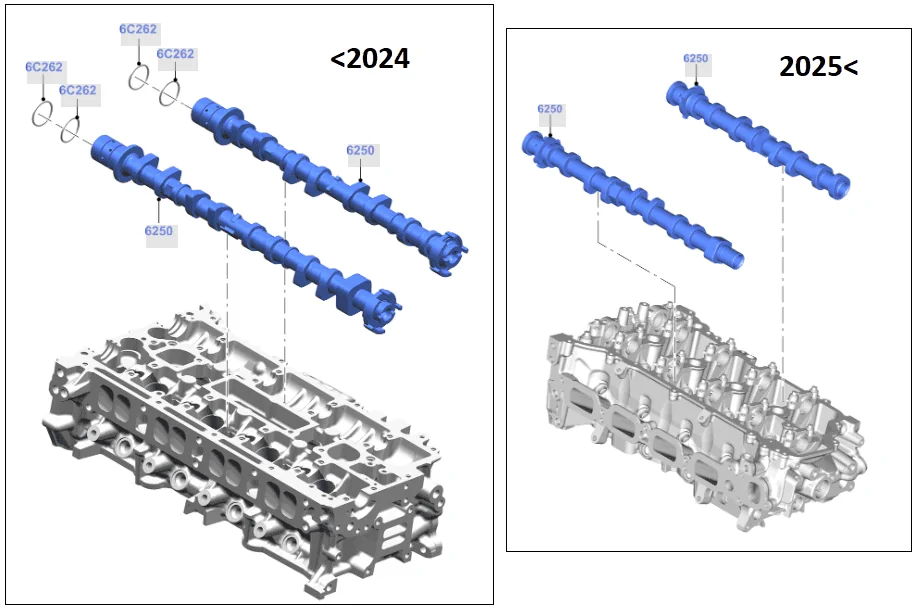
It's a completely new engine. Different block, different heads, different cams, different fuel system, different valve cover, different intake, different flywheel, different water pump, different thermostate housing, different crankcase ventilation system, etc...

2.0L BLOCK.png


2.0L HEAD.png


2.0L CAM.png
Is this one of those 3D stereoscopic thingys?
 

colinl

2.0L EcoBoost
Well-known member
First Name
Colin
Joined
Jun 21, 2022
Threads
32
Messages
5,440
Reaction score
6,179
Location
ICT
Vehicle(s)
'22 Maverick Lariat AWD, '22 Bronco OBX 2-Door
Engine
2.0L EcoBoost
Clubs
 
Last edited:

Jman79

2.0L EcoBoost
Well-known member
Joined
Jul 31, 2023
Threads
10
Messages
641
Reaction score
839
Location
North East, USA
Vehicle(s)
Honda Odessey, Ford Maverick 🤞MY24
Engine
2.0L EcoBoost
It is so when they come out with an ST or Raptor model it will be a bigger jump in HP.... Just a thought.
Such games 😞, but sad to say, entirely plausible.
 
Sponsored

Block

2.5L Hybrid
Well-known member
First Name
Eric
Joined
Oct 2, 2022
Threads
0
Messages
49
Reaction score
8
Location
Syracuse, ny
Vehicle(s)
Ford Focus
Engine
2.5L Hybrid
I read somewhere it's due to a particulent filter...which is $4k to replace on some other engine (escape?).
 

Probity

2.5L Hybrid
Well-known member
Joined
Jul 6, 2021
Threads
9
Messages
328
Reaction score
546
Location
Covington LA
Vehicle(s)
'24 Silverado CCSB 2.7 (a Mav. Hybrid next time?)
Engine
2.5L Hybrid
Your concerns are unfounded. Every car sold in Europe and Australia has had a ppf/opf/gpf since 2018. Their fuel economy didn't go down. The filters are not clogging up. Gasoline engines burn hotter that diesel and low rpm, city driving, still makes enough heat to undergo the 10 minute regen cycle. Also, the European HP numbers aren't even down. Compare any European OPF/PPF equipped BMW and the ouput listed (in PS) will be 10 or so hp higher than the (SAE) rated US non OPF counterpart. And these filters are not failing and needing to be replaced. And they don't cost thousands of dollars. There's no platinum, paladium and rhodium in there. It's just a ceramic honeycomb inside of a steel tube. A gpf/ppf/opf costs automakers $200 to make.

https://www.reuters.com/business/au...eptillion-more-particles-research-2022-04-27/
I too did a little looking into this. Generally agree that Euro/Aussie vehicles comparing pre/post GPF didn't lose fuel economy or much HP. Current Euro 6 emissions spec (and upcoming Euro 7) look to have the same PM (particulate mass) and PN (particulate number) requirements - except - the big change in Euro 7 is requiring PN covering particles less than 10 nm (nanometers) vs 23 nm in Euro 6 (smaller ultrafines do more lung damage).

The Euro specs and EPA specs regarding PM are an apples-to-oranges comparison, can't directly correlate them. Euro 6/7 use PM and PN. Current (now) EPA Tier 3 regs (from 2014) call for PM 3 mg/miles (for the FTP dyno test) and 10 mg/mile (for the US06 dyno test). The new EPA regs (2027 onward) call for PM 0.5 mg/mile or less - but - no specified PN requirement. The Euro requirement (4.5 mg/km) is 7.24 mg/mile. But the EPA (and generally the auto folks) acknowledge that dropping from 3 or 10 mg/mile to 0.5 mg/mile is so severe that it will effectively 'capture' knocking down PN to the Euro standard or better.

All the blurbs I've seen about GPF cost from EPA or Reuters or whoever is pretty much complete BS. The EPA used one of their fancy cost models (Omega?), and came up with a range of numbers (depends on engine size and GPF location of course) that from memory were all less than $200. This was just the cost of the ceramic/whatever thingy, not the pressure sensor system, OBD requirements, etc (it wasn't a 'GPF systems cost'). The automakers, in their comments to EPA before it became a "final' rule, rarely gave specific GPF costs (Hyundai an exception), but the points they did uniformly stress were:

*with the new EPA 0.5 mg/mile requirement, it likely won't be plug-and-play (i.e. taking a GPF from a current Euro model and slapping it onto an equivalent US model likely won't fly). I have no idea if the GPF system on the 2025 Maverick EB is to be lifted from a euro system and slapped onto the new 2.0, or if it's an entirely new GPF system. The new EPA rule isn't officially effective until 2027 so the 2025 Mav may not even meet the 0.5 mg/mile stand. I don't know and currently no one other than Ford might know. The 0.5 mg/mile standard is a whole new ballgame.

* all auto folks took issue with being able to measure 0.5 mg/mile standard accurately and with repeatability. They said they currently couldn't do it, EPA said yeah we've looked at data and think you're overstating your issues.

*the OBD requirements in the final rule is causing issues for the automakers.

*some (luckily only a few) manufacturers noted that their US models might need entire exhaust system changes. That's certainly not trivial wrt cost.

*Hyundai: "HMG emphasizes hardware changes will be necessary for the proposed 0.5mg/mi PM standard, and there will be packaging modification of after-treatment hardware to allow the addition of GPF and pressure sensors. Engine calibration will be required to account for increased backpressure. In fact, HMG estimates that just the additional hardware (cc-GPF, catalyst, sensors, valves, etc.) needed to comply with Tier 4 requirements will range from $500- $800 USD per vehicle. This estimated increase solely accounts for material costs, and does not include the additional costs involved with investments in technology development of the new hardware."

It will be a while before details are known. Even if I somehow coerced a JP Morgan type attending the next Ford quarterly earnings meeting to sandbag Farley or Lawler with questions like "what do you expect the added cost/vehicle to be once GPF systems are fitted on US models?" or "will the '25 Maverick with GPF meet the new EPA 0.5 mg/mile requirement?", I doubt they'd answer.
 

Gonzo chris

Banned
Banned
First Name
Chris
Joined
Feb 27, 2024
Threads
0
Messages
1,175
Reaction score
635
Location
Bucks county PA
Vehicle(s)
Infiniti g35 coupe, VW Golf
Engine
Undecided
I too did a little looking into this. Generally agree that Euro/Aussie vehicles comparing pre/post GPF didn't lose fuel economy or much HP. Current Euro 6 emissions spec (and upcoming Euro 7) look to have the same PM (particulate mass) and PN (particulate number) requirements - except - the big change in Euro 7 is requiring PN covering particles less than 10 nm (nanometers) vs 23 nm in Euro 6 (smaller ultrafines do more lung damage).

The Euro specs and EPA specs regarding PM are an apples-to-oranges comparison, can't directly correlate them. Euro 6/7 use PM and PN. Current (now) EPA Tier 3 regs (from 2014) call for PM 3 mg/miles (for the FTP dyno test) and 10 mg/mile (for the US06 dyno test). The new EPA regs (2027 onward) call for PM 0.5 mg/mile or less - but - no specified PN requirement. The Euro requirement (4.5 mg/km) is 7.24 mg/mile. But the EPA (and generally the auto folks) acknowledge that dropping from 3 or 10 mg/mile to 0.5 mg/mile is so severe that it will effectively 'capture' knocking down PN to the Euro standard or better.

All the blurbs I've seen about GPF cost from EPA or Reuters or whoever is pretty much complete BS. The EPA used one of their fancy cost models (Omega?), and came up with a range of numbers (depends on engine size and GPF location of course) that from memory were all less than $200. This was just the cost of the ceramic/whatever thingy, not the pressure sensor system, OBD requirements, etc (it wasn't a 'GPF systems cost'). The automakers, in their comments to EPA before it became a "final' rule, rarely gave specific GPF costs (Hyundai an exception), but the points they did uniformly stress were:

*with the new EPA 0.5 mg/mile requirement, it likely won't be plug-and-play (i.e. taking a GPF from a current Euro model and slapping it onto an equivalent US model likely won't fly). I have no idea if the GPF system on the 2025 Maverick EB is to be lifted from a euro system and slapped onto the new 2.0, or if it's an entirely new GPF system. The new EPA rule isn't officially effective until 2027 so the 2025 Mav may not even meet the 0.5 mg/mile stand. I don't know and currently no one other than Ford might know. The 0.5 mg/mile standard is a whole new ballgame.

* all auto folks took issue with being able to measure 0.5 mg/mile standard accurately and with repeatability. They said they currently couldn't do it, EPA said yeah we've looked at data and think you're overstating your issues.

*the OBD requirements in the final rule is causing issues for the automakers.

*some (luckily only a few) manufacturers noted that their US models might need entire exhaust system changes. That's certainly not trivial wrt cost.

*Hyundai: "HMG emphasizes hardware changes will be necessary for the proposed 0.5mg/mi PM standard, and there will be packaging modification of after-treatment hardware to allow the addition of GPF and pressure sensors. Engine calibration will be required to account for increased backpressure. In fact, HMG estimates that just the additional hardware (cc-GPF, catalyst, sensors, valves, etc.) needed to comply with Tier 4 requirements will range from $500- $800 USD per vehicle. This estimated increase solely accounts for material costs, and does not include the additional costs involved with investments in technology development of the new hardware."

It will be a while before details are known. Even if I somehow coerced a JP Morgan type attending the next Ford quarterly earnings meeting to sandbag Farley or Lawler with questions like "what do you expect the added cost/vehicle to be once GPF systems are fitted on US models?" or "will the '25 Maverick with GPF meet the new EPA 0.5 mg/mile requirement?", I doubt they'd answer.
Sandbag Farley? Does Ford have a choice whether or not to fit it?
Sponsored


Top