

It sure wouldn’t hurt to get it out and drive it 20 miles or so..get it good and hot and flog it a bit. The old “Italian tune-up” as it were.
Sponsored

Fuel mileage is decent, considering my driving habits, and hasn't changed much except the expected summer and winter differences. I think my lifetime average is 19 something which has been pretty steady. Much higher on road trips, but most of the 6600 miles I have on the truck been in town. Engine runs excellent. Never a hiccup.Yes. Too many assumptions. I see my oil level fluctuate that mulch regularly, and have no dilution issues. I mentioned earlier a few causes of this. It's every unlikely it's anywhere near that percentage.
How's your fuel mileage, and how is it running? That's a LOT of fuel that would show multiple symptoms.
You have it in your head that DI engines regularly have this problem and they really don't.
10-4, will do.Your math is fine, but there is zero evidence that says the .25 qt there is fuel in the oil. As Tbone said, your nose will deceive you.
Keep checking the oil to watch it over time. At the next change, send a sample off for testing. Relax and enjoy your truck.

I did take one trip this winter to the UP of Michigan, but it was practically a snowstorm both ways. 35mph a good chunk of it. LOL.It sure wouldn’t hurt to get it out and drive it 20 miles or so..get it good and hot and flog it a bit. The old “Italian tune-up” as it were.


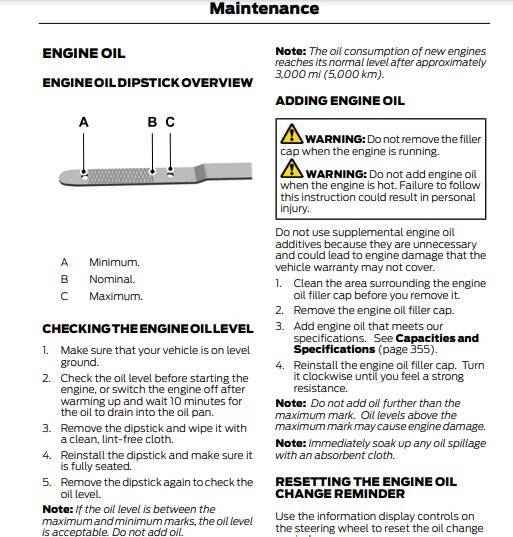
My '23 EB oil level also varies from the "B" nominal level to the "C" maximum during the winter when driving less than 30 minutes in cold weather. It doesn't start dropping down unless I drive an hour or more, and interestingly it seems to drop quicker driving for long periods of city driving than long periods of freeway driving. I always check the oil level in the morning (before driving) to be consistent. I knew there would be some variation, but I was surprised that it changes as much as it does. My MPFI vehicles always have very consistent oil levels, so I don't think much of the change is related to temperature. So, I avoid driving the Mav during short trips as much as possible and change at 5000 mile intervals. When I see the level getting too high, I take it for a longer drive.In the pic below of the Maverick dipstick there's three points, A, B & C. I assume B is full and the distance from A to B would be one quart? If B is full (5.5 quarts) C would appear to be approx 1/4 quart more.
I believe my truck was at B the second to last time I checked it and it was at C when I last checked it.
0.25 quart (gas?) / 5.5 quarts (oil) = 4.5% fuel dilution.
That's pretty high, no?
Or, is there too many assumptions in my thinking?
Do you know how much the level increased on the dipstick with the 8% dilution?The last time I had my oil analyzed (5000-mile interval) it came back showing 8% dilution.

15 minutes is excessive idling at any temperature.The last time I had my oil analyzed (5000-mile interval) it came back showing 8% dilution. They suggested changing it at 2500 miles. I changed it at 2500 miles and am awaiting results. My truck idles about 15 minutes in the am and another 15 minutes in the pm, considering we were 10 to 15 below zero for about 3 weeks. The lab said that fuel dilution is common on EcoBoost's that idle a lot.
Obviously, you have not lived where it gets cold for months on end.15 minutes is excessive idling at any temperature.
Honestly when it gets below zero, I don't check closely. Just making sure it has close to the proper level.Do you know how much the level increased on the dipstick with the 8% dilution?
They did address it in the latest Final Rule.During last month's brutal cold snap I was really surprised to smell strong gasoline vapors in the exhaust. I didn't really worry about it, figuring they were temporarily dumping a rich fuel mix into a cold engine. I was just kind of surprised the EPA would let them do that. I guess there must be exceptions for really cold startup conditions. ICE is not yet a perfected technology.

Catch can keeps oil out of the combustion, not fuel out of oil. The responses have it right, driving it longer helps evaporate fuel that gets in oil.Would an oil catch can, be a good solution for the OP's situation?