

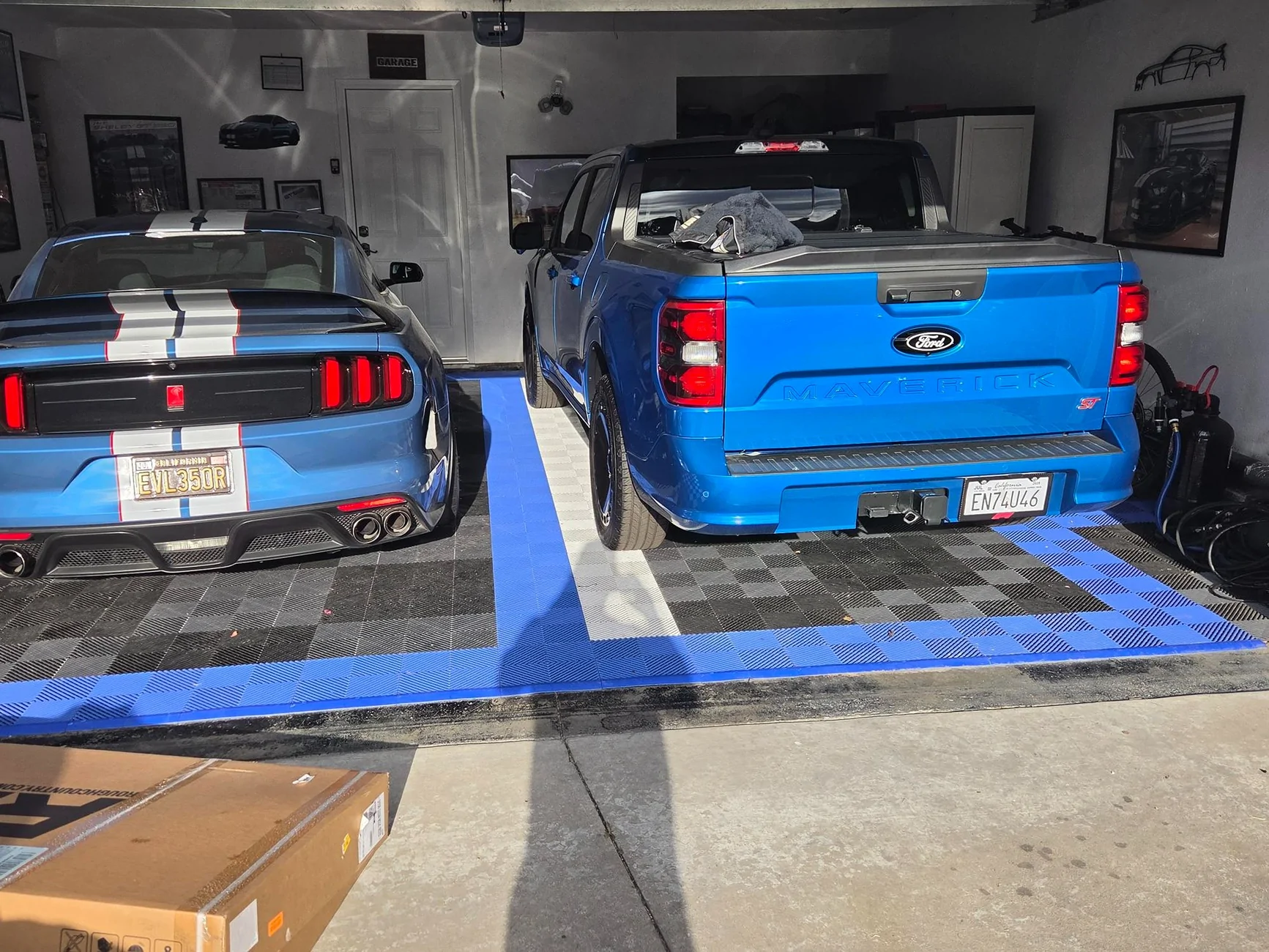
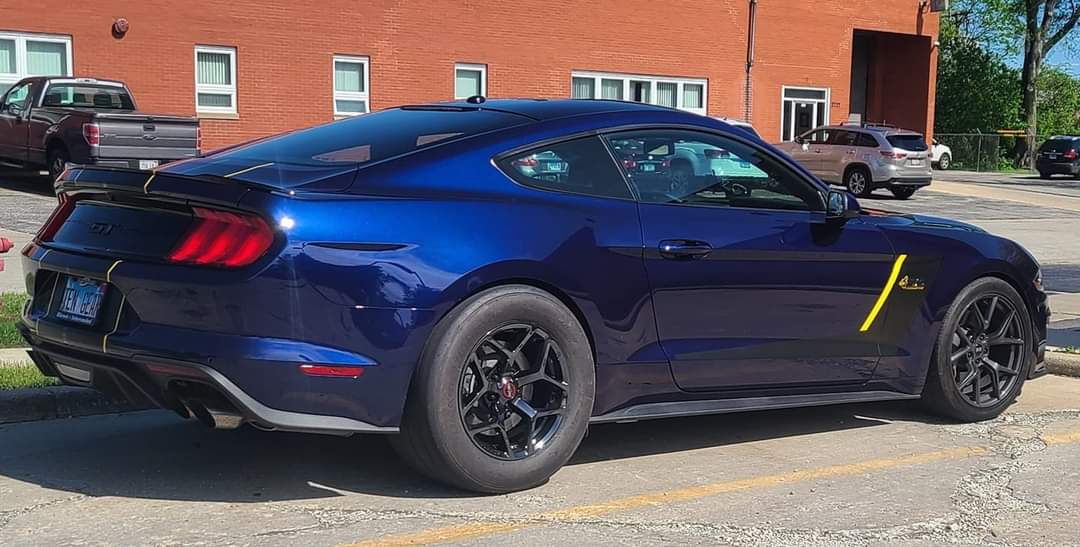
Funny thing is, my son has a 2013 GT500 in Cali. After riding in my 2018 GT when it just had a tune, he told me that he thought my car was quicker that his supercharged Trinity. I have beat other superchaged Coyotes with just a tune in my 18 GT A10. Then I added the Procharger. Initially Lund Racing would tune for a max of 10PSI on 93. So I have both a 10psi 93 tune, and the E85 for 15psi. On 10 psi The car spun/chirped the drag radials all the way though the 5th gear shift at 95mph. Then I stepped up to 30x13.5 ET Streets, and 15psi.Thats why they boost it.... and with Ford and Shelby engineers infinite wisdom, set it at 8.4 compression:
"The 2012 Shelby GT500 (5.4L supercharged V8) has a lower compression ratio compared to its naturally aspirated counterparts (such as the 5.0L Coyote engine) specifically to handle the added stress and heat from the supercharger.
The 2011–2012 GT500 5.4L engine has a static compression ratio of 8.4:1.
"Why the Lower Compression?
Preventing Detonation (Knock): Boosting an engine packs more air and fuel into the cylinder, increasing the pressure and temperature. A lower compression ratio provides a safety margin against detonation, which can destroy an engine.
Boost Handling: Because the supercharger forces air into the engine, the engine does not need high mechanical compression to generate power.
Comparison: While the 2012 GT500 runs an 8.4:1 ratio, the naturally aspirated 2011-2012 5.0L Coyote engine runs a much higher 11:1 compression.
Note on Later Models:
For the 2013–2014 GT500 (5.8L), Ford increased the compression ratio to 9.0:1, but the 2012 and earlier supercharged cars used the lower 8.4:1 ratio for safety and durability."
And there's more....."
"Internal combustion engines designed for superchargers (blowers) typically use a lower static compression ratio compared to naturally aspirated engines.
This is done to prevent engine damage, specifically to avoid "knock" or detonation caused by the massive increase in cylinder pressure from the blower.
Here are the key details:
Ideal Range: For supercharged gasoline engines, a static compression ratio of 7.5:1 to 9.0:1 is recommended, with 8.0:1 often cited as the optimum balance for performance and reliability.
Reasoning: When a blower forces air into the engine, it creates a much higher "effective" compression ratio. Lowering the base (static) compression allows the engine to handle higher boost levels (10+ psi) without breaking pistons or causing failure.
High vs. Low Boost: If the engine is running very low boost (3-5 psi), higher compression can be used, but as boost increases, the static compression ratio must be lowered to keep the "final" compression ratio within safe limits (usually under 12.4:1 for pump gas)."
Sponsored



 Nice!
Nice!