

Sponsored

Anyone use Premium Fuel?

Raymundo76

2.0L EcoBoost
Well-known member
First Name
Ray
Joined
Oct 15, 2022
Threads
66
Messages
799
Reaction score
793
Location
Mesa Az
Vehicle(s)
21 Mazda CX-5
Engine
2.0L EcoBoost
Clubs
 
I did a write up a year ago when my local Costco had 91 octane for 20 cents per gallon more than 87. The MPG improvement was 3. A 13.8 gallon tank a fill up is $2.76 more. If the price per gallon is the same you get two extra gallons of gas.
interesting, thanks!
Sponsored


RichardCranium

2.0L EcoBoost
Well-known member
First Name
R
Joined
Sep 1, 2023
Threads
20
Messages
1,075
Reaction score
1,463
Location
California
Vehicle(s)
2024 Maverick XL 2.0 AWD 4K CP360
Engine
2.0L EcoBoost
Clubs
 
I know you are being sarcastic.

But I don't think you know

THIS IS A HYBRID SUB-FORUM
Why am I even reading this then? What can I say, I am here for the jokes.
 

TheSEARCH

2.5L Hybrid
Well-known member
First Name
Dan
Joined
Mar 22, 2022
Threads
26
Messages
1,470
Reaction score
1,310
Location
14150
Vehicle(s)
ford
Engine
2.5L Hybrid
Why do you think Ford recommends 91 ? That recommendation does not make a hybrid more desirable does it; so Ford has no reason to recommend 91 other than that it is what they must think to be best for the engine. Of course it could be just a CYA. However , the hybrid gets such good MPG that the added cost of 91 is not an issue for me. If it is for you, use 87; but 5 years from now don't bitch if you have problems!!
Easy to answer. Yes you will get a SLIGHT boots in MPG according to a test I saw i believe motor trend did test. If i remember correctly it was maybe 2 or 3 percent increase in MPG . So ford says hey yea get better mileage with premium plus less chance if any pre ignition which is bad for engine EVEN with the ability to see it and correct it by retarding timing it still isn't good and better if it never occurs in the first place. . So sure they say go for it. For most its not worth it as the added cost verse the benefits are much. But if say both fuels cost the same premium would be the choice. Its about a buck a gallon more where i am at.
 

James

2.0L EcoBoost
Well-known member
First Name
James
Joined
Jun 3, 2021
Threads
4
Messages
83
Reaction score
62
Location
Pennsylvania , USA
Vehicle(s)
2023 Maverick XLT AWD
Engine
2.0L EcoBoost
Premium is $4.299/gal. here, that's what have been using. I'm old and drive that way also.

Ford Maverick Anyone use Premium Fuel? DSCN5712
 

Walter56

2.5L Hybrid
Well-known member
First Name
W
Joined
Jan 17, 2022
Threads
10
Messages
230
Reaction score
282
Location
Missouri
Vehicle(s)
Volt
Engine
2.5L Hybrid
In hot weather an engine has a higher tendency to knock or ping. Only if you are knocking pinging is 91 going to help. Otherwise a lesser grade is just fine. All grades contain the same energy content, so mileage is the same, regardless.
Doubt you'd ever hear a modern engine knock. Sensors and ecm control ignition to adjust for fuel quality. MPG would go down
 

Sponsored

Command1

2.0L EcoBoost
Active member
First Name
Steve
Joined
Apr 8, 2023
Threads
1
Messages
29
Reaction score
38
Location
Wisconsin
Vehicle(s)
2023 Ford Maverick
Engine
2.0L EcoBoost
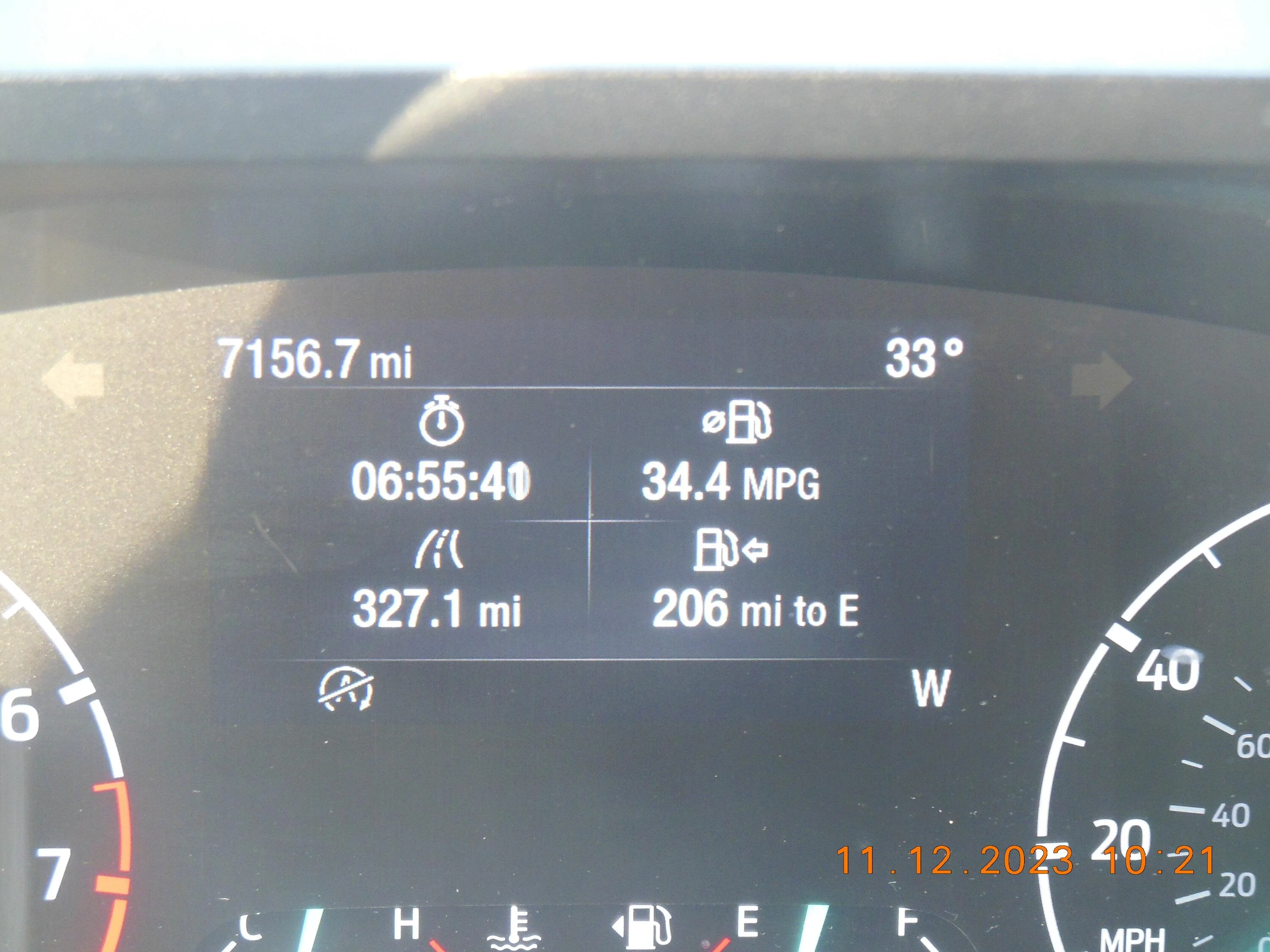
I just turned 10,000 miles this morning on my 2023 AWD Ecoboost Maverick. I've only used 91 octane with no ethanol since new average 30 MPG overall.
 

commadorebob

2.0L EcoBoost
Well-known member
First Name
Bob
Joined
Sep 17, 2022
Threads
62
Messages
4,952
Reaction score
10,539
Location
Alabama
Vehicle(s)
2025 Expedition Max Platinum; 2023 Maverick Lariat
Engine
2.0L EcoBoost
You can pretty much trip on videos on YouTube explaining that unless you are driving a $500,000 super car, just put 87 in your tank. Your driving style will dictate your fuel economy more than the octane rating. And unless you literally don't drive for a year, 87 will be fine parked in your tank.
 

Guv

2.0L EcoBoost
Well-known member
First Name
Steve
Joined
Jan 15, 2022
Threads
15
Messages
1,287
Reaction score
1,145
Location
USA
Vehicle(s)
Ford
Engine
2.0L EcoBoost
Cool jacket.
Horrible logic.

It does not matter how many gallons you put in today. You'll spend the same amount of money per mile. Maybe you were adding sarcasm. 🤔
Bad Ecoboost owner, Bad!!
 

TheWizziard

2.5L Hybrid
Well-known member
Joined
Jul 14, 2022
Threads
3
Messages
1,051
Reaction score
1,116
Location
Texas-RGV
Vehicle(s)
2023 Maverick XLT Oxford White
Engine
2.5L Hybrid
I live in south Texas. Near sea level but very hot.
I use regular 87 octane fuel without any problems.
 

James K

2.0L EcoBoost
Well-known member
First Name
James
Joined
Jun 19, 2022
Threads
3
Messages
707
Reaction score
690
Location
NY
Vehicle(s)
2022 Maverick,1960 Bugeye, 1973 GT6, 2016 R1200GS, 2024 KLX300
Engine
2.0L EcoBoost
In hot weather an engine has a higher tendency to knock or ping. Only if you are knocking pinging is 91 going to help. Otherwise a lesser grade is just fine. All grades contain the same energy content, so mileage is the same, regardless.
I know I'm opening a can of worms but a knock sensor detects the knocking and retards the timing when lower octane fuel causes it. Generally you're not aware this is happening if it's working properly. However, a ICE that is maximizing timing on higher octane makes more power than one that is retarded with lower octane. So lets say for example it takes 100hp to move a particular vehicle at 70 MPH and you have a 200 hp motor, you'll be pushing the throttle half way (this is just for the example as ICE don't run in a linier manner). Now you give the motor lesser octane and it gets timing retarded resulting (for this example) in 190 hp. Now you have to have the throttle at 55%. Because the engine measures air coming in and matches the fuel delivery, you will get slightly more fuel use with the lower octane. Additionally, higher octane fuels burn slower allowing a very slight increase in power stroke (reason for more hp). You would be 100% correct if the motor was never set up to take advantage of high test or back in the day timing was set on mechanical/vacuum distributers that had limits for timing changes but the Maverick should see some improvement in MPG at varying degrees depending on circumstances. I've only had 87 octane in my truck 2 times (couldn't be avoided) and both times I saw a 2 to 3 MPG drop.
 
Sponsored

Guv

2.0L EcoBoost
Well-known member
First Name
Steve
Joined
Jan 15, 2022
Threads
15
Messages
1,287
Reaction score
1,145
Location
USA
Vehicle(s)
Ford
Engine
2.0L EcoBoost
I know I'm opening a can of worms but a knock sensor detects the knocking and retards the timing when lower octane fuel causes it. Generally you're not aware this is happening if it's working properly. However, a ICE that is maximizing timing on higher octane makes more power than one that is retarded with lower octane. So lets say for example it takes 100hp to move a particular vehicle at 70 MPH and you have a 200 hp motor, you'll be pushing the throttle half way (this is just for the example as ICE don't run in a linier manner). Now you give the motor lesser octane and it gets timing retarded resulting (for this example) in 190 hp. Now you have to have the throttle at 55%. Because the engine measures air coming in and matches the fuel delivery, you will get slightly more fuel use with the lower octane. Additionally, higher octane fuels burn slower allowing a very slight increase in power stroke (reason for more hp). You would be 100% correct if the motor was never set up to take advantage of high test or back in the day timing was set on mechanical/vacuum distributers that had limits for timing changes but the Maverick should see some improvement in MPG at varying degrees depending on circumstances. I've only had 87 octane in my truck 2 times (couldn't be avoided) and both times I saw a 2 to 3 MPG drop.
I still think you would be requiring the same amount of hp on the highway given the same condition. Also, a larger throttle opening is better for reducing ICE pumping losses, however small they may be. This is one of the advantages of an engine using cylinder deactivation and why smaller displacement engines typically achieve better fuel economy. Now, lower octane will result in an ignition advance curve with less timing under high load/peak power operations but part throttle (when knock is not a problem) should still be able to run at optimum ignition timing close to TDC. Maybe part of your mpg hit could be from non cruise conditions, merging with traffic, accelerating from a stop, the occasional Silverado that needs sorting out 😉
By the way, I also use only premium in our Ecoboosts and my Coyote.
 

Mark S.

2.0L EcoBoost
Well-known member
First Name
Mark
Joined
Dec 10, 2021
Threads
0
Messages
91
Reaction score
111
Location
St. Jacob, IL
Vehicle(s)
2021 Bronco Sport
Engine
2.0L EcoBoost
"If your owner's manual says your vehicle doesn't require premium but says that your vehicle will run better on higher octane fuel, it's really up to you. The cost increase is typically higher than the fuel savings. However, lowering CO2 emissions and decreasing petroleum usage by even a small amount may be more important than cost to some consumers."
This is a bit higher up on the page:

For most vehicles, higher octane fuel may improve performance and gas mileage and reduce carbon dioxide (CO2) emissions by a few percent during severe duty operation, such as towing a trailer or carrying heavy loads, especially in hot weather. However, under normal driving conditions, you may get little to no benefit.
This jibes with the owner's manual, which says any performance increase will be most noticeable on hot days with the engine under heavy load.

Why do you think Ford recommends 91 ? Ford knows all this tech info and they recommend 91, with the note that 87 is OK.
The manual clearly states the engine operates on 87 octane, and it RECOMMENDS 91 octane if you need the most engine performance. If you aren't towing or hauling heavy load you may use 87 octane without reservation.

just filled up with 93 and omg what a performance difference. I’m at a stage where I don’t drive that much so premium is a manageable cost.but most of all it’s fun to drive 👍
This is the PRIMARY benefit for EcoBoost owners. Ford's advertised horsepower specs are based on use of premium fuel. If you don't use premium your engine will knock at lower power demand--especially in hot weather--prompting the PCM to cut power output. How much? One owner in the Mustang EcoBoost community did before & after dyno runs with his stock 2.3L EcoBoost Mustang. With premium his engine achieved within a percent or two of advertised max power (310 HP). After switching to regular max power output dropped some 10%.

Yes you will get a SLIGHT boots in MPG according to a test I saw i believe motor trend did test. If i remember correctly it was maybe 2 or 3 percent increase in MPG . So ford says hey yea get better mileage with premium plus less chance if any pre ignition which is bad for engine EVEN with the ability to see it and correct it by retarding timing it still isn't good and better
A couple of points on this comment: First, there have been a lot of different comparison tests on this subject over the years. IIRC, the test you refer to noted the 2-3% increase when the engine is operated near maximum power output. That's not a real-world test. Car & Driver did a comparison with four different cars under real-world driving conditions with mixed results. Keep in mind: for the mileage testing C&D drove each car over a specified course followed by a refill. It generally take the PCM several miles to readjust to a different octane fuel, and it's nearly impossible to refill a car to exact same level twice, so take that portion of the test with a grain of salt.

So lets say for example it takes 100hp to move a particular vehicle at 70 MPH and you have a 200 hp motor, you'll be pushing the throttle half way (this is just for the example as ICE don't run in a linier manner). Now you give the motor lesser octane and it gets timing retarded resulting (for this example) in 190 hp. Now you have to have the throttle at 55%. Because the engine measures air coming in and matches the fuel delivery, you will get slightly more fuel use with the lower octane.
Seems logical, but you're missing some important factors. For one thing, detonation requires heat, which means high power demand. Below 50% maximum power there is almost nothing you can do with timing or mixture to induce detonation, because there simply isn't enough heat. At high power demand you are stuffing high quantities of air/fuel in the cylinder with the turbocharger. The more fuel/air you burn, the more heat. And the cylinder retains heat between combustion events. When the sparkplug fires, pressure in the cylinder goes way up, generating even more heat. With enough heat and pressure you get secondary, spontaneous ignition of the mixture in different areas of the cylinder. These generate their own flame fronts, separate from that generated by the spark event. Knock is the sound made by two (or more) flame fronts colliding.

Further, there is the issue of mixture. One of the ways designers keep detonation under control with a turbocharged engine is to enrichen the fuel/air mixture (i.e. add more fuel). A richer mixture burns more slowly, so it has the net effect of changing the timing at the cost of fuel efficiency. When you switch to premium fuel you can keep the mixture leaner at higher power output, thus efficiency improves.

These factors are why the owner's manual says you will see the most benefit from premium on hot days when the engine is under heavy load. It's only under those condition you'll experience detonation. At typical highway cruising speeds your engine is producing something less than 40 hp, and nowhere near the heat necessary to generate detonation. At that power output the PCM doesn't need to change mixture or timing when you switch between premium and regular.

I've only had 87 octane in my truck 2 times (couldn't be avoided) and both times I saw a 2 to 3 MPG drop.
I suggest you try again, but don't use the dash indicator, and hand-measure over several tanks. I've keep a running log of fuel use for my EcoBoost-equipped Bronco Sport since new. I've run both regular and premium several different times under different environmental conditions. For comparison, I run each type of fuel for at least three tanks, and hand measure. This is the best way to cancel out all the variables that factor in to fuel economy. You can read through the thread here. The bottom line for my driving conditions is there is no efficiency gain with premium fuel.

TL;DR: The owner's manual is your best source for operating instructions. If you need maximum power, or you just like to know that maximum power is always available, use premium. For normal operation save your money and use regular.
 
Last edited:

Paulyz

2.0L EcoBoost
Well-known member
First Name
Paul
Joined
Oct 14, 2021
Threads
1
Messages
665
Reaction score
418
Location
Forestville, WI
Website
www.churchbelltoweradventure-suspense.com
Vehicle(s)
Maverick
Engine
2.0L EcoBoost
I pretty much always feed mine with 91 octane, ethanol-free. That is because of the manual (that you posted) and my truck sips fuel... and it is reasonable in my part of the country at $3.459. My truck told me "Life's too short for cheap gas". If I were in SoCal, I'd probably be looking for the cheapest 87 octane for a lot more.
Trouble here in Wisconsin is, 91 octane is $1.00 per gallon more than 87. I tried using 91 but didn't notice any difference. When I tow a heavy trailer I use 91 though.
 

James K

2.0L EcoBoost
Well-known member
First Name
James
Joined
Jun 19, 2022
Threads
3
Messages
707
Reaction score
690
Location
NY
Vehicle(s)
2022 Maverick,1960 Bugeye, 1973 GT6, 2016 R1200GS, 2024 KLX300
Engine
2.0L EcoBoost
I still think you would be requiring the same amount of hp on the highway given the same condition. Also, a larger throttle opening is better for reducing ICE pumping losses, however small they may be. This is one of the advantages of an engine using cylinder deactivation and why smaller displacement engines typically achieve better fuel economy. Now, lower octane will result in an ignition advance curve with less timing under high load/peak power operations but part throttle (when knock is not a problem) should still be able to run at optimum ignition timing close to TDC. Maybe part of your mpg hit could be from non cruise conditions, merging with traffic, accelerating from a stop, the occasional Silverado that needs sorting out 😉
By the way, I also use only premium in our Ecoboosts and my Coyote.
That's what I said, same hp for same conditions. I'm using a hypothetical situation for illustration without consideration of real world variables. Speed, weight, gear ratios, temperature, humidity, air density, torque/hp curves and many other factors will impact it. Heck, even the formulation of 2 different 92 octane fuels can impact it. What I'm saying is: all things equal with the exception of octane and timing you'll see more efficiency (which translates to MPG) with higher octane.
Sponsored


Top