
Sponsored

Why Does 11.7V seem to be magic number?

Darryl

2.5L Hybrid
Well-known member
First Name
Darryl
Joined
May 9, 2025
Threads
13
Messages
1,606
Reaction score
3,597
Location
Tallahassee Florida
Vehicle(s)
2025 Maverick XLT HYBRID
Engine
2.5L Hybrid
Clubs
 
What caught my eye initially was that the OP, Butch, wrote:

"I have noticed that 11.7V seems to be a trend for low voltage cutoff. Most OBD2 dash cam power supplies use 11.7 as their cutoff and Ford uses it, in my experience, for the battery saver mode in my Maverick. Readings base on a 12V power port volt/usb dongle."

His readings may be off some, but even cheap 12V power port plug-in meters are fairly accurate (maybe +/- 0.2V).

Batteries should be kept at 12.4V or higher to avoid sulfation:
https://www.power-sonic.com/what-is-a-sulfated-battery-and-how-do-you-prevent-it/

The further below 12.4V, the greater the risk of sulfation. So levels like 11.7V are concerning.

I'm gonna keep using the Battery Tender (BT) rather than rely on 'battery saver mode.'.
Did you ever have the ACCM updated? If you do that, you may solve the problem and be able to treat your maverick normally and eliminate having to use a battery tender.
Sponsored


Master Blaster

2.5L Hybrid
Well-known member
First Name
Master
Joined
Feb 20, 2024
Threads
8
Messages
1,303
Reaction score
1,920
Location
Toronto
Vehicle(s)
23 Maverick Lariat Hybrid
Engine
2.5L Hybrid
Did you ever have the ACCM updated? If you do that, you may solve the problem and be able to treat your maverick normally and eliminate having to use a battery tender.
I had the ACCM update when I went in for my 3rd battery. They updated every module when I went in for the 4th battery. I watch the battery charge like a hawk now. They have not solved the incorrect charging algorithm problem, and its killing batteries. It charges a 5A-6A for about 5 minutes instead of minimum an hour, and then drops to 2A for only another 10 minutes, and then drops to a stupidly low 1/2A for the rest of the time. Some first-year student read the proper charging curve wrong and wrote the algorithm incorrectly. I have no idea why there is an overflow pipe on the battery when it never charges hard enough to bubble the acid and never reaches even 80% charge.
 
OP
OP
Bob The Builder

Bob The Builder

2.0L EcoBoost
Well-known member
First Name
Butch
Joined
Dec 2, 2021
Threads
54
Messages
2,598
Reaction score
4,884
Location
Vermont
Vehicle(s)
2020 Jeep Cherokee ** 2023 Mav FX/4
Engine
2.0L EcoBoost
What caught my eye initially was that the OP, Butch, wrote:

"I have noticed that 11.7V seems to be a trend for low voltage cutoff. Most OBD2 dash cam power supplies use 11.7 as their cutoff and Ford uses it, in my experience, for the battery saver mode in my Maverick. Readings base on a 12V power port volt/usb dongle."

His readings may be off some, but even cheap 12V power port plug-in meters are fairly accurate (maybe +/- 0.2V).

Batteries should be kept at 12.4V or higher to avoid sulfation:
https://www.power-sonic.com/what-is-a-sulfated-battery-and-how-do-you-prevent-it/

The further below 12.4V, the greater the risk of sulfation. So levels like 11.7V are concerning.

I'm gonna keep using the Battery Tender (BT) rather than rely on 'battery saver mode.'.

A smart, but a cumbersome solution. There does not seem to be a better one.
Yeah, cold here so got lazy about popping the hood and verifying voltage with my Fluke multimeter. I spent the money on one of those nice copper body power port dongles with 27W PD charging as well as a volt meter. As you say "should" be within .1 - .2VDC accuracy.

The following from a long conversation with Microsoft Co-Pilot. I have edited to a very condensed version to keep things short and simple. One can take this info with a grain of salt or hang their hat on it. IMHO it is really nothing more than tonnes of info gleaned from the internet with an AI to put it all together.


Old batteries live at 100% charge. Modern ones don’t.

Classic alternators charged to a fixed 14.4 V all the time.

That kept the battery topped off at 12.6–12.8 V at rest.
Modern vehicles — including your Maverick — use smart alternators that:
• intentionally avoid fully charging the battery
• float the battery around 70–80% SOC
reduce alternator load to improve MPG (This makes huge sense, CAFE driven. )
• only charge aggressively during braking or deceleration. (Yep, see above)

So the battery starts its “resting period” at a lower SOC than old-school systems ever allowed.

I summarize the above by saying that my gut feeling is Ford and other manufacturers are perfectly willing to sacrifice battery life longevity in order to feed the CAFE mandated gods. Most batteries, AGM more specifically, will last through the warranty period so this is on us, the consumer. Ford get decimal point better CAFE, we get the short end of the stick. :crazy: :sadface:
 

Timothyd

2.5L Hybrid
Well-known member
First Name
Tim
Joined
Nov 10, 2021
Threads
52
Messages
4,122
Reaction score
3,512
Location
Illinois
Vehicle(s)
Buick Encore, Miata, motorcycles
Engine
2.5L Hybrid
Clubs
 
I have noticed that 11.7V seems to be a trend for low voltage cutoff. Most OBD2 dash cam power supplies use 11.7 as their cutoff and Ford uses it, in my experience, for the battery saver mode in my Maverick. Readings base on a 12V power port volt/usb dongle.

Very confusing to me as back in my day a battery reading 11.7V is most likely on its way out and doubtful it will start the vehicle, yet here we are and my truck starts just fine even down to -24F this winter.

I guess I am a bit confused why Ford would allow the battery to drop this low while the truck sits not used for a few weeks. :crazy:
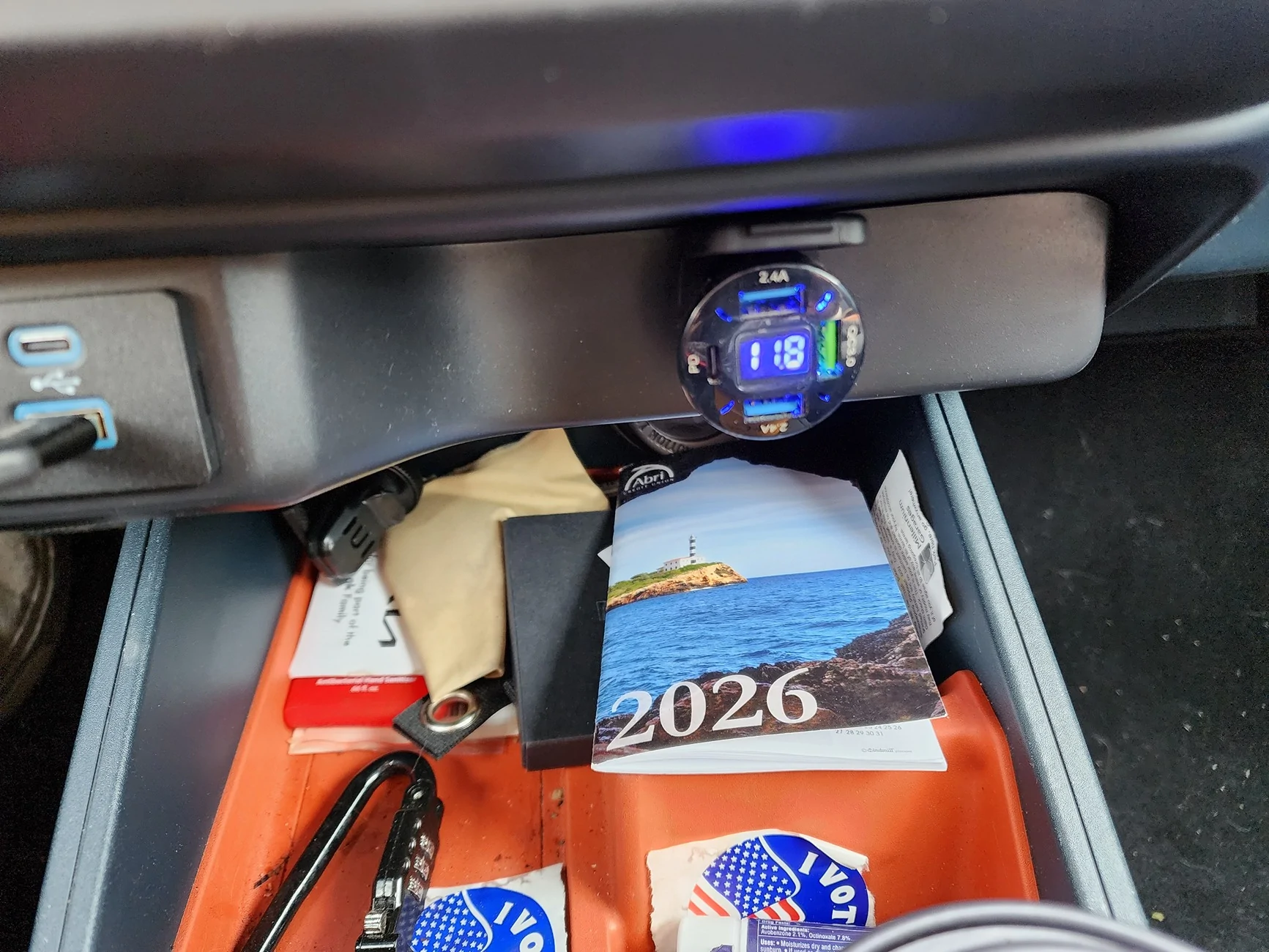
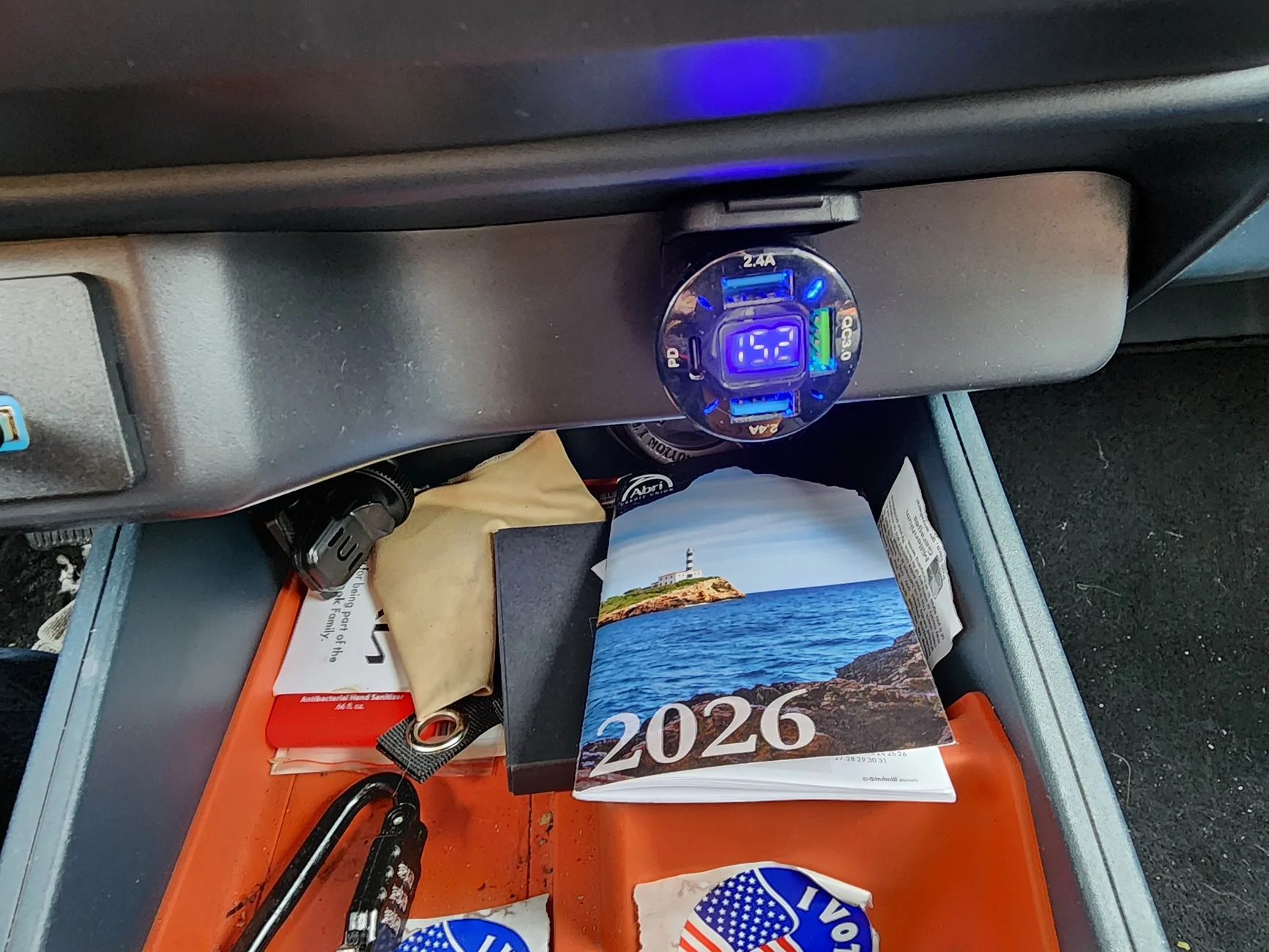
Here's my voltages from the cigarette lighter ignition on and engine on. Thai hasn't changed for two years. :
Ford Maverick Why Does 11.7V seem to be magic number? 20260118_135636
Ford Maverick Why Does 11.7V seem to be magic number? 20260118_135657
 
OP
OP
Bob The Builder

Bob The Builder

2.0L EcoBoost
Well-known member
First Name
Butch
Joined
Dec 2, 2021
Threads
54
Messages
2,598
Reaction score
4,884
Location
Vermont
Vehicle(s)
2020 Jeep Cherokee ** 2023 Mav FX/4
Engine
2.0L EcoBoost
Here's my voltages from the cigarette lighter ignition on and engine on. Thai hasn't changed for two years. :
20260118_135636.webp
20260118_135657.webp
Looks exactly like mine.
 

Sponsored

sajohnson

2.0L EcoBoost
Well-known member
First Name
Sherman
Joined
Mar 27, 2025
Threads
0
Messages
211
Reaction score
228
Location
MIDDLETOWN, MD
Vehicle(s)
BS Badlands
Engine
2.0L EcoBoost
Did you ever have the ACCM updated? If you do that, you may solve the problem and be able to treat your maverick normally and eliminate having to use a battery tender.
From my post above (#13):

"First I should point out that we have a 2022 BS Badlands. In addition to the BS forum I belong to the Maverick forum since some issues are the same or similar."

So no ACCM update.

Regardless of the vehicle -- Maverick, Bronco Sport, etc., all FLA and AGM batteries will have a longer service life if kept at/near 100% SOC.

Needless to say, automotive engineers are aware of that. I can only assume that they are willing to reduce service life by allowing significant depth of discharge (DoD) because there are some benefits -- slightly increased CAFE, keeping certain devices operating -- and the main drawback, more frequent battery replacements, is on the owner.

BTW -- while the factory warranty is 3 years/36,000 miles, it covers "premature failure":

"Not "Premature": Situations not covered under this definition include failure due to leaving lights on, lack of use (parasitic drain), extreme weather exposure, or normal, gradual end-of-life degradation."

"For many Ford vehicles, particularly hybrids and electric vehicles (like the Mach-E or Escape PHEV), the 12V battery is notorious for failing prematurely if the car sits, which may or may not be covered depending on dealer interpretation of "abuse" vs. "defect"."

Owners that do a significant amount of driving on a regular basis probably have little/no need for a Battery Tender. Vehicles that are not driven very much should have one. Battery life will be extended and it greatly reduces the chance of a 'no start' surprise.
 
Last edited:

sajohnson

2.0L EcoBoost
Well-known member
First Name
Sherman
Joined
Mar 27, 2025
Threads
0
Messages
211
Reaction score
228
Location
MIDDLETOWN, MD
Vehicle(s)
BS Badlands
Engine
2.0L EcoBoost
Yeah, cold here so got lazy about popping the hood and verifying voltage with my Fluke multimeter. I spent the money on one of those nice copper body power port dongles with 27W PD charging as well as a volt meter. As you say "should" be within .1 - .2VDC accuracy.

The following from a long conversation with Microsoft Co-Pilot. I have edited to a very condensed version to keep things short and simple. One can take this info with a grain of salt or hang their hat on it. IMHO it is really nothing more than tonnes of info gleaned from the internet with an AI to put it all together.


Old batteries live at 100% charge. Modern ones don’t.

Classic alternators charged to a fixed 14.4 V all the time.

That kept the battery topped off at 12.6–12.8 V at rest.
Modern vehicles — including your Maverick — use smart alternators that:
• intentionally avoid fully charging the battery
• float the battery around 70–80% SOC
reduce alternator load to improve MPG (This makes huge sense, CAFE driven. )
• only charge aggressively during braking or deceleration. (Yep, see above)

So the battery starts its “resting period” at a lower SOC than old-school systems ever allowed.

I summarize the above by saying that my gut feeling is Ford and other manufacturers are perfectly willing to sacrifice battery life longevity in order to feed the CAFE mandated gods. Most batteries, AGM more specifically, will last through the warranty period so this is on us, the consumer. Ford get decimal point better CAFE, we get the short end of the stick. :crazy: :sadface:
Always good to meet a fellow Fluke owner. I have a model 179, and some day I'll learn how to use it.

My comment about the accuracy of the plug-in voltmeters was intended to point out that even if the meter reading is off, the situation is still bad. IOW, while they might not exactly have NBS lab grade accuracy, they are good enough in this case.

The Microsoft Co-Pilot info makes sense.

I agree with your summary -- that seems to be the situation. I haven't heard any other explanation.

From what you found -- "...the battery starts its “resting period” at a lower SOC than old-school systems ever allowed", I'd suggest that all Maverick and Bronco Sport owners (probably owners of all newer vehicles) consider using a Battery Tender (or Battery Minder). There's no downside. With AGM batteries costing $250-$300+ a battery maintainer will easily pay for itself.
 
OP
OP
Bob The Builder

Bob The Builder

2.0L EcoBoost
Well-known member
First Name
Butch
Joined
Dec 2, 2021
Threads
54
Messages
2,598
Reaction score
4,884
Location
Vermont
Vehicle(s)
2020 Jeep Cherokee ** 2023 Mav FX/4
Engine
2.0L EcoBoost
Always good to meet a fellow Fluke owner. I have a model 179, and some day I'll learn how to use it.

My comment about the accuracy of the plug-in voltmeters was intended to point out that even if the meter reading is off, the situation is still bad. IOW, while they might not exactly have NBS lab grade accuracy, they are good enough in this case.

The Microsoft Co-Pilot info makes sense.

I agree with your summary -- that seems to be the situation. I haven't heard any other explanation.

From what you found -- "...the battery starts its “resting period” at a lower SOC than old-school systems ever allowed", I'd suggest that all Maverick and Bronco Sport owners (probably owners of all newer vehicles) consider using a Battery Tender (or Battery Minder). There's no downside. With AGM batteries costing $250-$300+ a battery maintainer will easily pay for itself.
All my instruments are Fluke. Even my little circuit tracer is a Fluke. They make the best stuff as you well know.

Your comment on the plug in voltmeter was taken as you intended. Just wanted to point out I bought a more expensive Chinese made one rather than the usual cheaper plastic one. 😀

I am going to start using a tender. Cheers.
 

Cherokee

2.0L EcoBoost
Well-known member
Joined
Jan 3, 2025
Threads
49
Messages
3,709
Reaction score
6,917
Location
North Carolina
Vehicle(s)
2004 Ford Escape Platinum, 2024 Ford Maverick Lariat 2.0L AWD
Engine
2.0L EcoBoost
I have noticed that 11.7V seems to be a trend for low voltage cutoff. Most OBD2 dash cam power supplies use 11.7 as their cutoff and Ford uses it, in my experience, for the battery saver mode in my Maverick. Readings base on a 12V power port volt/usb dongle.

Very confusing to me as back in my day a battery reading 11.7V is most likely on its way out and doubtful it will start the vehicle, yet here we are and my truck starts just fine even down to -24F this winter.

I guess I am a bit confused why Ford would allow the battery to drop this low while the truck sits not used for a few weeks. :crazy:
I have the fix, Ford, you listening ?
I’ll give you this one for free.

We have remote start with the app and the key fob. On most models right now?

Develop a program that’s automated to activate when it see’s a resting start battery voltage of 11.8 VDC.

This program starts the ICE in the Maverick, Ecoboost or Hybrid and shuts down when the battery gets up to 12.8 VDC for the AGM and 13.0 VDC for the Flooded cells.

Ford parts can sell a hose designed to vent engine exhaust outside if the Truck is in a Garage.
And program in a fail safe so it will not start inside a garage if the hose is not properly routed to the outside.

We Landed on the frickin moon way back in 1969 with XT level computer tech.

You can’t tell me this battery issue cannot be fixed by a Company that broke the seven minute lap time at Nürburgring with the Mustang GTD.

Ford ! What is going on. !!!!!!!

The Ford Mustang GTD at the Nürburgring refers to the high-performance, track-focused version of the Mustang, engineered to achieve sub-seven-minute laps on the legendary German circuit. It's notable as the first American production car to break this barrier (6:57.685 in late 2024), then improved its time to 6:52.072 in 2025 with further refinements, aiming to beat rivals like the Chevy Corvette ZR1. Key features include a supercharged V8, carbon fiber body, advanced aerodynamics, and race-derived suspension, making it a serious contender against European supercars.
 
Last edited:
Sponsored

HeyBales

2.5L Hybrid
Well-known member
First Name
Mike
Joined
May 3, 2024
Threads
4
Messages
4,851
Reaction score
4,407
Location
KC Metro area
Vehicle(s)
2005 Toyota RAV4, 2024 XLT Hybrid
Engine
2.5L Hybrid

sajohnson

2.0L EcoBoost
Well-known member
First Name
Sherman
Joined
Mar 27, 2025
Threads
0
Messages
211
Reaction score
228
Location
MIDDLETOWN, MD
Vehicle(s)
BS Badlands
Engine
2.0L EcoBoost
All my instruments are Fluke. Even my little circuit tracer is a Fluke. They make the best stuff as you well know.

Your comment on the plug in voltmeter was taken as you intended. Just wanted to point out I bought a more expensive Chinese made one rather than the usual cheaper plastic one. 😀

I am going to start using a tender. Cheers.
Side note: I had a Fluke NCVT for years. After I retired I stopped using it very often. When I went to turn it on it had stopped working. The batteries (well before their 'good until' date) had leaked and damaged the PCB. I tried to clean it up but it was beyond fixing.

To replace it, I decided to get a Southwire NCVT recommended by an engineer who has a website devoted to RV electrical systems. It worked OK, except on some ordinary duplex outlets it would only alert on one of the two (2) hot slots. Very strange. On others it worked as expected. Southwire sent me another tester and it functioned exactly the same.

Lesson -- stick with Fluke.

Actually, I'm sure there are other mfrs that make good DMMs, NCVTs, etc. With some research a person could save some money and still have something reasonably decent.
 

sajohnson

2.0L EcoBoost
Well-known member
First Name
Sherman
Joined
Mar 27, 2025
Threads
0
Messages
211
Reaction score
228
Location
MIDDLETOWN, MD
Vehicle(s)
BS Badlands
Engine
2.0L EcoBoost
Here's my testing in 24MY hybrid for draw after shutdown and door lock.
Sadly not a Fluke.
Sure wish it reached Sleep Mode level draw after 15 min!!!

https://www.mavericktruckclub.com/forum/threads/battery-saver-24-hybrid.76992/post-1271351

After 30 min was still at 0.33 Amps usage.
Not that high thru the whole test - but again this was only open door, then lock.
Not drive then park and lock door. Probably would have been worse then.
No Fluke?

Ford Maverick Why Does 11.7V seem to be magic number? 1768870462926-s6


:cool:

For what we're talking about, any reasonably accurate meter is fine.

As a technician, my attitude is generally, the more data the better. In this case, while having current draw over time is helpful:

1) It seems that not all Mavericks (and Bronco Sports) have a problem with low battery voltage. So many vehicles will probably show <50 mA after the larger loads shut down.

2) The main thing to focus on is battery voltage. Regardless of whether the current draw is within spec or not, if the voltage is below ~12.40V the battery should be charged.

For example, all else equal, a new battery will stay above 12.4V longer than one that has lost some capacity.

The easiest thing to do (where 120V power is available) is to get in the habit of connecting a BT. That eliminates the need for any testing.
 

Darryl

2.5L Hybrid
Well-known member
First Name
Darryl
Joined
May 9, 2025
Threads
13
Messages
1,606
Reaction score
3,597
Location
Tallahassee Florida
Vehicle(s)
2025 Maverick XLT HYBRID
Engine
2.5L Hybrid
Clubs
 
From my post above (#13):

"First I should point out that we have a 2022 BS Badlands. In addition to the BS forum I belong to the Maverick forum since some issues are the same or similar."

So no ACCM update.

Regardless of the vehicle -- Maverick, Bronco Sport, etc., all FLA and AGM batteries will have a longer service life if kept at/near 100% SOC.

Needless to say, automotive engineers are aware of that. I can only assume that they are willing to reduce service life by allowing significant depth of discharge (DoD) because there are some benefits -- slightly increased CAFE, keeping certain devices operating -- and the main drawback, more frequent battery replacements, is on the owner.

BTW -- while the factory warranty is 3 years/36,000 miles, it covers "premature failure":

"Not "Premature": Situations not covered under this definition include failure due to leaving lights on, lack of use (parasitic drain), extreme weather exposure, or normal, gradual end-of-life degradation."

"For many Ford vehicles, particularly hybrids and electric vehicles (like the Mach-E or Escape PHEV), the 12V battery is notorious for failing prematurely if the car sits, which may or may not be covered depending on dealer interpretation of "abuse" vs. "defect"."

Owners that do a significant amount of driving on a regular basis probably have little/no need for a Battery Tender. Vehicles that are not driven very much should have one. Battery life will be extended and it greatly reduces the chance of a 'no start' surprise.
The reason I mentioned the ACCM update is because it has solved the battery drain issue on many hybrid Mavericks. And it's free if done under 3/36 . And yes., the AGM battery is superior as evidenced by the fact that Ford installed them in the place of the original enhanced flooded battery that originally came in the EcoBoost Maverick as well as the Bronco Sport that had a battery recall. And I also noticed that my 2025 hybrid has a 570 CCA AGM battery instead of the paltry 390 CCA battery that was original equipment in the older hybrids. Even the replacement in the older hybrids was only a 400 and something CCA flooded battery. So you're spot on there. I suggested a reset of the battery monitor at the time of the ACCM update because it just seems to help those that have come into our shop. I noticed that it seems to allow a fuller charge. Nothing wrong with the battery tender. But if the Maverick can be corrected to not need it. It would be a lot more convenient. My Maverick sat on the lot for over a month untouched while I was waiting for some things to come through before I was able to take it home. It was fine. So I know that if things are working correctly, there's very little parasitic drain.
 

sajohnson

2.0L EcoBoost
Well-known member
First Name
Sherman
Joined
Mar 27, 2025
Threads
0
Messages
211
Reaction score
228
Location
MIDDLETOWN, MD
Vehicle(s)
BS Badlands
Engine
2.0L EcoBoost
Ideally, FLA and AGM batteries should be kept at 100% SOC. Obviously that's not always possible, but Ford allows the voltage to drop as low as 9.5V in some cases!:
https://www.ford.com/support/how-to...y-does-my-ford-vehicle-enter-deep-sleep-mode/

'Battery saver' is activated at a much higher voltage, but still way too low.

The owner's manual does not specify voltage or SOC that triggers warnings. I got tired of searching. The best I found is:

"Ford's Battery Management System (BMS) triggers warnings based on low State of Charge (SOC) or voltage, often around 20% SOC or lower..."

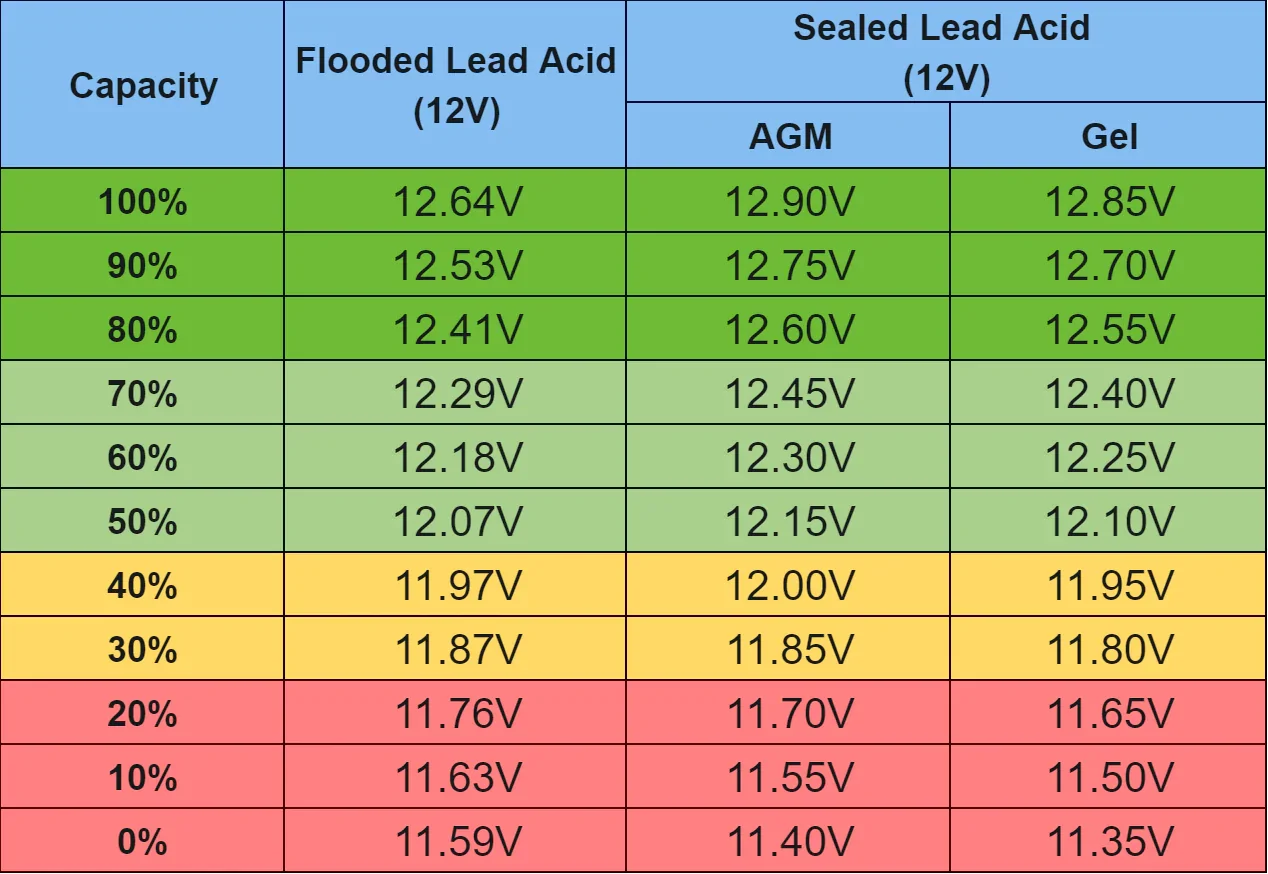
20% SOC is about 11.7V -- which corresponds with some posts here.

Anything less than 12.4 volts (close to 70% SOC) risks sulfation, lower capacity, and shortened service life.

Ford Maverick Why Does 11.7V seem to be magic number? 1768883030750-z


That can happen even when everything is functioning normally, which is why it is worthwhile to use a BT.

They can be wired so that the hood does not even have to be opened -- it can be connected using a 12V SAE connector. Quick and easy.
Sponsored


Top