

- First Name
- Mike
- Joined
- Dec 8, 2024
- Threads
- 4
- Messages
- 88
- Reaction score
- 206
- Location
- DeKalb, IL
- Vehicle(s)
- 2024 Maverick Lariat (Grabber Tribute)
- Engine
- 2.0L EcoBoost
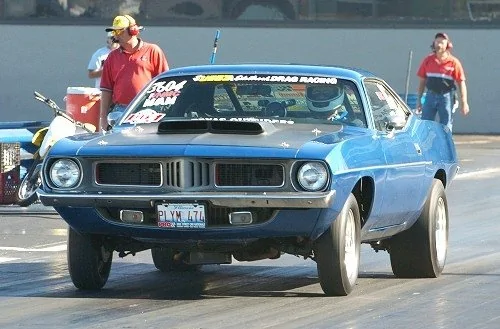
Back during the hurricaine Katrina week when gas was increasing in price exponentially, I began researching E85 as a fuel for my drag racing Plymouth Barracuda. Confirring with a couple top level alcohol racing collegues, I confirmed my upjetting and tuning calculations were in the ball park and set about converting.Roh roh.... here goes nothin....
I am a fuel ethanol expert. Ask me anything about it's manufacturing.
I was in the fuel ethanol business many years ago, but not currently.
70% of the corn kernel is converted into ethanol and CO2 via natural fermentation. 30% is made into animal (cattle) feed. None is wasted.
Give me 100 pounds of corn.
I will give you:
35.7 pounds of 200 proof ethanol
Which is 5.42 gallons.
35.7 pounds of pure CO2
Which is sometimes bottled
Which is sometimes made into dry ice
Which is sometimes vented
28.5 pounds of calorie dense cattle food
0.15 pounds of corn oil.
Which is sometimes called "yellow grease"
Which is sometimes made into bio-diesel
Which is sometimes (most often) added to the cattle feed to add fat to the cattle feed.
100 pounds of corn costs $7.44 on October 15, 2025.
One gallon of ethanol has 76,300 btu of energy.
To make ethanol you have a brewery and distillery under on roof. Combined this is called a "bio-refinery".
Inside the modern ethanol "bio-refinery" it takes 24,000 btu of fossil fuel heat to distill, and 0.4 kWh of grid electricity to make 1 gallon of ethanol.
People like to say moving the corn from field to refinery used fuel too. Sure. But very little. With trains, 1 ton of corn can be moved 400 miles on 1 gallon of diesel. Or move 400 tons of corn 1 mile per gallon. Usually, the bio-refineries are surrounded by corn field. Transportation of corn truly uses minimal fuel.
How far do oil companies transport oil?
Much greater distances.
And one should not delve into subsidies if trying to discredit ethanol. Oil companies get more subsidy than ethanol companies. And no one has gone to war over ethanol.
Now please. Ask me anything about fuel. Ethanol.
Long story short, I ran that car on the strip and street on E85 until I sold it in early 2020. Also wrote a couple articles on the conversion and helped several others tune their own stuff as well. Sanctions changed rules, racing fuel companies came out with E85 blends (at a much higher price than pumps, but with closer tolerance to percentage) and a lot of drag racers are still running it today. Corrosion, phase seperation, water retention, hose deterioration and lots of other myths were dispelled during that time as well, right in my own garage!
My 74 Barracuda still had it's original fuel tank, I did replace the 5/16 fuel lines with 3/8 and add an electric boost pump at the tank to accomodate the increase volume need and replaced the cork composit gaskets in the carburetor with silicone which Holley produced for methanol applications. I did keep the tank full as it was vented to the atomosphere and never had a problem with water absorbtion. Also managed to drop a tenth of a second off the elapsed times with just the fuel change to E85 from Pump Premium even with only 9.8-1 compression. I suspect it would have run exponentially better at 12 or 12.5-1. Fuel economy? Well, with a ride like that, who cares anyway?
Sponsored