

Sponsored

Premature rear brake rotor wear

HeyBales

2.5L Hybrid
Well-known member
First Name
Mike
Joined
May 3, 2024
Threads
4
Messages
4,972
Reaction score
4,578
Location
KC Metro area
Vehicle(s)
2005 Toyota RAV4, 2024 XLT Hybrid
Engine
2.5L Hybrid
If you do a Google search for rear brake pads wearing faster - you'll see many forum entries for all kinds of cars for decades ago, and nothing to do with hybrids.
That's when I discovered it, at least 10 yrs ago.
Light braking is the culprit - which the hybrid just encourages.
Well, and smaller pad depth usually on rear, so it's actually noticeable.
Sponsored


 

MakinDoForNow

2.5L Hybrid
Well-known member
First Name
James
Joined
Sep 24, 2021
Threads
2
Messages
8,490
Reaction score
6,059
Location
Texas
Vehicle(s)
2022 Maverick
Engine
2.5L Hybrid
If you do a Google search for rear brake pads wearing faster - you'll see many forum entries for all kinds of cars for decades ago, and nothing to do with hybrids.
That's when I discovered it, at least 10 yrs ago.
Light braking is the culprit - which the hybrid just encourages.
Well, and smaller pad depth usually on rear, so it's actually noticeable.
Yes to light braking in past. I had more than one friend over years who would drive with foot on brake pedal supposedly not pressing it until needed. They invariably need brake work in 1/3 +/- % time of the expected frequency.
 
Last edited:

Cherokee

2.0L EcoBoost
Well-known member
Joined
Jan 3, 2025
Threads
51
Messages
3,813
Reaction score
7,233
Location
North Carolina
Vehicle(s)
2004 Ford Escape Platinum, 2024 Ford Maverick Lariat 2.0L AWD
Engine
2.0L EcoBoost
I’d ask my Ford dealer at my next service then reported back in here on what they said.
 

Cougar70

2.5L Hybrid
Banned
Banned
First Name
Brian
Joined
Apr 25, 2025
Threads
3
Messages
120
Reaction score
305
Location
Glen Burnie MD
Vehicle(s)
2024 Maverick XLT Hybrid
Engine
2.5L Hybrid
I haven’t read every post in this thread, so what I’m thinking may have already been suggested.

As you’re slowing down, initially when you take your foot off the gas pedal, the regen is effectively braking, then when you actually put your foot on the brakes, the regen is still active and is working to slow the truck from the front wheels where the regen generator is connected and the actual application of brakes is more on the back brakes.

I would think this wear on the back brakes would be increased when actively trying to use the regen system and when using a drive mode that favors the regen system to slow the truck down.

Couple these actions with “inexpensive” rear rotors and I can see them wearing in a way that would be considered premature.

I’m curious if with a 25 hybrid AWD that in AWD, whether the regen braking works on all wheels or if it only works to same as the FWD hybrids.
 
Last edited:

todd92

2.0L EcoBoost
Well-known member
First Name
Todd
Joined
Aug 21, 2023
Threads
5
Messages
628
Reaction score
1,717
Location
07830
Vehicle(s)
F-150 (2), Edge ST, Edge Titanium
Engine
2.0L EcoBoost
The rotors scoring and wearing has nothing to do with the rear brake pads wearing faster than the fronts. If the road salt is Magnesium Chloride it will absolutely destroy brake rotors if the vehicle is not frequently washed.
 

Sponsored

Cougar70

2.5L Hybrid
Banned
Banned
First Name
Brian
Joined
Apr 25, 2025
Threads
3
Messages
120
Reaction score
305
Location
Glen Burnie MD
Vehicle(s)
2024 Maverick XLT Hybrid
Engine
2.5L Hybrid
The rotors scoring and wearing has nothing to do with the rear brake pads wearing faster than the fronts. If the road salt is Magnesium Chloride it will absolutely destroy brake rotors if the vehicle is not frequently washed.
I’m sure that type of road salt can affect a brake rotor, but you normally expect something like that to affect both front and back rotors somewhat evenly.

And it sounds like it’s affecting more than just people’s trucks in salt environments.
 

greycat

2.5L Hybrid
Active member
First Name
Tom
Joined
Oct 30, 2021
Threads
2
Messages
38
Reaction score
104
Location
syracuse
Vehicle(s)
maverick
Engine
2.5L Hybrid
Yes to light braking in past. I had more than one friend over years who would drive with foot on brake pedal supposedly not pressing it until needed. They invariably need brake work in 1/3 +/- % time of the expected frequency.
I'd hate to be stuck behind that person.
 

MakinDoForNow

2.5L Hybrid
Well-known member
First Name
James
Joined
Sep 24, 2021
Threads
2
Messages
8,490
Reaction score
6,059
Location
Texas
Vehicle(s)
2022 Maverick
Engine
2.5L Hybrid
I'd hate to be stuck behind that person.
In HS there were 635 in my graduation class and not sure how many but about 10-12 seemed to be doing this, so say 1-2% of drivers. But who knows for sure. There were several over the next 30 years who complained of rear brake wear. The rear brakes are normally applied first and/or at greater pressure to help prevent "fishtailing" (the main reason if you only purchase two tires the shop will normally recommend the better tread is on the rear wheels, better grip for ice/water hydroplaning).
 

HeyBales

2.5L Hybrid
Well-known member
First Name
Mike
Joined
May 3, 2024
Threads
4
Messages
4,972
Reaction score
4,578
Location
KC Metro area
Vehicle(s)
2005 Toyota RAV4, 2024 XLT Hybrid
Engine
2.5L Hybrid
So I did some slippery brake testing, well in normal too first.

Whether I was coasting, or braking lightly at top of regen, or aggressively in bottom of regen.
There was at no time brake pressure to any brakes, including the rear.
So regen was only regen.

I'll have to review the logs for an instance of hitting the brakes harder to pop out beyond regen, to see the wheel axle application.

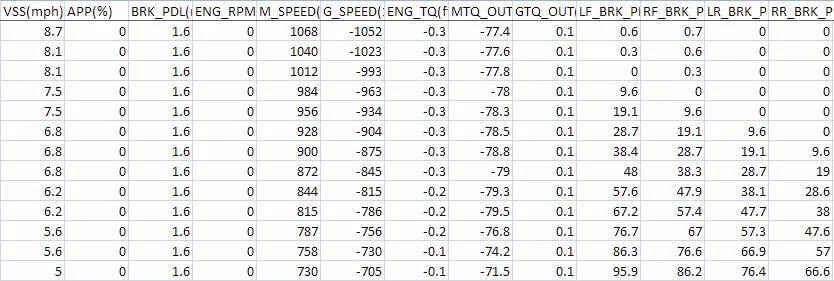
Now what I did see - is when you reach that final 10 mph and the pads start getting pushed in and even more about 5 mph and less.
The rear has more pressure initially applied and kept higher until stopped.
This I'll have to compare with Normal to see if it happens then.

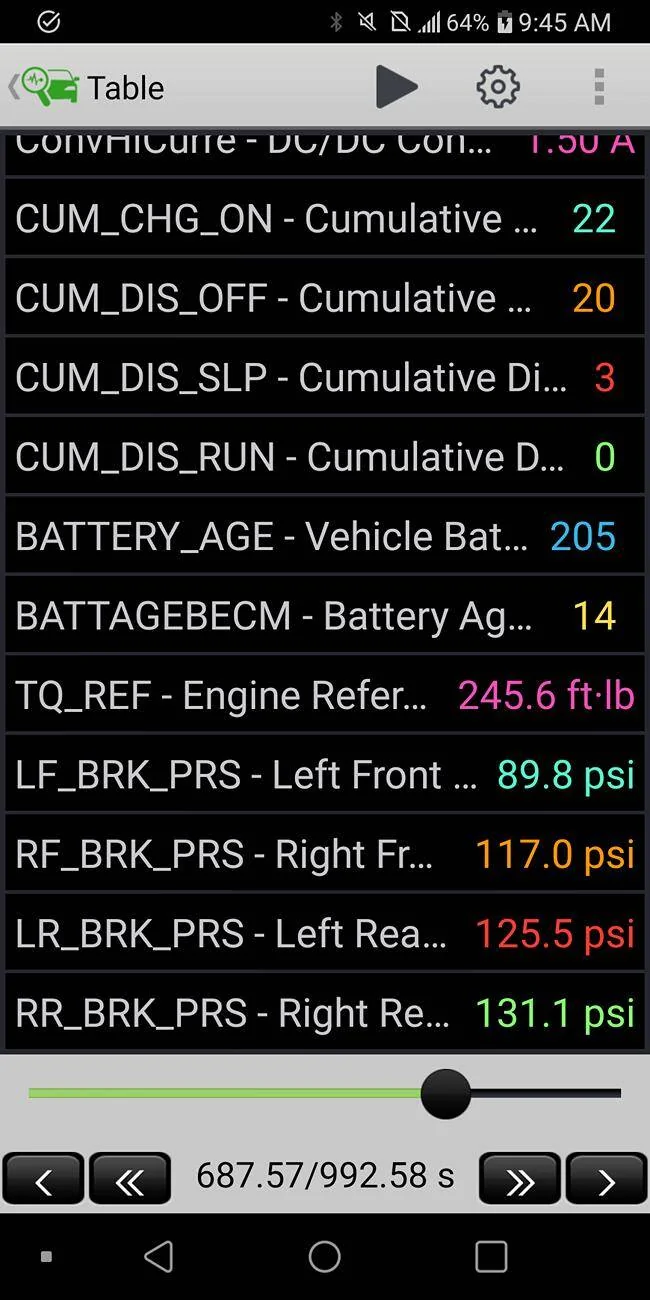
It was never a big difference - but it was there. Like this. Some of the differences is for sure the laggy time of readings from ABS module. But rear always higher than front. This was a straight stop, not a corner.
Ford Maverick Premature rear brake rotor wear Screenshot_20250519-094551
 

ricklee4570

2.5L Hybrid
Well-known member
First Name
Rick
Joined
Mar 29, 2025
Threads
6
Messages
51
Reaction score
36
Location
Virginia
Vehicle(s)
2025 Ford Maverick Hybrid
Engine
2.5L Hybrid
I am interested to see if this is a rare occurrence or will most of us experience accelerated wear?
 
Sponsored

jdavidr

2.5L Hybrid
Member
First Name
David
Joined
Oct 13, 2023
Threads
0
Messages
6
Reaction score
0
Location
United States
Vehicle(s)
xr650r
Engine
2.5L Hybrid
So I did some slippery brake testing, well in normal too first.

Whether I was coasting, or braking lightly at top of regen, or aggressively in bottom of regen.
There was at no time brake pressure to any brakes, including the rear.
So regen was only regen.
Awesome data, thanks so much. Good to know that the regen green zone achieved by pressing the brake pedal isn't actually riding the brakes, even in slippery mode.

Any chance you could collect some data using the L button to "brake"? My impression is that hitting the L button with your foot off the accelerator and off the brake performs the equivalent of precisely pressing the brake pedal to maximize either regen or engine braking (depending on the state of the hybrid battery charge) without actually using the brakes.

The left dial gauge seems to indicate that's what it's doing, as it will pin the needle right at the edge of the green zone... but given our brake wear, and the amount I use that L button to slow down (quite often), I'm now skeptical.

BTW, it seems you have to be going above ~10-15mph for the L button to do what I'm describing.
 

MakinDoForNow

2.5L Hybrid
Well-known member
First Name
James
Joined
Sep 24, 2021
Threads
2
Messages
8,490
Reaction score
6,059
Location
Texas
Vehicle(s)
2022 Maverick
Engine
2.5L Hybrid
Awesome data, thanks so much. Good to know that the regen green zone achieved by pressing the brake pedal isn't actually riding the brakes, even in slippery mode.

Any chance you could collect some data using the L button to "brake"? My impression is that hitting the L button with your foot off the accelerator and off the brake performs the equivalent of precisely pressing the brake pedal to maximize either regen or engine braking (depending on the state of the hybrid battery charge) without actually using the brakes.

The left dial gauge seems to indicate that's what it's doing, as it will pin the needle right at the edge of the green zone... but given our brake wear, and the amount I use that L button to slow down (quite often), I'm now skeptical.

BTW, it seems you have to be going above ~10-15mph for the L button to do what I'm describing.
I use L button to maximize Regen from 65-70 mph quite frequently.
 

HenryFord

2.5L Hybrid
Well-known member
Joined
Apr 13, 2025
Threads
24
Messages
378
Reaction score
570
Location
MO
Vehicle(s)
2025 Maverick XL Hybrid FWD(ordered)
Engine
2.5L Hybrid
This is a rather disturbing thread if this turns out to be a common issue. Chewing up brake pads every 30k is not my idea a of a good time.
 

HeyBales

2.5L Hybrid
Well-known member
First Name
Mike
Joined
May 3, 2024
Threads
4
Messages
4,972
Reaction score
4,578
Location
KC Metro area
Vehicle(s)
2005 Toyota RAV4, 2024 XLT Hybrid
Engine
2.5L Hybrid
I am interested to see if this is a rare occurrence or will most of us experience accelerated wear?
If you do the Google search I suggested - you'll see you will likely experience this as many have been for over the last 10 yrs on all makes and models.

Probably less than them though, since our brakes really only brought on at the end if doing regen decently.

If you are always gently just barely going past regen into the pads - then probably faster wear will occur. Back off just a bit.
 

HeyBales

2.5L Hybrid
Well-known member
First Name
Mike
Joined
May 3, 2024
Threads
4
Messages
4,972
Reaction score
4,578
Location
KC Metro area
Vehicle(s)
2005 Toyota RAV4, 2024 XLT Hybrid
Engine
2.5L Hybrid
Appears it could be a strong result of slippery mode.

Normal mode braking within the regen area also causes no brake pressure.
But when you get slow enough for it to occur - the axles that get the most pressure are different than in Slippery mode.
This was pretty consistent among the stops, and as the pressure was increased the difference remained.
Again - only talking from about 5mph to stopped.

Ford Maverick Premature rear brake rotor wear imag


Now - mid-drive braking at 35 mph hard enough to grab pads, not really the same thing.
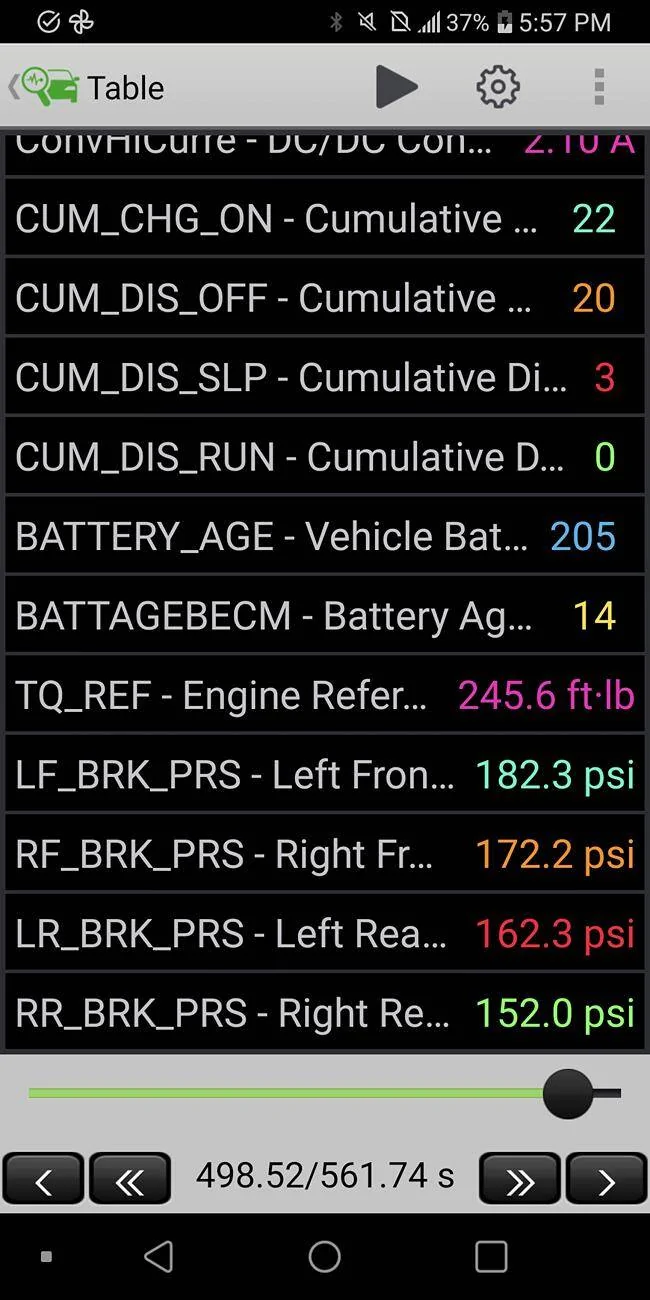
Still not talking really hard here just enough to go past regen, only down to 28 mph while no one happened to be behind me. Here's a snippet, close enough pressure, though perhaps swapping from front to rear.
I'll for sure include this in my drive mode braking tests. Still trying to figure out how to make the differences due to drive mappings stand out.

Ford Maverick Premature rear brake rotor wear 1747704222926-jx


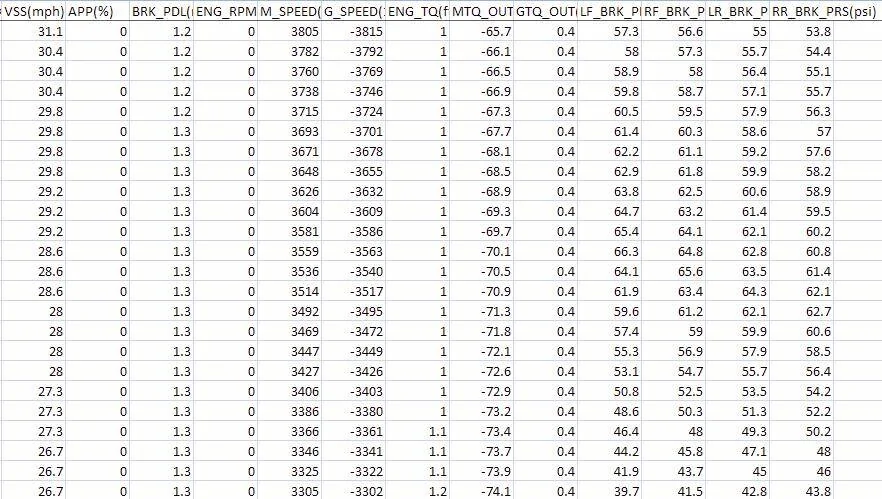
Also - here's why I know it's laggy from the ABS to the display or log file.
Slowdown braking about 13 mph the front brakes do get pressure while the back get nothing.
Around 8 the rear's are brought in.
But you can see from the diagonal effect the millisecond delay.
The fronts still came on first in Normal mode. The backs in Slippery mode, with a difference in pressure.

Ford Maverick Premature rear brake rotor wear 1747705036666-s
Sponsored

 
Last edited:


Top