

Wow!! Great thread. Kudos.
Sponsored

Holy crap that's amazingly dumb! An entire team of engineers designed that, there must have been a reason for this as a specification.Fact: 2022 Hybrid (and others) actively drain a 12 volt battery to the computed 80% charge level.
Then do not try to add charge to the 12 volt battery until a computed 60% or lower charge is reached.

One down. One to go.Holy crap that's amazingly dumb! An entire team of engineers designed that, there must have been a reason for this as a specification.
I need to dig up my old 12v power socket test thingamabob and see if the '26 does this.
I scratch my head over that one too. There is a rather large alternative power source available nearby in the hybrid, why not tap that for power when the vehicle is otherwise off?Well it charges the battery better it still does not address the issue of the parasitic drain problem.
SAME HERE.I scratch my head over that one too. There is a rather large alternative power source available nearby in the hybrid, why not tap that for power when the vehicle is otherwise off?
Of course, I'm not an engineer, so maybe I'm just ignorant.
Be sure to compare the amps of current into the 12v with lights & fan on and off.Oh - mine's different then, right now.
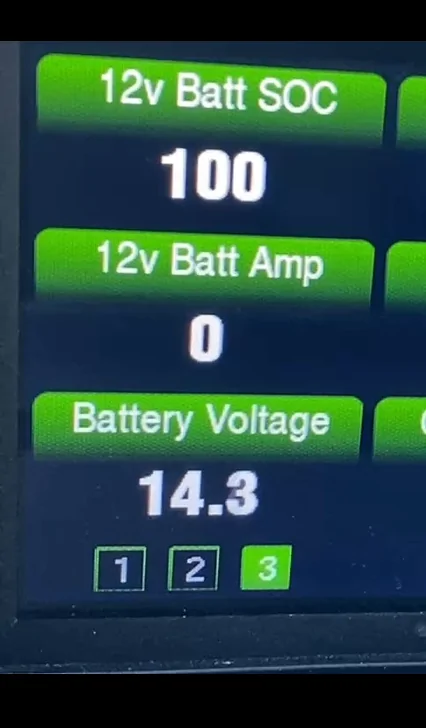
I'm always at 14.x - 15.x.
No matter initial seconds of 15 A down to float 0.5 A.
But that's probably because my battery is currently no where near 12.8V resting.
When it was, I did see that effect of draw.
Oh those carefree days! Literally - only lasted a few days...
I'll see what happens on drive home tonight - plan on letting the initial high amp drop to float level - then I'll test with fan and headlights.
And video it.
Glenn - aren't you coming up on the season that testing a 12V resistance heater would work well.

From the normal posts from those having that B issue - the parasitic drain was going to kill ya in 1 or 2 nights anyway.Excellent work trying and documenting different theories.
Am I correct you're working on the premise:
A) These things cause a higher state of chargeB) Which is independent of a parasitic draw. However a higher state of charge will hold off the parasitic draw issues longer.
The "large" (HVB) power source would only normally have only that capacity between 30-40% soc (=0-100% of 1.1kw) available to maintain 12v. Might be enough? I think Ford would resist placing any load at rest on the 8 year warranted battery.I scratch my head over that one too. There is a rather large alternative power source available nearby in the hybrid, why not tap that for power when the vehicle is otherwise off?
Of course, I'm not an engineer, so maybe I'm just ignorant.
It appears for safety in the vast majority of EV's and others - off needs to be off.I scratch my head over that one too. There is a rather large alternative power source available nearby in the hybrid, why not tap that for power when the vehicle is otherwise off?
Of course, I'm not an engineer, so maybe I'm just ignorant.

| Condition | Target State of Charge | Recommended Action |
|---|---|---|
| Storage | 100% | Store in a cool, dry place and use a smart trickle charger. |
| Active Use | 50% to 100% | Recharge to 100% as soon as possible after use. |
| Emergency | > 12.4V | Never let resting voltage drop below 12.4V to avoid early failure. |