


Sponsored

Battery Maintainer - Where did you put the plug?

HeyBales

2.5L Hybrid
Well-known member
First Name
Mike
Joined
May 3, 2024
Threads
4
Messages
4,917
Reaction score
4,500
Location
KC Metro area
Vehicle(s)
2005 Toyota RAV4, 2024 XLT Hybrid
Engine
2.5L Hybrid
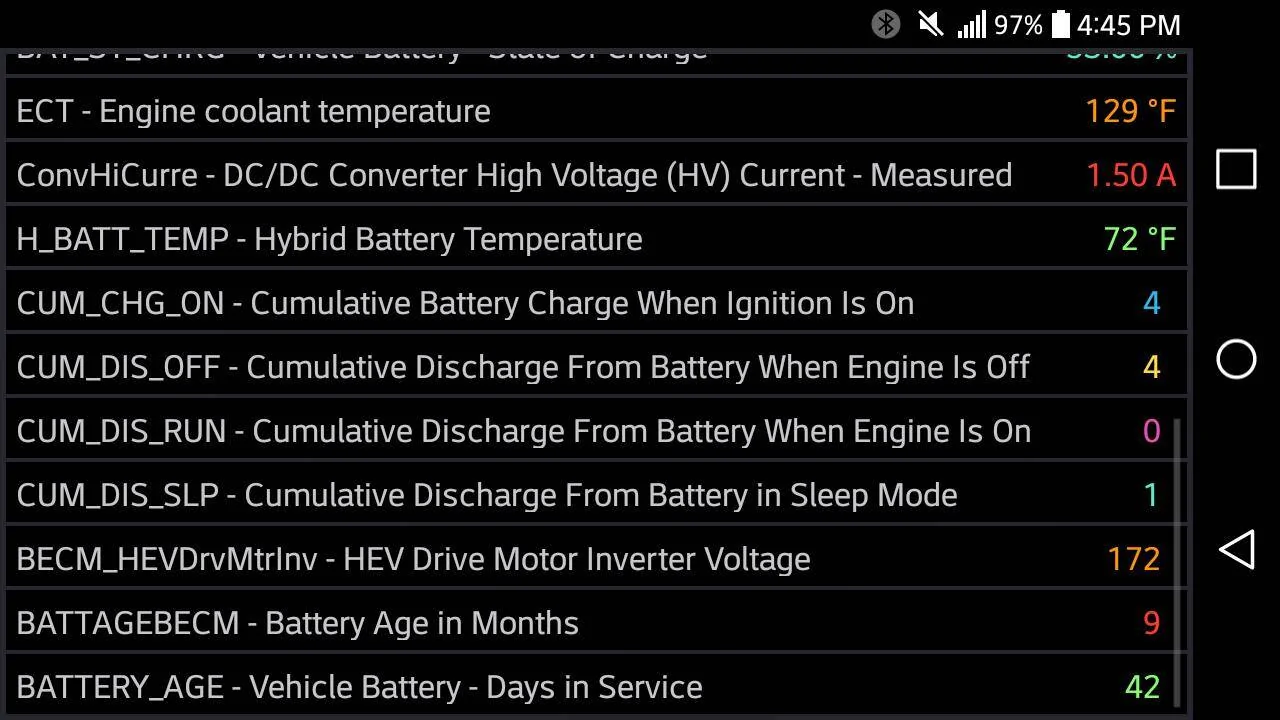
So maybe they do not actually count the truncated descriptions? maintainer charge and the 8hr truck locked battery learn routine is super important. If I put my maintainer on underwood jump posts lock truck and leave it for 7-10 days. Truck seems to run much better but who knows. Can you see further out on the
Description truncated just because of font & screen size.
After finding these are only values logged like this for battery - I agree that learn routine must be very important.
All but discharge while running had a value in my case. When you click on more details, most PIDs give what the reading is in, like V, A, RPM, ect. Nothing on these.

Cumulative Battery Charge When Ignition is On
Cumulative Discharge from Battery When Engine Is Off
Cumulative Discharge from Battery When Engine is On
Cumulative Discharge from Battery in Sleep Mode

ETA: corrected the full descriptions & added pic.
Screenshot_2024-12-04-16-45-45.webp
Sponsored

 
Last edited:

MakinDoForNow

2.5L Hybrid
Well-known member
First Name
James
Joined
Sep 24, 2021
Threads
2
Messages
8,465
Reaction score
6,029
Location
Texas
Vehicle(s)
2022 Maverick
Engine
2.5L Hybrid
Description truncated just because of font & screen size.
After finding these are only values logged like this for battery - I agree that learn routine must be very important.
All but discharge while running had a value in my case. When you click on more details, most PIDs give what the reading is in, like V, A, RPM, ect. Nothing on these.

Cumulative Battery Charge When Ignition is On
Cumulative Discharge from Battery With Ignition Off
Cumulative Discharge from Battery While Running
Cumulative Discharge from Battery in Sleep Mode
Hmmm! Does cumulative discharge from battery with engine off reduce or go negative when charging with engine off??
I suppose the PID's are logged in/by PCM and if BMS monitors charging maybe it sends update info to BCM at power up? Or maybe 8 hour learn has to be run?
I put Noco g5 on hybrid XLT lux three days ago and left hood up normally lock truck do remember. This afternoon Noco was solid green with no other lights. So optimization had completed. I hit unlock/lock....unlock/lock had locking clicks then had other relay(?) clicks then nothing. Noco switched green only deep blink on. Presumably to to battery off. I did not hang around but two hours later light was solid green maint stand by. I will unlock/lock every day for two or three days so maybe the 8hr learn will repeat and see damn battery at 100% for 4-5 times in a row. Who knows but I got two Mavericks and can not use one for a week occasionally.
 

HeyBales

2.5L Hybrid
Well-known member
First Name
Mike
Joined
May 3, 2024
Threads
4
Messages
4,917
Reaction score
4,500
Location
KC Metro area
Vehicle(s)
2005 Toyota RAV4, 2024 XLT Hybrid
Engine
2.5L Hybrid
Hmmm! Does cumulative discharge from battery with engine off reduce or go negative when charging with engine off??
I suppose the PID's are logged in/by PCM and if BMS monitors charging maybe it sends update info to BCM at power up? Or maybe 8 hour learn has to be run?
I put Noco g5 on hybrid XLT lux three days ago and left hood up normally lock truck do remember. This afternoon Noco was solid green with no other lights. So optimization had completed. I hit unlock/lock....unlock/lock had locking clicks then had other relay(?) clicks then nothing. Noco switched green only deep blink on. Presumably to to battery off. I did not hang around but two hours later light was solid green maint stand by. I will unlock/lock every day for two or three days so maybe the 8hr learn will repeat and see damn battery at 100% for 4-5 times in a row. Who knows but I got two Mavericks and can not use one for a week occasionally.
I did 2 charges since that BMS reset 42 days ago, and no value going negative for discharge while engine off.
Those 2 matching ones were actually 0 and finally 1 for a long time each - almost thought they weren't being used, but sure thought I recalled a value there prior to reset, but that was prior to keeping them on screen too.
They did those jumps up to 4 after some colder weather, including that sleep to 1. And indeed it seemed like on startup I saw the first 1 for discharge, and then eventually driving the 1 for charging.
Whatever value is tracked is probably just whatever goes in/out of battery - but the only charge it cares about is ignition on.
I'm guessing discharge engine running is more for logging an error condition - likely shouldn't happen. Or maybe "Engine" is not correct term for when it's actually measured as it's own figure - but should be "Ignition".

Good idea with simple door unlock/lock to allow another relearn. Considering the following regarding calibration.
I'm going to see if scan tool is assuming whole numbers, but there is actually more values to display.

I think this is what is attempting to be done - with limitations. Still not sure if it works as poorly on their other vehicles, or BMS is getting bad readings causing it to think equal charge to discharge, but in reality not.

https://batteryuniversity.com/article/bu-903-how-to-measure-state-of-charge

Coulomb Counting

Laptops, medical equipment and other professional portable devices use coulomb counting to estimate SoC by measuring the in-and-out-flowing current. Ampere-second (As) is used for both charge and discharge. The name “coulomb” was given in honor of Charles-Augustin de Coulomb (1736–1806) who is best known for developing Coulomb’s law(See BU-601: How does a Smart Battery Work?)

While this is an elegant solution to a challenging issue, losses reduce the total energy delivered, and what’s available at the end is always less than what had been put in. In spite of this, coulomb counting works well, especially with Li-ion that offer high coulombinc efficiency and low self-discharge. Improvements have been made by also taking aging and temperature-based self-discharge into consideration but periodic calibration is still recommended to bring the “digital battery” in harmony with the “chemical battery.”(See BU-603: How to Calibrate a “Smart” Battery)

To overcome calibration, modern fuel gauges use a “learn” function that estimates how much energy the battery delivered on the previous discharge. Some systems also observe the charge time because a faded battery charges more quickly than a good one.

Makers of advanced BMS claim high accuracies but real life often shows otherwise. Much of the make-believe is hidden behind a fancy readout. Smartphones may show a 100 percent charge when the battery is only 90 percent charged. Design engineers say that the SoC readings on new EV batteries can be off by 15 percent. There are reported cases where EV drivers ran out of charge with a 25 percent SoC reading still on the fuel gauge.
 

Glen Baker LLC

2.5L Hybrid
Well-known member
Joined
May 29, 2024
Threads
30
Messages
7,267
Reaction score
12,186
Location
Central Nevada & Utah
Vehicle(s)
Maverick XLT Hybrid
Engine
2.5L Hybrid
Ok this
Ok This explains the BMS and why! Not on maverick but same sensor computer chip, etc.
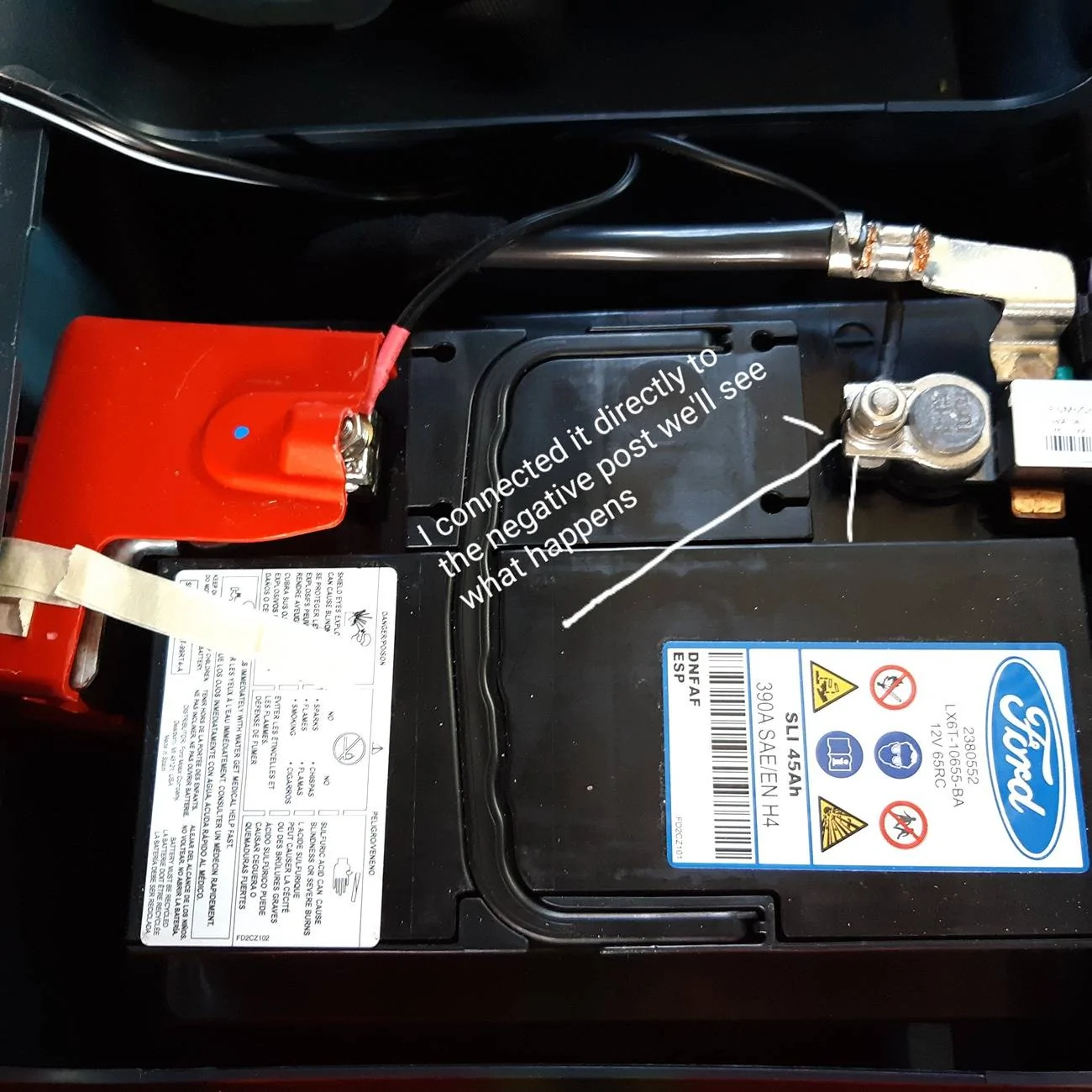
I took a look today under the seat, where the battery is located. I couldn't see anywhere convenient to hook the neg lead. I didn't want to undo the the nut on the bolt that look like it had paint on it and I didn't want to undo the negative bolt from the floor.
I guess I'll be the test case 😳 for negative leed to the Post. Hooked it up Dec. 1 so far so good.
20241206_102250.webp
 
Last edited:

MakinDoForNow

2.5L Hybrid
Well-known member
First Name
James
Joined
Sep 24, 2021
Threads
2
Messages
8,465
Reaction score
6,029
Location
Texas
Vehicle(s)
2022 Maverick
Engine
2.5L Hybrid
I did 2 charges since that BMS reset 42 days ago, and no value going negative for discharge while engine off.
Those 2 matching ones were actually 0 and finally 1 for a long time each - almost thought they weren't being used, but sure thought I recalled a value there prior to reset, but that was prior to keeping them on screen too.
They did those jumps up to 4 after some colder weather, including that sleep to 1. And indeed it seemed like on startup I saw the first 1 for discharge, and then eventually driving the 1 for charging.
Whatever value is tracked is probably just whatever goes in/out of battery - but the only charge it cares about is ignition on.
I'm guessing discharge engine running is more for logging an error condition - likely shouldn't happen. Or maybe "Engine" is not correct term for when it's actually measured as it's own figure - but should be "Ignition".

Good idea with simple door unlock/lock to allow another relearn. Considering the following regarding calibration.
I'm going to see if scan tool is assuming whole numbers, but there is actually more values to display.

I think this is what is attempting to be done - with limitations. Still not sure if it works as poorly on their other vehicles, or BMS is getting bad readings causing it to think equal charge to discharge, but in reality not.

https://batteryuniversity.com/article/bu-903-how-to-measure-state-of-charge

Coulomb Counting

Laptops, medical equipment and other professional portable devices use coulomb counting to estimate SoC by measuring the in-and-out-flowing current. Ampere-second (As) is used for both charge and discharge. The name “coulomb” was given in honor of Charles-Augustin de Coulomb (1736–1806) who is best known for developing Coulomb’s law(See BU-601: How does a Smart Battery Work?)

While this is an elegant solution to a challenging issue, losses reduce the total energy delivered, and what’s available at the end is always less than what had been put in. In spite of this, coulomb counting works well, especially with Li-ion that offer high coulombinc efficiency and low self-discharge. Improvements have been made by also taking aging and temperature-based self-discharge into consideration but periodic calibration is still recommended to bring the “digital battery” in harmony with the “chemical battery.”(See BU-603: How to Calibrate a “Smart” Battery)

To overcome calibration, modern fuel gauges use a “learn” function that estimates how much energy the battery delivered on the previous discharge. Some systems also observe the charge time because a faded battery charges more quickly than a good one.

Makers of advanced BMS claim high accuracies but real life often shows otherwise. Much of the make-believe is hidden behind a fancy readout. Smartphones may show a 100 percent charge when the battery is only 90 percent charged. Design engineers say that the SoC readings on new EV batteries can be off by 15 percent. There are reported cases where EV drivers ran out of charge with a 25 percent SoC reading still on the fuel gauge.
Ok, thanks for info. I have read once and will reread Friday. (Long story but I eat 1-2 Brazil nuts daily and will increase to 3 for couple days as the high selenium or whatever anti inflammatory or pavlove effects helps my thinking).
Per link consider the 4 hour rest period needed to stabilize lead acid battery before measurement occuring after the truck finishing it shutdown along with any programed draws including the power port delay say 2 hours. This could mean the battery up to 8 hour learn procedure actually occurs 6+/- hours after shutdown and locking starts a timer.
Re: units of measure possibly could be "type or rate" of charge? Type 1,2,3,4? (What is actual SOC after a charge to 15.? float voltage? Who knows since battery has to rest 4 hours to find out but we need something now).
Also: someone posted that he had concerns of high temps in hybrid battery compartment, thinking that possibly that the BMS with a temperature sensor was at times holding charging due to battery temp. He also questioned the proximity of the exhaust under the rear seat area. Maybe we need to verify actual temp battery is in? Might explain why 12v does not charge on long trips? I don't expect true but who knows.
More later my attention span is depleted.
 

Sponsored

HeyBales

2.5L Hybrid
Well-known member
First Name
Mike
Joined
May 3, 2024
Threads
4
Messages
4,917
Reaction score
4,500
Location
KC Metro area
Vehicle(s)
2005 Toyota RAV4, 2024 XLT Hybrid
Engine
2.5L Hybrid
Ok, thanks for info. I have read once and will reread Friday. (Long story but I eat 1-2 Brazil nuts daily and will increase to 3 for couple days as the high selenium or whatever anti inflammatory or pavlove effects helps my thinking).
Per link consider the 4 hour rest period needed to stabilize lead acid battery before measurement occuring after the truck finishing it shutdown along with any programed draws including the power port delay say 2 hours. This could mean the battery up to 8 hour learn procedure actually occurs 6+/- hours after shutdown and locking starts a timer.
Re: units of measure possibly could be "type or rate" of charge? Type 1,2,3,4? (What is actual SOC after a charge to 15.? float voltage? Who knows since battery has to rest 4 hours to find out but we need something now).
Also: someone posted that he had concerns of high temps in hybrid battery compartment, thinking that possibly that the BMS with a temperature sensor was at times holding charging due to battery temp. He also questioned the proximity of the exhaust under the rear seat area. Maybe we need to verify actual temp battery is in? Might explain why 12v does not charge on long trips? I don't expect true but who knows.
More later my attention span is depleted.
Temps in compartment - got a remote sensor in bed right now, was curious in summer how hot cabin got compared to covered bed (interesting experiment - nothing stood out so nothing was written down).
(sad there is no display for cabin temp on non-sync3 system, only what you want it to be, but there is a PID for that temp!)
Will just move that sensor right under the seat - and attempt to remember to make a note or two.

For these new colder temps - I have already seen starting at 11.7 V (plug-in & PID) 51% SOC, and after the highway run to work even today, at some point it dropped to 2A charge of battery, ended 12.1 V though some surface charge needed to dissipate so probably lower.
Doubting greatly that at 19 F it was too hot to keep up the higher charge rate.

PID value for charge while ign on did change to "5".
I guess it realized if 4 charge balances 4 discharge and the V is still this low, I need to go higher on charge. (still think it's a dumb system).

https://batteryuniversity.com/article/bu-403-charging-lead-acid
Info on temp difference effects on charging rate.
This may fully explain the 80% value seen in PIDs - not intended as max V for charge, but only when to go to topping charge rate, with float charge later. Sadly I've never seen 80% SOC except after full charge and relearn & drive next day, but since a SOC reading while charging is inaccurate, probably using other values to estimate when 80% is met (that formula appears to be very off in my case), so longer ign on time gives longer topping charges above the 80%
This is probably all because of safety of humans with battery in cabin, can't overheat or it wants to off-gas, despite vent tube, maybe still safety concern if someone left it off after replacement.

https://batteryuniversity.com/article/bu-402-what-is-c-rate
Wondering if this is the measurement value given...
Sure seems to describe what may be going on during relearn process. Except you can't do full discharge test (though many would think it must be!)
But you can measure rate of micro-draws, measure change in V, estimate AH of battery, got a c-rate to use with measuring charging in/out.
 
Last edited:

MakinDoForNow

2.5L Hybrid
Well-known member
First Name
James
Joined
Sep 24, 2021
Threads
2
Messages
8,465
Reaction score
6,029
Location
Texas
Vehicle(s)
2022 Maverick
Engine
2.5L Hybrid
Temps in compartment - got a remote sensor in bed right now, was curious in summer how hot cabin got compared to covered bed (interesting experiment - nothing stood out so nothing was written down).
(sad there is no display for cabin temp on non-sync3 system, only what you want it to be, but there is a PID for that temp!)
Will just move that sensor right under the seat - and attempt to remember to make a note or two.

For these new colder temps - I have already seen starting at 11.7 V (plug-in & PID) 51% SOC, and after the highway run to work even today, at some point it dropped to 2A charge of battery, ended 12.1 V though some surface charge needed to dissipate so probably lower.
Doubting greatly that at 19 F it was too hot to keep up the higher charge rate.

PID value for charge while ign on did change to "5".
I guess it realized if 4 charge balances 4 discharge and the V is still this low, I need to go higher on charge. (still think it's a dumb system).

https://batteryuniversity.com/article/bu-403-charging-lead-acid
Info on temp difference effects on charging rate.
This may fully explain the 80% value seen in PIDs - not intended as max V for charge, but only when to go to topping charge rate, with float charge later. Sadly I've never seen 80% SOC except after full charge and relearn & drive next day, but since a SOC reading while charging is inaccurate, probably using other values to estimate when 80% is met (that formula appears to be very off in my case), so longer ign on time give longer topping charges above the 80%
This is probably all because of safety of humans with battery in cabin.

https://batteryuniversity.com/article/bu-402-what-is-c-rate
Wondering if this is the measurement value given...
Sure seems like what may be going on during relearn process. Except you can't do full discharge test (though many would think it must be!)
Measure rate of micro-draws, measure change in V, estimate AH of battery, got a c-rate to use with measuring charging in/out.
FYI= 1-3 Brazil nuts per day allow me to remember where glasses, phone, etc were set down. Very high in selenium which is what helps many things. Unofficial study in nursing home found those with daily Brazil not had 40% less Alzheimer's. Who knows.
FYI = RE 80% charge level I posted over a year ago that the 80% only made sense if that was where float charging would start.
So what happens with float charge voltage desired if the buss exceeds that amount. Do we need a BMS controlled voltage limiter on the 12 volt positive terminal. Or will the BMS pulse charge using the higher voltage or just wait for it to be reduced. That would explain no charging on a five hours drive.
 

HeyBales

2.5L Hybrid
Well-known member
First Name
Mike
Joined
May 3, 2024
Threads
4
Messages
4,917
Reaction score
4,500
Location
KC Metro area
Vehicle(s)
2005 Toyota RAV4, 2024 XLT Hybrid
Engine
2.5L Hybrid
Underseat temp compared to cabin - when cold.
About 25 F outside.
Cabin eventually got up to 65 F as measured by Accurite in cell phone tray.
Under seat in battery compartment next to battery remote sensor - 38 F.

Nope - not too hot to charge, not too cold either as it started at normal 15A and quickly dropped from there to normal 2A. Wondering if HVB warming system actually side warms the 12 V battery area, since that seems to be right under it.
 

MakinDoForNow

2.5L Hybrid
Well-known member
First Name
James
Joined
Sep 24, 2021
Threads
2
Messages
8,465
Reaction score
6,029
Location
Texas
Vehicle(s)
2022 Maverick
Engine
2.5L Hybrid
Underseat temp compared to cabin - when cold.
About 25 F outside.
Cabin eventually got up to 65 F as measured by Accurite in cell phone tray.
Under seat in battery compartment next to battery remote sensor - 38 F.

Nope - not too hot to charge, not too cold either as it started at normal 15A and quickly dropped from there to normal 2A. Wondering if HVB warming system actually side warms the 12 V battery area, since that seems to be right under it.
Side warming might be supported by battery being located where it is instead of closer to door. Any way to check internal battery temp? But it's so small and 15 amps is pretty low even at 15.1-15.6v is not many watts so battery should be close to 80% (= the infamous "limit"). I would like to see truck run HVB up to 70-80% doc when approaching garage (it apparently knows based on when I leave to drive my 900 ft drive the seat belt dings in about 300 feet but when I come home, get out at gate, then drive to garage the seat belt does not ding!). Then during night use HVB to top off 12v and desulfate. So it appears in evitable (subject to fords coming fix) that a second rechargable battery for a maintainer will be necessary. (The fix for this is going to be something so simple that we may never know if someone just got a decimal out of place or whatever and they will keep their job).
ETA: If someone changed the 80% to 90% and watched to see if the drop to 2amp occurs there we would know what the 80% is really for.
 

Glen Baker LLC

2.5L Hybrid
Well-known member
Joined
May 29, 2024
Threads
30
Messages
7,267
Reaction score
12,186
Location
Central Nevada & Utah
Vehicle(s)
Maverick XLT Hybrid
Engine
2.5L Hybrid
I took a look today under the seat, where the battery is located. I couldn't see anywhere convenient to hook the neg lead. I didn't want to undo the the nut on the bolt that look like it had paint on it and I didn't want to undo the negative bolt from the floor.
I guess I'll be the test case 😳 for negative leed to the Post. Hooked it up Dec. 1 so far so good.
View attachment 186649
12/12/24
Well it is almost two weeks since I hooked my 4A battery maintainer. I have used it twice just to top off the battery.
Yes, I hooked the leads onto the clamps on the terminal.
On December 1st when I first hooked up the leads. I charged the battery for about 2 hours until the charger showed full. But I did not do a battery relearn.
So far I have had no battery run downs all the lights come on including the interior lights when I unlock the truck. Today, I again charged battery up. It took about an hour to show that it was fully charged and then I did the battery relearn.
Tomorrow I plan on reinserting fuse number 11/12 and running the truck for a week with just that replaced.
We'll see if the OEM Battery holds a charge.

20241206_102250.jpg
 

Attachments

  • 0 bytes Views: 0
Last edited:
Sponsored

MakinDoForNow

2.5L Hybrid
Well-known member
First Name
James
Joined
Sep 24, 2021
Threads
2
Messages
8,465
Reaction score
6,029
Location
Texas
Vehicle(s)
2022 Maverick
Engine
2.5L Hybrid
12/12/24
Well it is almost two weeks since I hooked my 4A battery maintainer. I have used it twice just to top off the battery.
Yes, I hooked the leads onto the clamps on the terminal.
On December 1st when I first hooked up the leads. I charged the battery for about 2 hours until the charger showed full. But I did not do a battery relearn.
So far I have had no battery run downs all the lights come on including the interior lights when I unlock the truck. Today, I again charged battery up. It took about an hour to show that it was fully charged and then I did the battery relearn.
Tomorrow I plan on reinserting fuse number 11/12 and running the truck for a week with just that replaced.
We'll see if the OEM Battery holds a charge.

20241206_102250.jpg
The charger needs to be connected to the other side of the box with the bar code (the BMS) close to where the wire that goes to body is attached. Connecting there allows the bms to report to the BCM how many amps were added to the battery by the charger to bring it to full charge. There is apparently something that requires that report to be added even if the new battery learn is done. Also it appears that when the truck charges the battery to 80% (presumably the 80% the forscan people are changing) appears where the charging drops to 2 amps (the float charge rate at 80%). The float rate amps will be further dropped as the battery approaches 100% to protect from overcharge. IF Your truck doesn't keep battery charged repeat the charging with the negative attached to the other side of the BMS followed by the 8 hr learn. Good luck.
 

HeyBales

2.5L Hybrid
Well-known member
First Name
Mike
Joined
May 3, 2024
Threads
4
Messages
4,917
Reaction score
4,500
Location
KC Metro area
Vehicle(s)
2005 Toyota RAV4, 2024 XLT Hybrid
Engine
2.5L Hybrid
12/12/24
Well it is almost two weeks since I hooked my 4A battery maintainer. I have used it twice just to top off the battery.
Yes, I hooked the leads onto the clamps on the terminal.
On December 1st when I first hooked up the leads. I charged the battery for about 2 hours until the charger showed full. But I did not do a battery relearn.
So far I have had no battery run downs all the lights come on including the interior lights when I unlock the truck. Today, I again charged battery up. It took about an hour to show that it was fully charged and then I did the battery relearn.
Tomorrow I plan on reinserting fuse number 11/12 and running the truck for a week with just that replaced.
We'll see if the OEM Battery holds a charge.

20241206_102250.jpg
From the tracking PIDS I put in some post, I'm thinking the charging direction isn't one that is tracked, maybe monitored, but no place to put the value.
Only discharge while off is tracked.
Charge is only while truck is running, therefore only from itself.
Makes sense, hence the relearn process to see what you've got, or it thinks you've got.
Then track discharge and charge and try to keep it equal.
 

MakinDoForNow

2.5L Hybrid
Well-known member
First Name
James
Joined
Sep 24, 2021
Threads
2
Messages
8,465
Reaction score
6,029
Location
Texas
Vehicle(s)
2022 Maverick
Engine
2.5L Hybrid
From the tracking PIDS I put in some post, I'm thinking the charging direction isn't one that is tracked, maybe monitored, but no place to put the value.
Only discharge while off is tracked.
Charge is only while truck is running, therefore only from itself.
Makes sense, hence the relearn process to see what you've got, or it thinks you've got.
Then track discharge and charge and try to keep it equal.
I have left my maintainer on mine for several days. And once a day unlock relock truck which seems to help so I am thinking it may store at least one or two prior max charge voltage to use if needed. Also it appears that it likes to charge to at least 65% no matter how old battery is until it fails.
 

Glen Baker LLC

2.5L Hybrid
Well-known member
Joined
May 29, 2024
Threads
30
Messages
7,267
Reaction score
12,186
Location
Central Nevada & Utah
Vehicle(s)
Maverick XLT Hybrid
Engine
2.5L Hybrid
The charger needs to be connected to the other side of the box with the bar code (the BMS) close to where the wire that goes to body is attached. Connecting there allows the bms to report to the BCM how many amps were added to the battery by the charger to bring it to full charge. There is apparently something that requires that report to be added even if the new battery learn is done. Also it appears that when the truck charges the battery to 80% (presumably the 80% the forscan people are changing) appears where the charging drops to 2 amps (the float charge rate at 80%). The float rate amps will be further dropped as the battery approaches 100% to protect from overcharge. IF Your truck doesn't keep battery charged repeat the charging with the negative attached to the other side of the BMS followed by the 8 hr learn. Good luck.
Thank you for the info.
I'm not moving the lead.
It's working now.
If it stops working I'll move it.
We shall see what happens???
 

B2000

2.0L EcoBoost
Well-known member
Joined
Sep 6, 2022
Threads
3
Messages
612
Reaction score
892
Location
midwest
Vehicle(s)
B2000
Engine
2.0L EcoBoost
Clubs
 
Interested in where people with an Ecoboost hooked the negative lead for the battery charger under the hood when using a harness instead of the clamp-on option. I did not spot any good locations close to the battery.
Sponsored


Top