

Sponsored

Replaced my windshield 3.5 times already. Bad luck or Bad Design/Engineering?

JBnorthTX

2.5L Hybrid
Well-known member
First Name
Jay
Joined
Aug 21, 2021
Threads
38
Messages
967
Reaction score
1,669
Location
DFW
Vehicle(s)
2019 Mustang, 2013 Honda CRV
Engine
2.5L Hybrid
Clubs
 
So far nothing windshield related on the Maverick I've had for 16 months. Fingers crossed. I've had only two windshield replacements on vehicles in over 40 years of driving, and one was from hail damage.
Sponsored

 

Happy Guy 823

2.5L Hybrid
Well-known member
First Name
Arthur
Joined
Feb 12, 2022
Threads
8
Messages
105
Reaction score
118
Location
46324
Vehicle(s)
Dodge Dakota
Engine
2.5L Hybrid
I am glad I got the warranty from dealer that covers windshields and dings it sound like! What has the average cost been to replace a Maverick windshield?
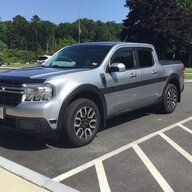
Just replaced mine. $1200
 

Deleted member 7089

Guest
The only time my windshield took a hit was when I was parked perpendicular to a roadway. Lesson learned.
 

sc226

2.5L Hybrid
Member
Joined
Aug 4, 2023
Threads
0
Messages
6
Reaction score
26
Location
Nashville, TN
Vehicle(s)
Ford Escape
Engine
2.5L Hybrid
I was an engineer at an automotive glass manufacturer for ~10 years, so I'd like to give some background into windshields and hope to dispel some of the incorrect information in this thread. I will start by saying I did not work for the company that built the Maverick windshield, but windshield manufacturing is pretty standard across the industry. My comments here are for windshields only, door glass, backlites, sunroofs, etc. are all different.

Windshield Construction - First off, all windshields, no matter the manufacturer or quality of vehicle, are made of 2 pieces of glass laminated with a layer of PVB in the middle.

Glass Thickness - In my experience, the glass thickness can range from 1.6mm to 2.6mm. The thinnest windshield I've seen is a 1.6 / 1.6 (outer/inner thickness) on a Lamborghini and the thickest a 2.6/2.6 (forgot which vehicle). The outer piece is always equal or thicker than the inner piece since it takes the most abuse. The most common constructions I've seen are ~2.1/2.1 and 2.1/1.6. The 2.1/1.6 are more commonly seen in the premium European brands. For other Ford comparisons, the F-150/250 (same exact windshield) is 2.2/2.2, Mustang is 2.0/2.0, Escape 2.1/2.1. So I would assume the Maverick is in that range.

Glass Material Composition -The glass itself, from any one manufacturer, is the same composition whether it's for a BMW, Toyota, Ford, Lamborghini, etc. There can be slight differences in light transmission levels (color), but all OEs have migrated toward the same color specifications. The reason for this is there is a legal limit of 70% Light Transmission for a windshield that an OE windshield cannot fall below. All OEs try to get as close to that as possible to reduce heat load into the cabin. So, If both BMW and Ford request a windshield with 2.1mm glass, it'll be the exact same composition. It would be far more expensive for the float glass process to transition between 'cheap' composition and a 'high-quality' composition. The float process likes stability above all else.

Interlayer Material - The PVB material is to prevent glass shards from going everywhere and to keep the occupant inside the vehicle in the event of an accident. The PVB material is pretty universal across the industry with only 2 or 3 suppliers and the material itself is generally interchangeable. When you see an 'Acoustic' windshield, the difference is in this interlayer. A typical layer of PVB is a monolithic layer ~0.76mm thick. Acoustic PVB is a tri-layer with a softer 0.04mm thick core surrounded by 0.38mm thick pieces. This soft core is what helps with making the cabin quieter. See this link for more info. https://automotive.saflex.com/solutions/saflex-e-series-acoustic-interlayer As far as durability goes, in durability testing, I've never seen any significant difference between acoustic and standard windshields.

Glass Manufacturing - When making a windshield you need to take a flat sheet of glass, heat it up, bend it to shape, then cool it. The cooling stage is where the stress / strength of the glass itself is set. If you cool a piece of glass very quickly, then you'll lock in a lot of stress and create tempered glass. This is good for some applications, but bad for a windshield. While a tempered windshield would be less prone to cracking, if/when it did crack, the whole thing would shatter into a million pieces. While those pieces would be held by the PVB, it would make it nearly impossible to see through and you'd need to stop immediately. On the opposite side, if you cool the glass very slowly, then it will easily chip/crack with small impacts. So OE's / manufacturers need to strike a balance between the two. There is an acceptable residual stress range that all OE windshields (regardless of OE Brand) fall within. On lower stress end, you have windshields that will chip easier, but the crack is less likely to propagate. While some are on the higher side, more chip resistant, but more likely to propagate once a chip does occur. Based on other Ford windshields, I imagine it falls somewhere in the middle. I can pretty much guarantee that the same furnaces (driver of the stress in the glass) are being used for the Maverick that are being used for more premium OE's.

Glass Shape / Design - This is probably one of this biggest factors when it comes to windshield durability. Windshields that are flatter, and have a steep installation angle are most prone to breakage. The highest breakage/replacement rate I've ever seen was on the Jeep Wrangler with its nearly flat and vertical installation angle. Although it was a pretty small windshield and relatively thick (2.3/2.3), the replacement rate was significantly above anything else. As the OE glass manufacturer, we had roughly the same orders for replacement Wrangler windshields as we did F-Series. To put that in perspective, they only make ~250-300K Wranglers per year while they make ~1.1M F-Series trucks. If there is a higher incidence of Maverick breakages (which I personally doubt), then I would point toward it potentially being a steeper / flatter windshield (which I'm not sure of).

All of this to say, there's a lot of factors that go into making a windshield and it's durability. But I guarantee that Ford is not going out and making a cheaper / lower quality windshield on the Maverick compared their other models. And having seen the quality requirements for other manufacturers compared to Ford, they're pretty much the same. Like it or not, glass breaks. There is no way to make a windshield that doesn't break.
 

Larrythelunatic

2.5L Hybrid
Well-known member
First Name
Larry
Joined
Sep 7, 2021
Threads
9
Messages
736
Reaction score
847
Location
Massachusetts
Vehicle(s)
92 Toyota Pickup. 22 IS hybrid Maverick. ‘25 Hybrid RAV4
Engine
2.5L Hybrid
Clubs
 
I was an engineer at an automotive glass manufacturer for ~10 years, so I'd like to give some background into windshields and hope to dispel some of the incorrect information in this thread. I will start by saying I did not work for the company that built the Maverick windshield, but windshield manufacturing is pretty standard across the industry. My comments here are for windshields only, door glass, backlites, sunroofs, etc. are all different.

Windshield Construction - First off, all windshields, no matter the manufacturer or quality of vehicle, are made of 2 pieces of glass laminated with a layer of PVB in the middle.

Glass Thickness - In my experience, the glass thickness can range from 1.6mm to 2.6mm. The thinnest windshield I've seen is a 1.6 / 1.6 (outer/inner thickness) on a Lamborghini and the thickest a 2.6/2.6 (forgot which vehicle). The outer piece is always equal or thicker than the inner piece since it takes the most abuse. The most common constructions I've seen are ~2.1/2.1 and 2.1/1.6. The 2.1/1.6 are more commonly seen in the premium European brands. For other Ford comparisons, the F-150/250 (same exact windshield) is 2.2/2.2, Mustang is 2.0/2.0, Escape 2.1/2.1. So I would assume the Maverick is in that range.

Glass Material Composition -The glass itself, from any one manufacturer, is the same composition whether it's for a BMW, Toyota, Ford, Lamborghini, etc. There can be slight differences in light transmission levels (color), but all OEs have migrated toward the same color specifications. The reason for this is there is a legal limit of 70% Light Transmission for a windshield that an OE windshield cannot fall below. All OEs try to get as close to that as possible to reduce heat load into the cabin. So, If both BMW and Ford request a windshield with 2.1mm glass, it'll be the exact same composition. It would be far more expensive for the float glass process to transition between 'cheap' composition and a 'high-quality' composition. The float process likes stability above all else.

Interlayer Material - The PVB material is to prevent glass shards from going everywhere and to keep the occupant inside the vehicle in the event of an accident. The PVB material is pretty universal across the industry with only 2 or 3 suppliers and the material itself is generally interchangeable. When you see an 'Acoustic' windshield, the difference is in this interlayer. A typical layer of PVB is a monolithic layer ~0.76mm thick. Acoustic PVB is a tri-layer with a softer 0.04mm thick core surrounded by 0.38mm thick pieces. This soft core is what helps with making the cabin quieter. See this link for more info. https://automotive.saflex.com/solutions/saflex-e-series-acoustic-interlayer As far as durability goes, in durability testing, I've never seen any significant difference between acoustic and standard windshields.

Glass Manufacturing - When making a windshield you need to take a flat sheet of glass, heat it up, bend it to shape, then cool it. The cooling stage is where the stress / strength of the glass itself is set. If you cool a piece of glass very quickly, then you'll lock in a lot of stress and create tempered glass. This is good for some applications, but bad for a windshield. While a tempered windshield would be less prone to cracking, if/when it did crack, the whole thing would shatter into a million pieces. While those pieces would be held by the PVB, it would make it nearly impossible to see through and you'd need to stop immediately. On the opposite side, if you cool the glass very slowly, then it will easily chip/crack with small impacts. So OE's / manufacturers need to strike a balance between the two. There is an acceptable residual stress range that all OE windshields (regardless of OE Brand) fall within. On lower stress end, you have windshields that will chip easier, but the crack is less likely to propagate. While some are on the higher side, more chip resistant, but more likely to propagate once a chip does occur. Based on other Ford windshields, I imagine it falls somewhere in the middle. I can pretty much guarantee that the same furnaces (driver of the stress in the glass) are being used for the Maverick that are being used for more premium OE's.

Glass Shape / Design - This is probably one of this biggest factors when it comes to windshield durability. Windshields that are flatter, and have a steep installation angle are most prone to breakage. The highest breakage/replacement rate I've ever seen was on the Jeep Wrangler with its nearly flat and vertical installation angle. Although it was a pretty small windshield and relatively thick (2.3/2.3), the replacement rate was significantly above anything else. As the OE glass manufacturer, we had roughly the same orders for replacement Wrangler windshields as we did F-Series. To put that in perspective, they only make ~250-300K Wranglers per year while they make ~1.1M F-Series trucks. If there is a higher incidence of Maverick breakages (which I personally doubt), then I would point toward it potentially being a steeper / flatter windshield (which I'm not sure of).

All of this to say, there's a lot of factors that go into making a windshield and it's durability. But I guarantee that Ford is not going out and making a cheaper / lower quality windshield on the Maverick compared their other models. And having seen the quality requirements for other manufacturers compared to Ford, they're pretty much the same. Like it or not, glass breaks. There is no way to make a windshield that doesn't break.
Thank You for this, Sir.
Very informative.
 

Sponsored

jsus

2.5L Hybrid
Well-known member
Joined
Dec 20, 2021
Threads
0
Messages
2,873
Reaction score
3,859
Location
USA
Vehicle(s)
2022 Ford Escape Hybrid AWD
Engine
2.5L Hybrid
A one or two car gap is appropriate for 10 or 20MPH according to the old "one car length per 10MPH" rule.

The new rule is 2 second gap. Works for all speeds. If you pay attention for a while it becomes automatic.
3 seconds rule, not 2. ~3 car lengths per 10 mph. That's baseline in ideal conditions. Limited visibility (weather, night), degraded traction, trailer, heavy vehicle, etc. all increase from that baseline.

https://www.travelers.com/resources/auto/travel/3-second-rule-for-safe-following-distance
 

Guv

2.0L EcoBoost
Well-known member
First Name
Steve
Joined
Jan 15, 2022
Threads
15
Messages
1,287
Reaction score
1,145
Location
USA
Vehicle(s)
Ford
Engine
2.0L EcoBoost
I think following distance might help but you have no control over another driver cutting in between you and the vehicle you were following.
I think it’s more like that one zebra old simba has his eye on. When it’s your time, it’s your time. Contractors with a Bobcat or similar machine on board
 

Ozarkbeard

Well-known member
Joined
May 22, 2022
Threads
14
Messages
4,344
Reaction score
5,477
Location
.
Vehicle(s)
.
Engine
Undecided
I was an engineer at an automotive glass manufacturer for ~10 years, so I'd like to give some background into windshields and hope to dispel some of the incorrect information in this thread.
Thank you for giving this thread actual facts on windshields. Your post is a breath of fresh air, compared to the hot air that people were pulling from their arses and posting as fact on this thread.
 

Suzukiridr14

2.5L Hybrid
Well-known member
First Name
Frank
Joined
Oct 30, 2021
Threads
19
Messages
1,543
Reaction score
1,981
Location
Sarasota Florida
Vehicle(s)
1956 THunderbird , 2016 Acura MDX (Wifes car)
Engine
2.5L Hybrid
Clubs
 
Maybe the “next” time you have to replace it, try getting the Lariat spec acoustic windshield to see if this is more resistant to rock chips. I can’t say if the aftermarket has that available, or if it’s a dealer only part?
I read somewhere that a Lariat windshield is about $1100. Not sure what a standard windshield cost.
 

Suzukiridr14

2.5L Hybrid
Well-known member
First Name
Frank
Joined
Oct 30, 2021
Threads
19
Messages
1,543
Reaction score
1,981
Location
Sarasota Florida
Vehicle(s)
1956 THunderbird , 2016 Acura MDX (Wifes car)
Engine
2.5L Hybrid
Clubs
 
This is my only complaint. The windshield glass is s#@t !!! My '05 F-150 took vicious shots on the windshield, never even a chip in 7 years of ownership! Had to replace my Maverick windshield on day 5 of ownership from a rock hit . The new one (15 months now) has 3 , tiny dings in it 🤬 ! $500 deductible from insurance really doesn't cushion the blow at all , if this is going to be a consistent problem.
My comprehensive insurance says windshield replacement is 0 deductible, side windows you have to pay the deductible. (Check your policy)

 
Sponsored

Blkraven66

2.0L EcoBoost
Well-known member
First Name
Greg
Joined
Jan 10, 2022
Threads
27
Messages
186
Reaction score
138
Location
New Jersey
Vehicle(s)
Ford Maverick
Engine
2.0L EcoBoost
My comprehensive insurance says windshield replacement is 0 deductible, side windows you have to pay the deductible. (Check your policy)
GEICO said , SORRY....you must use your $500 deductible. Who is your insurance company?
 

Guv

2.0L EcoBoost
Well-known member
First Name
Steve
Joined
Jan 15, 2022
Threads
15
Messages
1,287
Reaction score
1,145
Location
USA
Vehicle(s)
Ford
Engine
2.0L EcoBoost
Our State Farm policy in Texas is 500 deductible. Lowest allowed if financed.

 

Eagle11

2.5L Hybrid
Well-known member
Joined
Aug 6, 2021
Threads
18
Messages
1,982
Reaction score
1,693
Location
Valley of the Sun
Vehicle(s)
'07 Boxster S, 2018 BMW M5, Ducati's, Suzuki's
Engine
2.5L Hybrid
Clubs
 
Have had to replace my windshield 3.5 times in not even two years since owning, from rocks smashing into glass. One of the times required me to have the pillar repainted. The .5 time was having to stop a crack from spreading from a rock that worked, but the crack remained, until another rock hit the glass.

This last time really pissed me off, as saw the hit happen, and the crack spread across the glass, There was a medium size truck in front of me, but not for at least 45 yards.

The way i see it:
1 time bad luck
2 time bad luck/coincidence
3 times starting to think theres some design aerodynamic issues going on
3.5. Enough is enough.
It's just bad luck....

My 2013 BMW, I replaced the front windshield 4 times in 2014. My Husband's 2015 BMW, he had to replace his 3 times in 2016.
 

Eagle11

2.5L Hybrid
Well-known member
Joined
Aug 6, 2021
Threads
18
Messages
1,982
Reaction score
1,693
Location
Valley of the Sun
Vehicle(s)
'07 Boxster S, 2018 BMW M5, Ducati's, Suzuki's
Engine
2.5L Hybrid
Clubs
 
Our State Farm policy in Texas is 500 deductible. Lowest allowed if financed.
You have glass coverage?
Sponsored


Top