

Sponsored
Status
Not open for further replies.
OP
OP
Buschur

Buschur

2.0L EcoBoost
Well-known member
First Name
David
Joined
Sep 17, 2021
Threads
44
Messages
676
Reaction score
1,628
Location
Wakeman, Ohio
Vehicle(s)
2020 F150
Engine
2.0L EcoBoost
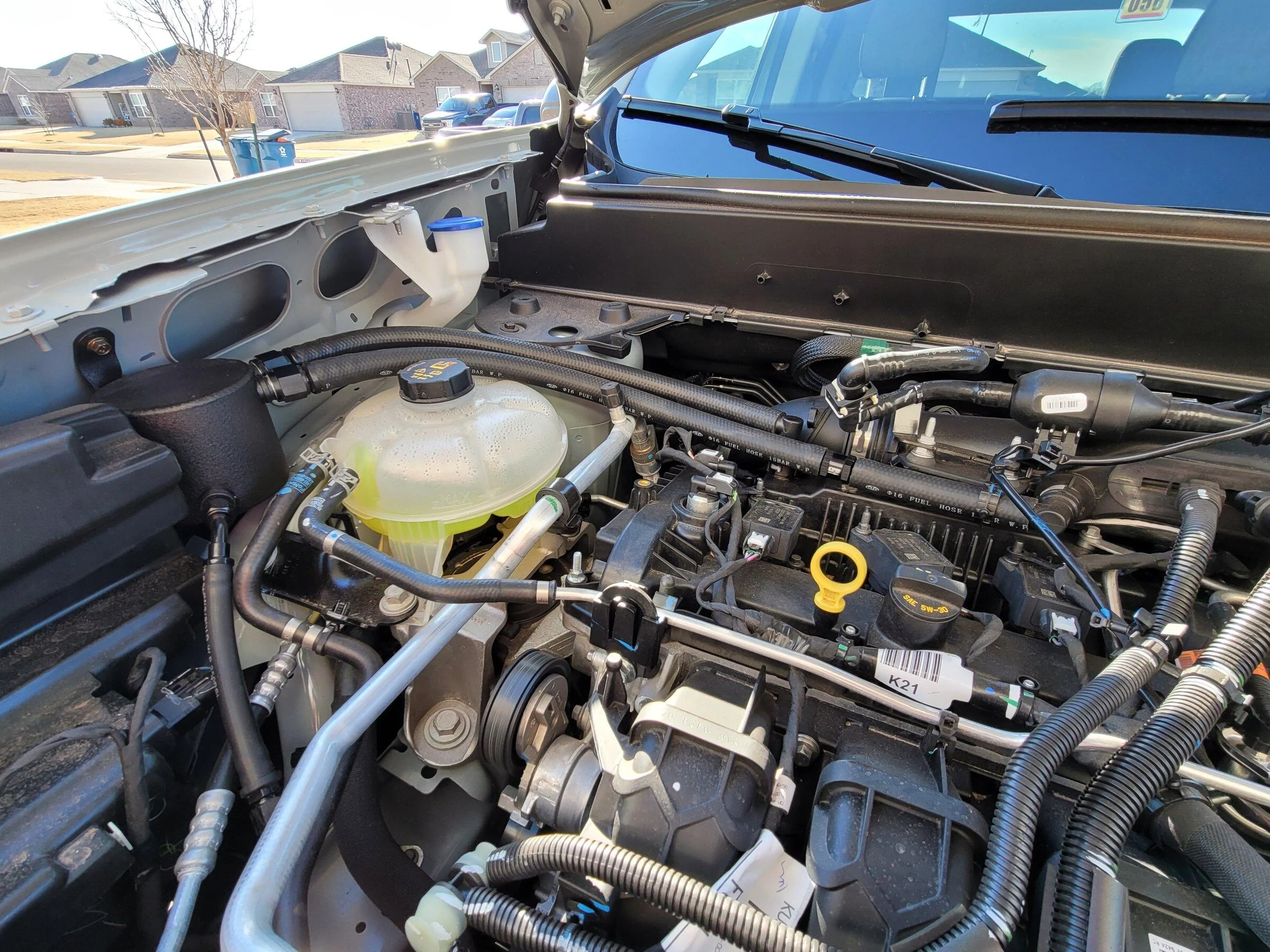
We have a new product coming, as I have mentioned quite a few times. A vented can, which is ideal if you don't need to worry about emissions. The hold up has been a part we needed CNC'd which ended up being over the top expensive. We got back a 3D printed sample about a week and a have ago which was built incorrectly, changes have been made and now they are making 50 pieces.

The new can, we will be vented and have additional ports, to further vent the crankcase and pick up the PVC ports also.
Sponsored
 
OP
OP
Buschur

Buschur

2.0L EcoBoost
Well-known member
First Name
David
Joined
Sep 17, 2021
Threads
44
Messages
676
Reaction score
1,628
Location
Wakeman, Ohio
Vehicle(s)
2020 F150
Engine
2.0L EcoBoost
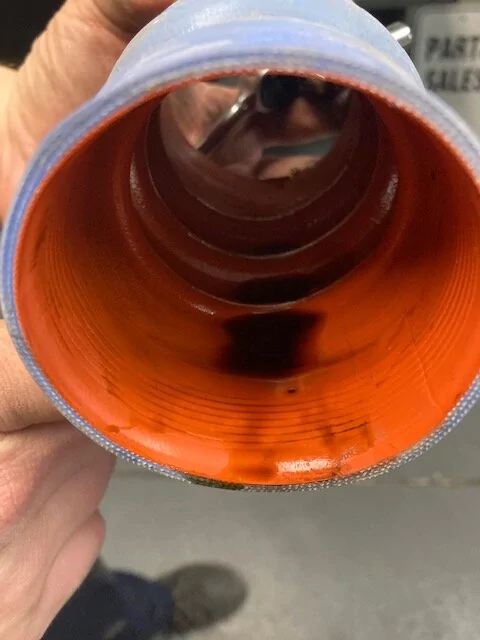
This is what our catch can stops from happening. As I've explained, our primary purpose here is performance. A thin coating of oil in your intercooler, especially the undersized crap the Maverick comes with, will completely ruin the efficiency of the intercooler.

This coupling is off a highly maintained 2020 F150 3.5EB, that's just the oil in the coupling we pulled off this morning. The truck is getting a custom catch can and larger front mount here at the shop today.


Ford Maverick Buschur's Maverick 2.0 oil separators DONE! IMG_0621
 
OP
OP
Buschur

Buschur

2.0L EcoBoost
Well-known member
First Name
David
Joined
Sep 17, 2021
Threads
44
Messages
676
Reaction score
1,628
Location
Wakeman, Ohio
Vehicle(s)
2020 F150
Engine
2.0L EcoBoost
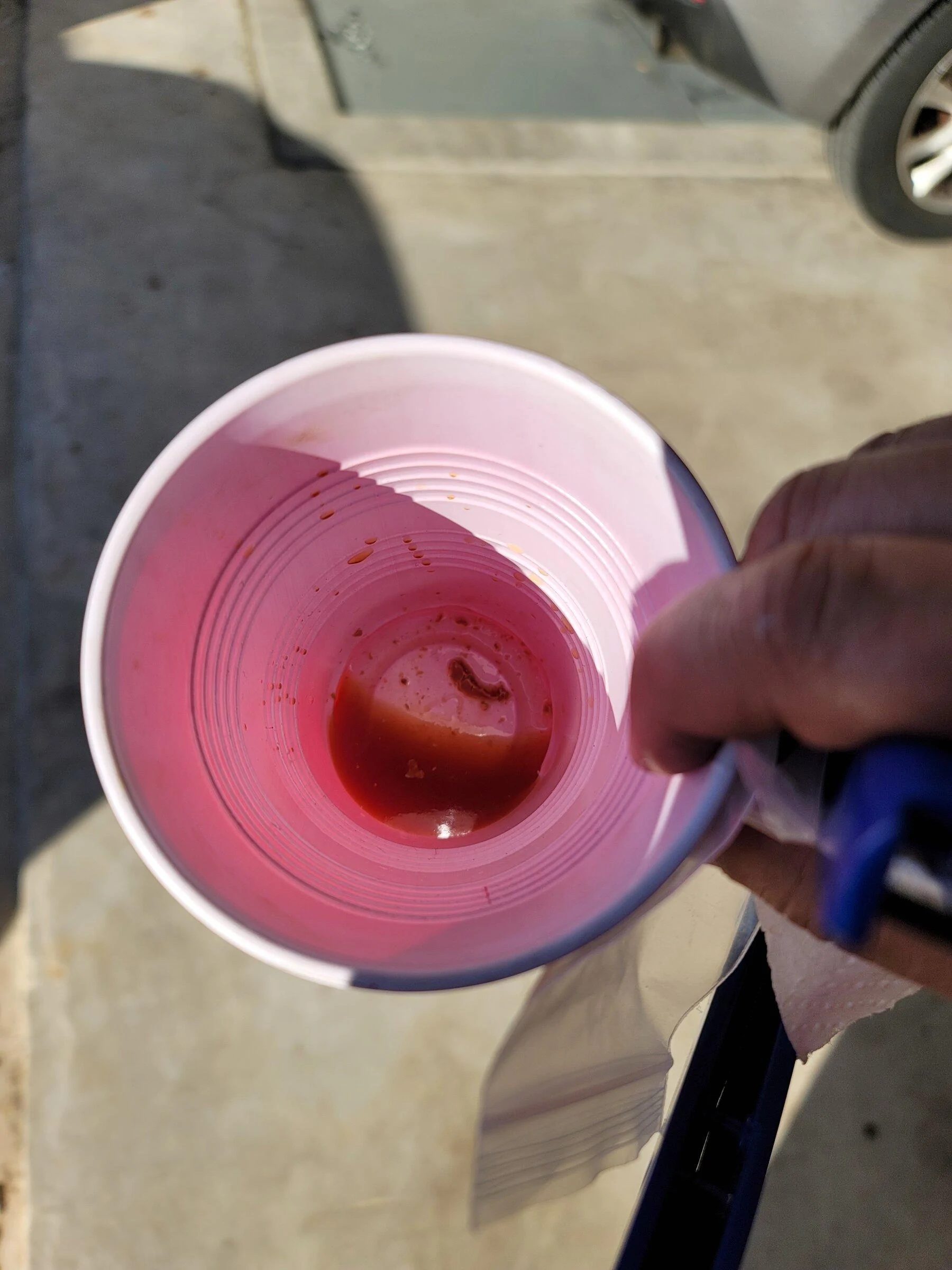
Same ecoboost from the coupler above. This is some of the crap that was in the end tank. 20,000 miles.

We've done testing in the past that shows what a massive hit to the efficiency this oil does to an intercooler. I believe I've posted that data here in the forums.

Believe me, if you care about performance, you do not want this crap making its way into your intercooler.

Ford Maverick Buschur's Maverick 2.0 oil separators DONE! IMG_0634
 

GaryHoosier

2.0L EcoBoost
Well-known member
First Name
Kevin
Joined
Oct 21, 2021
Threads
1
Messages
150
Reaction score
174
Location
Kenosha WI
Vehicle(s)
2010 Ford Escape, 2022 Ford Maverick 2.0L XLT AWD
Engine
2.0L EcoBoost
Oil catch can update:
I installed the oil catch can around 1,100 miles. As of today I have 4245 miles on the vehicle. That is a little over 3000 miles driven with the catch can. I didn't catch a lot but I can say some gunk and water were catched. It is some gunk that did not made it thru.
Thanks @Buschur for a great product. $279 well spent to protect my truck 🙂👍

20220209_160944.jpg


20220209_160056.jpg
I'm impressed, but don't think this alteration would pass muster
Oil catch can update:
I installed the oil catch can around 1,100 miles. As of today I have 4245 miles on the vehicle. That is a little over 3000 miles driven with the catch can. I didn't catch a lot but I can say some gunk and water were catched. It is some gunk that did not made it thru.
Thanks @Buschur for a great product. $279 well spent to protect my truck 🙂👍

20220209_160944.jpg


20220209_160056.jpg
I appreciate this feedback, think it's probably a good idea.
But my concern is that any such alteration to a vehicle's breathing system would set off alarm bells at the emissions test req'd by the state.
I don't need that headache.
 

dolbylogic

Member
First Name
Monty
Joined
Sep 7, 2021
Threads
0
Messages
12
Reaction score
41
Location
Oklahoma, USA
Vehicle(s)
2022 Ford Maverick
I'm impressed, but don't think this alteration would pass muster

I appreciate this feedback, think it's probably a good idea.
But my concern is that any such alteration to a vehicle's breathing system would set off alarm bells at the emissions test req'd by the state.
I don't need that headache.
Well that alteration is keeping my engine clean and free of some gunk. The only difference between stock and the alteration is that you are adding a way to filter that gunk. Shouldn't your emissions goes down since some of that gunk it not reaching your engine? Anyway it is a choice and there are better people in this forum to explain it better than I do. Hope this helps you making your decision.
 
Last edited:

Sponsored

AMCfoxbody

2.0L EcoBoost
Well-known member
Joined
Jan 23, 2022
Threads
21
Messages
375
Reaction score
321
Location
DMV
Vehicle(s)
2022 Maverick XL
Engine
2.0L EcoBoost
OP/Buschur, do you have an installation video or text instructions for the install?
 

LC48

2.0L EcoBoost
Well-known member
First Name
Bill
Joined
Oct 24, 2021
Threads
6
Messages
456
Reaction score
676
Location
Johnson County Texas
Vehicle(s)
Maverick XLT, AWD, Carbonized Gray. Highlander Lim
Engine
2.0L EcoBoost
Clubs
 
I run two cans, both catch plenty of oil, water, and fuel.

If anyone needs to replace the Ford anti-tamper fittings (orange tabs) you can get them @ UPR, Pcv fittings

@Buschur design works fine, and is very well built, as he has stated he is not particularly interested in capturing the crankcase vent at the pcv because that enters the airstream downstream of the turbo and intercooler and his goal is simply to keep the intercooler clean and efficient as possible. I run two because I don't want any of that crap in my intake at all and cans are the cheapest way to minimize that issue.

If you keep an eye on your stuff you are not going to suffer from frozen vent lines or cans.
 

Fordguyw

2.5L Hybrid
Active member
Joined
Feb 6, 2022
Threads
1
Messages
34
Reaction score
38
Location
South Central PA
Vehicle(s)
2023 Ford Maverick XLT Hybrid
Engine
2.5L Hybrid
I have read this entire thread and feel that clarification is needed for people who are considering purchasing an air/oil separator (aka catch can) but still don't fully understand what they do or if/why they are needed.

First, you have to understand how the PCV system works. PCV stands for Positive Crankcase Ventilation. The system is designed to evacuate the oil vapor, water vapor, fuel vapor, and pressure that build up in the crankcase and send it back through the combustion chambers and catalytic converter(s) so that it can be burned and cleaned before going out to the atmosphere. The pressure in the crankcase is primarily caused by blow-by. Blow-by is caused by high pressure on top of the pistons, during combustion, which pushes combustion gases (including droplets of oil and fuel) past the piston rings down into the crankcase. Blow-by is made worse by power adders (boost) because the combustion chamber pressures are much higher than in a naturally aspirated engine. Without the PCV system this blow-by would have to be vented in some other way or the pressure and contaminants would cause engine failure (damaged pistons, rings, bearings, blown out seals, etc.). There are many ways to vent the crankcase, but the PCV system is currently the most cost-effective, emissions compliant, way to do it. I also want to add that oil quality is very important to limit blow-by and oil vaporization. Please take note that Ford changed the specification on the 5w-30 oil used in the 2.0L EcoBoost (as well as many other Ford engines) sometime in 2020 or 2021. The old spec was WSS-M2C946-B1, and the new spec is WSS-M2C961-A1. I have not been able to find the difference between these two specs but would guess it has to do with vaporization and/or attempting to prevent turbo coking (damaging deposits on turbo components). If you change your own oil, make sure you purchase the new spec (it will be listed on the back of the container). I went to the local big chain auto parts store and the 5-quart Motorcraft 5w-30 synthetic blend was still the old spec. Luckily, the individual quarts were the updated spec, so I paid more for the individual quarts to get the correct oil. If you have someone else (including the dealer) change your oil, make them prove to you they are using the correct spec oil.

For the purposes of my explanation, I'll divide the PCV system into two 'sides'. The first side is the PCV valve side. The PCV valve is a one-way valve that draws pressure and vapors from the crankcase directly into an engine vacuum source (typically the intake manifold between the throttle body and cylinder head). The second side is the air intake side (any portion of the intake system that is before the throttle body).

The PCV valve on the 2.0L EcoBoost is built into a vapor separator mounted to the front of the engine (actually side, but our engines are transverse mounted because of the front wheel drive platform). This vapor separator simply flows what is collected back into the oil pan. It is better than nothing, but nowhere near as good as an external air/oil separator at collecting the harmful vapors. This side of the PCV system is what causes carbon buildup on the intake valves in an engine with direct injection. The pressure and vapors are pulled, via vacuum, directly into the intake manifold and no fuel is sprayed into the intake passages. This is only an issue with direct injection because carburetion, throttle body injection, and multi-port injection all mix the fuel with the air before it is drawn into the combustion chamber. This air/fuel mixture cleans the intake valves as it passes over them while entering the combustion chamber. To keep the intake valves clean, on a direct injected engine, an air/oil separator on the PCV side is the simplest solution. There are cleaning processes that can be performed by dealers and/or other mechanics, as well as some over the counter cleaners, but I can't speak to the cost or effectiveness.

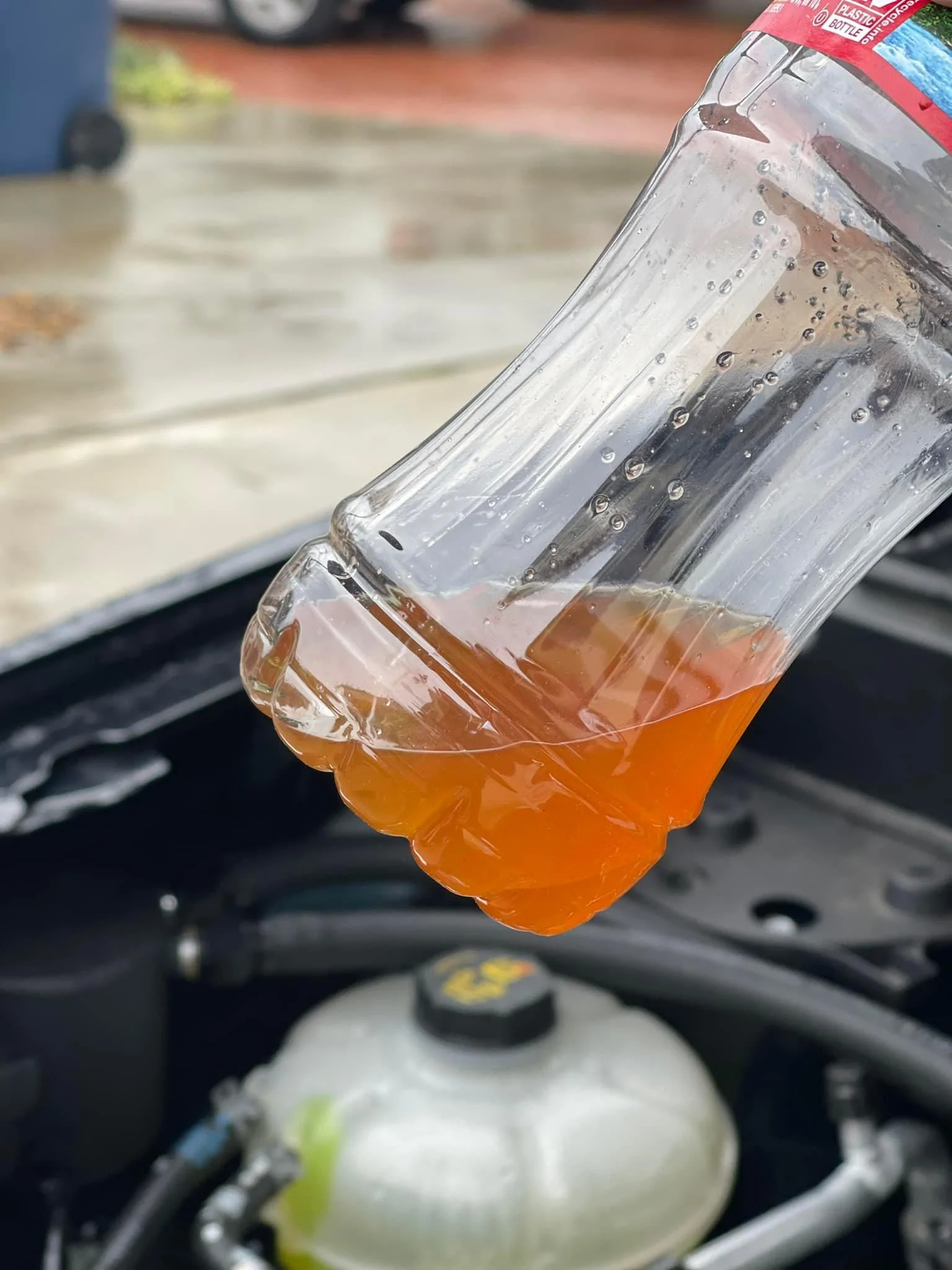
As @Buschur has explained, the separator he sells is for the air intake side of the PCV system. This side of the system is more about pressure equalization under normal driving conditions, but under boost (positive manifold pressure instead of vacuum) the amount of pressure and vapor relief on this side increases because the PCV valve is closed (boost pressure will be forcing it closed). That makes this side the only means of pressure and vapor relief under boost. Because of this, a separator on this side is still very important on a turbo application. This is especially true with aftermarket tuning that raises boost (which will increase blow-by), when the vehicle is used to tow, when driven aggressively (racing or aggressive street driving), or simply to keep performance optimal. As @Buschur has also explained; any blow-by that does get drawn in by the air intake runs through the turbo, the intercooler, and the throttle body which will leave harmful deposits on/in all 3 without a separator on this side. Just be aware that a separator on this side will typically catch much less, if anything, on a gently driven vehicle. This is for the following reasons: 1. When engine vacuum exists, pretty much all of the pressure and vapor is evacuated through the PCV valve side. 2. The air drawn into the air intake takes the path of least resistance, which (under light or no throttle) is the air filter assembly and large tube, not the small tube from the valve cover to the air intake tube. 3. There is typically a baffle (or baffles) in the valve cover which limit the amount of air and vapors that can pass into the air intake. This is why some of you are getting nothing, or very little, when you drain the can. Also, the attached image isn't an accurate representation of what to expect for most people. It looks to be about 99% water which is most likely due to the environment that particular vehicle is in (cold or very humid), or if the vehicle is driven short distances and not allowed to reach full heat soak. FYI- A separator on this side typically won't catch anything on a healthy naturally aspirated engine (such as the 2.5L in the hybrid). Also, the 2.5L hybrid engine is not direct injected, so it doesn't need a separator on the PCV valve side either.

In conclusion: if you want any turbo direct injected engine to last a long time and/or a lot of miles I recommend you install an air/oil separator on both 'sides' of the PCV system.

Ford Maverick Buschur's Maverick 2.0 oil separators DONE! 270191188_10223179860698272_4518581221544273120_n
 
Last edited:

Larrythelunatic

2.5L Hybrid
Well-known member
First Name
Larry
Joined
Sep 7, 2021
Threads
9
Messages
736
Reaction score
847
Location
Massachusetts
Vehicle(s)
92 Toyota Pickup. 22 IS hybrid Maverick. ‘25 Hybrid RAV4
Engine
2.5L Hybrid
Clubs
 
I have read this entire thread and feel that clarification is needed for people who are considering purchasing an air/oil separator (aka catch can) but still don't fully understand what they do or if/why they are needed.

First, you have to understand how the PCV system works. PCV stands for Positive Crankcase Ventilation. The system is designed to evacuate the oil vapor, water vapor, fuel vapor, and pressure that build up in the crankcase and send it back through the combustion chambers and catalytic converter(s) so that it can be burned and cleaned before going out to the atmosphere. The pressure in the crankcase is primarily caused by blow-by. Blow-by is caused by high pressure on top of the pistons, during combustion, which pushes combustion gases (including droplets of oil and fuel) past the piston rings down into the crankcase. Blow-by is made worse by power adders (boost) because the combustion chamber pressures are much higher than in a naturally aspirated engine. Without the PCV system this blow-by would have to be vented in some other way or the pressure and contaminants would cause engine failure (damaged pistons, rings, bearings, blown out seals, etc.). There are many ways to vent the crankcase, but the PCV system is currently the most cost-effective, emissions compliant, way to do it. I also want to add that oil quality is very important to limit blow-by and oil vaporization. Please take note that Ford changed the specification on the 5w-30 oil used in the 2.0L EcoBoost (as well as many other Ford engines) sometime in 2020 or 2021. The old spec was WSS-M2C946-B1, and the new spec is WSS-M2C961-A1. I have not been able to find the difference between these two specs but would guess it has to do with vaporization and/or attempting to prevent turbo coking (damaging deposits on turbo components). If you change your own oil, make sure you purchase the new spec (it will be listed on the back of the container). I went to the local big chain auto parts store and the 5-quart Motorcraft 5w-30 synthetic blend was still the old spec. Luckily, the individual quarts were the updated spec, so I paid more for the individual quarts to get the correct oil. If you have someone else (including the dealer) change your oil, make them prove to you they are using the correct spec oil.

For the purposes of my explanation, I'll divide the PCV system into two 'sides'. The first side is the PCV valve side. The PCV valve is a one-way valve that draws pressure and vapors from the crankcase directly into an engine vacuum source (typically the intake manifold between the throttle body and cylinder head). The second side is the air intake side (any portion of the intake system that is before the throttle body).

The PCV valve on the 2.0L EcoBoost is built into a vapor separator mounted to the front of the engine (actually side, but our engines are transverse mounted because of the front wheel drive platform). This vapor separator simply flows what is collected back into the oil pan. It is better than nothing, but nowhere near as good as an external air/oil separator at collecting the harmful vapors. This side of the PCV system is what causes carbon buildup on the intake valves in an engine with direct injection. The pressure and vapors are pulled, via vacuum, directly into the intake manifold and no fuel is sprayed into the intake passages. This is only an issue with direct injection because carburetion, throttle body injection, and multi-port injection all mix the fuel with the air before it is drawn into the combustion chamber. This air/fuel mixture cleans the intake valves as it passes over them while entering the combustion chamber. To keep the intake valves clean, on a direct injected engine, an air/oil separator on the PCV side is the simplest solution. There are cleaning processes that can be performed by dealers and/or other mechanics, as well as some over the counter cleaners, but I can't speak to the cost or effectiveness.

As @Buschur has explained, the separator he sells is for the air intake side of the PCV system. This side of the system is more about pressure equalization under normal driving conditions, but under boost (positive manifold pressure instead of vacuum) the amount of pressure and vapor relief on this side increases because the PCV valve is closed (boost pressure will be forcing it closed). That makes this side the only means of pressure and vapor relief under boost. Because of this, a separator on this side is still very important on a turbo application. This is especially true with aftermarket tuning that raises boost (which will increase blow-by), when the vehicle is used to tow, when driven aggressively (racing or aggressive street driving), or simply to keep performance optimal. As @Buschur has also explained; any blow-by that does get drawn in by the air intake runs through the turbo, the intercooler, and the throttle body which will leave harmful deposits on/in all 3 without a separator on this side. Just be aware that a separator on this side will typically catch much less, if anything, on a gently driven vehicle. This is for the following reasons: 1. When engine vacuum exists, pretty much all of the pressure and vapor is evacuated through the PCV valve side. 2. The air drawn into the air intake takes the path of least resistance, which (under light or no throttle) is the air filter assembly and large tube, not the small tube from the valve cover to the air intake tube. 3. There is typically a baffle (or baffles) in the valve cover which limit the amount of air and vapors that can pass into the air intake. This is why some of you are getting nothing, or very little, when you drain the can. Also, the attached image isn't an accurate representation of what to expect for most people. It looks to be about 99% water which is most likely due to the environment that particular vehicle is in (cold or very humid), or if the vehicle is driven short distances and not allowed to reach full heat soak. FYI- A separator on this side typically won't catch anything on a healthy naturally aspirated engine (such as the 2.5L in the hybrid). Also, the 2.5L hybrid engine is not direct injected, so it doesn't need a separator on the PCV valve side either.

In conclusion: if you want any turbo direct injected engine to last a long time and/or a lot of miles I recommend you install an air/oil separator on both 'sides' of the PCV system, or a vent setup on the air intake side and a separator on the PCV valve side (if you're not concerned with emissions).

270191188_10223179860698272_4518581221544273120_n.jpg
Got kids?
Got grandkids?
BE CONCERNED WITH EMISSIONS!!
 

Fordguyw

2.5L Hybrid
Active member
Joined
Feb 6, 2022
Threads
1
Messages
34
Reaction score
38
Location
South Central PA
Vehicle(s)
2023 Ford Maverick XLT Hybrid
Engine
2.5L Hybrid
Got kids?
Got grandkids?
BE CONCERNED WITH EMISSIONS!!
I spent a lot of time putting together that information and your only take was related to a mention of emissions! I only mentioned venting the air intake side because it was brought up earlier in this thread and @Buschur is designing a vented system which I'm sure is for off-road (racing) use only! I will re-word it so people like you understand I didn't mean we shouldn't be concerned about emissions! This was meant as technical information because that's what this thread is about!
 
Sponsored

Larrythelunatic

2.5L Hybrid
Well-known member
First Name
Larry
Joined
Sep 7, 2021
Threads
9
Messages
736
Reaction score
847
Location
Massachusetts
Vehicle(s)
92 Toyota Pickup. 22 IS hybrid Maverick. ‘25 Hybrid RAV4
Engine
2.5L Hybrid
Clubs
 
I spent a lot of time putting together that information and your only take was related to a mention of emissions! I only mentioned venting the air intake side because it was brought up earlier in this thread and @Buschur is designing a vented system which I'm sure is for off-road (racing) use only! I will re-word it so people like you understand I didn't mean we shouldn't be concerned about emissions! This was meant as technical information because that's what this thread is about!
Yes, you did. And well presented it was. My compliments.
But, please tell us………
Why didn’t you quit after saying “………..and a separator on the PCV valve side”?
Not trolling. Sincere question.
 

Fordguyw

2.5L Hybrid
Active member
Joined
Feb 6, 2022
Threads
1
Messages
34
Reaction score
38
Location
South Central PA
Vehicle(s)
2023 Ford Maverick XLT Hybrid
Engine
2.5L Hybrid
Yes, you did. And well presented it was. My compliments.
But, please tell us………
Why didn’t you quit after saying “………..and a separator on the PCV valve side”?
Not trolling. Sincere question.
Not sure what you're asking since what you quoted isn't even what I said. Anyway, I explained very clearly why I originally included the information about venting the air intake side which I have since removed from my original post. Re-read the end of my original post. The part that offended you is no longer there.
 

Larrythelunatic

2.5L Hybrid
Well-known member
First Name
Larry
Joined
Sep 7, 2021
Threads
9
Messages
736
Reaction score
847
Location
Massachusetts
Vehicle(s)
92 Toyota Pickup. 22 IS hybrid Maverick. ‘25 Hybrid RAV4
Engine
2.5L Hybrid
Clubs
 
Not sure what you're asking since what you quoted isn't even what I said. Anyway, I explained very clearly why I originally included the information about venting the air intake side which I have since removed from my original post. Re-read the end of my original post. The part that offended you is no longer there.
Not a question of taking (nor giving) offense. And I quoted you directly. Took a screenshot.
I don’t want to start a political thing here. The “reasonably healthy” Earth will outlive me. I only hope to extend that health for a few more generations. Giving up a scoshe of performance to advance that goal is a very small price to pay.
 

Fordguyw

2.5L Hybrid
Active member
Joined
Feb 6, 2022
Threads
1
Messages
34
Reaction score
38
Location
South Central PA
Vehicle(s)
2023 Ford Maverick XLT Hybrid
Engine
2.5L Hybrid
Not a question of taking (nor giving) offense. And I quoted you directly. Took a screenshot.
I don’t want to start a political thing here. The “reasonably healthy” Earth will outlive me. I only hope to extend that health for a few more generations. Giving up a scoshe of performance to advance that goal is a very small price to pay.
1st- Unless you don't understand what all caps and exclamation points mean, "BE CONCERNED WITH EMISSIONS!!" seems like you took offense.

2nd- You did not quote me directly. You said (this is a direct copy and paste): “and a separator on the PCV valve side”. I have to assume you were attempting to quote the end of the last sentence on my next to last paragraph (once again, a direct copy and paste): "need a separator on the PCV valve side either."

3rd- You certainly seem to be trying to "start a political thing here" but I'm not taking your bait. Plus, you're trying to start it with the wrong person on this thread because there are numerous mentions of venting the air intake side of the PCV system earlier in this thread, but you obviously haven't read the whole thread and decided to try to pick on me. As I have explained twice before; I rethought, and decided to remove, the statement regarding venting the air intake side (which is the only thing I originally mentioned that would make catch cans allow any emissions into the atmosphere).

LET IT GO and go troll some political forum instead!
 
Last edited:

Larrythelunatic

2.5L Hybrid
Well-known member
First Name
Larry
Joined
Sep 7, 2021
Threads
9
Messages
736
Reaction score
847
Location
Massachusetts
Vehicle(s)
92 Toyota Pickup. 22 IS hybrid Maverick. ‘25 Hybrid RAV4
Engine
2.5L Hybrid
Clubs
 
1st- Unless you don't understand what all caps and exclamation points mean, "BE CONCERNED WITH EMISSIONS!!" seems like you took offense.

2nd- You did not quote me directly. You said (this is a direct copy and paste): “and a separator on the PCV valve side”. I have to assume you were attempting to quote the end of the last sentence on my next to last paragraph (once again, a direct copy and paste): "need a separator on the PCV valve side either."

3rd- You certainly seem to be trying to "start a political thing here" but I'm not taking your bait. Plus, you're trying to start it with the wrong person on this thread because there are numerous mentions of venting the air intake side of the PCV system earlier in this thread, but you obviously haven't read the whole thread and decided to try to pick on me. As I have explained twice before; I rethought, and decided to remove, the statement regarding venting the air intake side (which is the only thing I originally mentioned that would make catch cans allow any additional emissions into the atmosphere).

LET IT GO and go troll some political forum instead!
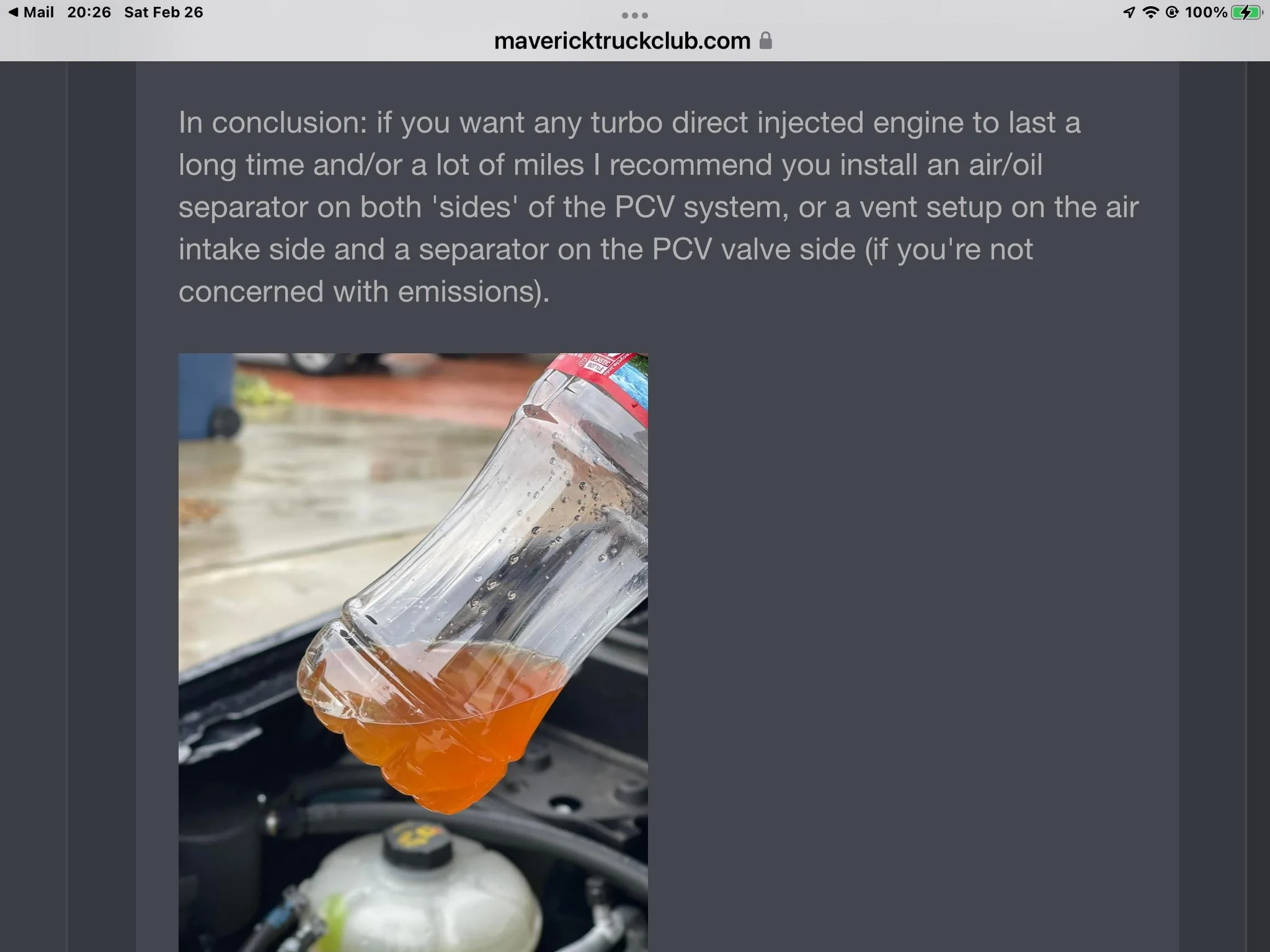
1/ Caps for emphasis. Too important to let slide.
2/ Direct quote. See screen shot.
3/ The fact that you removed the pertinent part shows that you
knew what I was talking about.
‘Nuff said. My “emissions” point was made.
Watching a left coast hockey game.
I’m done…….
Ford Maverick Buschur's Maverick 2.0 oil separators DONE! 75C3C87F-F887-4070-89E3-B4E9B7F8C9B0
Sponsored

 
Status
Not open for further replies.


Top