
Sponsored
Status
Not open for further replies.

Fordguyw

2.5L Hybrid
Active member
Joined
Feb 6, 2022
Threads
1
Messages
34
Reaction score
38
Location
South Central PA
Vehicle(s)
2023 Ford Maverick XLT Hybrid
Engine
2.5L Hybrid
1/ Caps for emphasis. Too important to let slide.
2/ Direct quote. See screen shot.
3/ The fact that you removed the pertinent part shows that you
knew what I was talking about.
‘Nuff said. My “emissions” point was made.
Watching a left coast hockey game.
I’m done…….
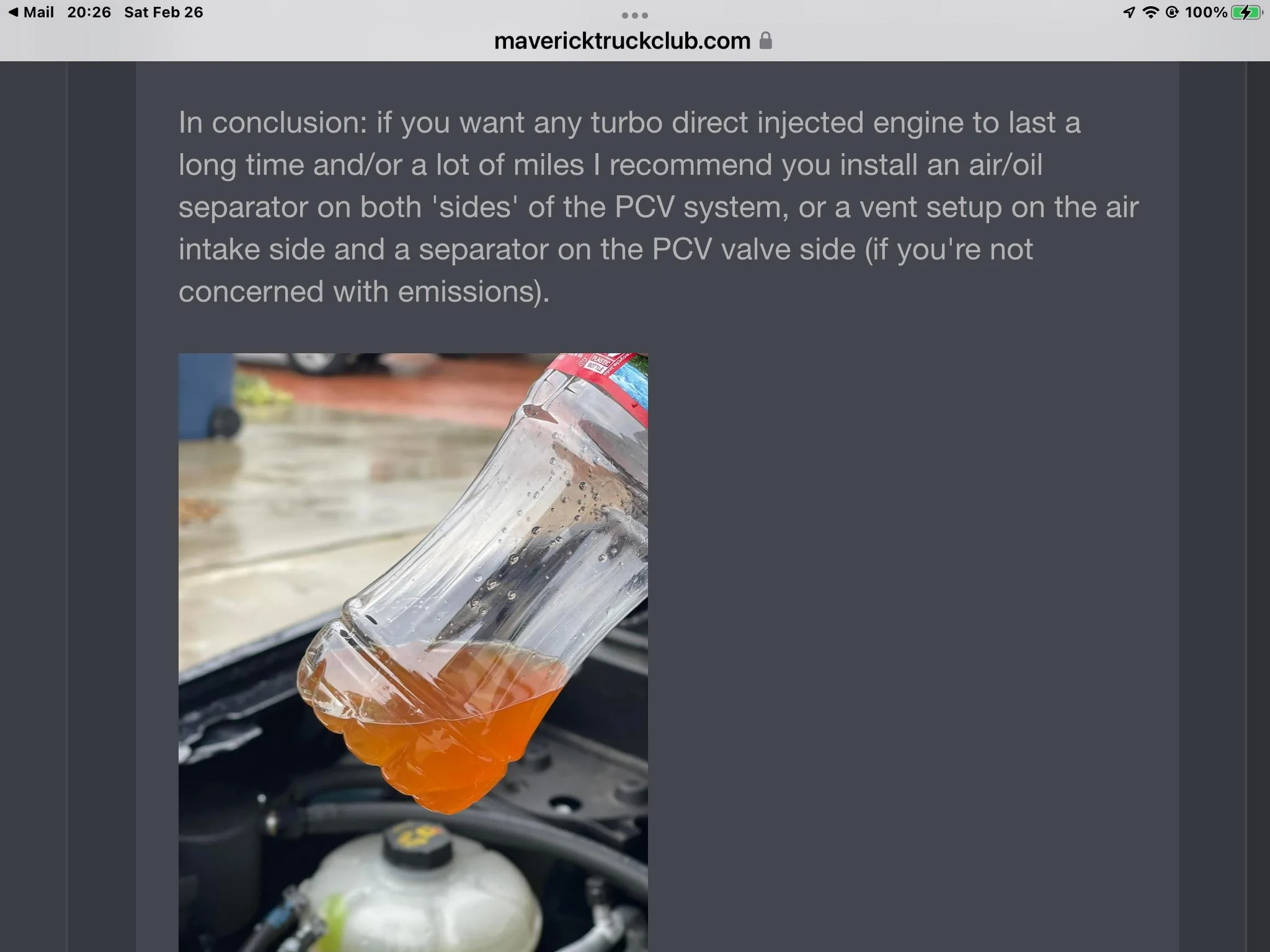
75C3C87F-F887-4070-89E3-B4E9B7F8C9B0.webp
You never quoted what I wrote about emissions, which you completely misunderstood from the beginning. You made your own statement regarding emissions. After your "emphasized" (rude) post, I simply removed the part about venting which included the statement "(if you're not concerned about emissions)" in which I meant venting would be for off-road use (racing). What I wrote explaining air/oil separators pertains to any direct injected turbocharged (or supercharged) engine (not just the Maverick) and emissions regulations don't pertain to racing. I was, by no means, recommending people bypass or delete emissions components on their daily driver. This is why I figured it was best to just remove the info about venting instead of rewriting my last paragraph.

Now, I'm done....... 🤣
Sponsored

 
Last edited:

FakeCowboy

Banned
Banned
Joined
Jan 6, 2022
Threads
6
Messages
958
Reaction score
2,046
Location
Mid Atlantic
Vehicle(s)
2016 Subaru WRX
I've had a Crawford dual chamber AOS on my 2016 WRX for over 130,000 miles now, I spent almost $400 on it and installed it right after buying the WRX. The Crawford AOS even runs coolant through it to prevent condensation from occurring inside the canister and mixing with the oil to make a sludgy mixture but it drains directly back into the oil pan instead of having to be drained regularly. Despite having this AOS on my WRX, I've had to walnut blast the intake valves every 30k miles and the buildup is really significant. I'm also not the only one, these high compression high PSI turbo motors produce SO MUCH blow by that I'm sure it's impossible to completely mitigate although maybe Ford has addressed this via specific oil types that are less prone to vaporization. I have used Pennzoil platinum in my WRX since oil change 1 and every UOA I've received has been excellent but maybe I do get a significant amount of vaporization with the PP oil.

That being said, I do think an AOS is a smart addition for a modern direct injected turbocharged engine like the ecoboost, it's a relatively cheap method of insuring that you're doing the most you can to prevent oil from coating the insides of your intercooler which does significantly reduce it's ability to dissipate heat and to keep as much oil as possible off of your intake valves which will turn to carbon and affect the engine's performance. My point is that even with an AOS make sure you're checking the intake valves on your Maverick regularly and doing what you can to keep them clean and keep your engine running optimally.
 

GaryHoosier

2.0L EcoBoost
Well-known member
First Name
Kevin
Joined
Oct 21, 2021
Threads
1
Messages
150
Reaction score
174
Location
Kenosha WI
Vehicle(s)
2010 Ford Escape, 2022 Ford Maverick 2.0L XLT AWD
Engine
2.0L EcoBoost
I spent a lot of time putting together that information and your only take was related to a mention of emissions! I only mentioned venting the air intake side because it was brought up earlier in this thread and @Buschur is designing a vented system which I'm sure is for off-road (racing) use only! I will re-word it so people like you understand I didn't mean we shouldn't be concerned about emissions! This was meant as technical information because that's what this thread is about!
...very aptly named, "LarryTheLunatic".
Should be forced to read Rob't Pirsig's 'Zen and the Art of Motorcycle Maintenance'
 
OP
OP
Buschur

Buschur

2.0L EcoBoost
Well-known member
First Name
David
Joined
Sep 17, 2021
Threads
44
Messages
676
Reaction score
1,628
Location
Wakeman, Ohio
Vehicle(s)
2020 F150
Engine
2.0L EcoBoost
OP/Buschur, do you have an installation video or text instructions for the install?
The catch can comes with written instructions, extremely easy to install, mayb 15 minutes.
 
OP
OP
Buschur

Buschur

2.0L EcoBoost
Well-known member
First Name
David
Joined
Sep 17, 2021
Threads
44
Messages
676
Reaction score
1,628
Location
Wakeman, Ohio
Vehicle(s)
2020 F150
Engine
2.0L EcoBoost
I'm doing a write up elsewhere about a long trip I just took in our Maverick. For this thread though I'm going to say that after about 3,000 highway miles my can was FULL! Check out the other thread.
 

Sponsored

Theunknown_87

2.0L EcoBoost
Well-known member
First Name
Dustin
Joined
Feb 10, 2022
Threads
13
Messages
103
Reaction score
92
Location
North Carolina
Vehicle(s)
22 Maverick
Engine
2.0L EcoBoost
The catch can comes with written instructions, extremely easy to install, mayb 15 minutes.
Just a comparison in products, the J&L catch can, seems nice too.
After watching their video, and looking at your product, there is quite of bit of difference. The Busch seems very quick to install.
Would you provide thoughts on the competitors?

I'm just interested in both sides of this
 
OP
OP
Buschur

Buschur

2.0L EcoBoost
Well-known member
First Name
David
Joined
Sep 17, 2021
Threads
44
Messages
676
Reaction score
1,628
Location
Wakeman, Ohio
Vehicle(s)
2020 F150
Engine
2.0L EcoBoost
Just a comparison in products, the J&L catch can, seems nice too.
After watching their video, and looking at your product, there is quite of bit of difference. The Busch seems very quick to install.
Would you provide thoughts on the competitors?

I'm just interested in both sides of this
I've commented on the differences many-many times already.
 

ShadowBlack XL440

2.5L Hybrid
Well-known member
First Name
Robert
Joined
Jan 21, 2022
Threads
12
Messages
1,026
Reaction score
1,305
Location
Northern Ohio
Vehicle(s)
Non-Ford, not enought room to list..........
Engine
2.5L Hybrid
Oil separators are done! The way the factory system sucks unfiltered oil/vapors directly from the valve cover and into the intake tract. This is HORRIBLE. I expected a PCV in line, there is nothing. So the key is to simply keep this oil out of the intake and even more importantly the intercooler. This can does that.

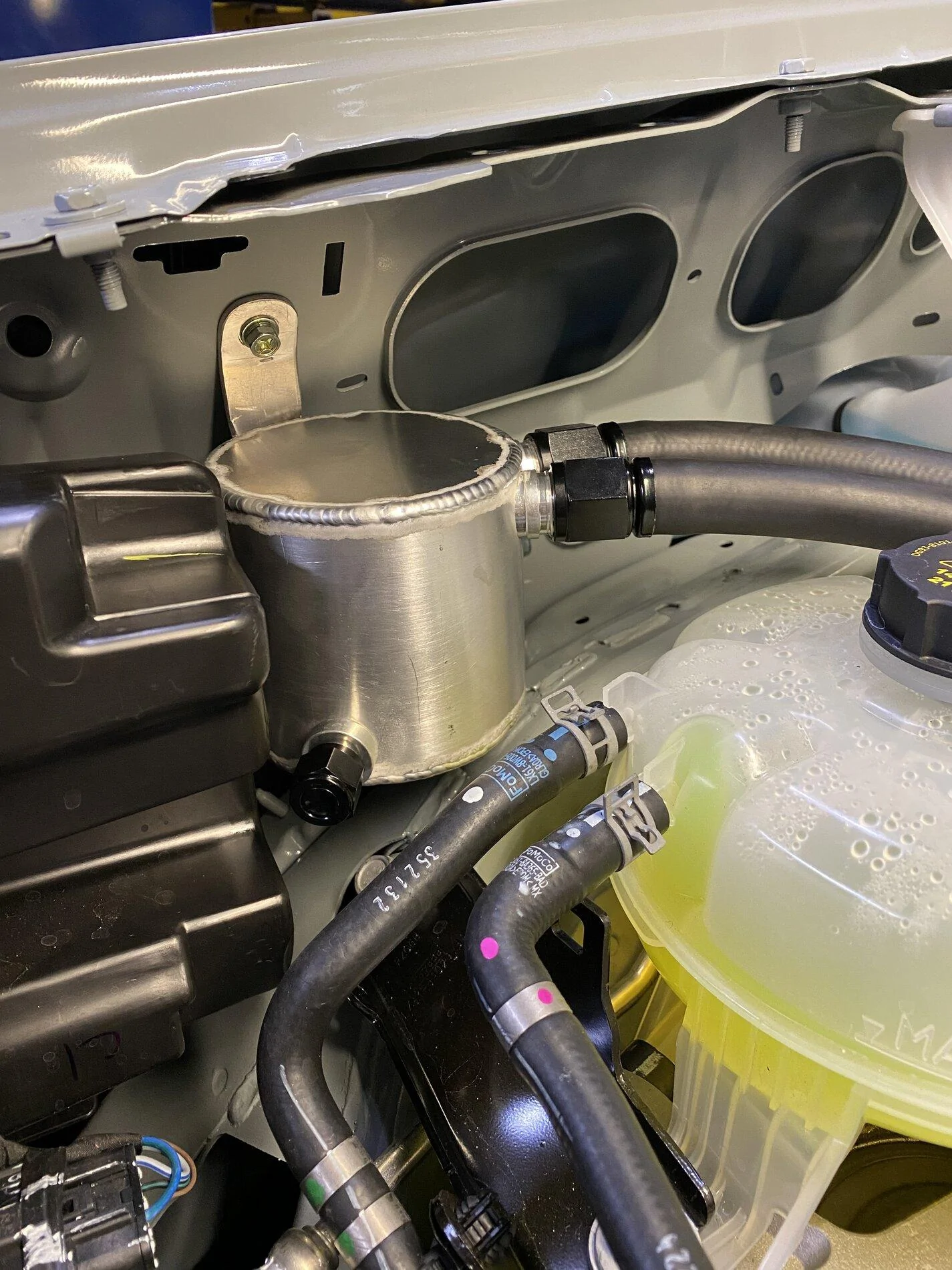
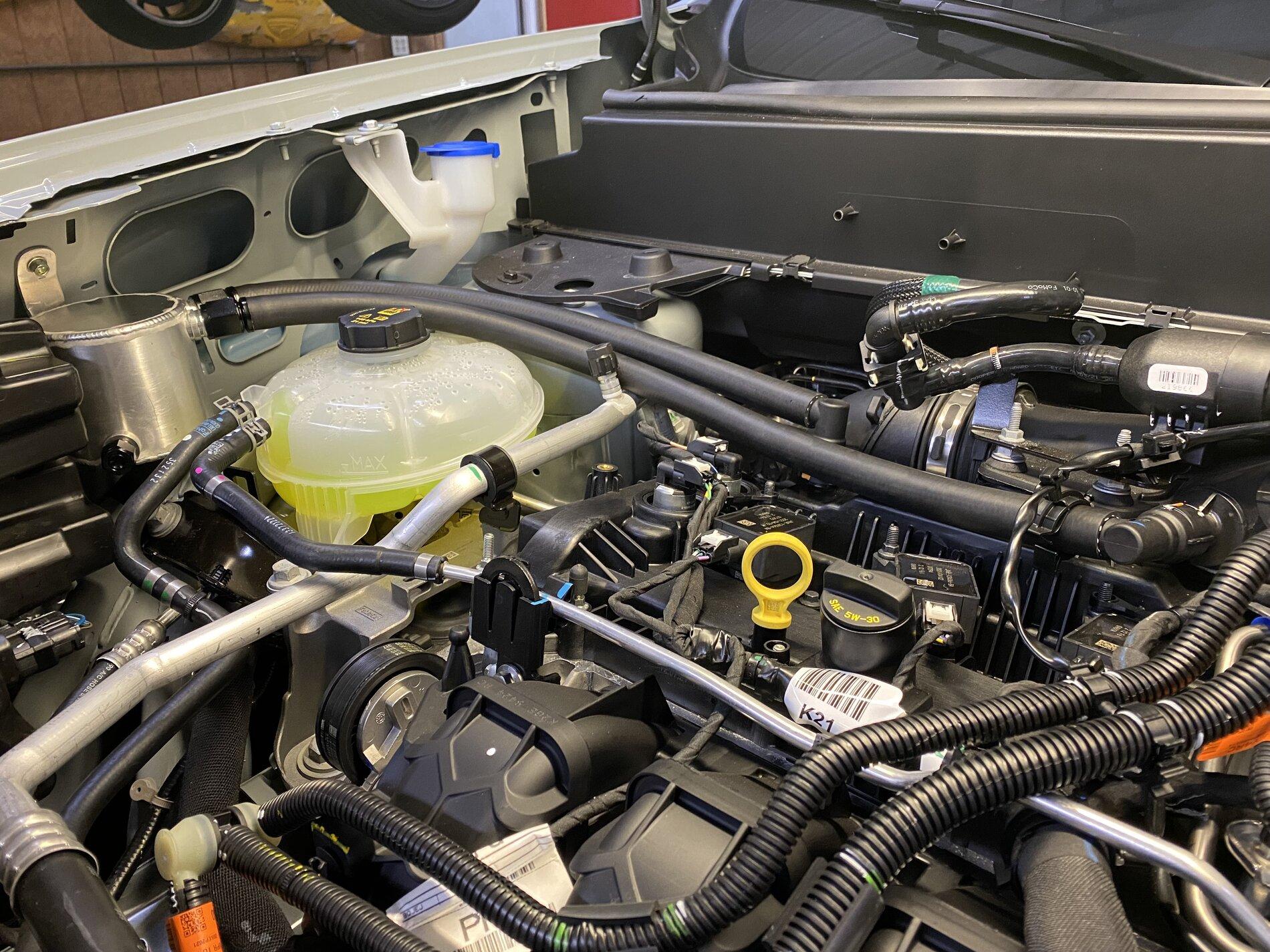
The pictured can is in raw aluminum, the production models will all be powder coated in wrinkle black. We will start welding those cans up tomorrow, we should be able to ship product next week, no issue.

We are able to do these for $279!
IMG_0334.jpg
IMG_0335.jpg


Q&A:


Sure. I'll try to explain the system. I'll try to type this out to make it make sense.

The crankshaft is spinning in the engine splashing oil around, same goes for the camshafts. The combustion process causes a lot of cylinder pressure, some of that sneaks past the rings and into the block. The cylinder heads have holes that drain the oil back to the oil pan, those same holes allow that combustion gas that ends up in the crank case to make it into the cylinder head area. So you end up with all these spent combustion gasses and oil inside your engine. The valve cover has a vent on it that, in this case, goes directly to the air intake tube. That tube is always under vacuum sucking those vapors and oil out of the valve cover and into the intake. Those gases and oil is then sucked into the turbo, compressed and travels through the intercooler pipes, intercooler and then back into the intake manifold, cylinder head/valves re-burnt and the processes goes on and on.

Over time, and in many cases not a lot of time, that oil/vapor builds up on the valves/pistons and combustion chamber. It also lowers octane values and the worst part is the oil coats the inside of the intercooler and keeps building up inside of it. We have dumped a solid 1/2 quart of oil out of intercoolers in the past.

The oil separator is put into this system and catches that oil and separates it by a filtering media that is in the can. You occasionally drain it and it keeps the largest majority of the oil in the can, that is the closed system you see here.

A vented can has a filter on the top of it and is not recirculated (I should say should not be). The valve cover vent goes to the can, the crankcase vents directly to the can and catches 100% of the oil and vapors and the intake tract where it use to re-circulate to is eliminated.

The system on the Maverick is good for performance but horrible for contaminating the intake tract. The performance side is good because it directly vents the crankcase pressure but it does so with no way to filter out the contaminates. So what you gain in a drop in crankcase pressure will soon be cancelled by an intercooler full of oil. Even a thin film of oil inside an intercooler drastically drops its efficiency.

Hope this helps.
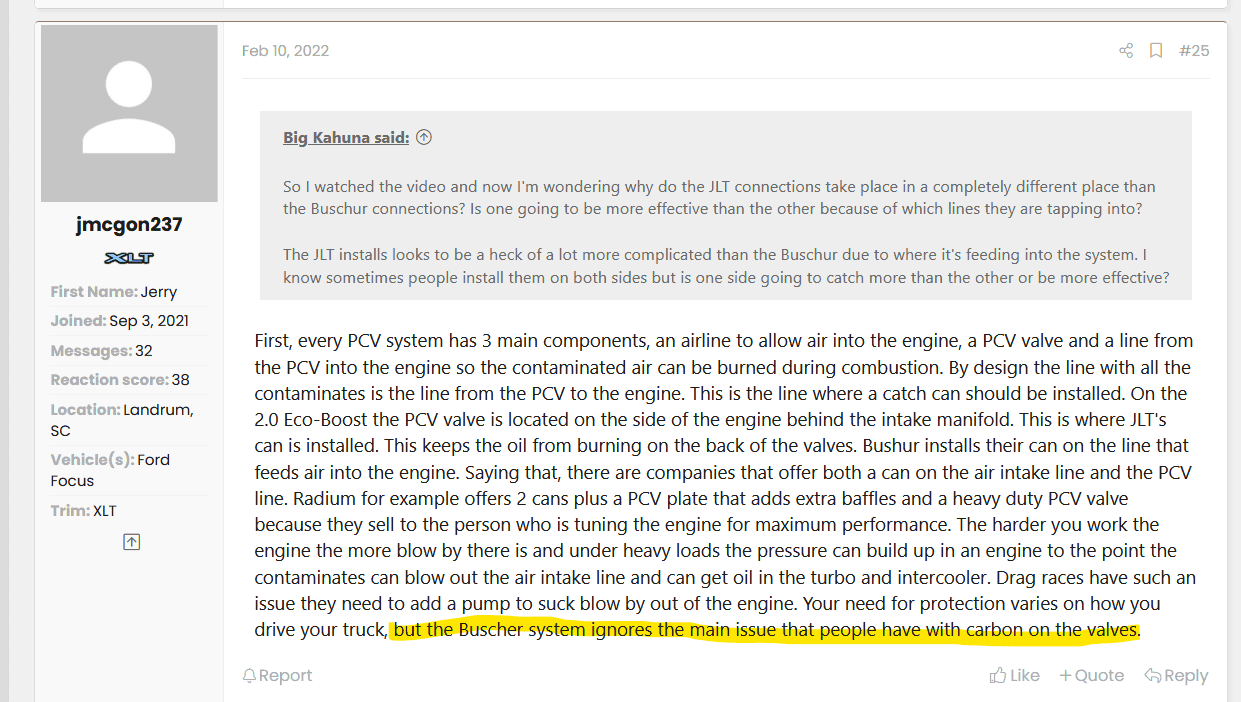
David, Good explanation but why does this posting claim that your system does not address the valve build up issues due to oil contamination?
Ford Maverick Buschur's Maverick 2.0 oil separators DONE! 1647879267671
 
Sponsored

FakeCowboy

Banned
Banned
Joined
Jan 6, 2022
Threads
6
Messages
958
Reaction score
2,046
Location
Mid Atlantic
Vehicle(s)
2016 Subaru WRX
FakeCowboy, Nice. Did your XL get delivered? If I am not mistaken both our XLs were about on the same schedule.
No, it apparently went into production last week but still nothing, no modules, I have a feeling it's going to be on some kind of chip hold due to either CP360 or 4K towing. Yours got shipped I see?
 

ShadowBlack XL440

2.5L Hybrid
Well-known member
First Name
Robert
Joined
Jan 21, 2022
Threads
12
Messages
1,026
Reaction score
1,305
Location
Northern Ohio
Vehicle(s)
Non-Ford, not enought room to list..........
Engine
2.5L Hybrid
No, it apparently went into production last week but still nothing, no modules, I have a feeling it's going to be on some kind of chip hold due to either CP360 or 4K towing. Yours got shipped I see?
FakeCowboy, Yes, it is in the shipping process. It has been setting in a rail yard in St. Louis. Il. over the weekend. Waiting for it to get back on track to Ohio. This should be your week. Hope yours moves along as quickly as possible too.
 
OP
OP
Buschur

Buschur

2.0L EcoBoost
Well-known member
First Name
David
Joined
Sep 17, 2021
Threads
44
Messages
676
Reaction score
1,628
Location
Wakeman, Ohio
Vehicle(s)
2020 F150
Engine
2.0L EcoBoost
I’ve explained how our can works at least a dozen times. Everyone has an idea, everyone is an expert.


David, Good explanation but why does this posting claim that your system does not address the valve build up issues due to oil contamination?
1647879267671.png
 

Rew409

2.0L EcoBoost
Well-known member
First Name
Ron
Joined
Apr 10, 2022
Threads
5
Messages
74
Reaction score
36
Location
Texas
Vehicle(s)
2011 Lariat
Engine
2.0L EcoBoost
Clubs
 
I run two cans, both catch plenty of oil, water, and fuel.

If anyone needs to replace the Ford anti-tamper fittings (orange tabs) you can get them @ UPR, Pcv fittings

@Buschur design works fine, and is very well built, as he has stated he is not particularly interested in capturing the crankcase vent at the pcv because that enters the airstream downstream of the turbo and intercooler and his goal is simply to keep the intercooler clean and efficient as possible. I run two because I don't want any of that crap in my intake at all and cans are the cheapest way to minimize that issue.

If you keep an eye on your stuff you are not going to suffer from frozen vent lines or cans.
Did you install two Bushur catch cans ?
 
OP
OP
Buschur

Buschur

2.0L EcoBoost
Well-known member
First Name
David
Joined
Sep 17, 2021
Threads
44
Messages
676
Reaction score
1,628
Location
Wakeman, Ohio
Vehicle(s)
2020 F150
Engine
2.0L EcoBoost
I've been out of town and off the net for about a week.

Our can, as has been explained over and over, addresses the main issue which is contamination to the intake/intercooler which kills performance, causes detonation etc. and adds to the build up on the valves.
Sponsored

 
Status
Not open for further replies.


Top