

- Banned
- #31
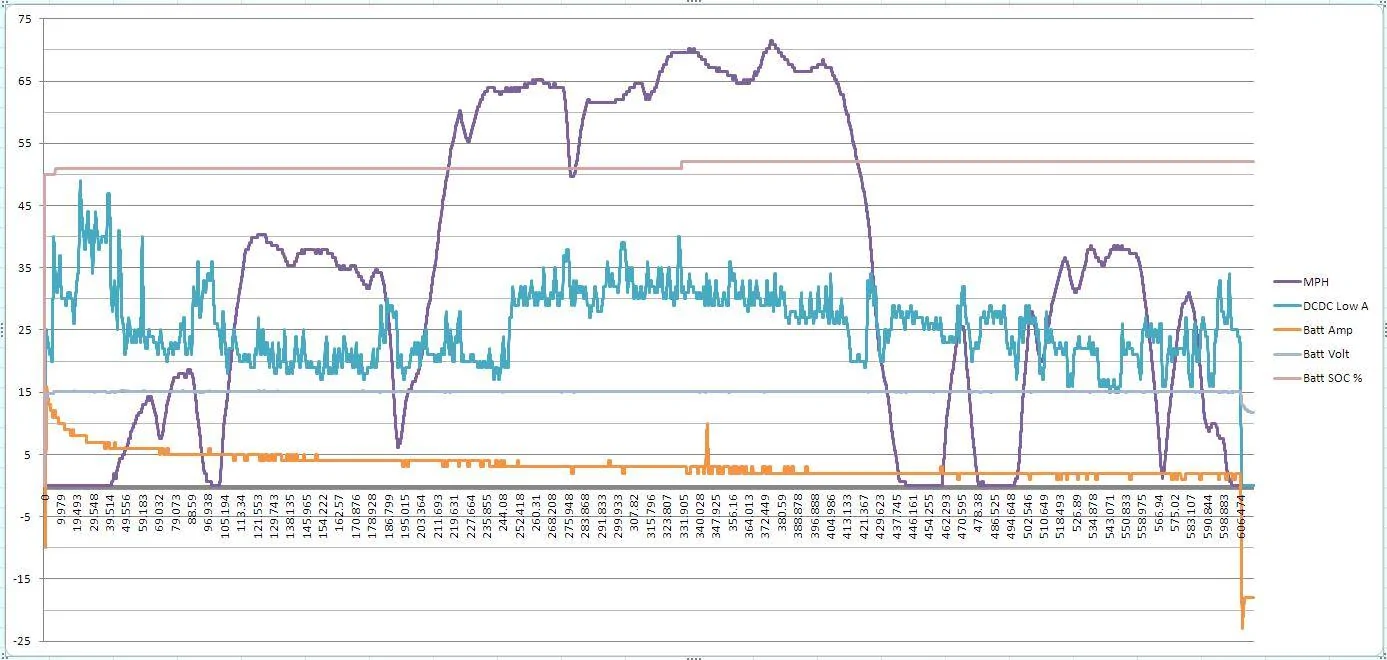
Just like mine.Using Forscan Lite logging function.
Here's my 10 min run into work, 1/3 the time on the highway. Cold day, 25 F, wanted ICE running more in an example of not mattering for charging, nor highway speeds.
SOC started 50%, 11.5 V, before engaging the HVB in On & Ready mode.
SOC ended 52%, 11.8 V (after some surface discharge holding down brake, but not totally accurate)
Starting & continuing charge rate:
15A drop to 10A in about 7 sec,
10A drop to 7A abouts 17 sec,
7A drop to 5A abouts 44 sec,
5A drop to 3A abouts 176 sec, almost 3 min,
3A drop to 2A abouts 109 sec, with strange spike up to 10A about 344 sec in, for only ms, when SOC jumped up,
2A drop to 1A abouts 250 sec, tad over 4 min.
Ending charge rate between 1 & 2, guessing abouts 1.5A.
If BMS was basing this charging method on 50% SOC it was aware of, and starting voltage 11.5, it really seems it should have kept the higher charging rate for much longer. (most of that happened before I started moving!)
Cold battery factor in algorithm?
Saw the same thing in more pleasant fall days 70 F the whole time.
If anyone wants the raw data, it's got more fields in the log - HVB A/V/SOC, torque Eng/Motor, RPM Eng/Gen/Motor.
A sulfated battery will not TAKE a charge.
In our cases, it's not a matter of the truck not giving, it is a matter of the battery not taking.
Prove this by using a grid powered charger overnight. It will do between little and zero good.
Sponsored