
Sponsored

VVT versus oil viscosity

SiskRifles

2.0L EcoBoost
Member
First Name
Charlie
Joined
Aug 2, 2024
Threads
8
Messages
19
Reaction score
15
Location
Here
Vehicle(s)
2024 Maverick
Engine
2.0L EcoBoost
There is some debate on oil viscosity. Seems there always is. A feller was telling me a few days ago that with these particular engines, the VVT would not work if the oil was too thick. So, me being what I am, I ask why. He couldn't give any real info much on anything, but held fast that it wouldn't work, likely ruin the engine.
So I am asking here.
On a 2024 Maverick 2.0, what are the parameters for VVT ?
Obviously the computer controls this, but to what end ?
Assuming a cam centerline of some place that is zero, how many degrees fore and aft can the advance or retard be ?
Is this controlled on RPM alone ?
Only on manifold pressure ?
Exhaust temperature ?
ICP ?
Knock sensors ?
Throttle position ?
What effect do the different drive modes, normal, economy, etc, have ?
Is any info coming back from the transmission ?
The conversation started on a topic of using a synthetic 15W-40 that had the SN rating. This person swore the VVT cant work with that oil. And this was assuming normal operating temperature. This question is concerning the amount of retard or advance, not how the system itself works. I understand that part, just how much and what info makes the decision.
And this:....outside of an engine fault code, how would I ever know one way or the other ?
Thanks
Charlie
Sponsored
 

Tbone289

2.0L EcoBoost
Well-known member
First Name
Terry
Joined
Jul 18, 2024
Threads
0
Messages
2,195
Reaction score
3,802
Location
MO
Vehicle(s)
'24 Mav FX4, '12 Focus SE Sport, '01 Focus ZX3, '00 Jeep XJ, '67 Bronco
Engine
2.0L EcoBoost
It is an electronically-controlled, hydraulically operated system, and the oil serves as the hydraulic fluid. There are Ford factory engines with Ti-VCT (VVT) actuators that specify oils in a range of 5W-20 to 5w-50, and I know for a fact that some MTC members are using 5w-40 oil with no issues in their Ecoboost Mavericks. I doubt you'll encounter any issues with the performance or longevity of the Ti-VCT system in that range.

With that said, I wouldn't recommend 15w-40 at all in cold weather, and there should be no advantage to using 15w-40 over 5w-40. They should perform the same at operating temperature.

Here is some basic information showing how Ti-VCT operates. The only notable difference between the video's 1.6L Ecoboost and the 2.0 Ecoboost's timing system is that the 1.6L uses a timing belt, and the 2.0L uses a timing chain.:

https://www.fordmuscle.com/news/video-inside-fords-ti-vct-technology/
 
Last edited:
OP
OP

SiskRifles

2.0L EcoBoost
Member
First Name
Charlie
Joined
Aug 2, 2024
Threads
8
Messages
19
Reaction score
15
Location
Here
Vehicle(s)
2024 Maverick
Engine
2.0L EcoBoost
Tbone
Thanks for the link. Do you know where I can find info on what drives the system ? Not the VVT oil system, but what determines the outputs ?
Thanks
Charlie
 

Tbone289

2.0L EcoBoost
Well-known member
First Name
Terry
Joined
Jul 18, 2024
Threads
0
Messages
2,195
Reaction score
3,802
Location
MO
Vehicle(s)
'24 Mav FX4, '12 Focus SE Sport, '01 Focus ZX3, '00 Jeep XJ, '67 Bronco
Engine
2.0L EcoBoost
You're welcome Charlie. I haven't been able to find any specifics about the input parameters that determine the exact cam phase settings during operation.
 

EngineeredDetails

2.0L EcoBoost
Well-known member
First Name
Andy
Joined
Dec 1, 2022
Threads
0
Messages
92
Reaction score
195
Location
Vance, AL
Vehicle(s)
2004 F150, 2016 Fusion, 2017 Explorer
Engine
2.0L EcoBoost
Mostly your Camshaft Position Sensor is telling the ECU what the current state is and the ECU can make it's calculations (I'm going to assume Volumetric Efficiency and Calculated Engine Load) which then relay to the VVT solenoids what to do. And oil does play a critical role because the phasers rely on oil pressure to advance/retard. And if you've been around since the 3-valve 5.4 Triton motors-then you know Ford can make some crappy phasers. Also seen on some of the early gen 3.5 ecoboost. You can use Forscan to see what the ECU is calling for (degrees of advance/retard) and what the actual phaser is doing.
 

Sponsored

OP
OP

SiskRifles

2.0L EcoBoost
Member
First Name
Charlie
Joined
Aug 2, 2024
Threads
8
Messages
19
Reaction score
15
Location
Here
Vehicle(s)
2024 Maverick
Engine
2.0L EcoBoost
Was oil viscosity a problem with the early ones ? If so, what happened ? Was it an oil problem or a parts problem ?
 

Tbone289

2.0L EcoBoost
Well-known member
First Name
Terry
Joined
Jul 18, 2024
Threads
0
Messages
2,195
Reaction score
3,802
Location
MO
Vehicle(s)
'24 Mav FX4, '12 Focus SE Sport, '01 Focus ZX3, '00 Jeep XJ, '67 Bronco
Engine
2.0L EcoBoost

Phimosis

2.0L EcoBoost
Well-known member
First Name
Larry
Joined
Jul 18, 2024
Threads
2
Messages
1,180
Reaction score
1,520
Location
Santa Clarita, CA
Vehicle(s)
2024 Maverick Lariat FX4 4K tow
Engine
2.0L EcoBoost
Was oil viscosity a problem with the early ones ? If so, what happened ? Was it an oil problem or a parts problem ?
The problem is this:

https://en.m.wikipedia.org/wiki/Hagen–Poiseuille_equation

Engineers understand this physics principal, so they adjust the pipe diameter based on how long the route is, what viscosity of oil they are using, how much oil pressure the pump can make, before it opens the bypass valve to prevent an over pressure situation and how much pressure is needed on the other end to adequately lubricate the bearings or operate the VVT.

So, I’m going to make up numbers to illustrate what actually happens. Let’s say you have a Prius engine that runs 0W-20. It has very skinny oil passages for the low viscosity oil. Because the viscosity is low, it is able to have 65 psi at the oil pump and 55 psi at the VVT.

if you try running 20W-50 oil in it, the viscosity will be high enough that the resistance to flow from the skinny oil passages will cause the pressure head to sky rocket. It will be trying to make over 100 psi at the pump, but the oil pump will have an internal bypass that will limit the pressure to 80 psi, which will immediately reduce the overall volume of flow through the system. And even with 80 psi at the pump, by the time the high vosocity oil travels through the skinny passages for a long distance, the pressure at the VVT will only be 40 psi and the flow rate will be 50% as much as with with the 0W-20 oil, which leads to the VVT not not reaching the full timing advance at high rpm and also leading to premature bearing wear because the reduced volume of oil flow leads to reduced thermal dissipation and the bearings get very hot and become scored over time.

Hopefully this illustrates what the problem is with using a thicker oil than what the engineers recommend. How much the actual change in oil pressure and flow rate is, is something that only the engineers are going to have data on, because they can run computer simulations based on a 3D CAD file of their engine, while varying the oil viscosities and pump pressures.
 

Snox801

2.0L EcoBoost
Well-known member
First Name
Levi
Joined
Nov 16, 2023
Threads
39
Messages
1,742
Reaction score
2,036
Location
Spring Lake Michigan
Vehicle(s)
23 F150-2016 RS/ 22 GT500/ rx8 x2/ 95 mustang GT/ 17 edge.
Engine
2.0L EcoBoost
The problem is this:

https://en.m.wikipedia.org/wiki/Hagen–Poiseuille_equation

Engineers understand this physics principal, so they adjust the pipe diameter based on how long the route is, what viscosity of oil they are using, how much oil pressure the pump can make, before it opens the bypass valve to prevent an over pressure situation and how much pressure is needed on the other end to adequately lubricate the bearings or operate the VVT.

So, I’m going to make up numbers to illustrate what actually happens. Let’s say you have a Prius engine that runs 0W-20. It has very skinny oil passages for the low viscosity oil. Because the viscosity is low, it is able to have 65 psi at the oil pump and 55 psi at the VVT.

if you try running 20W-50 oil in it, the viscosity will be high enough that the resistance to flow from the skinny oil passages will cause the pressure head to sky rocket. It will be trying to make over 100 psi at the pump, but the oil pump will have an internal bypass that will limit the pressure to 80 psi, which will immediately reduce the overall volume of flow through the system. And even with 80 psi at the pump, by the time the high vosocity oil travels through the skinny passages for a long distance, the pressure at the VVT will only be 40 psi and the flow rate will be 50% as much as with with the 0W-20 oil, which leads to the VVT not not reaching the full timing advance at high rpm and also leading to premature bearing wear because the reduced volume of oil flow leads to reduced thermal dissipation and the bearings get very hot and become scored over time.

Hopefully this illustrates what the problem is with using a thicker oil than what the engineers recommend. How much the actual change in oil pressure and flow rate is, is something that only the engineers are going to have data on, because they can run computer simulations based on a 3D CAD file of their engine, while varying the oil viscosities and pump pressures.
This is completely wrong. It’s false. Many ford engines call for 5w50 for track use with the same vvt.
Number two probably the worlds leader in engine oil is lake speed jr.
He backs up this fact. Even your 0w20 is significantly thicker than even 60w in the dead of winter.
Basically your 0w20 when started on a 5 degree day will be vastly thicker than any 50w when warm
So you are telling me most of the winter I drive to town and my vvt does not work? Or when I change to 5w50 for track use it also won’t work?

Ford engineers the the exact same 2.3 engine for many cars that call for 5w30. That exact same engine goes into a mustang and it calls for 5w50
.
 

Snox801

2.0L EcoBoost
Well-known member
First Name
Levi
Joined
Nov 16, 2023
Threads
39
Messages
1,742
Reaction score
2,036
Location
Spring Lake Michigan
Vehicle(s)
23 F150-2016 RS/ 22 GT500/ rx8 x2/ 95 mustang GT/ 17 edge.
Engine
2.0L EcoBoost
This is completely wrong. It’s false. Many ford engines call for 5w50 for track use with the same vvt.
Number two probably the worlds leader in engine oil is lake speed jr.
He backs up this fact. Even your 0w20 is significantly thicker than even 60w in the dead of winter.
Basically your 0w20 when started on a 5 degree day will be vastly thicker than any 50w when warm
So you are telling me most of the winter I drive to town and my vvt does not work? Or when I change to 5w50 for track use it also won’t work?

Ford engineers the the exact same 2.3 engine for many cars that call for 5w30. That exact same engine goes into a mustang and it calls for 5w50
.
And yes this can be back up by showing what my timing is doing with thicker oil. Hint, it does the same thing. Called data logging.
 
Sponsored

Phimosis

2.0L EcoBoost
Well-known member
First Name
Larry
Joined
Jul 18, 2024
Threads
2
Messages
1,180
Reaction score
1,520
Location
Santa Clarita, CA
Vehicle(s)
2024 Maverick Lariat FX4 4K tow
Engine
2.0L EcoBoost
This is completely wrong. It’s false. Many ford engines call for 5w50 for track use with the same vvt.
Number two probably the worlds leader in engine oil is lake speed jr.
He backs up this fact. Even your 0w20 is significantly thicker than even 60w in the dead of winter.
Basically your 0w20 when started on a 5 degree day will be vastly thicker than any 50w when warm
So you are telling me most of the winter I drive to town and my vvt does not work? Or when I change to 5w50 for track use it also won’t work?

Ford engineers the the exact same 2.3 engine for many cars that call for 5w30. That exact same engine goes into a mustang and it calls for 5w50
.
It’s not wrong. It’s physics.
 

Snox801

2.0L EcoBoost
Well-known member
First Name
Levi
Joined
Nov 16, 2023
Threads
39
Messages
1,742
Reaction score
2,036
Location
Spring Lake Michigan
Vehicle(s)
23 F150-2016 RS/ 22 GT500/ rx8 x2/ 95 mustang GT/ 17 edge.
Engine
2.0L EcoBoost
It’s not wrong. It’s physics.
The flow rate you post is not wrong but saying that it affects the vvt is wrong. And that is what the op was about. I can tell you from logs that the same timing is used when it’s 5 or 100.
Even thin oil when cold is incredibly thick. It’s physics. Somehow the by works the same
 

HenryFord

2.5L Hybrid
Well-known member
Joined
Apr 13, 2025
Threads
24
Messages
378
Reaction score
571
Location
MO
Vehicle(s)
2025 Maverick XL Hybrid FWD(ordered)
Engine
2.5L Hybrid
This is completely wrong. It’s false. Many ford engines call for 5w50 for track use with the same vvt.
Number two probably the worlds leader in engine oil is lake speed jr.
He backs up this fact. Even your 0w20 is significantly thicker than even 60w in the dead of winter.
Basically your 0w20 when started on a 5 degree day will be vastly thicker than any 50w when warm
So you are telling me most of the winter I drive to town and my vvt does not work? Or when I change to 5w50 for track use it also won’t work?

Ford engineers the the exact same 2.3 engine for many cars that call for 5w30. That exact same engine goes into a mustang and it calls for 5w50
.
The reason these oil threads go off the rails is because people don't understand what the viscosity numbers even mean.

People actually think 0w, or 5w means really really thin oil and that that second number is what it thickens up to... It does not work that way. SAE J300 is the spec that explains under what conditions and what what the measurement is to make an oil a 0w, 5w, 10w, 15w etc. The W does NOT mean weight, it means Winter.

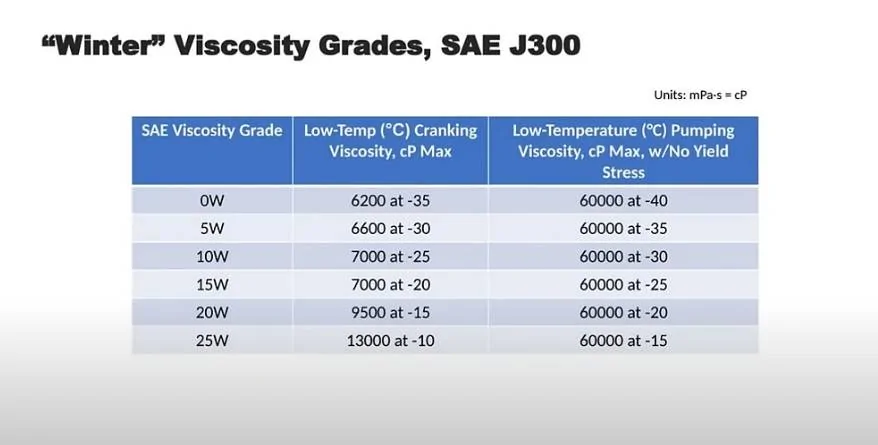
This first number is measured by temperature and the resistance called centipoise. The second number is measured by resistance to flow called centistoke. The second number is the actual viscosity of the oil at 100c(212f). Any given oil is going to vary it's viscosity by the ambient temperature and operating temperature of the engine. 0w-30, 5w-30, 10w-30 are ALL viscosity of 30 at full operating temp. The first number is only going to tell you down to what temperature it can be cranked/rotated/pumped and these temps when we say "cold" we mean -35c for 0w, -30c for 5w etc. Note that cold means FREAKING COLD! LOL The SAE J300 gives you the temp and the centipoise it has to meet or exceed. You can take 3 identical vehicles with the identical oil and have them in 3 different locations... Alaska, Michigan, Florida for example and every one of them will have a different viscosity oil at any given time.

So the OP mentioned a 15w-40 oil. The Ecoboost lists a viscosity of 30 as "recommended". A viscosity of 40 should still work fine as long as the ambient temps aren't too cold for that 15w. That according to the spec is -20c for cranking, and -25c for pumping.

Until people understand the basics they will continue to be off in the weeds with "too thin oil passages" and lots of wild speculation instead of science. If any of these "theories" about "too thick" oil were the case a used oil analysis would tell the tale. So if anyone has some actual numbers to share from a UOA that would be awesome. Preferably with some back to back tests with thin vs thick oil. Otherwise the science has been done on the oil side if people will take the time to look any of it up. I am sharing the winter(ie VERY COLD temps) preso for quick reference.

Now all that being said I would always start off with the "recommended" oil viscosity and work your way up from there if you feel you want a wider range of performance than the recommended spec oil. Of course climate, conditions, and how you use your vehicle play a critical role all of this as well. The higher the viscosity of the oil will mean more drag and less fuel economy. Just something to keep in mind.

As to the questions about the inputs, outputs and what is going on with the Ecoboost I wouldn't have the first clue. I know there are still lots of problems to this day with VVT and MDS systems. Some advocate early oil changes to make sure that oil passages don't get gummed up etc. Too thick of an oil? Not likely unless maintenance is being neglected or lots of short tripping/extreme duty is involved. But without some tests and some data to work with that is all speculation. In those cases if concerned about this I certainly would be doing oil changes earlier.

I would encourage you to do some testing by sending in some oil for analysis and see what is really going on. After a few oil changes and some data to back it up it should put your mind at ease and help you with your maintenance routine. Just a reminder when doing a UOA it takes approximately 2 changes with the same oil for the old oil to mostly be flushed and no longer affecting the additive packages of your new oil and affecting the numbers coming back from the tests. So plan on at least 2 changes and tests per oil you decide to try. I recommend spending some quality time with The Motor Oil Geek on Youtube if you are really interested in this sort of stuff.

Ford Maverick VVT versus oil viscosity winter_oil_viscosity_chartjpg
Sponsored


Top