
Sponsored
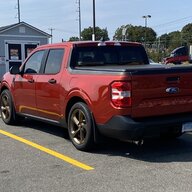

Not on a hybrid.I'd say 50,000 miles on a set of brakes is bragging rights!

- First Name
- Rich
- Joined
- Dec 5, 2023
- Threads
- 0
- Messages
- 7
- Reaction score
- 9
- Location
- SF Bay Area, CA
- Vehicle(s)
- 2024 Ford Maverick
- Engine
- 2.5L Hybrid
This link by Professor Kelly, exactly explains how regenerative braking works!The motor doesn't need to change direction to switch from being propulsive to generating power. It's just a matter of whether the motor controller is providing current or not.
But, yes, since regenerative braking is done through the drivetrain and it's a FWD vehicle then that braking force is only applied on the front wheels. So the brake balance may be tuned to be slightly rear-biased, especially when crossing to utilizing the friction brakes, to offset the assist of the regen in the front.
Hybrid and EV Regenerative Braking Systems (youtube.com)
Ah, regenerative braking.didnt know they lasted that long. Using the other gentleman's example of brakes lasting 210,000 miles,I drive roughly 10,000 miles a year. That means I wouldn't need new brakes on my vehicle for 21 years! Doesn't seem possible.Not on a hybrid.
Also, if you had the Hybrid and drove only 10k per year, your oil changes would probably be needed only once annually.Ah, regenerative braking. didnt know they lasted that long. Using the other gentleman's example of brakes lasting 210,000 miles,I drive roughly 10,000 miles a year. That means I wouldn't need new brakes on my vehicle for 21 years! Doesn't seem possible.
Sponsored
- Joined
- Oct 12, 2023
- Threads
- 17
- Messages
- 343
- Reaction score
- 385
- Location
- San Diego, CA
- Vehicle(s)
- Mazda6 '06
- Engine
- 2.5L Hybrid
Yeah, good point, it is the electricity that changes direction, not the motor. I did know that but certainly didn't write it clearly.The motor doesn't need to change direction to switch from being propulsive to generating power. It's just a matter of whether the motor controller is providing current or not.
But, yes, since regenerative braking is done through the drivetrain and it's a FWD vehicle then that braking force is only applied on the front wheels. So the brake balance may be tuned to be slightly rear-biased, especially when crossing to utilizing the friction brakes, to offset the assist of the regen in the front.
- First Name
- Thomas
- Joined
- Jul 7, 2021
- Threads
- 13
- Messages
- 145
- Reaction score
- 245
- Location
- Hampton roads
- Vehicle(s)
- 2023 Royal Enfield INT, 2006 Honda Shadow 1100
- Engine
- 2.0L EcoBoost
Talking with a tech yesterday. Newer Ford's have a rear brake bias especially in low speed light braking applications. Hybrid or ecoboost a lot of us can expect the rears to wear quicker.
- First Name
- Andy
- Joined
- Jan 20, 2022
- Threads
- 7
- Messages
- 476
- Reaction score
- 526
- Location
- Ontario, Canada
- Vehicle(s)
- '24 Corolla hatch, '25 Mazda 3
- Engine
- 2.5L Hybrid
Not disputing, but the rears on my '22 hybrid don't engage enough to keep the rotors swept clean.Talking with a tech yesterday. Newer Ford's have a rear brake bias especially in low speed light braking applications. Hybrid or ecoboost a lot of us can expect the rears to wear quicker.

Cheers.
50K brake replacement is not cause for bragging rights on any light vehicle. The Focus 5sp that the Mav replaced got new front brakes at 125K and rear at 200K.Not on a hybrid.
Jury is out on the Mav. Still looking good at 20K.

- First Name
- Brian
- Joined
- Jul 2, 2021
- Threads
- 46
- Messages
- 863
- Reaction score
- 1,128
- Location
- Akron, Ohio
- Vehicle(s)
- '22 HPR Maverick AWD 4K LUX
- Engine
- 2.0L EcoBoost
interesting. at 43k i was told i have 4/10 left on my rear pads and they will need to be done soon...Talking with a tech yesterday. Newer Ford's have a rear brake bias especially in low speed light braking applications. Hybrid or ecoboost a lot of us can expect the rears to wear quicker.
Sponsored

That's what my '12 Focus 5sp is getting too. I replaced the fronts at 130K miles, and still plenty left on the rears @150K.50K brake replacement is not cause for bragging rights on any light vehicle. The Focus 5sp that the Mav replaced got new front brakes at 125K and rear at 200K.
Jury is out on the Mav. Still looking good at 20K.
I need to express a huge amount of skepticism here. Have you seen these worn-down pads or is this a wannabe doing a scam? 50k is about normal for pads on an EcoBoost, but extremely low for a Hybrid. The rear brakes are so big on the Maverick that 16" wheels will not clear them. Assuming that its not the crooked shop doing a scam, either you are doing a lot of extremely hard braking or you have a hung brake caliper.
- First Name
- Robert
- Joined
- Jul 20, 2022
- Threads
- 2
- Messages
- 71
- Reaction score
- 73
- Location
- East Tennessee
- Vehicle(s)
- 2022 Velocity Blue Maverick
- Engine
- 2.5L Hybrid
2007 hybrid Camry had 130k on original brakes & 12V battery when I traded it.I'd say 50,000 miles on a set of brakes is bragging rights!
Sponsored
Similar threads


- Replies
- 15
- Views
- 1,960
- Replies
- 12
- Views
- 2,065
- Replies
- 18
- Views
- 4,143
