
Sponsored

Ford to launch Maverick EV (I hope this is true)

Blinky

2.0L EcoBoost
Well-known member
Joined
Nov 25, 2023
Threads
7
Messages
544
Reaction score
732
Location
Alberta, Canada
Vehicle(s)
2024 Maverick, 1991 Toyota Dyna
Engine
2.0L EcoBoost
I'd rather a plug in hybrid. 50 miles of EV range would get me to work and back daily but gas to still allow for a 1300km trip to the coast without spending 5 hours recharging.
Sponsored


 

TonyS

2.5L Hybrid
Well-known member
First Name
Tony
Joined
Dec 30, 2021
Threads
4
Messages
193
Reaction score
327
Location
47711
Vehicle(s)
2022 Ford Maverick XL
Engine
2.5L Hybrid
We will be in the market for a new car (wife's car) in the next 12-18 months. She likes small SUV's. Six months ago I thought a Plug In Hybrid would be the way to go. Then I started doing the math.

Right now, the price difference on a pure ICE versus hybrid version of is typically not a lot of money. At least on some of the desirable SUV's our list. An average premium for hybrid vs traditional ICE is often around $3,000. Sometimes less, sometimes more. But an average. So a new SUV high on our list is the Toyota Rav4.
ICE starts at just under $29,000
Hybrid starts at just under $32,00
Plug in Hybrid starts at just under $44,000

IMPORTANT TO NOTE that the base ICE Rav4 is FWD. All Trims of the Hybrid are AWD. We want AWD, so the price difference between ICE and hybrid for us is around $1600. That is to say - NOT MUCH DIFFERENCE.

You can buy a lot of gas with $12.000 price difference between hybrid and PHEV. And the Rav 4 PHEV is bit on the low side as far as eMPG estimates - 94mpg.

Also, I live in an area where the utility rates are higher than the national average. National average 15 cents a KWH, we are about 19 cents a KWH. And the f.... monopoly gets rate increases like a spoiled kid gets candy. So I'm certain those electric rates are going up as the years go by.

So bottom line is that that the Rav 4 plug in Hybrid - always charged at home - would cost around $5.25-$5.50 per 100 miles driven on electricity. Where as gas at $3 a gallon (and it's less than that right now) and the hybrid's 40 mpg the same 100 miles would cost $7.50

So if she drives 15,000 mile a year and saves $2 every 100 miles on gas, the PHEV Toyota Rav4 would save us $300 a year in gas. Wow. Only takes 40 years to break even.

The tax credits are probably going away very soon. But as near as I can tell only the Ford Escape PHEV (that is, a small SUV) qualifies for a tax credit. We'd have to lease to the get the tax credit. And that makes things complicated in terms of what a vehicle actually costs you. We usually buy car and own it for 10-12 years.

I really like the idea of rarely buying gas. A 35-40 mile electric only range would meet 85-90% of our driving. We park our cars in an attached garage so would do all charging at home. But financially buying a PHEV makes zero sense. And we are not doing pure electric (BEV) until charging stations are both plentiful and fast and the prices come down on the cars themselves.
 
Last edited:

HeyBales

2.5L Hybrid
Well-known member
First Name
Mike
Joined
May 3, 2024
Threads
4
Messages
4,917
Reaction score
4,498
Location
KC Metro area
Vehicle(s)
2005 Toyota RAV4, 2024 XLT Hybrid
Engine
2.5L Hybrid
We will be in the market for a new car (wife's car) in the next 12-18 months. She likes small SUV's. Six months ago I thought a Plug In Hybrid would be the way to go. Then I started doing the math.

Right now, the price difference on a pure ICE versus hybrid version of is typically not a lot of money. At least on some of the desirable SUV's our list. An average premium for hybrid vs traditional ICE is often around $3,000. Sometimes less, sometimes more. But an average. So a new SUV high on our list is the Toyota Rav4.
ICE starts at just under $29,000
Hybrid starts at just under $32,00
Plug in Hybrid starts at just under $44,000

IMPORTANT TO NOTE that the base ICE Rav4 is FWD. All Trims of the Hybrid are AWD. We want AWD, so the price difference between ICE and hybrid for us is around $1600. That is to say - NOT MUCH DIFFERENCE.

You can buy a lot of gas with $12.000 price difference between hybrid and PHEV. And the Rav 4 PHEV is bit on the low side as far as eMPG estimates - 94mpg.

Also, I live in an area where the utility rates are higher than the national average. National average 15 cents a KWH, we are about 19 cents a KWH. And the f.... monopoly gets rate increases like a spoiled kid gets candy. So I'm certain those electric rates are going up as the years go by.

So bottom line is that that the Rav 4 plug in Hybrid - always charged at home - would cost around $5.25-$5.50 per 100 miles driven on electricity. Where as gas at $3 a gallon (and it's less than that right now) and the hybrid's 40 mpg the same 100 miles would cost $7.50

So if she drives 15,000 mile a year and saves $2 every 100 miles on gas, the PHEV Toyota Rav4 would save us $300 a year in gas. Wow. Only takes 40 years to break even.

The tax credits are probably going away very soon. But as near as I can tell only the Ford Escape PHEV (that is, a small SUV) qualifies for a tax credit. We'd have to lease to the get the tax credit. And that makes things complicated in terms of what a vehicle actually costs you. We usually buy car and own it for 10-12 years.

I really like the idea of rarely buying gas. A 35-40 mile electric only range would meet 85-90% of our driving. We park our cars in an attached garage so would do all charging at home. But financially buying a PHEV makes zero sense. And we are not doing pure electric (BEV) until charging stations are both plentiful and fast and the prices come down on the cars themselves.
Nice inclusion of everything needed to add to cost.

Another one perhaps - many places charge more annual tag/registration for non-ICE vehicles to make up for missed fuel tax collected for roads.
Some have different rates, going higher from HEV, PHEV, to BEV.

Your state do that?
 

TonyS

2.5L Hybrid
Well-known member
First Name
Tony
Joined
Dec 30, 2021
Threads
4
Messages
193
Reaction score
327
Location
47711
Vehicle(s)
2022 Ford Maverick XL
Engine
2.5L Hybrid
Nice inclusion of everything needed to add to cost.

Another one perhaps - many places charge more annual tag/registration for non-ICE vehicles to make up for missed fuel tax collected for roads.
Some have different rates, going higher from HEV, PHEV, to BEV.

Your state do that?
Good point. The annual extra costs of registration does eat into savings.

Yes. Indiana charges more in Registration fees for both hybrids and BEV's. Hybrid/PHEV is an extra $74, BEV is $221.

I understand and accept the need for road funding, but I find the extra tax on hybrids a bit annoying. The Ford Maverick hybrid is rated 37 mpg combined. Which is only ONE MPG better than a gas powered Honda Civic or Hyundai Elantra. Two MPG better than Nissan Versa and Toyota Corolla. So virtually the same MPG but no surcharge on the registration.
 

slashsnake

Well-known member
First Name
Chris
Joined
Apr 8, 2023
Threads
2
Messages
160
Reaction score
150
Location
Minnesota
Vehicle(s)
Tesla model 3, Kia Soul Xline
Engine
Undecided
I will consider a pure EV when a comparable price vehicle is the same or less than its ice counterpart. You know 2,500 moving parts versus 25 moving parts got to be cheaper to make.
Minimum 400 mi range.
10 to 12 minute fill up to 100%. None of this 80% charge in 30 minutes 20% remainder takes 2 hours.
Charging stations as plentiful as gas stations. Including in the middle of nowhere.
Electric cost on par with gasoline.
🤣
Till then I'll stick with the ice hybrid.
Some are. for me 90% of my charging is at home. So it's about to hit the negatives temps for a few weeks here. Zero times standing outside at the pump. Every morning my car warming up in my non-heated closed garage (no backing out to warm up). 90% of the time, my fillups take me 0 minutes.

On road trips, sure it's 15-20 minutes every 3 hours... yeah, that's what my son and wife are needing already. Most places we go we charge at the hotel, so we can pull in near empty, leave the next day full and not worry about hitting a gas station on the way out.

Charging for road trips you definitely as of now want something that works on the Tesla system. I live in BFE Minnesota. Closest walmart is 40 minutes. Closest supercharging station is 10. I've driven to Colorado, Tennessee, Florida, Around the UP to Michigan, out to Glacier National Park through North Dakota, up and across Canada to Montreal. Not many places I can't go with that.

Costs... well that was the reason I went with an EV. I like my hot hatches. I wanted something with full stop adaptive cruise, lane keeping, a nice sound system, roomy in a smaller shape (why I usually go hatch) and fast. I kept looking at the list, and my Model 3 kept ticking the boxes and for less than other vehicles I was looking at. I'm 80k miles in. Costs have been a set of tires, about $100 in windshield fluid/an AC filter, a brake clean, and about 3 cents a mile.
Okay that’s isn’t quite the story.
I live in Northern MN.
Our Governor has said if science shows we can mine without ruining our lakes and rivers, then we can mine. MN already produces almost all of the iron ore for steel in the US and we have for more than 100 years.

We have a lot of copper in our state. Proposed copper mines have their tailings in a watershed that flows into a million acre wilderness.

Even the proposed mines have changed their tailings plans because they said their old plans were not engineered sufficiently. What if we built a mine with their old tailings engineering?
You cannot mine for copper in a wetland. (Sulfuric acid is produced by wet tailings).

More than 70% of Minnesotans are not in favor of losing our wilderness for mining.
Bob
Agree... Minnesota passed Alaska a few years ago to be top 5 in the US in mining, so it's not an "anti-mining" stance. It is saying do it without destroying our lakes and natural areas. I love heading up to the Boundary Waters every year and hope years down the line my son can with his kids someday. If we can mine without releasing sulfuric acid and heavy metals into our wetlands, lakes and rivers... ok. If not, as someone who lives here and enjoys my time on the lakes, I would prefer we didn't mine.
 

Sponsored

mr mojo risen

2.0L EcoBoost
Well-known member
First Name
Brian
Joined
Mar 22, 2022
Threads
17
Messages
711
Reaction score
1,058
Location
Evansville IN
Vehicle(s)
2023 Maverick, 2020 VW Passat, 2015 Nissan Sentra
Engine
2.0L EcoBoost
Clubs
 
I've no interest in an EV Maverick.
A EREV yes.
Hopefully Ford will marketing will not screw up like they did when they introduced the Maverick. Thinking more people would pay the $1,500 upgrade to the EcoBoost. Surprised Ford when they didn't.
Not directed at you, but since you brought it up, what’s the difference between an “EV” and an “EREV”? They’re both EVs, are they not; except the latter apparently has greater range(?).

I work in the Oil and Gas industry so I absolutely won’t be buying an EV, though I will seriously consider a Hybrid or possibly even a PHEV for a vehicle in the future.
 

mr mojo risen

2.0L EcoBoost
Well-known member
First Name
Brian
Joined
Mar 22, 2022
Threads
17
Messages
711
Reaction score
1,058
Location
Evansville IN
Vehicle(s)
2023 Maverick, 2020 VW Passat, 2015 Nissan Sentra
Engine
2.0L EcoBoost
Clubs
 
Good point. The annual extra costs of registration does eat into savings.

Yes. Indiana charges more in Registration fees for both hybrids and BEV's. Hybrid/PHEV is an extra $74, BEV is $221.

I understand and accept the need for road funding, but I find the extra tax on hybrids a bit annoying. The Ford Maverick hybrid is rated 37 mpg combined. Which is only ONE MPG better than a gas powered Honda Civic or Hyundai Elantra. Two MPG better than Nissan Versa and Toyota Corolla. So virtually the same MPG but no surcharge on the registration.
I just clicked on your profile since you’re discussing IN registration fees, and I live in the ZIP code next door to you (47712).
 

slashsnake

Well-known member
First Name
Chris
Joined
Apr 8, 2023
Threads
2
Messages
160
Reaction score
150
Location
Minnesota
Vehicle(s)
Tesla model 3, Kia Soul Xline
Engine
Undecided
To be fair, I wasn't hung up on price of a PHEV. I'd pay a premium for PHEV. I was stating I'd sell everything for an EV that would do 500 mi per top-off and charge fast enough that I wouldn't waste my life away at a super charger.
I guess it depends on the person. I live in BFE Minnesota. We take a few road trips every year. Rockies, Smokies, Glacier Nat'l Park, through the UP to Michigan, across Canada to Montreal... no issues. We average over 15k miles a year on our BEV. It's a stop every 3 hours or so for 15-20 minutes. My wife and son are making that stop regardless, most of them we are grabbing a bite too. When we hit our destination, usually we end up charging there, so pull into the hotel, no run to gas up that night or before we leave the next day before we get started. We can pull in near empty and leave the next morning full. The trip back to Colorado and South Dakota was fun. Every day we'd leave Estes with a full charge and go explore all day, drive over the divide, go hike a new peak, grab dinner, head back to our hotel, plug in and repeat the next day with a full "tank". On the way back, cruise through the Black Hills, stop at Mount Rushmore and explore a few hours and leave with 120 more miles of range than when we pulled in. Stop in Deadwood and leave with another 100 miles of range. Pull into Wall Drug because we have to hit every weird tourist trap, and leave with 250 more miles of range after an hour of wandering there.

That's the "painful" part.

But the other 90% of the year... Tomorrow it's supposed to be -3 out with snow. I don't need to go to the gas station and stand outside and pump gas, I just plug in my car when I pull it in the garage. My garage isn't heated so it hangs around freezing at these temps, and I hop in a nice warm car every single morning because it can heat up without opening the garage door and backing it out since there's no CO. I spent a LOT less time dealing with filling up and oil changes and maintenance on my BEV than I ever did on any other car I've owned.

Now I gave reasons I don't think I would want a Maverick EV (Towing and weight), though an EV Lobo sounds fun, but I'd say for the thread about the "one pet peeve of your Maverick", gas/maintenance time/cost is probably gas stations and oil changes and such. Yes, everyone's situations are different. And I get that for some people, 7 hours straight is a need. I absolutely get that if you can't charge at home, it can cost more time and possibly "fuel" cost for an EV, or if you spend most of your driving on road trips. If it was me alone, getting to Tennessee is a one day event. Up at 3, there by dinner, stop when low on gas only. But honestly, it's a big timesaver and quite nice for us.
 

Darnon

2.5L Hybrid
Well-known member
Joined
Jul 4, 2021
Threads
10
Messages
5,720
Reaction score
7,227
Location
WNY
Vehicle(s)
2022 Maverick
Engine
2.5L Hybrid
Not directed at you, but since you brought it up, what’s the difference between an “EV” and an “EREV”? They’re both EVs, are they not; except the latter apparently has greater range(?).
EREV means it has an [internal combustion] range extender. In other words it's effectively an EV-biased PHEV.
 

rad32

2.0L EcoBoost
Well-known member
Joined
Jun 4, 2024
Threads
1
Messages
50
Reaction score
71
Location
PA
Vehicle(s)
2024 Ford Maverick XL
Engine
2.0L EcoBoost
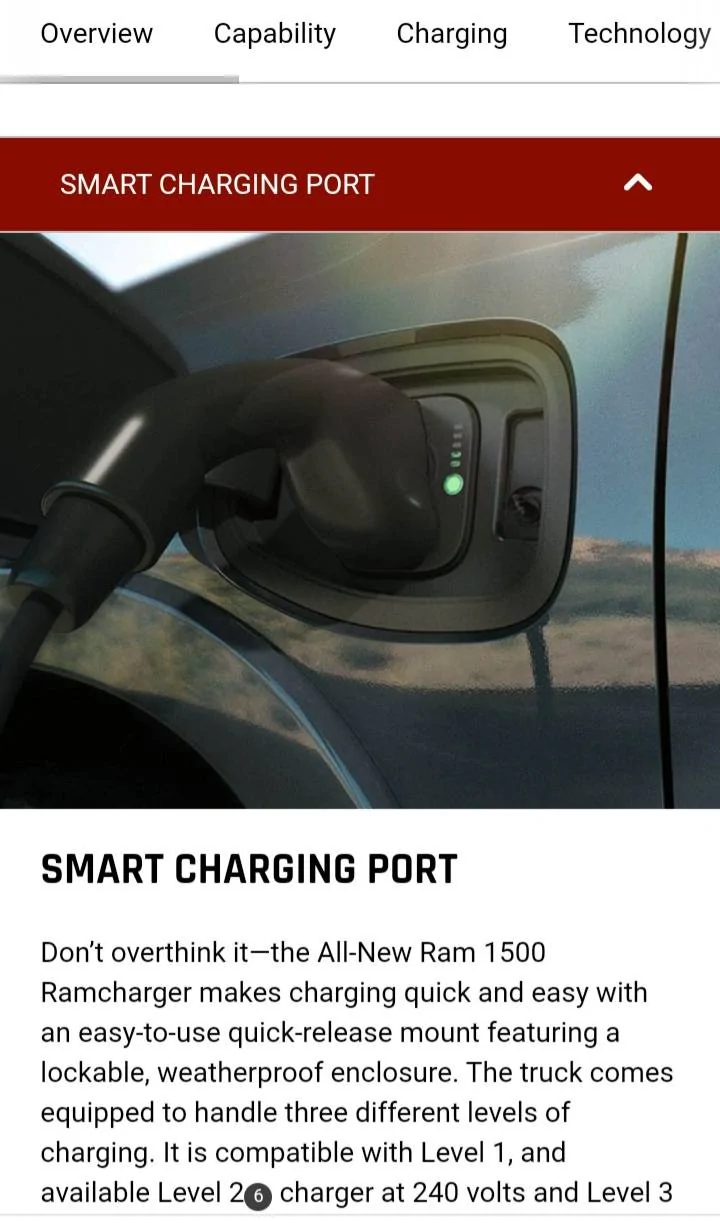
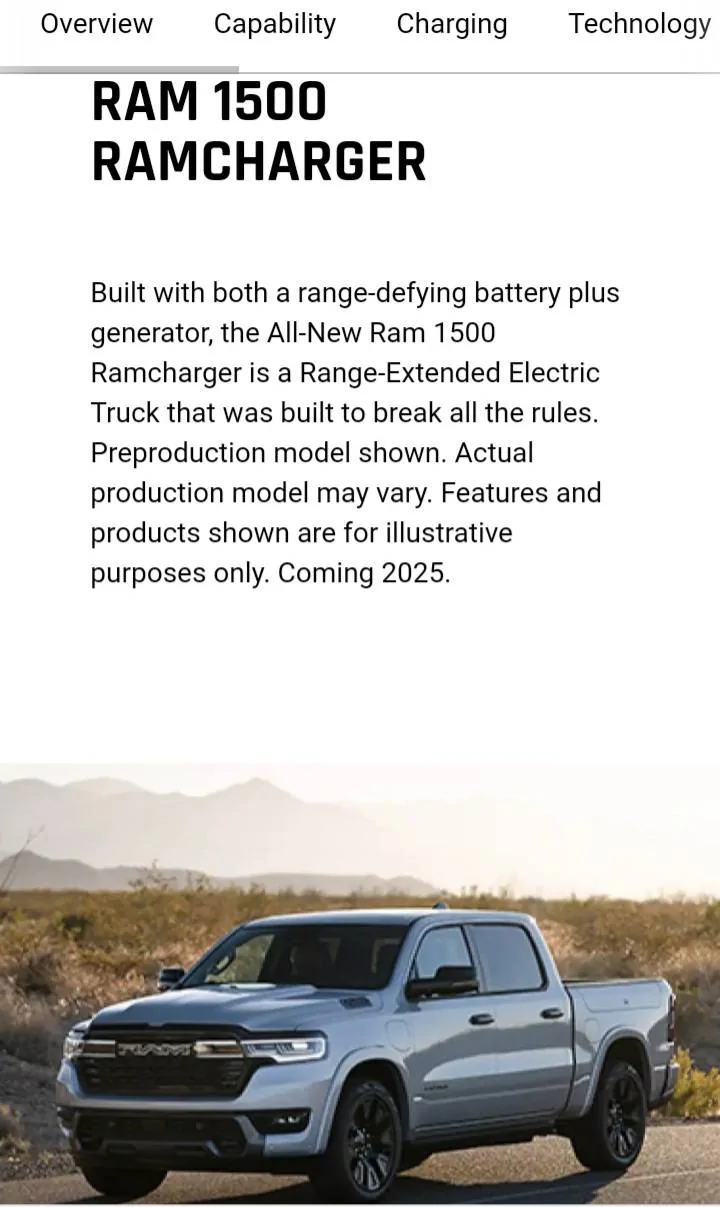
Does the new Ram (P)plug in? Yes
Is the new Ram a (H) hybrid? Yes, it is a series hybrid like a Chevy volt, rather than a parallel hybrid like a Prius or Maverick.
Is the new Ram an (EV) electric vehicle? Yes. It is designed to be powered on electric alone, including towing, for the first 92 kWh of the trip. -equivalent to 9.2 gallons of gas-
Like you said above the Ram Charger is a series hybrid, those are getting the designation EREV. Theres an ICE that only acts as a generator, its not connected to a transmission. PHEV usually used to describe parallel hybrid that you can plugin like the Escape PHEV, Rav 4 Prime, Prius Prime, Wrangler and Grand Cherokee 4xe etc. All of those have an ICE connected to a transmission that drives the vehicle and an electric motor sandwiched between the ICE and the transmission or built into the transmission itself. So calling the Ramcharger a PHEV would lead you to think its built and operates similarly to one of the Primes or 4xes.
 
Last edited:
Sponsored

Glen Baker LLC

2.5L Hybrid
Well-known member
Joined
May 29, 2024
Threads
30
Messages
7,255
Reaction score
12,166
Location
Central Nevada & Utah
Vehicle(s)
Maverick XLT Hybrid
Engine
2.5L Hybrid
Ramcharger Plug in range extended?
Stellantis calls at range extended.
I call it for what it does. Plugs in for daily drives. Carries gas for the other 600 miles for wherever else I may WANT to drive. Including the middle of nowhere.
One vehicle does both jobs.
Now if Ford could downsize this to the Maverick. I'd be on board.
Ford Maverick Ford to launch Maverick EV (I hope this is true) 20250207_060023


Ford Maverick Ford to launch Maverick EV (I hope this is true) 20250207_060441
 
Last edited:

colinl

2.0L EcoBoost
Well-known member
First Name
Colin
Joined
Jun 21, 2022
Threads
32
Messages
5,440
Reaction score
6,178
Location
ICT
Vehicle(s)
'22 Maverick Lariat AWD, '22 Bronco OBX 2-Door
Engine
2.0L EcoBoost
Clubs
 
National average 15 cents a KWH, we are about 19 cents a KWH.
the rest of your post was interesting as well, but I'm curious about this one. is that your fully burdened rate or just what you see on the line item?

the reason I ask is that I have a smart thermostat and it's linked to the local energy company, and it has awareness of peak hours, off-peak, and even when energy is cleaner. (in Kansas, that means from a wind turbine.)

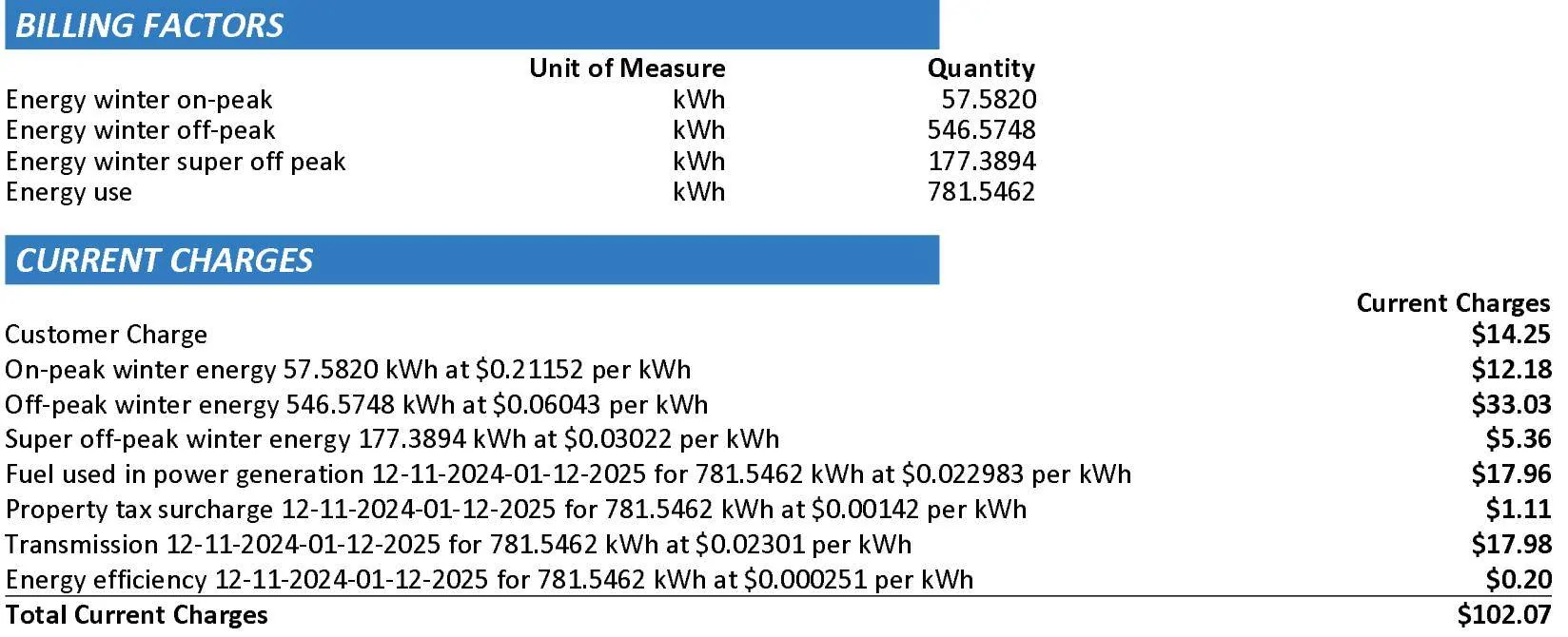
but there are so many fees that my advertised rates are not the real price I'm paying. the vast majority of my energy is in the off-peak rate, almost used 10x the on-peak. and I have some super off-peak as well. but the final bill with flat fees and rated charges actually results in a bill for $102.07 against an energy usage of 781.542 kwh, which my calculator says is $0.1306 per kwh.

Ford Maverick Ford to launch Maverick EV (I hope this is true) evergy
 
OP
OP

Scott Asheville

2.0L EcoBoost
Well-known member
First Name
Scott
Joined
Oct 4, 2021
Threads
79
Messages
2,330
Reaction score
5,481
Location
Asheville, NC
Vehicle(s)
2022 AWD XLT ECO LUX CP360 HPR
Engine
2.0L EcoBoost
As an engineer, I've always loathed hybrids and "range extended vehicles" as inelegant Rube Goldberg solutions that will have high maintenance costs down the road.

But I've mellowed a bit on "range extended vehicles" as I've listened to Jim Farley and other OEM engineers explain that some of these systems can actually be simpler than a pure ICE vehicle. No complex automatic transmission, no driveshafts, quite a few other ICE components eliminated, and the engine operating in a sweet spot, acting purely as a generator for the BEV portion.

I've even mellowed on the Maverick hybrid, though I wouldn't touch one with a ten foot pole. But I acknowledge the transmission is dramatically simpler, no stress-inducing turbocharger, etc. And I can see that owners on MTC frigging love their hybrid Mavericks.

I still believe pure BEV is inevitable over time, as ranges double and triple and weight and cost halve and then halve again. But I won't put down any wagers on the timeline for all of that.

The best outcome for all of us is a customer-driven, free enterprise future with minimal government meddling. You want a BEV in your driveway (I do), then get a BEV. You want an ICE in your driveway (I want one of those too), then get an ICE. Get a hybrid. Get a VTOL. Get a rocket. Get a Star Trek portable transporter. Whatever floats your boat and works for you.
 

dalola

2.0L EcoBoost
Well-known member
First Name
Retired
Joined
Oct 8, 2021
Threads
15
Messages
2,519
Reaction score
4,309
Location
SE Ohio 🇺🇸
Website
sunsetridgecabinhockinghills.com
Vehicle(s)
'24 Mustang Mach-E P4X, '24 Bronco Big Bend 2Dr Sasquatch, Hot Rods
Engine
2.0L EcoBoost
We will be in the market for a new car (wife's car) in the next 12-18 months. She likes small SUV's. Six months ago I thought a Plug In Hybrid would be the way to go. Then I started doing the math.

Right now, the price difference on a pure ICE versus hybrid version of is typically not a lot of money. At least on some of the desirable SUV's our list. An average premium for hybrid vs traditional ICE is often around $3,000. Sometimes less, sometimes more. But an average. So a new SUV high on our list is the Toyota Rav4.
ICE starts at just under $29,000
Hybrid starts at just under $32,00
Plug in Hybrid starts at just under $44,000

IMPORTANT TO NOTE that the base ICE Rav4 is FWD. All Trims of the Hybrid are AWD. We want AWD, so the price difference between ICE and hybrid for us is around $1600. That is to say - NOT MUCH DIFFERENCE.

You can buy a lot of gas with $12.000 price difference between hybrid and PHEV. And the Rav 4 PHEV is bit on the low side as far as eMPG estimates - 94mpg.

Also, I live in an area where the utility rates are higher than the national average. National average 15 cents a KWH, we are about 19 cents a KWH. And the f.... monopoly gets rate increases like a spoiled kid gets candy. So I'm certain those electric rates are going up as the years go by.

So bottom line is that that the Rav 4 plug in Hybrid - always charged at home - would cost around $5.25-$5.50 per 100 miles driven on electricity. Where as gas at $3 a gallon (and it's less than that right now) and the hybrid's 40 mpg the same 100 miles would cost $7.50

So if she drives 15,000 mile a year and saves $2 every 100 miles on gas, the PHEV Toyota Rav4 would save us $300 a year in gas. Wow. Only takes 40 years to break even.

The tax credits are probably going away very soon. But as near as I can tell only the Ford Escape PHEV (that is, a small SUV) qualifies for a tax credit. We'd have to lease to the get the tax credit. And that makes things complicated in terms of what a vehicle actually costs you. We usually buy car and own it for 10-12 years.

I really like the idea of rarely buying gas. A 35-40 mile electric only range would meet 85-90% of our driving. We park our cars in an attached garage so would do all charging at home. But financially buying a PHEV makes zero sense. And we are not doing pure electric (BEV) until charging stations are both plentiful and fast and the prices come down on the cars themselves.
Great example of the self-analysis everyone should do when looking at the budgetary aspects of different drive systems. Of course, people can want what they want, but need to be very careful when looking at comprehensive costs related to each, and how it will affect their personal situation.
 

Phimosis

2.0L EcoBoost
Well-known member
First Name
Larry
Joined
Jul 18, 2024
Threads
2
Messages
1,180
Reaction score
1,518
Location
Santa Clarita, CA
Vehicle(s)
2024 Maverick Lariat FX4 4K tow
Engine
2.0L EcoBoost
1 US gallon = 114,500 BTU (conventional summer gasoline) 1 kWh = 3412 BTU.
1 gallon (US) = 33.56 kWh.
1 litre = 8.87 kWh.

wikipedia.com
While a gallon of gasoline does in fact contain 33.7 kwh of potential energy (the figure that the EPA uses), a heat engine that is combusting that energy source only has 25-28% thermodynamic efficiency, which means that 8.4-9.4 kWh of that energy gets converted into kinetic energy to move you down the road. The other 24.3-25.3 kWh of potential energy in that gallon of gas gets lost as waste heat in the exhaust and through the radiator, trans cooler and oil cooler.

Whereas, an EV has about 90% thermodynamic efficiency, losing 5% to heat in the battery from electrical resistance while it is discharging and 5% to heat loss from electrical resistance in the motor and friction in the motor bearings and transmission.

In the end, 10 kWh of electrical potential energy will get converted into 9 kWh of kinetic energy, making it roughly similar to a gallon of gasoline that creates 8.4-9.4 kWh of kinetic energy.

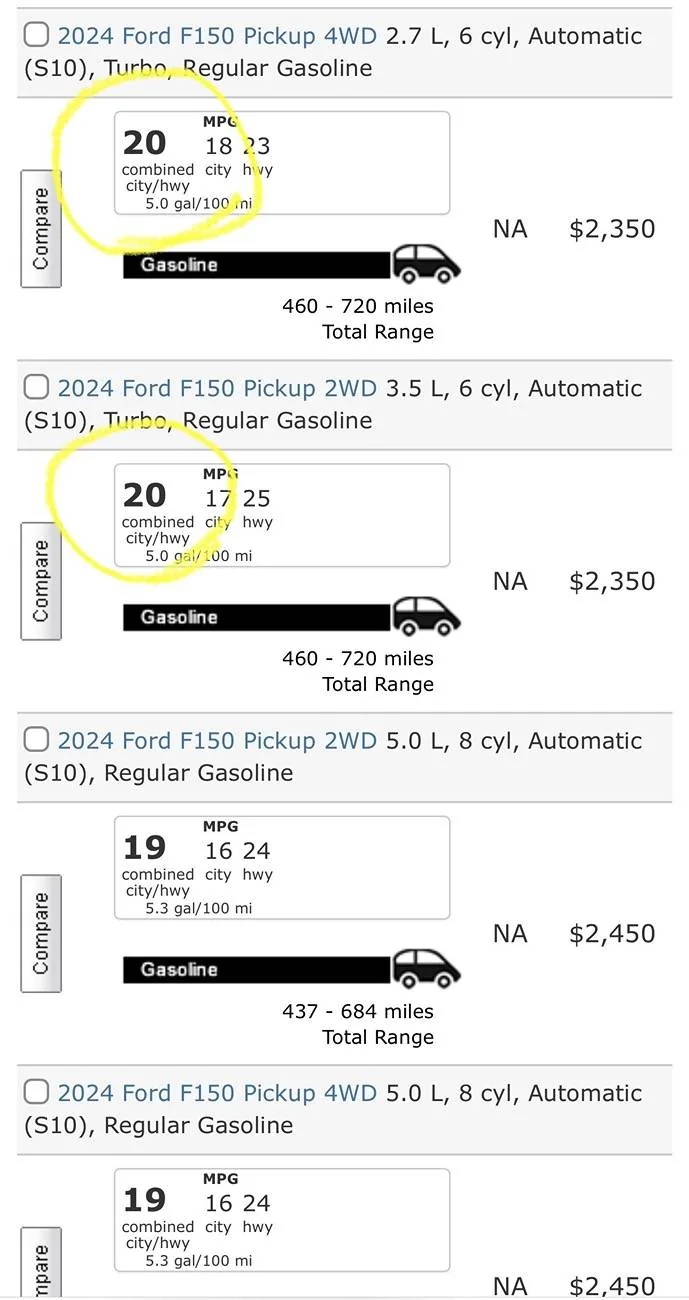
The perfect illustration of this is the F-150. A gasoline powered 4x4 crew cab gets 20 mpg epa combined cycle rating.
Ford Maverick Ford to launch Maverick EV (I hope this is true) IMG_1994


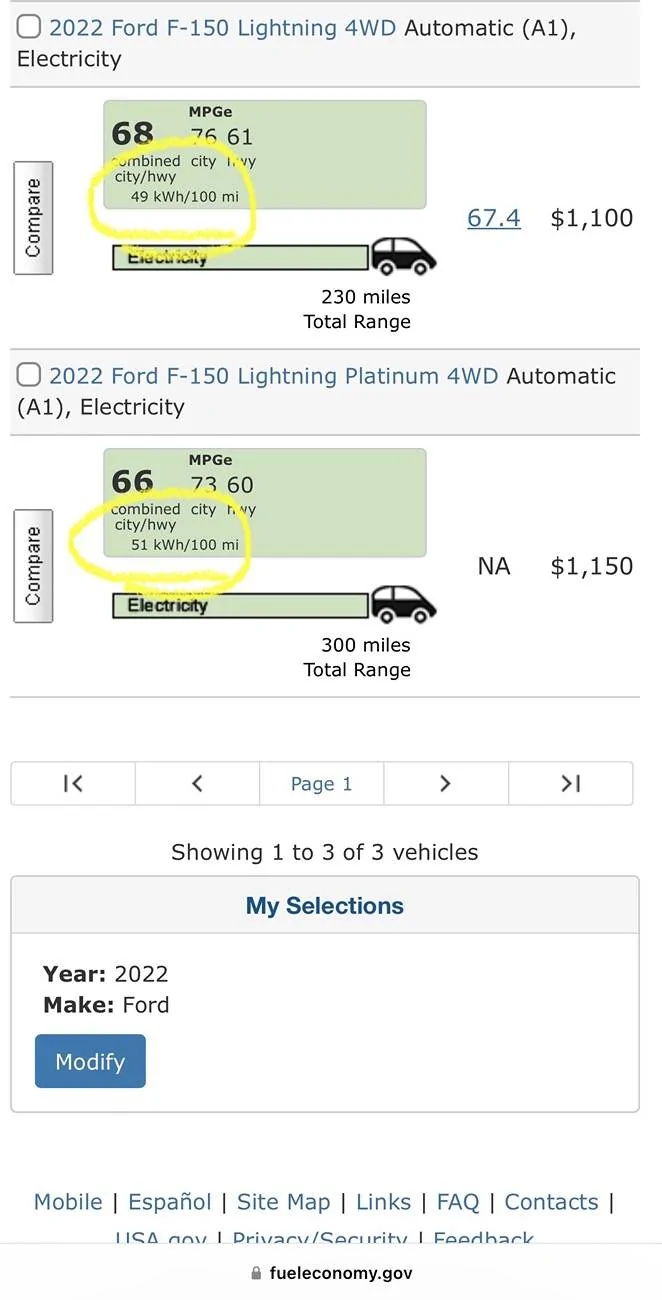
The comparable electric version is the crew cab 4x4 F-150 lighting. It uses ~50 kWh per 100 miles of epa combine cycle rating, which is 2.0 miles per kWh.

Ford Maverick Ford to launch Maverick EV (I hope this is true) IMG_1995


In summary: 20 miles per gallon is the roughly the same energy use rate as 2 miles per kWh. Doing simple algebraic substitution, it takes 10 kWh to go 20 miles, which means 1 gallon of gasoline is roughly equal to 10 kWh of electricity in real world EV applications.
Sponsored

 
Last edited:


Top