

Thanks. Nice to see.I wondered what they did back then. Never saw that commented on.
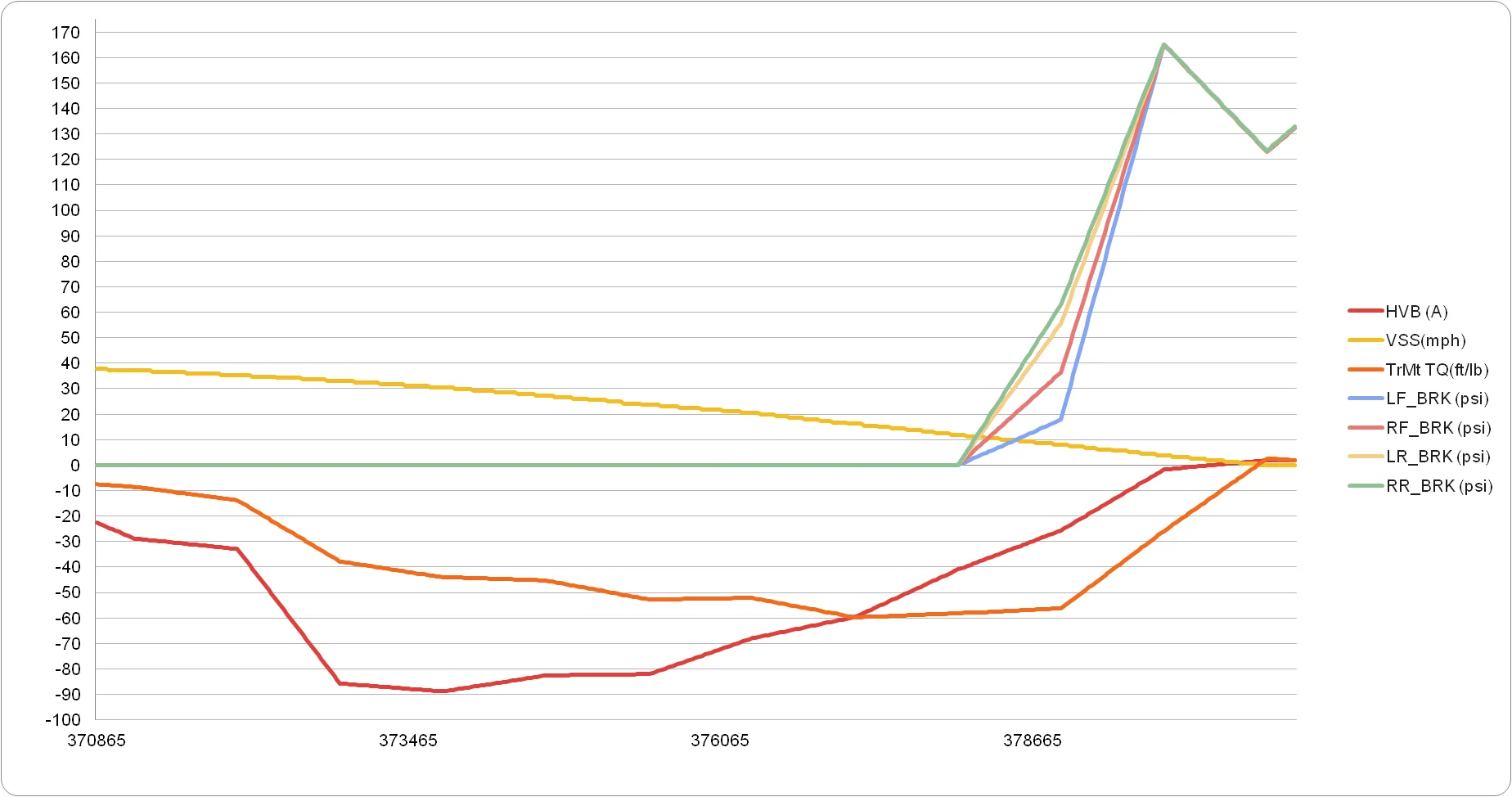
3.7 mph pressure to all 4 wheels match - probably has to do with how hard being pressed too - I'm a gentle stopper.
11.8 mph pressure is starting to be applied. But not enough to be noticeable.
So somewhere between there is enough to matter.
About 2 mph in logs for regen to hit 0. Basically nothing before that.
Data snippet for the following final seconds before a stop. Normal mode.
Was going 40 mph with ICE on, starting coasting as foot went to brake and ICE went off.
Pressed brake enough to stay at higher end of regen but didn't need max braking, plenty of battery to fill. About 1.1 mm on brake.
At 11.8 mph brake pressure started being applied - still totally in regen area for my press.
Rear brake PSI higher than front, until about 3.7 mph and 1.6 seconds later, when they all merged. (curious why front right about 2x PSI as left until merge, straight road)
I've noticed this effect before, rear's given pressure just barely stronger than fronts.
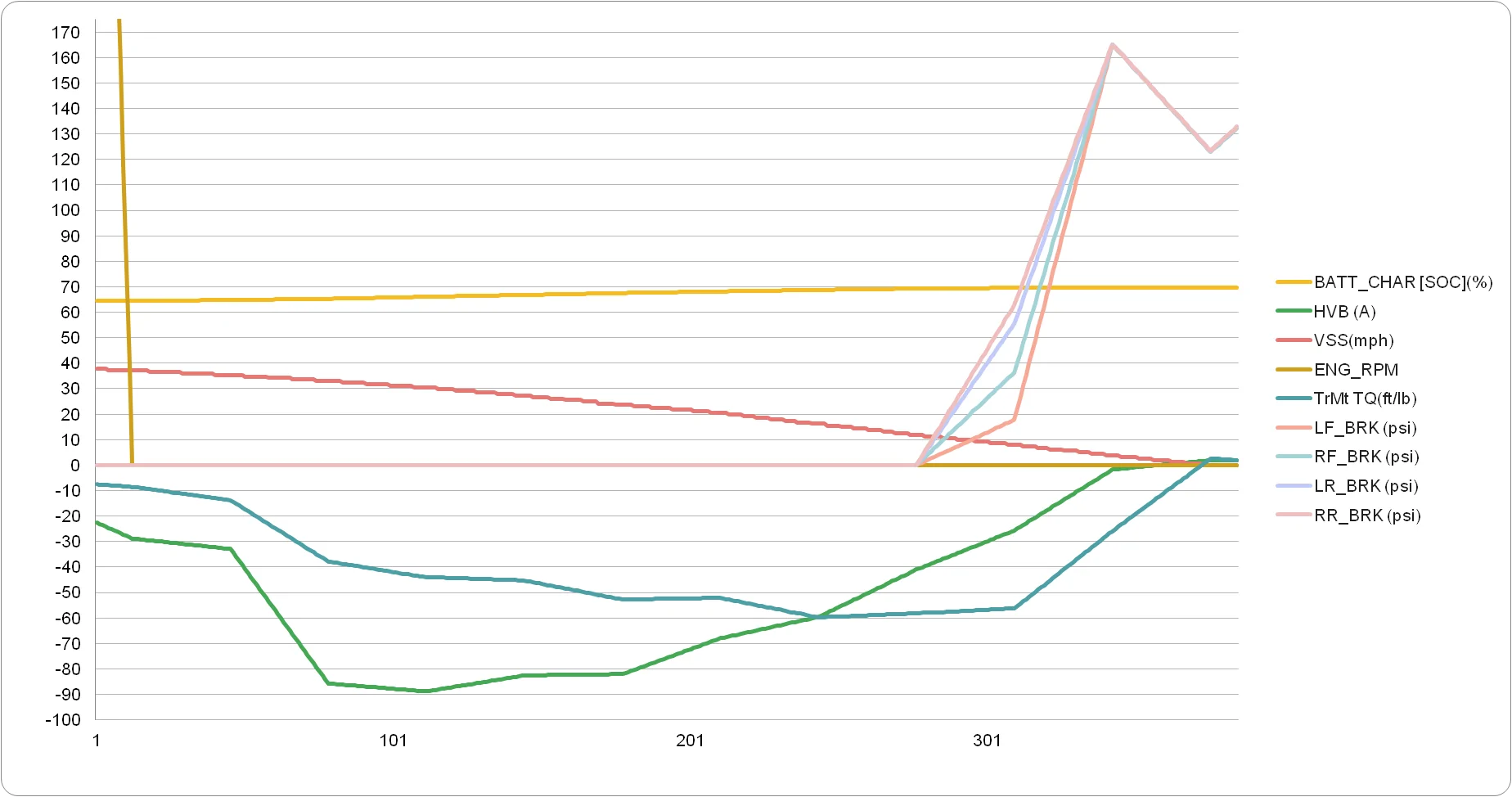
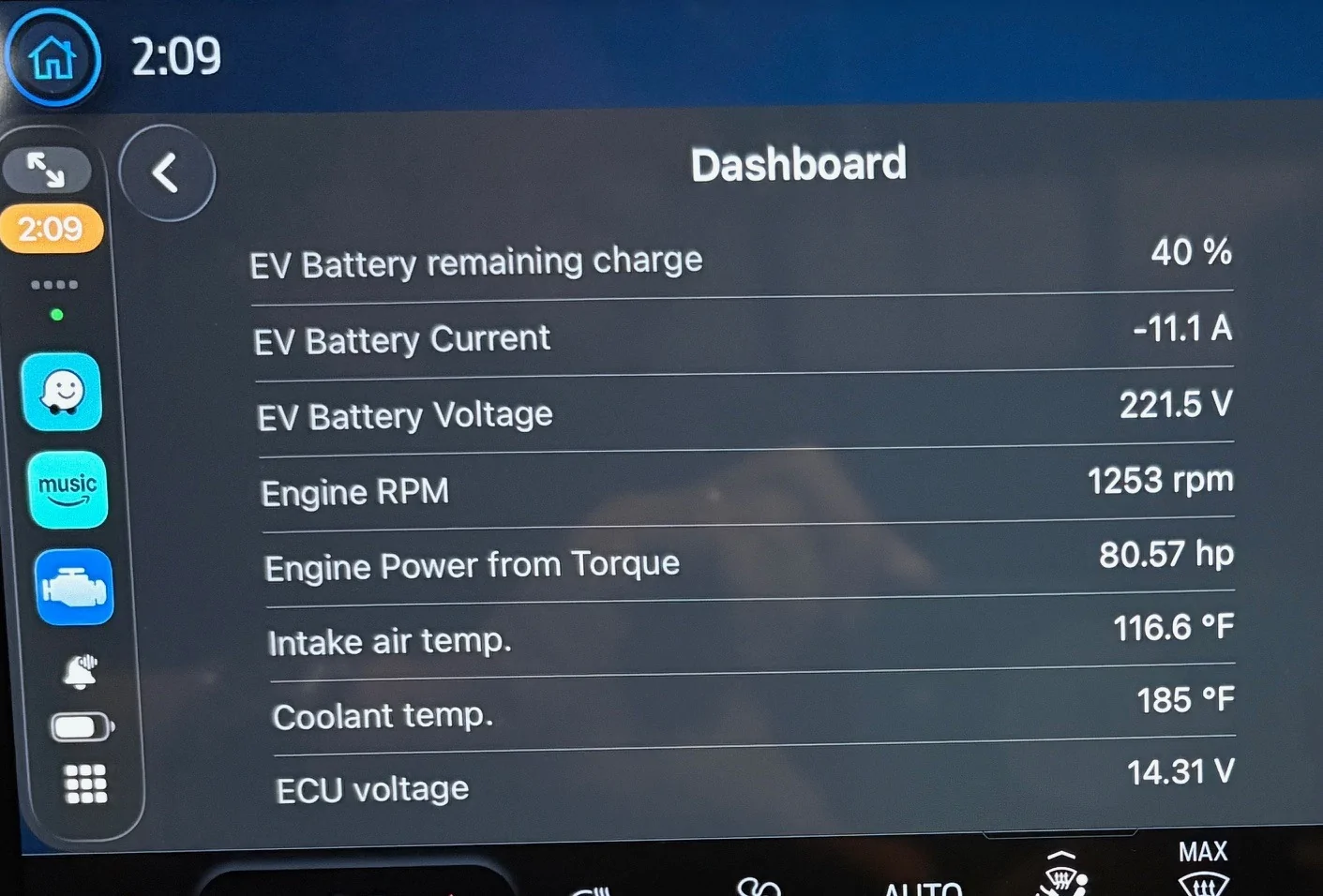
Data attached. Graph pic. Red line showing amps going to battery (coast regen to increased brake pedal regen), with neg traction motor torque confirming regen.
I would like to see HV SOC on the same chart.
Also does brake pressure always go up at 11 mph or just in this case? Do you have multiple examples?
Sponsored
 .
.

 )
)