
Sponsored

ZeroDay

2.5L Hybrid
Well-known member
Joined
Mar 24, 2026
Threads
0
Messages
66
Reaction score
125
Location
Canada
Vehicle(s)
2025 Maverick XLT Hybrid AWD, 1984 Volkswagen Jetta TD, 2007 Volvo V50 T5 AWD
Engine
2.5L Hybrid
@ZeroDay - if you can get some early coasting in - the system seems more willing to charge when cold, which starts warming it up, and quicker to the point it's more willing to discharge.
Then again - I was only near 0 or tad below F.
Highway speeds don't seem to add much in the way of charging anyway - which may have been good at -40!
I never have issues -39 and above! My commute is generally flat and slow enough it'll dump the entire battery and charger itself back up with the engine multiple times. I go full electric at full road speed quite often.
Sponsored


MakinDoForNow

2.5L Hybrid
Well-known member
First Name
James
Joined
Sep 24, 2021
Threads
2
Messages
8,632
Reaction score
6,270
Location
Texas
Vehicle(s)
2022 Maverick
Engine
2.5L Hybrid
I'm assuming the system is more of a battery heater than a battery cooler. Last winter I had one day below -40 and it would NOT use the electric motors or go into electric mode at all even after an hour of low speed highway. The truck was sluggish it felt like towing a heavy trailer and forgetting to use tow mode.
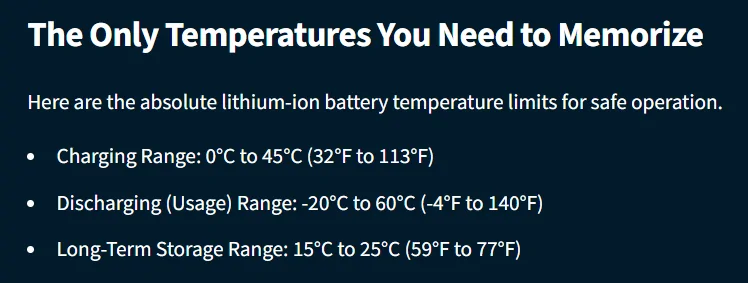
There is a heat recovery device in the exhaust near the muffler to heat battery coolant to help get HVB above 32°F so HVB can start being charged (lithium ion limit for longevity). Once battery is warm enough charge /discharge will warm it up to 60°F where sizes able amps can happen. The ice will be running generator and power for moving until HVB is warm enough to be used.
 

Cherokee

2.0L EcoBoost
Well-known member
First Name
Marty
Joined
Jan 3, 2025
Threads
65
Messages
4,278
Reaction score
8,395
Location
North Carolina
Vehicle(s)
2026 Ford Maverick Tremor
Engine
2.0L EcoBoost
These seemingly normal battery operational temps are not any concern. No need to monitor at all.
 
OP
OP
Mavster Mechanic

Mavster Mechanic

2.5L Hybrid
Well-known member
First Name
David
Joined
Jul 29, 2025
Threads
30
Messages
2,093
Reaction score
3,822
Location
USA
Vehicle(s)
Hybrid
Engine
2.5L Hybrid
No lights, no performance degradation, no problem.
I mentioned elsewhere one time at above 120°F I had no regen with "L" but still had regen using the brake pedal.

Still odd to me I saw no effort to cool the battery. I just had to wait for it to come down below 120°F by not using it for a while.
 

Sponsored

HeyBales

2.5L Hybrid
Well-known member
First Name
Mike
Joined
May 3, 2024
Threads
5
Messages
5,338
Reaction score
5,053
Location
KC Metro area
Vehicle(s)
2005 Toyota RAV4, 2024 XLT Hybrid
Engine
2.5L Hybrid
I mentioned elsewhere one time at above 120°F I had no regen with "L" but still had regen using the brake pedal.

Still odd to me I saw no effort to cool the battery. I just had to wait for it to come down below 120°F by not using it for a while.
So even though in Low mode the system changes the Amp rate of Regen depending on the speed you are coasting down from, and constantly the whole time almost - the system isn't willing to back off the amount earlier on a hot HVB.

So did it almost feel like Neutral coasting down in Low mode then?

Curious if you were able to get the Brake regen right almost to the max during that time - didn't seem like it was backing off a bit, like only allowing a certain max Amps?

I guess like The Tricks for 12VB - just go for a change of action based on a switch setting and temp in this case. Even though you can equal the effect at the same temp just fine.
 
OP
OP
Mavster Mechanic

Mavster Mechanic

2.5L Hybrid
Well-known member
First Name
David
Joined
Jul 29, 2025
Threads
30
Messages
2,093
Reaction score
3,822
Location
USA
Vehicle(s)
Hybrid
Engine
2.5L Hybrid
So even though in Low mode the system changes the Amp rate of Regen depending on the speed you are coasting down from, and constantly the whole time almost - the system isn't willing to back off the amount earlier on a hot HVB.

So did it almost feel like Neutral coasting down in Low mode then?

Curious if you were able to get the Brake regen right almost to the max during that time - didn't seem like it was backing off a bit, like only allowing a certain max Amps?

I guess like The Tricks for 12VB - just go for a change of action based on a switch setting and temp in this case. Even though you can equal the effect at the same temp just fine.
Coasting in "L" with a 120°+ HVB

INSTANT fuel cutoff and engine rev to ~4000 RPM.

Zero amps of regen even though battery was about 39% charged. But it was slowing from engine brake.
 
OP
OP
Mavster Mechanic

Mavster Mechanic

2.5L Hybrid
Well-known member
First Name
David
Joined
Jul 29, 2025
Threads
30
Messages
2,093
Reaction score
3,822
Location
USA
Vehicle(s)
Hybrid
Engine
2.5L Hybrid
IMG_9161.webp

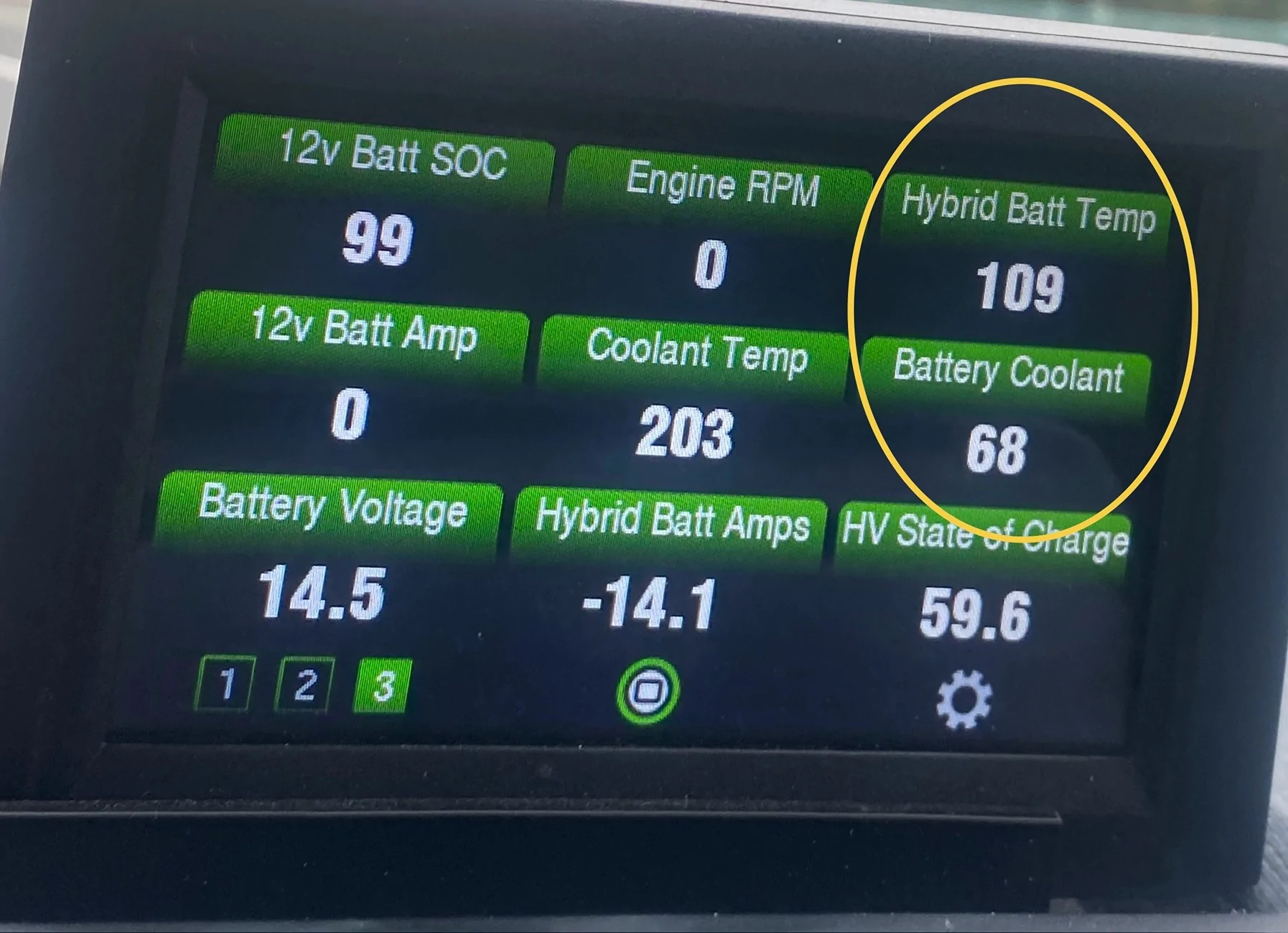
This Morning: Ambient 63°F

Still surprising to me battery is so warm on such a cool day. In more or less steady state (65 to 74 MPH) freeway driving. Some GENTLE rolling hills. Not many today.

Does yours behave the same??
Are you seeing similar numbers??
 

MakinDoForNow

2.5L Hybrid
Well-known member
First Name
James
Joined
Sep 24, 2021
Threads
2
Messages
8,632
Reaction score
6,270
Location
Texas
Vehicle(s)
2022 Maverick
Engine
2.5L Hybrid
Coasting in "L" with a 120°+ HVB

INSTANT fuel cutoff and engine rev to ~4000 RPM.

Zero amps of regen even though battery was about 39% charged. But it was slowing from engine brake.
120° is not a hot HVB. Li ion battery will charge/discharge efficiently the warmer it gets. University tests showed about 170° where heat phase change starts softening Chrystal structure. Most frequent recommendation is to reduce transfer activity at 148°F. Ford may not use coolant loop for cooling if ambient is not low enough to handle necessary BTU's
Then at 39%+SOC ice will be needed to brake for an indefinite time. Then when SOC drops to 20-22% or some other reason ice needs to run regen braking resumes until needed again. Pretty much HVB SOC from 40-70% appears to be reserved for regen brake pedal regen and switching of electrical needs. Only programmer may only know....
If ice reaches max rpm then you may see some hydraulics happening or may drop out of L I have no idea.
 

inline_five

2.5L Hybrid
Well-known member
Joined
Jun 15, 2023
Threads
33
Messages
1,195
Reaction score
1,656
Location
-
Vehicle(s)
2023 Hybrid XLT
Engine
2.5L Hybrid
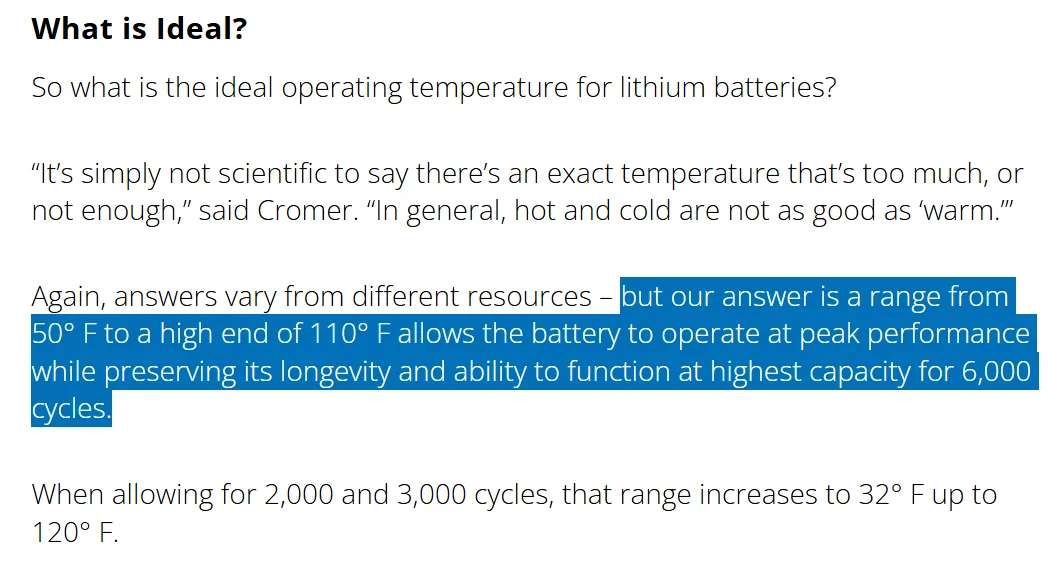
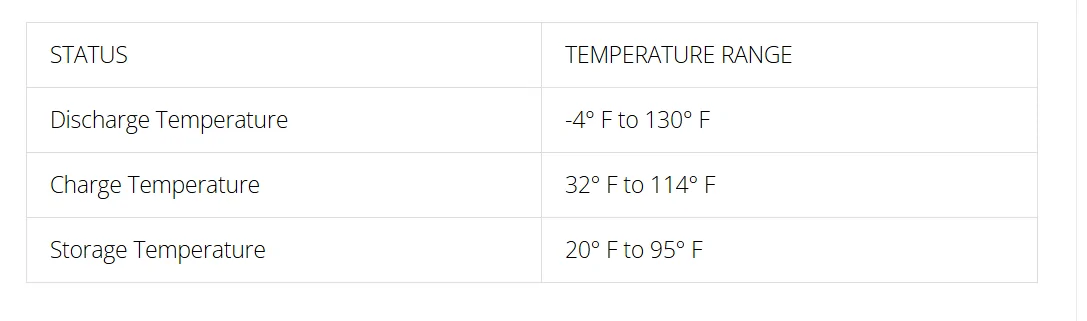
Since the vast majority of OAT's are 100° and below you'd thing a separate radiator would make sense for the battery coolant.

1786122575159-gy.webp


1786122594924-ju.webp


A different source, similar numbers:

1786122656750-5p.webp
 
Sponsored

MakinDoForNow

2.5L Hybrid
Well-known member
First Name
James
Joined
Sep 24, 2021
Threads
2
Messages
8,632
Reaction score
6,270
Location
Texas
Vehicle(s)
2022 Maverick
Engine
2.5L Hybrid
Since the vast majority of OAT's are 100° and below you'd thing a separate radiator would make sense for the battery coolant.

1786122575159-gy.webp


1786122594924-ju.webp


A different source, similar numbers:

1786122656750-5p.webp
The hybrid radiator is divided with the bottom 20% +/- being the portion used for HVB.
 
Last edited:

HeyBales

2.5L Hybrid
Well-known member
First Name
Mike
Joined
May 3, 2024
Threads
5
Messages
5,338
Reaction score
5,053
Location
KC Metro area
Vehicle(s)
2005 Toyota RAV4, 2024 XLT Hybrid
Engine
2.5L Hybrid
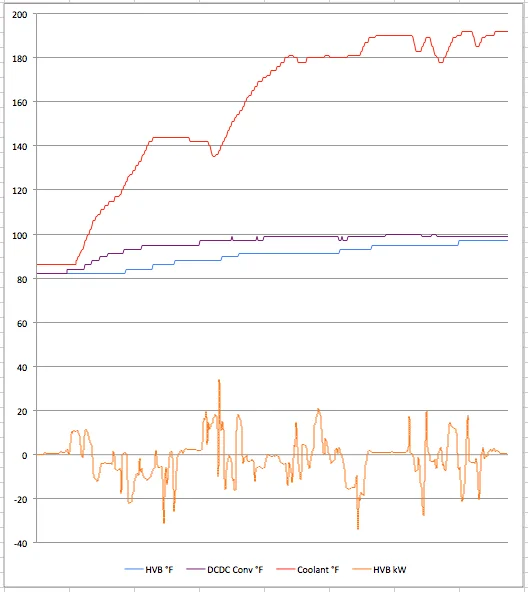
Hmmm - not seeing that high.
But notice in chart if my charging/discharging profile seems similar to yours.
Typical drive to work (I won't mention a little over 10 min and 5 miles) - downhill to highway, rolling hwy, then flattish to work.
I converted the amps to kW since there were some huge spikes ruining the scale.

Starting temp 82 in DCDC Conv & HVB, 86 F in cat & coolant.
After overnight - they really should be matching. Didn't have ambient temp sensor, hoping it adjusts accuracy based on those.

So even with some points of HVB max 32kW discharge on highway (turbo 43 HP!), or max 27kW charge on exit ramp - just doesn't get that high even with higher starting temp.
From what you've found with no real cooling - it would have eventually I suppose.
It was dropping when back at city driving and more charge/discharge switching, but max airflow thru engine bay too, despite less airflow over HVB undercarriage.

Data file shows grill shutters too - but not sure how much that would effect HV coolant circuit at the radiator, since 2 fins missing on top and bottom areas. If you didn't have AC on for your trip - perhaps it is effective.
0% open when no AC, which didn't last long starting at 83.
With AC on - 100% open sitting or low speed, down to 60% open when on highway.
So perhaps you were cool enough with outside air - shutters remained closed, which would explain your higher engine coolant temp I never reached.

1786122768887-ai.webp
 

Attachments

inline_five

2.5L Hybrid
Well-known member
Joined
Jun 15, 2023
Threads
33
Messages
1,195
Reaction score
1,656
Location
-
Vehicle(s)
2023 Hybrid XLT
Engine
2.5L Hybrid

HeyBales

2.5L Hybrid
Well-known member
First Name
Mike
Joined
May 3, 2024
Threads
5
Messages
5,338
Reaction score
5,053
Location
KC Metro area
Vehicle(s)
2005 Toyota RAV4, 2024 XLT Hybrid
Engine
2.5L Hybrid
120° is not a hot HVB. Li ion battery will charge/discharge efficiently the warmer it gets. University tests showed about 170° where heat phase change starts softening Chrystal structure. Most frequent recommendation is to reduce transfer activity at 148°F. Ford may not use coolant loop for cooling if ambient is not low enough to handle necessary BTU's
Then at 39%+SOC ice will be needed to brake for an indefinite time. Then when SOC drops to 20-22% or some other reason ice needs to run regen braking resumes until needed again. Pretty much HVB SOC from 40-70% appears to be reserved for regen brake pedal regen and switching of electrical needs. Only programmer may only know....
If ice reaches max rpm then you may see some hydraulics happening or may drop out of L I have no idea.
I guess Ford considers the 120 F too hot. Perhaps even better for longevity.

They appear to have designed the simple idea that if Low is used, where max regen rate would occur automatically - don't allow the regen no matter the SOC% available to charge.

But, when regen braking at the same 120 F - go ahead and allow possibly the exact same rate of regen. Going into the pads causes the same max regen rate.

I do wonder though - is there a limit to that regen braking region, if for too long like a long downhill, or gets too hot from regen - does the system enable the same engine-braking and stop the charging, even though plenty of SOC% left to recharge?
 

MakinDoForNow

2.5L Hybrid
Well-known member
First Name
James
Joined
Sep 24, 2021
Threads
2
Messages
8,632
Reaction score
6,270
Location
Texas
Vehicle(s)
2022 Maverick
Engine
2.5L Hybrid
I guess Ford considers the 120 F too hot. Perhaps even better for longevity.

They appear to have designed the simple idea that if Low is used, where max regen rate would occur automatically - don't allow the regen no matter the SOC% available to charge.

But, when regen braking at the same 120 F - go ahead and allow possibly the exact same rate of regen. Going into the pads causes the same max regen rate.

I do wonder though - is there a limit to that regen braking region, if for too long like a long downhill, or gets too hot from regen - does the system enable the same engine-braking and stop the charging, even though plenty of SOC% left to recharge?
The temperature of the stator in the drive motor may get too hot or much more likely somewhere in the electronics. Driving stop and go in "L" up to 60 mph will activate engine braking in 3-4 miles on no more than a few +/- 15 feet elevation.
Someone has posted that he leaves home and has a long downhill (3-5?) miles and his regen stops before he gets to bottom.
Sponsored


Top