

Sponsored

For those who are shocked by current auto loan rates here is historical rates since 1972

Status
Not open for further replies.

RichardCranium

2.0L EcoBoost
Well-known member
First Name
R
Joined
Sep 1, 2023
Threads
20
Messages
1,075
Reaction score
1,463
Location
California
Vehicle(s)
2024 Maverick XL 2.0 AWD 4K CP360
Engine
2.0L EcoBoost
Clubs
 
If someone bought a house in 2019, they could have refi'd and locked in a sub 3% mortgage and watched the home's value balloon quite a bit. They'd be sitting pretty in 2023, actually.
Wife and I bought our first house in 2009 for $142,500 @ 4.25% sold it in 2016 for $269,000, bought our current house for $289,000, rolled $110,000 profit as down payment on the new house at 4.25%. Refi to 2.875% Current value is $550,000. Scheduled to pay off in May.
too bad it means nothing because if I sold it now, then I have to buy something just as expensive (or more). Although, I guess if I was willing to have a mortgage again, I could always upgrade.
Sponsored


 

RichardCranium

2.0L EcoBoost
Well-known member
First Name
R
Joined
Sep 1, 2023
Threads
20
Messages
1,075
Reaction score
1,463
Location
California
Vehicle(s)
2024 Maverick XL 2.0 AWD 4K CP360
Engine
2.0L EcoBoost
Clubs
 
I started off making $4.25/hr in 1996.
I didn't buy a new car until age 35. Same with a house (condo actually) in 2016. No $ from parents on that either.
I don't overspend on BS things like eating out, Starbucks, fancy cell phones, etc.
I'm pretty sure the majority of people on TIkTok complaining about inflation/economy are doing so on phones that cost 2-5x what mine did. And ordering doordash while they're at it.

Delayed gratification is not a thing anymore.

I only worked hard on occasion, but did get a degree and have always been watchful of my spending. People buy random shit off instagram b/c an "influencer" told them to. No sympathy here until I see some evidence of you actually trying. Stop buying shit you don't need. Magically, you'll have more money for the things you do need.
1996 was when I started working for $4.25/hour as well. Worked a year and a half at a place that didn’t value me as an employee. I did not quit, even though I wanted to, until I found another job. I worked both jobs until I finished my probation period before quitting the first one. Second job I started washing windows at a gas station and worked my way up to shift manager by the time I was 18 because I was willing to do what it took to be a valuable employee. I would work holidays, double shifts, and I was available when the owners needed me. When I walked in and asked for a raise, they said yes without hesitation. Said I probably would have gotten more if I asked. All this because they valued me as an employee. When going to college, I had the opportunity to get a job that paid better. When I went in to give my notice, the owners offered to pay 50 cents (a lot at that time) more than my new job offer because they did not want to lose me as an employee because of my work ethic.
During college, at one point in time I was working 3 jobs and going to school full time because that is what it took.

I agree with @surfstar in that I rarely see this today. It took a lot of work for my wife and me to get where we are today. I am 42, my wife is 38. I do not know many people that are my age that have a paid off house, but I do see people with fancy handbags, nails, expensive phones and cars. It took me 27 years of hard work to get where I am today.

Every entry level job near me is always hiring. I know business owners and hiring managers, and they all say the same thing, “no one wants an entry level job.” They all want a supervisory position they want more money than the job is worth, or they don’t want to work as many hours but still get full time benefits and pay. It is worse with those who went to college. Then, because they can’t “find a job” they expect someone else to pay for their college loans.
 

Robert C

2.5L Hybrid
Well-known member
First Name
Robert
Joined
Apr 22, 2022
Threads
25
Messages
782
Reaction score
1,010
Location
48021
Vehicle(s)
2001 Ranger
Engine
2.5L Hybrid
And 2 1/2 years ago Ford was offering 0% for the 2022 Maverick for 3 years.
What's your point?
 

Mav_RICK

2.5L Hybrid
Well-known member
First Name
Rick
Joined
Nov 4, 2022
Threads
28
Messages
1,497
Reaction score
1,989
Location
Arizona
Vehicle(s)
Ford F150
Engine
2.5L Hybrid
Well you're in Iowa so I actually believe you.

But the idea of "working your way up" no longer exists in today's world (at least in Los Angeles and most major cities). Entry level workers in almost all jobs are treated as temporary and easily replaceable slaves and are rarely given full time positions so employers don't have to pay for their health insurance. Higher ranking jobs get filled by friends and family members of seasoned long term high ranking employees that skipped through the ranks and get hired because of who they know, not what they know.

Perhaps in Iowa there is a shortage of workers in all fields, but definitely not in the SouthWest.
I’ll make no judgment about how hard you work or how frugal you are. You are in California and there is probably no place in the world where you are at a bigger disadvantage

I’m semi retired and work as a driver for a resort. I drive very wealthy Californians often and they are worried their kids won’t be able to stay there. Unless you are ultra wealthy you better get on I-10 and head out of there.

While you’re at it take a real hard honest look at what happened there because what was the most prosperous state in the country has lost it big time and it’s nobody’s fault but the people that live there. Interest rate on a loan for a Maverick is far from being your biggest problem in California.
 

BuddyS

2.5L Hybrid
Well-known member
First Name
Rich
Joined
Oct 29, 2021
Threads
26
Messages
589
Reaction score
1,345
Location
Florida
Vehicle(s)
Volvo XC60 R Design & 2022 Maverick XLT
Engine
2.5L Hybrid
Putting it into an inflation calculator is nice but doesn't give the whole story. Housing prices on average have far out paced inflation while average wages have not.
So has house size and demanded amenities. A 2000 sq foot house 40 years ago would have been a virtual mansion. Most houses had 1 or 1.5 bathrooms. A three car garage? Only millionaires had that kind of thing. Ask a boomer (or me, at 55) about the granite countertops and home theater room in our first house, and we’ll laugh all day long. For a first house think simple and small, and it might not be in the hip location where you want to live. It’s not unreasonable to put in a few years of living in a smaller house , having a longer commute, and building equity and saving for your next home.
 
Last edited:

Sponsored

Mav_RICK

2.5L Hybrid
Well-known member
First Name
Rick
Joined
Nov 4, 2022
Threads
28
Messages
1,497
Reaction score
1,989
Location
Arizona
Vehicle(s)
Ford F150
Engine
2.5L Hybrid
So has house size and demanded amenities. A 2000 sq foot house 40 years ago would have been a virtual mansion. Most houses had 1 or 1.5 bathrooms. A three car garage? Only millionaires had that kind of thing. Ask a boomer (or me, at 55) about the granite countertops and home theater room in our first house, and we’ll laugh all day long. For a first house think simple and small, and it might not be in the hip location where you want to live. It’s not unreasonable to put in a few years of living in a smaller house , having a longer commute, and building equity and saving for your next home.
That is a great formula and worked for you and I but I’m afraid it’s not as easy as that today for many reasons. Good luck getting a woman to go along with those principals in today’s world. The society is so materialistic today. I do agree with these two younger guys on some of their points. I don’t envy them especially living in California and Illinois on top of it. The first thing anyone can do to help themselves though is to quit blaming others , take responsibility for your own actions and stop making stupid choices.
 

CaptBanana

2.5L Hybrid
Well-known member
First Name
Joe
Joined
Sep 16, 2022
Threads
4
Messages
54
Reaction score
85
Location
Massachusetts
Vehicle(s)
'23 Lariat Lux Hybrid, '06 Chevy Cobalt
Engine
2.5L Hybrid
Clubs
 
This thread's been awesome. I'm 26 and am facing the housing affordability crisis mentioned above. I work hard, have two degrees in computer engineering and am paid very well for my age as a software engineer, making well north of the average household income in my state. No student debt, no dependents. However, I can't afford the average home.

To all the "old folks", you need to understand that the COST of houses has FAR outpaced inflation, and the historically low rates have covered up the issue until the winter of 2021-2022 when rates shot up.

My parents bought their place in 2009 for ~$425k, and the estimated value is at $850k+ now. That's a doubling in 14 years! Anyone who bought before the pandemic has been able to enjoy the value of their homes skyrocketing and ended up on top. Anyone who missed that train is completely fucked. I can break out some more numbers if you really need it, but it sounds like plenty of people in this thread already have.

So has house size and demanded amenities. A 2000 sq foot house 40 years ago would have been a virtual mansion. Most houses had 1 or 1.5 bathrooms. A three car garage? Only millionaires had that kind of thing. Ask a boomer (or me, at 55) about the granite countertops and home theater room in our first house, and we’ll laugh all day long. For a first house think simple and small, and it might not be in the hip location where you want to live. It’s not unreasonable to put in a few years of living in a smaller house , having a longer commute, and building equity and saving for your next home.
The huge problem in my area is that nobody builds the smaller houses you mention. EVERY new construction is some 2500+ square foot behemoth with asking prices STARTING at $800k, and the owners of the smaller homes you mention are HODLing at sub-3% because they don't want to eat a higher rate up-sizing into the $800k homes.
 
First Name
Mike
Joined
Oct 12, 2023
Threads
3
Messages
24
Reaction score
52
Location
Clio Michigan
Vehicle(s)
2024 Maverick XLT Hybrid on order
Engine
2.5L Hybrid
I guess that's supposed to be some kind of a snarky insult.
Sorry. I'm too far out in the sticks to understand. And too old to care if I did.
Have a nice life, kiddo. I am.
Same here. The kids don't understand that "OK boomer" isn't an insult to a person who is actually part of the boomer generation.

I bought my first house in 1986 for around $70K I think. And my first new car in 1985 was $8250. But interest rates were higher than they are now. And the other thing that focusing on the "average price" of a house misses, is that the average house is a lot bigger and nicer (esp. kitchens and baths) than they were then. Same with cars, in terms of their amenities and safety features.
 

BuddyS

2.5L Hybrid
Well-known member
First Name
Rich
Joined
Oct 29, 2021
Threads
26
Messages
589
Reaction score
1,345
Location
Florida
Vehicle(s)
Volvo XC60 R Design & 2022 Maverick XLT
Engine
2.5L Hybrid
This thread's been awesome. I'm 26 and am facing the housing affordability crisis mentioned above. I work hard, have two degrees in computer engineering and am paid very well for my age as a software engineer, making well north of the average household income in my state. No student debt, no dependents. However, I can't afford the average home.

To all the "old folks", you need to understand that the COST of houses has FAR outpaced inflation, and the historically low rates have covered up the issue until the winter of 2021-2022 when rates shot up.

My parents bought their place in 2009 for ~$425k, and the estimated value is at $850k+ now. That's a doubling in 14 years! Anyone who bought before the pandemic has been able to enjoy the value of their homes skyrocketing and ended up on top. Anyone who missed that train is completely fucked. I can break out some more numbers if you really need it, but it sounds like plenty of people in this thread already have.


The huge problem in my area is that nobody builds the smaller houses you mention. EVERY new construction is some 2500+ square foot behemoth with asking prices STARTING at $800k, and the owners of the smaller homes you mention are HODLing at sub-3% because they don't want to eat a higher rate up-sizing into the $800k homes.
I get that, but that's what I mean about compromising. For the first 8 years of my career I commuted a hour each way every day because the affordable homes were that far from work. And in those 8 years of fixed costs (no rent increases!) I built equity and saved and my home value ticked up. And then I could afford a nicer house, closer in.

Another nice thing about buying a home like that is that your priorities change and it can be easier to save money. You stop going out to eat as much, you don't hit the bars as often, and you make a pot of coffee at home before you head out the door. You start to focus on other things, hopefully your career brightens, and savings start to come easier.
 

BuddyS

2.5L Hybrid
Well-known member
First Name
Rich
Joined
Oct 29, 2021
Threads
26
Messages
589
Reaction score
1,345
Location
Florida
Vehicle(s)
Volvo XC60 R Design & 2022 Maverick XLT
Engine
2.5L Hybrid
That is a great formula and worked for you and I but I’m afraid it’s not as easy as that today for many reasons. Good luck getting a woman to go along with those principals in today’s world. The society is so materialistic today. I do agree with these two younger guys on some of their points. I don’t envy them especially living in California and Illinois on top of it. The first thing anyone can do to help themselves though is to quit blaming others , take responsibility for your own actions and stop making stupid choices.
So at the end of the day it's the same old problem... it's finding the right woman. ;)
 
Sponsored

AutobahnSHO

2.5L Hybrid
Well-known member
First Name
Will
Joined
Oct 11, 2021
Threads
18
Messages
2,113
Reaction score
2,277
Location
S.Carolina
Vehicle(s)
Maverick, Miata
Engine
2.5L Hybrid
I do find the perspective interesting, and young(er) folks gain a lot by learning some history.

For reference my grandfather bought a cheap 1-bedroom house and by hand dug out a half-basement 2nd room. Over time he built a deck which grew walls and became a TV room. He also built a work shed behind the house which also grew walls then gained a small bathroom while my dad and uncle grew up there, then a small kitchen and became the place my uncles first lived in after they got married. Then it became a rental after grandpa passed so grandma didn't need to worry about money.

Great grandfather hand-dug a half-basement house (Idaho) for the family to live in.

My current house was built in 1976 and looks small to many of the new houses nowadays- only 1600 sq.ft. 3 bedroom. But it works, and we're not going to be in debt forever on it.... That's my only debt now, we paid off Maverick a month after buying it (couldn't do cash in time since we didn't get Ford emails, the dealer called the day it was delivered).

Financial freedom from not getting everything we want is amazing! I can buy everything I "want" because I don't want much. :) NOT saying any of this to brag but to maybe help others think about how they can live less-stressful...
 

gwrace14651

2.5L Hybrid
Well-known member
First Name
David
Joined
Sep 2, 2022
Threads
47
Messages
950
Reaction score
923
Location
TX
Vehicle(s)
2024 Ford Maverick Lariat Hybrid
Engine
2.5L Hybrid
Clubs
 
Had several car loans at zero percent and never paid higher than 1.99 percent on a 60 month term. Our 15 year fixed rate mortgage loan taken out in 2019 is at 2.5% for a new home we had built. With rates this high Americans may become a nation of renters and buyers of used cars.
 

Blokcar

2.0L EcoBoost
Well-known member
First Name
Blake
Joined
Jan 13, 2023
Threads
0
Messages
103
Reaction score
194
Location
Panama City Beach, FL
Vehicle(s)
Ford Maverick XLT Ecoboost
Engine
2.0L EcoBoost
Many people got spoiled with the extremely low or even 0% loan rates that were recently offered.

Those rates were unnaturally pushed down because of shocks to the financial system.

Now rates have moved to a more balanced market.

For reference here is a look at the Historical Auto Loan Rates since 1972

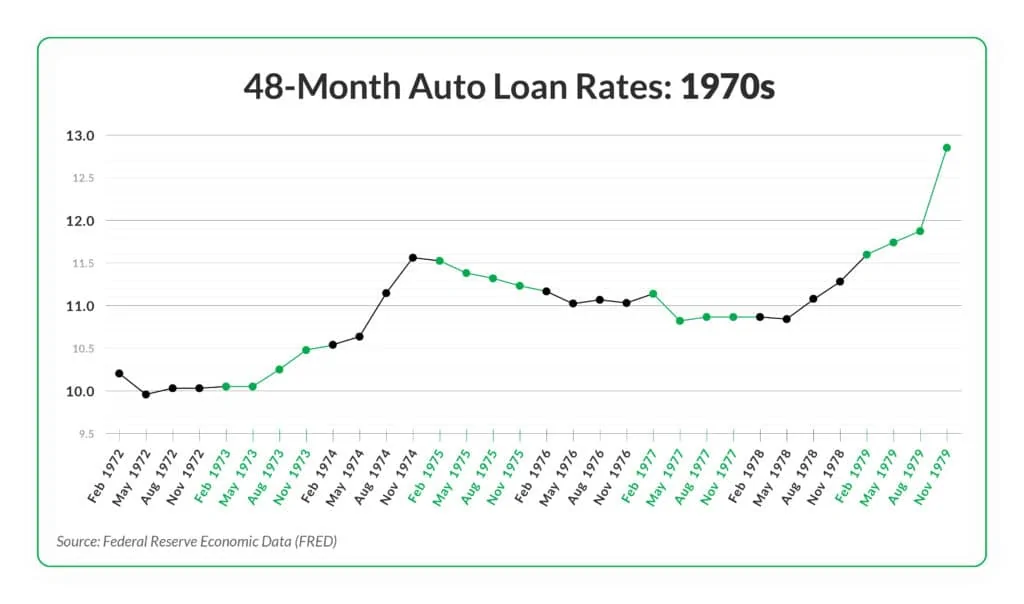
Rates in the 1970's were consistently above 10% hitting a peak of 11.57% in November 1974

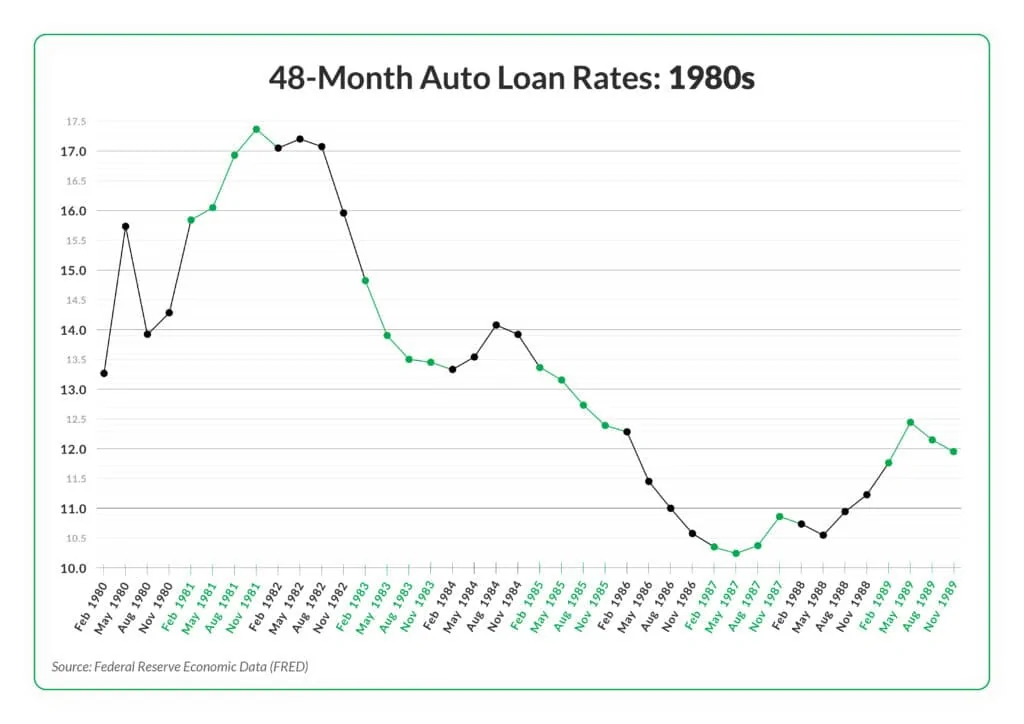
Rates in the 1980's were consistently above 10% hitting a peak of 17.36% by November 1981

Rates in the 1990's ranged from 11.6% in February 1991 to a low of 7.54% in February 1994. Although they would climb again to reach 9.78% in May 1995, they never crested 10%. For the rest of the decade, auto loan rates hung between 8.31% and 9.44%.

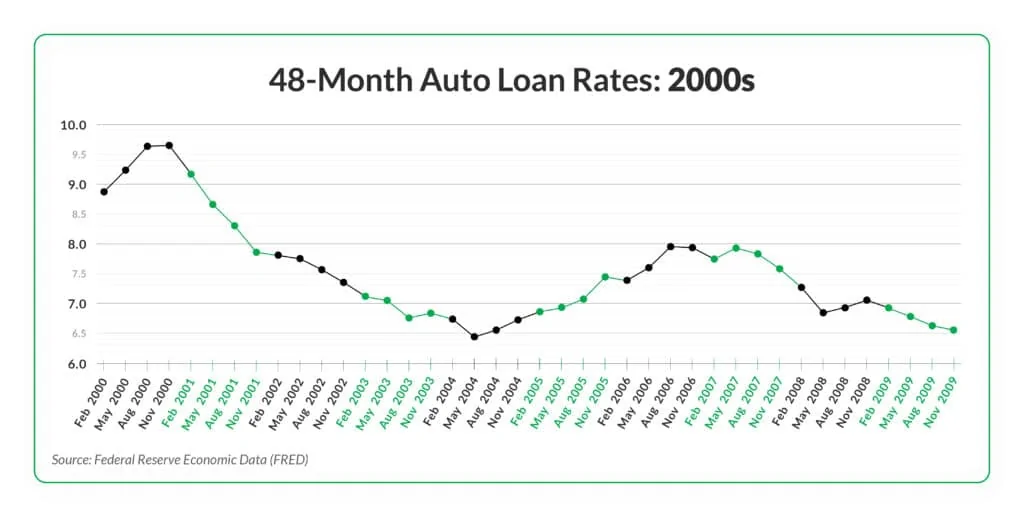
Rates in the 2000's ranged from 9.64% in November 2000 to 6.43% by May 2004

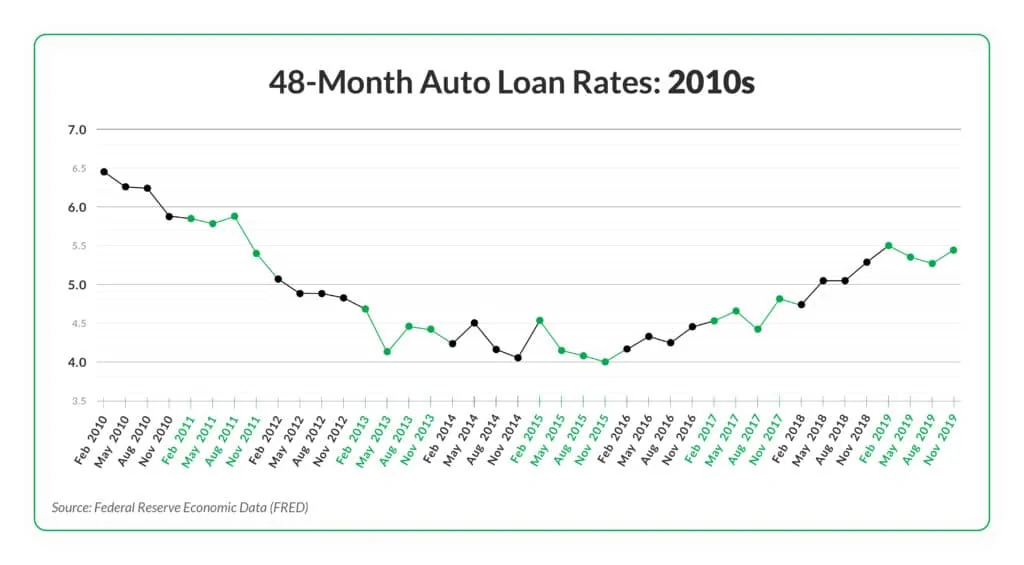
Rates in the 2010's were at their highest in 2011, peaking at 5.89% in August before falling to exceptionally low levels for the first half of the decade. There were moments of slight volatility between 2013 and 2015: Rates sat at 4.13% in May 2013, then rose to 4.5% a year later, immediately sank to 4.06% in November 2014, and then jumped back up to 4.53% by February 2015.

Auto loan rates hit their all-time lowest point in November 2015 at an even 4%. By 2019

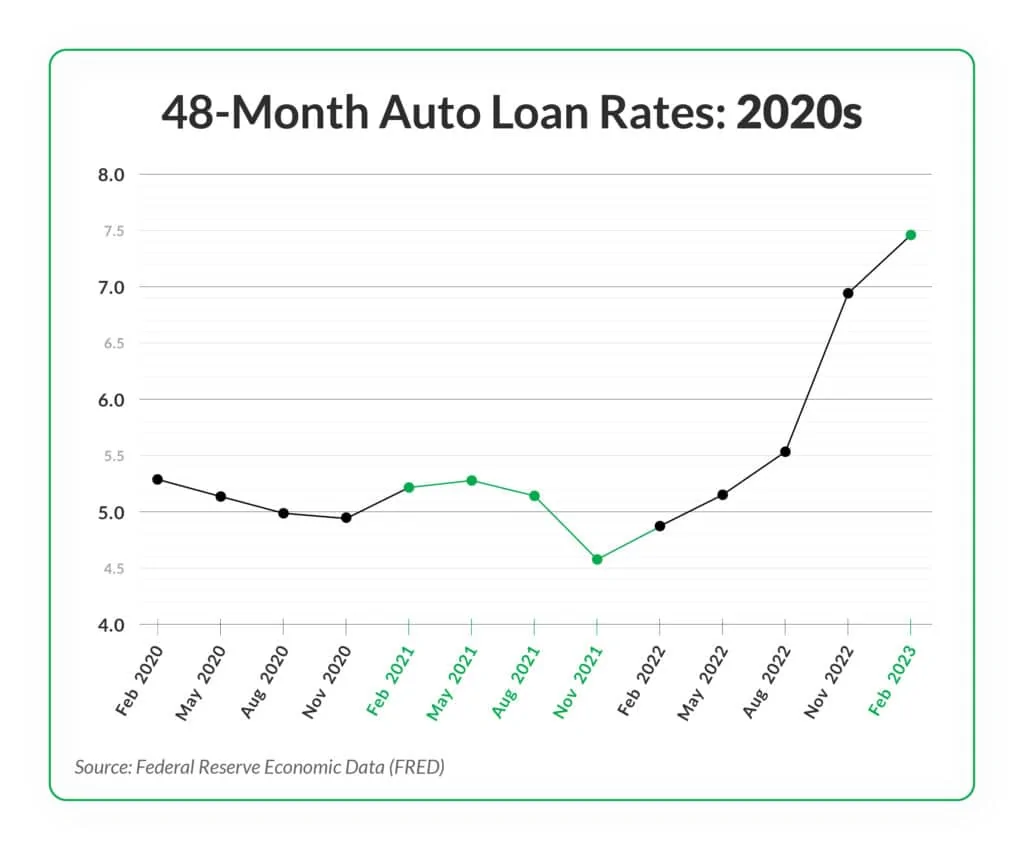
2020-2023 Auto loan rates were significantly influenced by the COVID-19 pandemic and the effect it had on the U.S. economy. Rates started off relatively low in 2020 and continued to decline in the first year of the pandemic. Once the world began to recover, auto loan rates skyrocketed, climbing to 6.94% by November 2022. As of February 2023, which is the most recent data collected by the Fed, rates sat at 7.46%.

Historical Auto Loan Rates


Historical Auto Loan Rates: 48-Month Loans

The Fed began tracking auto loan rates for new cars with 48-month loan terms in February 1972. We’ll summarize the FRED findings by decade below.

1972-1979

When the Fed first began tracking this data in February 1972, auto loan rates sat at 10.2%. They hovered consistently around 10% until about May 1973. The 1973-1975 recession saw rates slowly begin to rise as the country dealt with issues like high inflation, high unemployment and a global stock market crash. Rates peaked at 11.57% in November 1974, and it took several years for them to drop below 11% again.

As the U.S. continued to face high inflation following the recession, this led to a sharper increase in auto loan rates toward the end of the 1970s.

MW-DPR-48-Month-Auto-Loan-Rates-1970s-04-1024x604.jpg


1980-1989

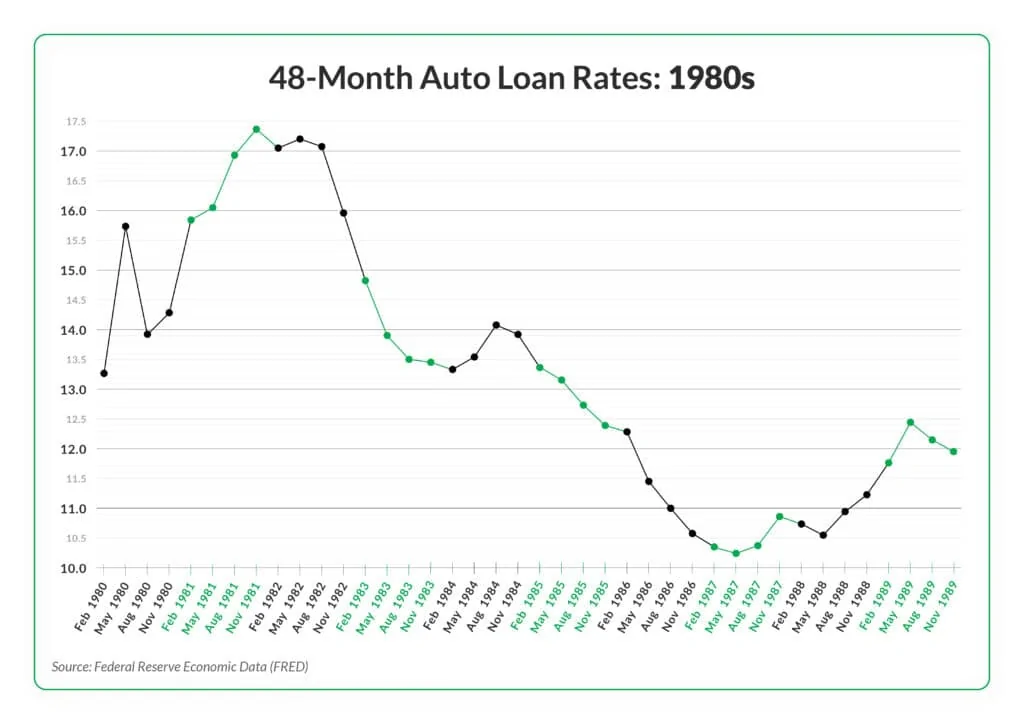
The 1980s started with auto loan rates at an all-time high, reaching a record 17.36% by November 1981. The early ‘80s was a period marked by extreme economic contraction, with the country facing another recession in 1981-1982. Monetary policy focused on controlling the inflation left over from the 1970s, and the Fed raised interest rates to combat this sky-high inflation, leading to high auto loan rates.

By November 1982, rates had begun to come down, dropping 1.39 points from the year before to 15.97%. The downward trend continued through much of the ‘80s as rates saw a relatively steady decline, reaching a low of 10.23% in May 1987. Rates would climb back up to 12.44% by May 1989 but would begin to wane almost immediately.

MW-DPR-48-Month-Auto-Loan-Rates-1980s-02-1024x724.jpg


1990-1999

In August 1990, Iraq invaded Kuwait, causing what’s now referred to as the 1990 oil price shock. A sudden rise in oil prices triggered a mild recession in the U.S., which caused loan rates to remain fairly high at the start of the ‘90s.

However, the recession was short-lived. It ended in March 1991, and the U.S. saw a drastic reduction in auto loan rates following its conclusion. They decreased from 11.6% in February 1991 to a low of 7.54% in February 1994. Although they would climb again to reach 9.78% in May 1995, they never crested 10%. For the rest of the decade, auto loan rates hung between 8.31% and 9.44%.

2000-2009

The early 2000s was another period of decline for new car loan rates, decreasing from 9.64% in November 2000 to 6.43% by May 2004. The 2001 New York City terrorist attack played a significant role in this decline, but rates began to steadily rise again starting in 2004.

The increase in rates continued until the Great Recession struck the economy in 2008, causing a sharp, rapid drop in new automobile loan rates. At the beginning of the downturn, rates stood at 7.27% — by May 2009, they had dropped to 6.79%.

MW-DPR-48-Month-Auto-Loan-Rates-2000s-02-1024x517.jpg


2010-2019

As the economy began to recover in 2010, auto loan rates continued to fall, sinking to 5.87% by November of that year. Rates were at their highest in 2011, peaking at 5.89% in August before falling to exceptionally low levels for the first half of the decade. There were moments of slight volatility between 2013 and 2015: Rates sat at 4.13% in May 2013, then rose to 4.5% a year later, immediately sank to 4.06% in November 2014, and then jumped back up to 4.53% by February 2015.

Auto loan rates hit their all-time lowest point in November 2015 at an even 4%. By 2019, they’d climbed up 1.5%, only to begin falling once the COVID-19 pandemic struck in early 2020.

MW-DPR-48-Month-Auto-Loan-Rates-2010s-02-1024x565.jpg


2020-2023

Auto loan rates were significantly influenced by the COVID-19 pandemic and the effect it had on the U.S. economy. Rates started off relatively low in 2020 and continued to decline in the first year of the pandemic. Once the world began to recover, auto loan rates skyrocketed, climbing to 6.94% by November 2022. As of February 2023, which is the most recent data collected by the Fed, rates sat at 7.46%.

MW-DPR-48-Month-Auto-Loan-Rates-2020s-03-1024x850.jpg


Historical Auto Loan Rates: 60-Month Loans

The Fed only started collecting data on 60-month loans for new cars in August 2006, so the available information isn’t nearly as extensive as it is for 48-month loans.

2006-2009

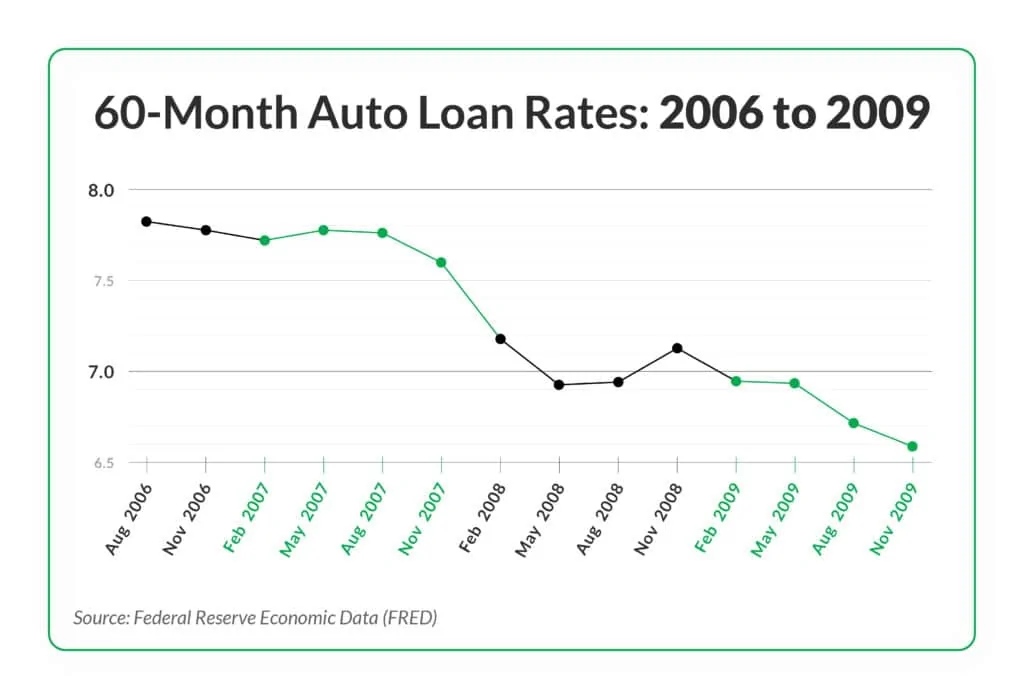
Auto loan rates saw a relatively steady decline from 2006 to 2009, falling from a high of 7.82% in August 2006 to 6.59% in November 2009. The steepest drop occurred between November 2007 and February 2008, when rates fell from 7.6% to 7.18%. During the Great Recession, rates settled around 7% but began falling gradually as the markets recovered.

-60-Month-Auto-Loan-Rates-2006-to-2009-01-1024x699.jpg


2010-2019

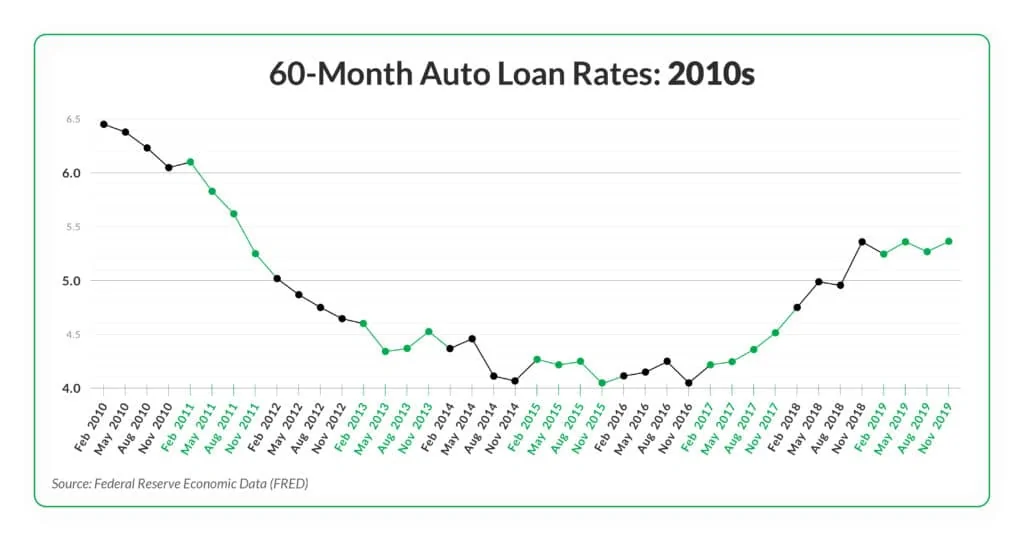
In the 2010s, 60-month auto loans rates saw a similar pattern to 48-month rates, declining steadily for the first four years to a low of 4.05% in November 2015. Rates stayed relatively consistent over the next year, until they began creeping back up in the following two years. From November 2016 to November 2018, rates climbed more than a percentage point from 4.05% to 5.36%. They remained right around that level through the end of 2019, just before the start of the COVID-19 pandemic.

MW-DPR-60-Month-Auto-Loan-Rates-2010s-01-1024x541.jpg


2020-2023

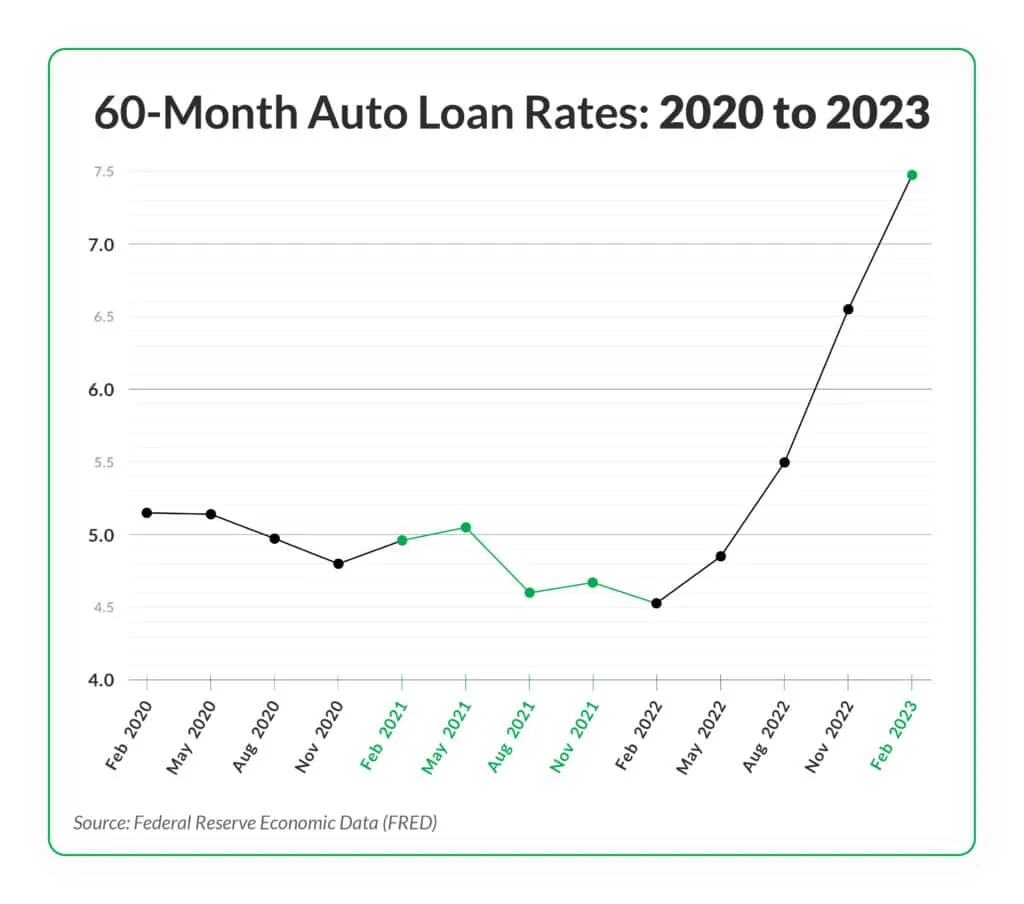
As the Fed cut interest rates in response to the economic effects of the COVID-19 pandemic, auto loan rates began a steady decline through all of 2020. While there were slight changes throughout 2021 and early 2022, rates for 60-month loans stayed between 4.52% (February 2022) and 5.05% (May 2021). By August 2022, rates had climbed to 5.5% and began to rise significantly, hitting 7.48% by February 2023.

-60-Month-Auto-Loan-Rates-2020-to-2023-01-1024x904.jpg


Historical Auto Loan Rates: 72-Month Loans

The Fed’s data for 72-month loans on new cars is the most limited, starting in August 2015.
2015-2019

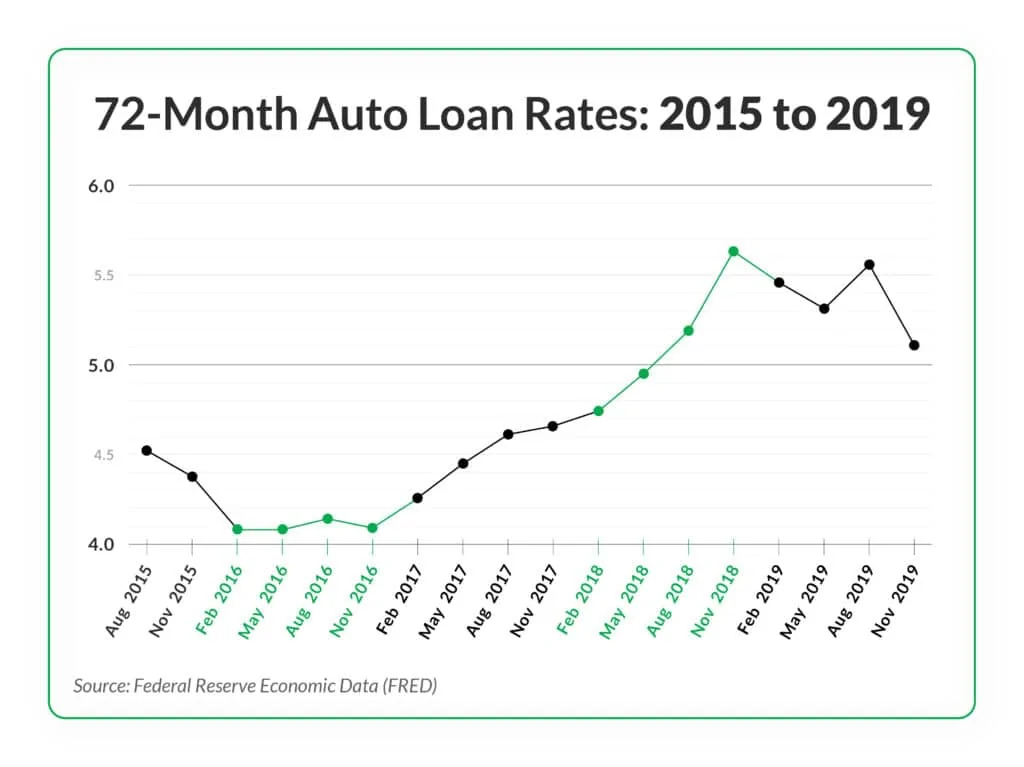
When the Fed first started collecting data on 72-month loans for new autos in August 2015, rates stood at 4.52%. By May of 2016, they’d declined by 0.44 percentage points, landing at 4.08%. From there, rates began a steady rise for most of the remainder of the decade, topping off at 5.63% in November 2018. From there, they stayed between 5% and 5.5% throughout 2019.

-72-Month-Auto-Loan-Rates-2015-to-2019-01-1024x767.jpg


2020-2023

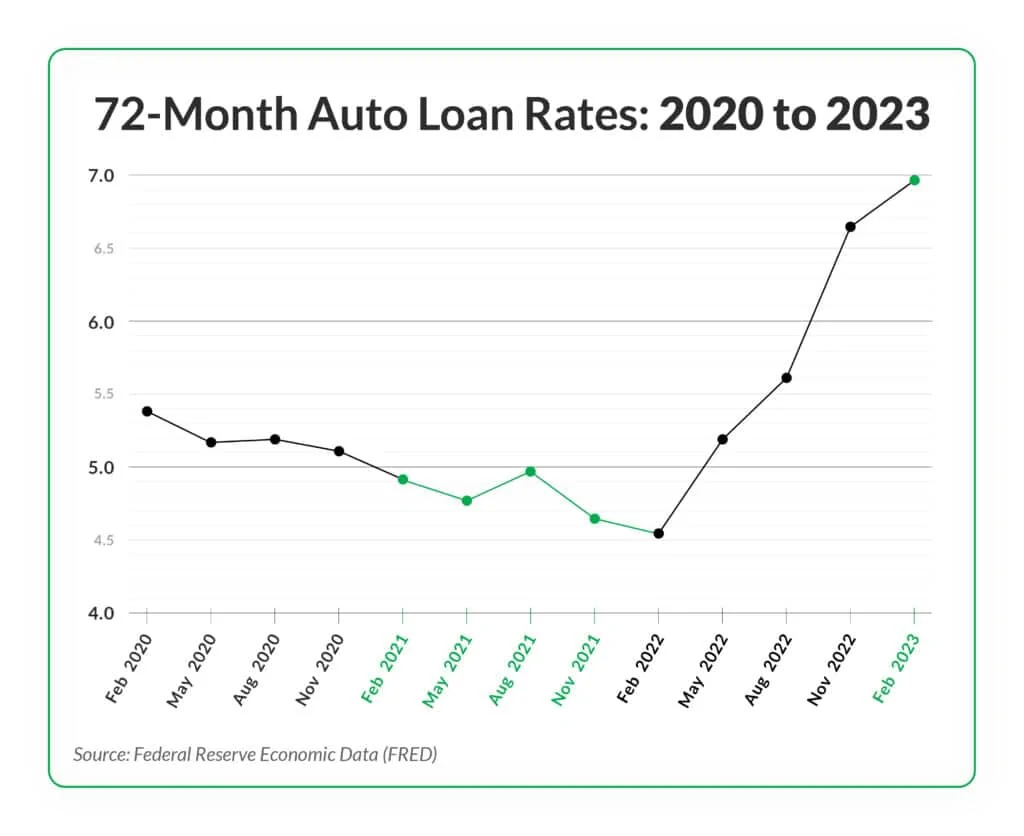
Similar to rates for all other loan terms, 72-month loan rates experienced a drop throughout 2020 and remained low for most of 2021 and early 2022. Rates didn’t rise above 5% again until May 2022, when they reached 5.19%. From there, they increased every few months, reaching 6.97% in February 2023.

-72-Month-Auto-Loan-Rates-2020-to-2023-01-1024x836.jpg


How Did the COVID-19 Pandemic Impact Auto Loan Rates?

Based on Federal Reserve data, auto loan rates experienced a decline during 2020 following the start of the COVID-19 pandemic. This is due in part to the fact that the Fed drastically lowered interest rates to help stabilize the economy during that time. Rates remained low throughout 2021 and early 2022 as the country looked to recover from the economic challenges it faced in an ongoing pandemic.

However, as the U.S. dealt with rising inflation, the Federal Reserve began to take steps in 2022 to counteract it. March 2022 marked the beginning of a series of rate hikes in which the Fed raised rates by five percentage points, with the most recent increase occurring in May 2023.

W-DPR-48-Month-Auto-Loan-Rates-1980s-02-1-1024x724.jpg
In 1980 the average car was around $7,600 which is around $28,000 in 2023 dollars. The current average car price is $48,000. Cars are more expensive.
 

Hager

2.5L Hybrid
Member
First Name
Jake
Joined
Jun 25, 2022
Threads
1
Messages
11
Reaction score
22
Location
iowa
Vehicle(s)
Jeep
Engine
2.5L Hybrid
I would be fine with the rates if banks gave us higher rates for using our money to loan out.
 

RichardCranium

2.0L EcoBoost
Well-known member
First Name
R
Joined
Sep 1, 2023
Threads
20
Messages
1,075
Reaction score
1,463
Location
California
Vehicle(s)
2024 Maverick XL 2.0 AWD 4K CP360
Engine
2.0L EcoBoost
Clubs
 
This thread's been awesome. I'm 26 and am facing the housing affordability crisis mentioned above. I work hard, have two degrees in computer engineering and am paid very well for my age as a software engineer, making well north of the average household income in my state. No student debt, no dependents. However, I can't afford the average home.

To all the "old folks", you need to understand that the COST of houses has FAR outpaced inflation, and the historically low rates have covered up the issue until the winter of 2021-2022 when rates shot up.

My parents bought their place in 2009 for ~$425k, and the estimated value is at $850k+ now. That's a doubling in 14 years! Anyone who bought before the pandemic has been able to enjoy the value of their homes skyrocketing and ended up on top. Anyone who missed that train is completely fucked. I can break out some more numbers if you really need it, but it sounds like plenty of people in this thread already have.


The huge problem in my area is that nobody builds the smaller houses you mention. EVERY new construction is some 2500+ square foot behemoth with asking prices STARTING at $800k, and the owners of the smaller homes you mention are HODLing at sub-3% because they don't want to eat a higher rate up-sizing into the $800k homes.
My sister is a waitress in California and just bought a house this year with high interest rates. It is doable, but you have to sacrifice and probably get a house that isn’t a brand new, almost mansion.
she was originally going to buy a new house before interest doubled, then she had to take a step back and realize that she needs to get a fixer upper.
Sponsored

 
Status
Not open for further replies.


Top