
Sponsored

I Haven't caught a thing. Not a drop. Catch Can

Rick65

2.0L EcoBoost
Well-known member
First Name
Rick
Joined
Sep 1, 2023
Threads
5
Messages
95
Reaction score
135
Location
So Cal
Vehicle(s)
2024 FX4, 4K tow
Engine
2.0L EcoBoost
Clubs
 
You want to do the other side. I had one on each side and removed the one at the rear of engine after a year of getting nothing. The front of engine side catches a lot of oil. I empty it every oil change. This picture is after 3,500 miles.
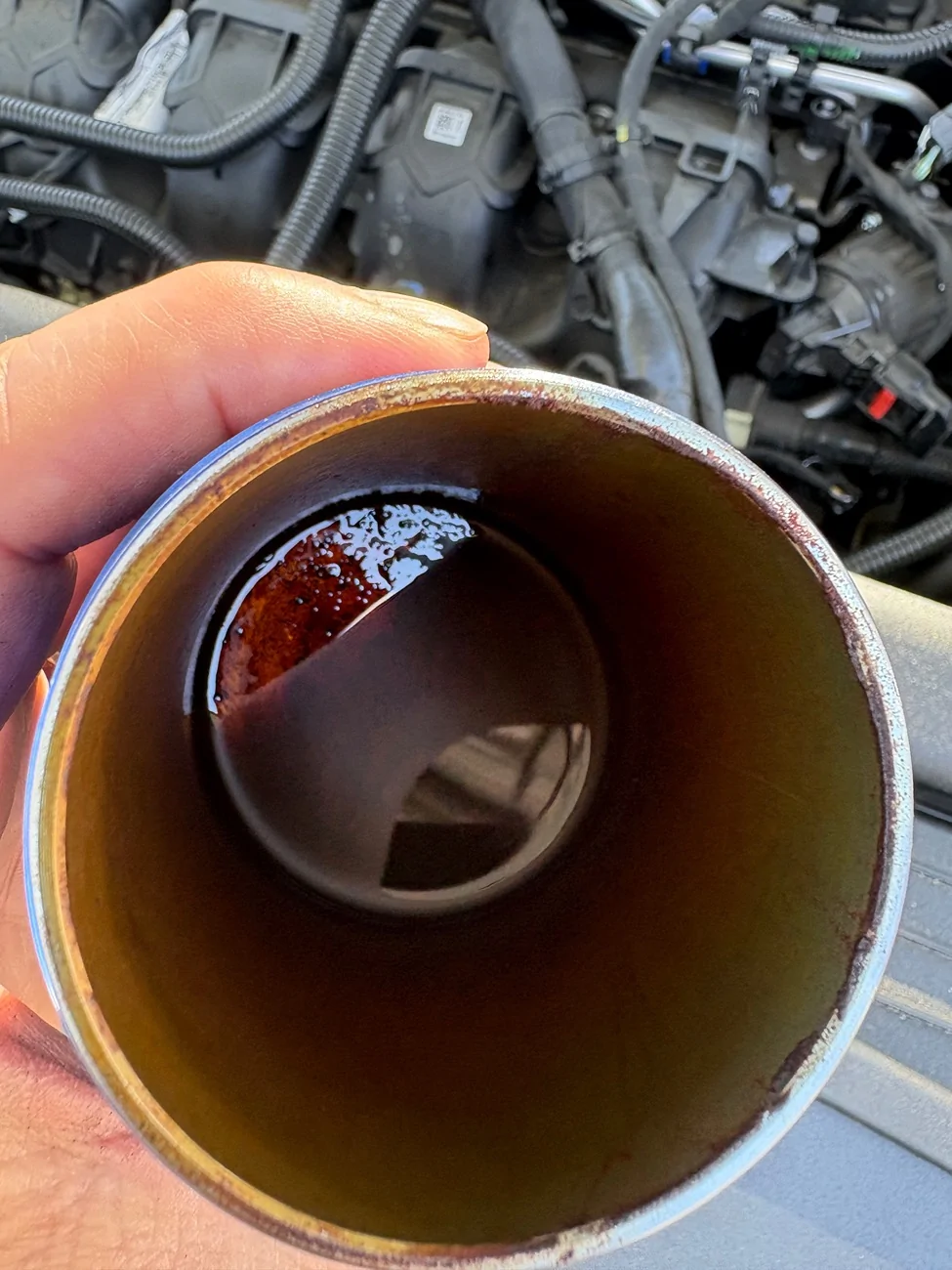
Ford Maverick I Haven't caught a thing. Not a drop. Catch Can IMG_3141
Ford Maverick I Haven't caught a thing. Not a drop. Catch Can IMG_3139
Sponsored

 
OP
OP
gjallen3

gjallen3

2.0L EcoBoost
Well-known member
First Name
Jerry
Joined
May 25, 2025
Threads
22
Messages
367
Reaction score
552
Location
Arizona
Vehicle(s)
2024 Maverick XLT
Engine
2.0L EcoBoost
You should NOT be running low tier el cheapo gas in your Ecoboost. Low tier gas belongs in hit & miss engines. These 2.0 turbocharged engines are considered high performance and as such should be fed at least high tier gas.

As for catch cans, I know nothing about them and not interested in them.
Thanks, I think.
 
OP
OP
gjallen3

gjallen3

2.0L EcoBoost
Well-known member
First Name
Jerry
Joined
May 25, 2025
Threads
22
Messages
367
Reaction score
552
Location
Arizona
Vehicle(s)
2024 Maverick XLT
Engine
2.0L EcoBoost
You want to do the other side. I had one on each side and removed the one at the rear of engine after a year of getting nothing. The front of engine side catches a lot of oil. I empty it every oil change. This picture is after 3,500 miles.
IMG_3141.webp
IMG_3139.webp
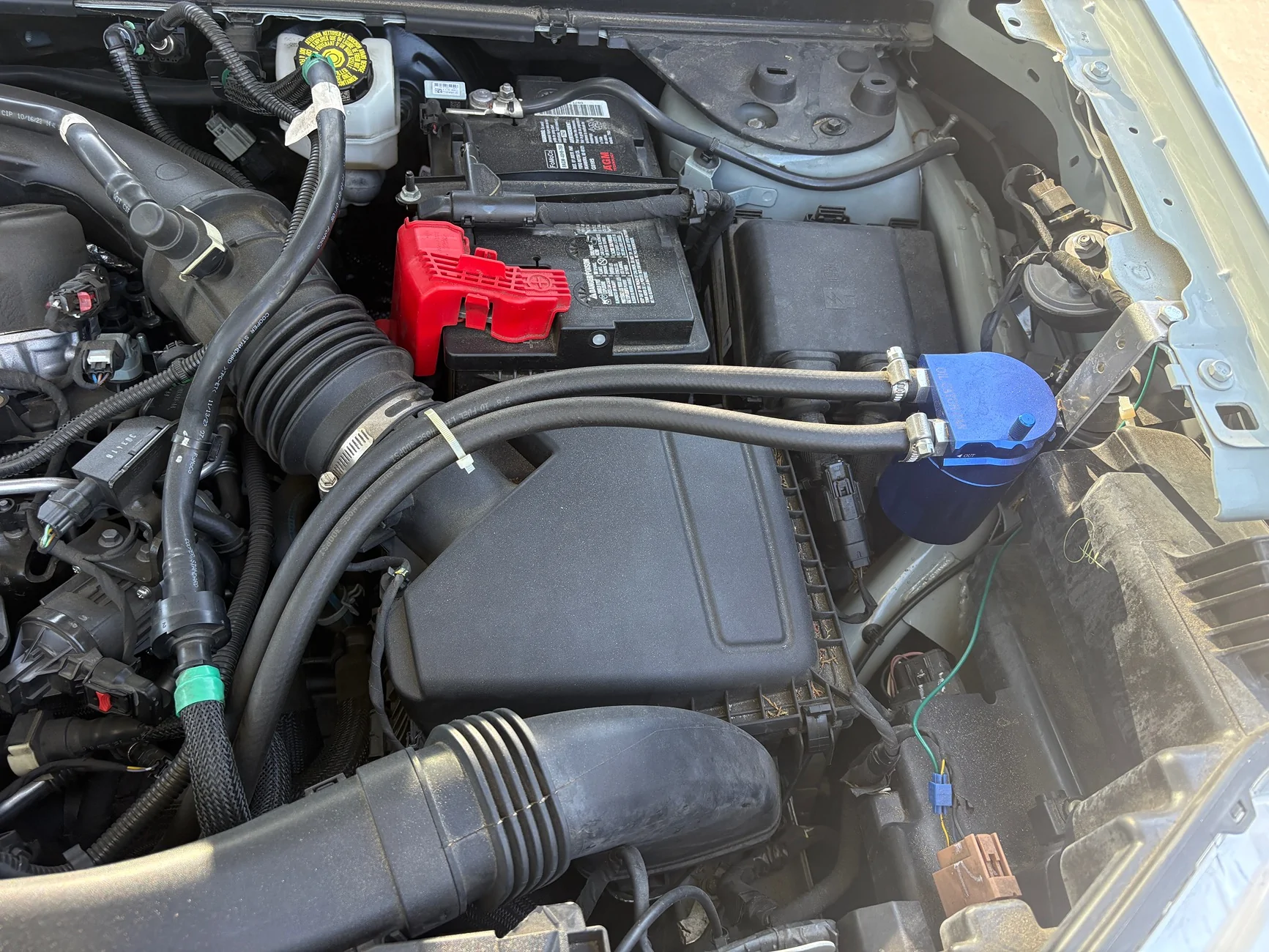
That’s the one I’m talking about. Same location as yours. Not a drop.
 

Rick65

2.0L EcoBoost
Well-known member
First Name
Rick
Joined
Sep 1, 2023
Threads
5
Messages
95
Reaction score
135
Location
So Cal
Vehicle(s)
2024 FX4, 4K tow
Engine
2.0L EcoBoost
Clubs
 
You have a 2024, right? Not the new engine? I would double check the install just in case. I definitely get oil and water in there. I think this is the install video I followed. Good luck.

That’s the one I’m talking about. Same location as yours. Not a drop.
 
OP
OP
gjallen3

gjallen3

2.0L EcoBoost
Well-known member
First Name
Jerry
Joined
May 25, 2025
Threads
22
Messages
367
Reaction score
552
Location
Arizona
Vehicle(s)
2024 Maverick XLT
Engine
2.0L EcoBoost
Yep. Watched that same video and followed it exactly.
 

Sponsored

Rick65

2.0L EcoBoost
Well-known member
First Name
Rick
Joined
Sep 1, 2023
Threads
5
Messages
95
Reaction score
135
Location
So Cal
Vehicle(s)
2024 FX4, 4K tow
Engine
2.0L EcoBoost
Clubs
 
I agree with TBone. I removed my clean side catch can because wasn't getting anything, maybe 1 or 2 drops after several months. On the dirty side, I get oil/water all year.
I see just about zero blow-by/condensate in mine during the summer months. We have a solid four seasons here though, and I definitely catch some in fall through spring. The colder the startups and the shorter the trips the more blow-by/condensate you will experience. Unless you spend a lot of time under boost, I wouldn't recommend you buy a breather (clean) side catch can.
 

tiktokbrainrot

2.0L EcoBoost
Well-known member
Joined
Mar 31, 2026
Threads
0
Messages
213
Reaction score
435
Location
around
Vehicle(s)
91 F250, 20 GLI, 25 Mav XLT
Engine
2.0L EcoBoost
The current 2.0 seems to be really good on the oil separation issue, the factory separator works well. Have we seen any that need walnut blasting yet? We've seen a few users at 80k+ miles and I cant recall any issues so far.

I think most automakers have gotten the hang of separating oil now, as opposed to 10-15 years ago when DI was relatively new on gas cars.
 

CajunMick

2.0L EcoBoost
Well-known member
First Name
Heman
Joined
Oct 15, 2023
Threads
48
Messages
1,002
Reaction score
729
Location
Houston, Texas
Vehicle(s)
2023 XLT Maverick
Engine
2.0L EcoBoost
The factory oil separators, especially the current version, return the liquid oil back into the crankcase. Oil captured on the dirty side catch can would have been put back into the crankcase instead of stuck in the can & associated hoses. Clean side catch can being empty shows the OEM separator is doing a fine job:)
My thoughts too. Maybe the engine separator doing the job.

Not a big fan of turbocharging. If we have to do away with wife‘s Escape, will select plain old naturally aspirated engine. There are some vehicles configured like this, and with automatic tranny, no CVT.
 

Ecorydr

2.5L Hybrid
Well-known member
First Name
Jim
Joined
Mar 16, 2026
Threads
0
Messages
167
Reaction score
218
Location
MO (Missery - home to those who voted for it!)
Vehicle(s)
2026 Maverick Lariat AWD
Engine
2.5L Hybrid
.......
Not a big fan of turbocharging. ........
Same here.... owned them before. They do spin up faster than a supercharger or procharger but the need for heated exhaust to push them is hard on turbo charger components....

"Automotive turbochargers operate in extreme environments, with the hot exhaust turbine and manifold reaching temperatures between 800°C to 1,050°C (1,470°F to 1,920°F) under heavy load. In contrast, the intake "cold" side and compressed air reach around 150°C to 200°C (300°F to 392°F) before passing through the intercooler."

"Under aggressive driving conditions, automotive supercharger housings can reach temperatures of 200°F to 230°F (93°C to 110°C). However, the temperature of the compressed air inside the supercharger can spike to nearly 400°F (204°C) before passing through an intercooler. "
 
Sponsored

Tbone289

2.0L EcoBoost
Well-known member
First Name
Terry
Joined
Jul 18, 2024
Threads
0
Messages
2,183
Reaction score
3,763
Location
MO
Vehicle(s)
'24 Mav FX4, '12 Focus SE Sport, '01 Focus ZX3, '00 Jeep XJ, '67 Bronco
Engine
2.0L EcoBoost
The factory oil separators, especially the current version, return the liquid oil back into the crankcase. Oil captured on the dirty side catch can would have been put back into the crankcase instead of stuck in the can & associated hoses. Clean side catch can being empty shows the OEM separator is doing a fine job:)
Your comment shows a fundamental misunderstanding of the PCV system and how the catch cans are routed.

The dirty side catch can works in addition to the factory oil separator, between the PCV valve and the intake manifold. The dirty side (PCV) catch can catches the liquid that the factory oil separator does not fully separate and return to the crankcase under positive crankcase pressure. Without a PCV catch can, the liquid found in it would travel straight from the factory separator into the intake manifold. The dirty side (PCV) catch can and factory oil separator are only functional while the crankcase pressure is positive relative to the intake manifold pressure.

Under boost, the clean side catch can separates liquids that travel from the valve cover through the breather while positive manifold pressure closes the PCV valve. The PCV valve is fully closed due to negative crankcase pressure (relative to the intake manifold), rendering the block-mounted factory oil separator non-functional. Liquid separated by the clean side can would normally travel from the crankcase through the intake, turbocharger and intercooler due to not being separated by the factory setup.

Since catch cans work in addition to, alongside, the factory oil separator, any liquid found either in clean side or dirty side catch cans is liquid that the factory crankcase ventilation system has failed to separate and return to the crankcase. 100% of the liquid found in the catch cans would be routed through the intake valves with the factory PCV/oil separator configuration.
 
Last edited:

tiktokbrainrot

2.0L EcoBoost
Well-known member
Joined
Mar 31, 2026
Threads
0
Messages
213
Reaction score
435
Location
around
Vehicle(s)
91 F250, 20 GLI, 25 Mav XLT
Engine
2.0L EcoBoost
Same here.... owned them before. They do spin up faster than a supercharger or procharger but the need for heated exhaust to push them is hard on turbo charger components....

"Automotive turbochargers operate in extreme environments, with the hot exhaust turbine and manifold reaching temperatures between 800°C to 1,050°C (1,470°F to 1,920°F) under heavy load. In contrast, the intake "cold" side and compressed air reach around 150°C to 200°C (300°F to 392°F) before passing through the intercooler."

"Under aggressive driving conditions, automotive supercharger housings can reach temperatures of 200°F to 230°F (93°C to 110°C). However, the temperature of the compressed air inside the supercharger can spike to nearly 400°F (204°C) before passing through an intercooler. "
" Internal combustion engines operate with distinct thermal profiles across different components. Engine coolant maintains an average operating temperature of 195 to 220°F (87–105°C), which is the range for optimal efficiency and minimal wear. In contrast, the combustion chamber experiences extreme transient heat during operation, with gas temperatures typically reaching 2,500–2,800°C (4,500–5,000°F) and potentially spiking higher in gasoline engines under load. "

See, I can make numbers bold to seem scary too.

Turbos are not scary. Honda has been making reliable turbocharged engines for many years, as have VW, BMW, Mercedes, kia, hyundai, ece. This also includes Ford, there are plenty of examples of F-150s with ecoboost engines over 300k miles still chugging along without issue.

Just because something gets hot does not mean it is scary.
 

Ecorydr

2.5L Hybrid
Well-known member
First Name
Jim
Joined
Mar 16, 2026
Threads
0
Messages
167
Reaction score
218
Location
MO (Missery - home to those who voted for it!)
Vehicle(s)
2026 Maverick Lariat AWD
Engine
2.5L Hybrid
" Internal combustion engines operate with distinct thermal profiles across different components. Engine coolant maintains an average operating temperature of 195 to 220°F (87–105°C), which is the range for optimal efficiency and minimal wear. In contrast, the combustion chamber experiences extreme transient heat during operation, with gas temperatures typically reaching 2,500–2,800°C (4,500–5,000°F) and potentially spiking higher in gasoline engines under load. "

See, I can make numbers bold to seem scary too.

Turbos are not scary. Honda has been making reliable turbocharged engines for many years, as have VW, BMW, Mercedes, kia, hyundai, ece. This also includes Ford, there are plenty of examples of F-150s with ecoboost engines over 300k miles still chugging along without issue.

Just because something gets hot does not mean it is scary.
Mine came "cut and pssted" off the web, no intent to do so on my behalf - just lazy I guess and didnt think it would offend anyone.

And yes.... ICE do have high internal temps... but since wr are talking about their induction systems... turbos create more heat for turbo related components.

Not scary at all, just more prone to heat issues. Infact, if I was a racer, would go with the turbo. But for my HO garage queen around town convertible, Ill stick with the blower.

Besides who dont like "blowers"...😉
 

tiktokbrainrot

2.0L EcoBoost
Well-known member
Joined
Mar 31, 2026
Threads
0
Messages
213
Reaction score
435
Location
around
Vehicle(s)
91 F250, 20 GLI, 25 Mav XLT
Engine
2.0L EcoBoost
Mine came "cut and pssted" off the web, no intent to do so on my behalf - just lazy I guess and didnt think it would offend anyone.

And yes.... ICE do have high internal temps... but since wr are talking about their induction systems... turbos create more heat for turbo related components.

Not scary at all, just more prone to heat issues. Infact, if I was a racer, would go with the turbo. But for my HO garage queen around town convertible, Ill stick with the blower.
Mine was also cut and paste. Dont think I put in more effort then you did.

Again, heat is not scary. Why would the turbo hitting a temp a fraction of the inside of the engine be a problem? Do you know what metallurgy is? Do you understand what heat resistent metal is?

It's not the 1980s anymore. Turbo heat soak isnt a problem for 99% of drivers. Nor do turbos die just because they get warm. It's OK to evolve past technophobic misinformation and embrace modern technology.
 
OP
OP
gjallen3

gjallen3

2.0L EcoBoost
Well-known member
First Name
Jerry
Joined
May 25, 2025
Threads
22
Messages
367
Reaction score
552
Location
Arizona
Vehicle(s)
2024 Maverick XLT
Engine
2.0L EcoBoost
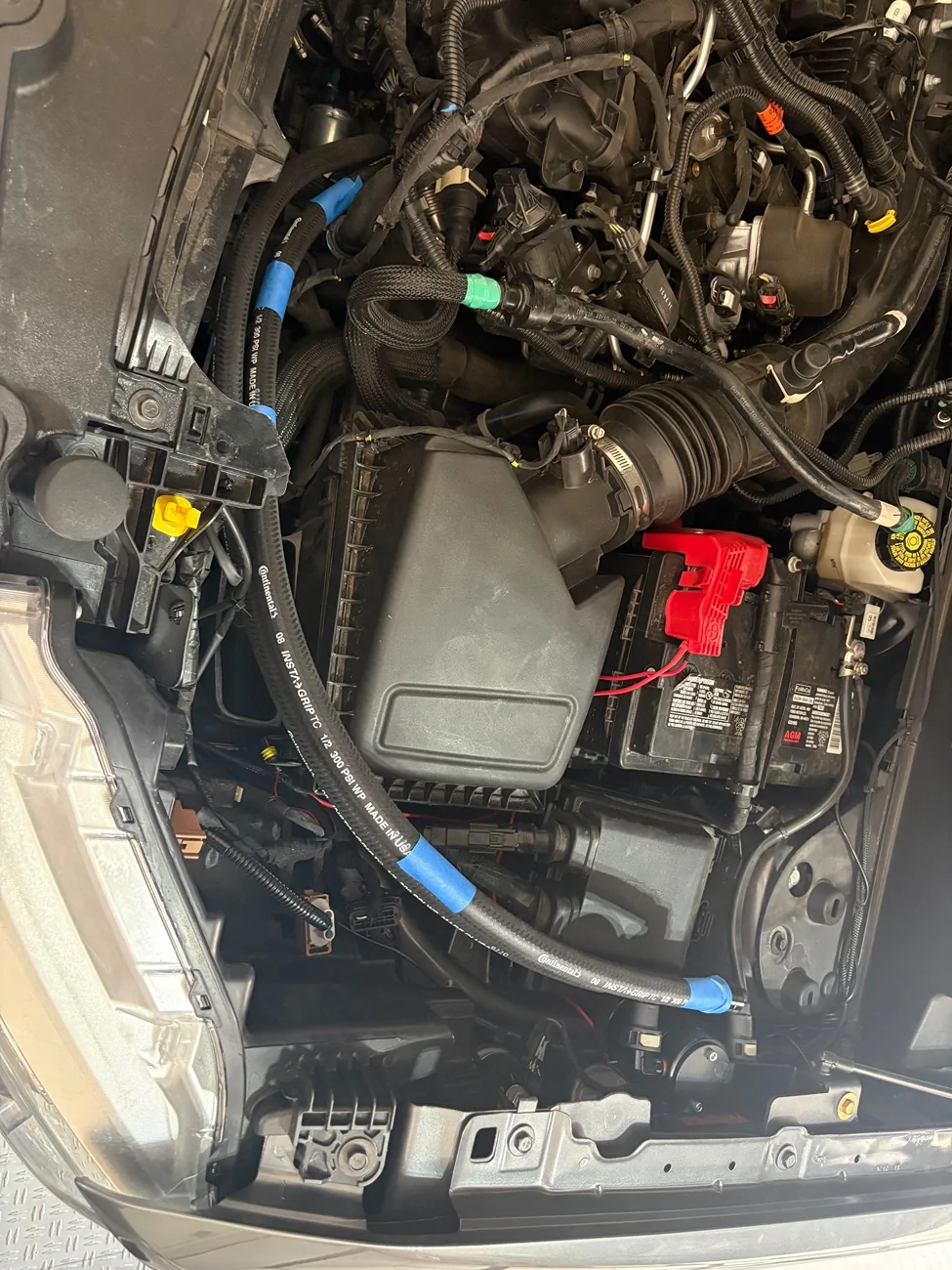
Maybe post a picture in case any members can spot something that looks off.
Here is a picture of my installation. I marked the PCV hose with blue tape so you can see it better. This hose is connected to the PCV on the block. It’s the fitting that moves and swivels. The other is connected to the intake manifold. It doesn’t move or swivel
Ford Maverick I Haven't caught a thing. Not a drop. Catch Can IMG_1334
Sponsored

 
Last edited:


Top