Sponsored

Atkinson Cycle Engine

  • Thread starter Deleted member 5749
  • Start date
  • Watchers 1

Deleted member 5749

Guest
OK boys and girls, time for science lesson. If you're getting the hybrid you may have noticed the references to Akinson Cycle Engine. This is in comparison to the more common Otto Cycle Engine. I've included a link to a video that explains the differnece in a very clear and concise way. This isn't new technology. It's been around for a while and has been in use by Ford since 2011 in the C-Max Hybrid. I've lived with one for 2 1/2 years and I'm a fan,
Sponsored


 

FirstFord

2.5L Hybrid
Well-known member
Joined
Aug 2, 2021
Threads
3
Messages
690
Reaction score
1,336
Location
Massachusetts
Vehicle(s)
VW Jetta
Engine
2.5L Hybrid
Thanks for that Larry.

So we can take three things from this:

1. efficiency in increased (as shown in the vid)
2. torque is lower because temperature and expansion are reduced at the bottom of the power stroke
2. max RPM is reduced (reducing potential HP) due to increased mass and con-rod lever arm of long stroke

And that's why we don't see Atkinson cycle engines in conventional cars; the negatives outweigh the advantages.

But in a hybrid, the traction motor compensates for the shortcomings. Add in regenerative braking and you have a pretty sweet architecture.
 

Bill Cather

2.5L Hybrid
Well-known member
First Name
Bill
Joined
Aug 1, 2021
Threads
6
Messages
146
Reaction score
233
Location
Mesa, AZ
Vehicle(s)
Maverick
Engine
2.5L Hybrid
Thank you sir
 

Darksider

Well-known member
Banned
Joined
Oct 24, 2021
Threads
4
Messages
330
Reaction score
388
Location
Here
Vehicle(s)
Two
Umm there are many Atkinson engines running stand alone. I had one in a Hyundai Elantra that worked just like any other engine.

As far as your negatives goes you are not understanding the engine. The internals are a regular "conventional engine" what is different is the valve opening and closing timing. This is all computer controlled and can be moved to efficient high rpm valve opening. It is variable valve timing so it is adjustable. This gives you the best if both worlds, Atkinson when efficient is needed and conventional when power is needed.
 
OP
OP

Deleted member 5749

Guest
Thanks for that Larry.

So we can take three things from this:

1. efficiency in increased (as shown in the vid)
2. torque is lower because temperature and expansion are reduced at the bottom of the power stroke
2. max RPM is reduced (reducing potential HP) due to increased mass and con-rod lever arm of long stroke

And that's why we don't see Atkinson cycle engines in conventional cars; the negatives outweigh the advantages.

But in a hybrid, the traction motor compensates for the shortcomings. Add in regenerative braking and you have a pretty sweet architecture.
Well said. And my experience with the 2.0 Atkinson hybrid with CVT completely changed my automotive perspective. My last car was a heavily modded Fiat Abarth that dynoed at 210bhp and sucked fuel like a full size SUV. Add to it that it was single handedly raising sea level by a millimeter every time it started and it was clearly time for a change.
 

Sponsored

FirstFord

2.5L Hybrid
Well-known member
Joined
Aug 2, 2021
Threads
3
Messages
690
Reaction score
1,336
Location
Massachusetts
Vehicle(s)
VW Jetta
Engine
2.5L Hybrid
Well said. And my experience with the 2.0 Atkinson hybrid with CVT completely changed my automotive perspective. My last car was a heavily modded Fiat Abarth that dynoed at 210bhp and sucked fuel like a full size SUV. Add to it that it was single handedly raising sea level by a millimeter every time it started and it was clearly time for a change.
210 from an Abarth. Impressive. That was some roller skate! Especially since it doesn't have LSD. Must have been a handful AND a hoot!
 
OP
OP

Deleted member 5749

Guest
210 from an Abarth. Impressive. That was some roller skate! Especially since it doesn't have LSD. Must have been a handful AND a hoot!
I spent far too much money on it. Big turbo, FMIC, tune, 4" intake, and 100 octane low lead made for some very torquey giddyup.
 
Last edited by a moderator:

fbov

Well-known member
First Name
Frank
Joined
Jun 28, 2021
Threads
0
Messages
452
Reaction score
502
Location
Bushnell's Basin
Vehicle(s)
2020 Escape Hybrid
OK boys and girls, time for science lesson. If you're getting the hybrid you may have noticed the references to Akinson Cycle Engine. ... has been in use by Ford since 2011 in the C-Max Hybrid. I've lived with one for 2 1/2 years and I'm a fan,
(media deleted)
For the record:
C-Max was introduced in the US in late 2012 as a 2013 model. I had an October 2012 build.
All Ford Escape hybrids (introduced in 2005) use Atkinson-cycle engines.

This is not a bad video (no sound, right?) but as with nearly all YouTube videos, there's a kicker; he's comparing different displacement engines. The principles are there, but the Atkinson approach goes much farther.

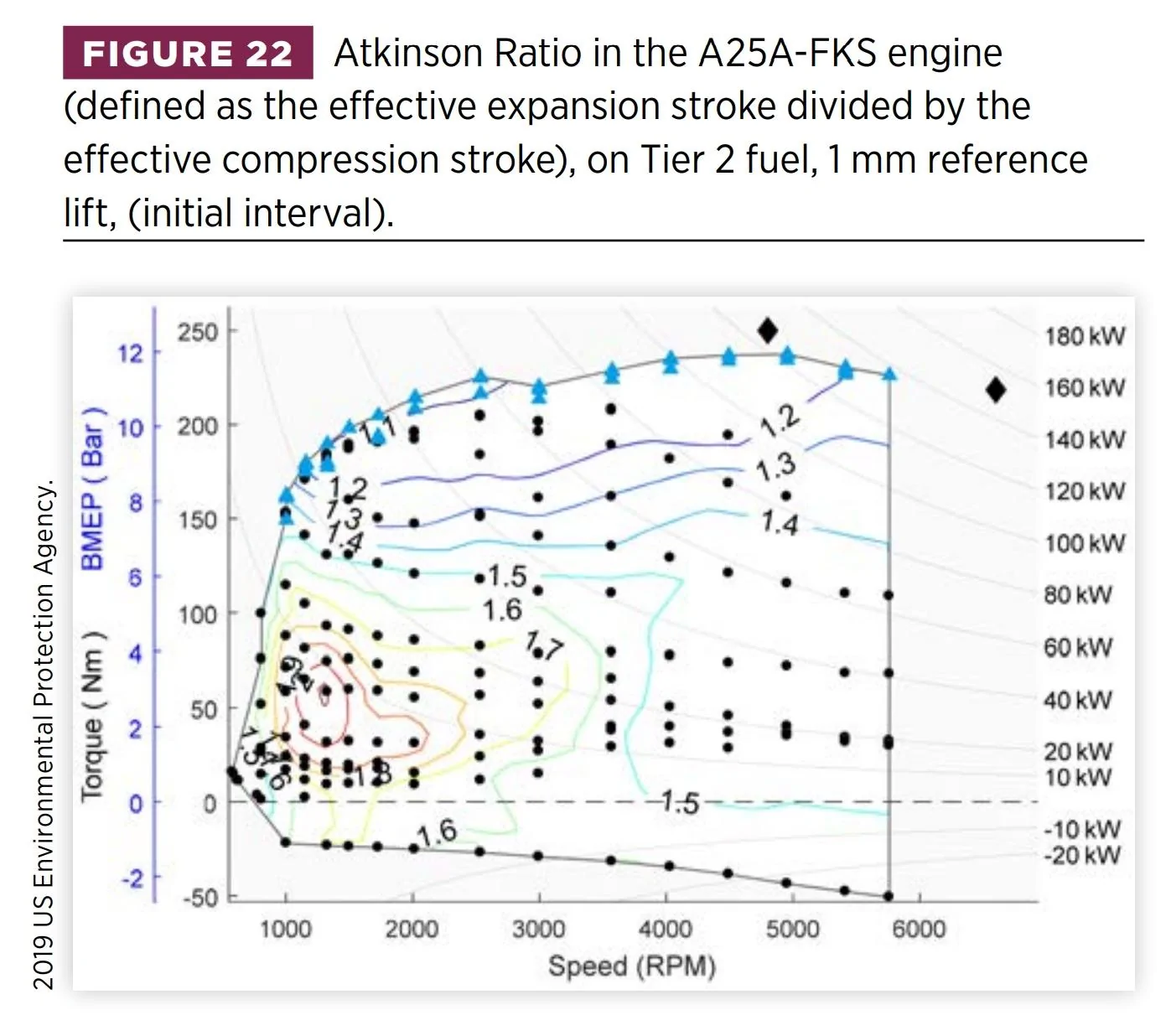
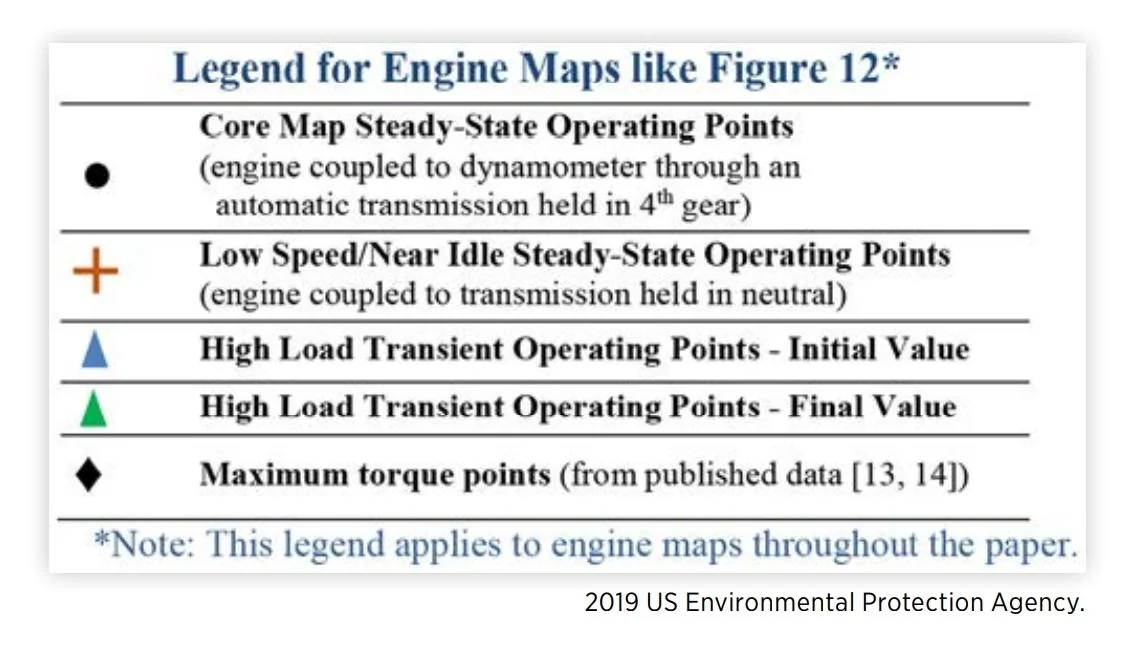
This chart is from an SAE report (available if interested). It shows torque vs. RPM for a range of Atkinson-cycle operating points. Only the top curve, maximum torque, uses a 10% volume difference typically ascribed to Atkinson engines. Lesser torque output requires less cylinder fill, allowing up to 2x the expansion in the bull's eye, and pushing efficiency close to 40%. This is the state of the art.

Ford Maverick Atkinson Cycle Engine Atkinson Map for Toyota 25L

Ford Maverick Atkinson Cycle Engine Atkinson Map Key for Toyota 25L


And yes, the "negative torque" region of the chart is real; it's being slowed by the charging motor. In the C-Max (introduced in 2013), Ford called it "negative split" mode. Only available under low load with a very full HVB.
 

clavicus

2.5L Hybrid
Well-known member
Joined
Jun 21, 2021
Threads
37
Messages
1,483
Reaction score
2,050
Location
North Carolina
Vehicle(s)
2022 Maverick Lariat Lux Hybrid
Engine
2.5L Hybrid
And yes, the "negative torque" region of the chart is real; it's being slowed by the charging motor. In the C-Max (introduced in 2013), Ford called it "negative split" mode. Only available under low load with a very full HVB.
Is that essentially for long downhill engine braking situation?
 

Autonomous

Well-known member
First Name
Steve
Joined
Oct 29, 2021
Threads
3
Messages
64
Reaction score
136
Location
PNW
Vehicle(s)
2021 Dodge Promaster 3500, Icky 2015 Outback
Hmmm. Could the A cycle have less engine braking under closed throttle allowing more of the vehicles kinetic energy to be recovered?
 
Sponsored

fbov

Well-known member
First Name
Frank
Joined
Jun 28, 2021
Threads
0
Messages
452
Reaction score
502
Location
Bushnell's Basin
Vehicle(s)
2020 Escape Hybrid
Is that essentially for long downhill engine braking situation?
...less engine braking...
No engine braking in my Escape. The C-Max Hill Assist defaulted to engine braking after it filled the HVB. Very loud... The Escape Hybrid switches to a lower-power regen mode, perhaps using a resistive load, and remains silent.

In terms of off-throttle behavior, regen braking is calibrated to feel like a conventional drivetrain, slight drag at speed, but it won't stop completely, and will creep forward once stopped.
 

MysticRob

Well-known member
First Name
Rob
Joined
Oct 30, 2021
Threads
0
Messages
61
Reaction score
66
Location
Boise, ID
Vehicle(s)
2013 Ford C-Max
Good info here. I had an 08 Escape Hybrid we liked, though it always kicking on the ICE above 20-25MPH always sucked. We sold it and got a 2013 C-Max Hybrid about 6 years ago and we really like it. Pretty easy to beat the EPA figures with a light throttle touch (we get 46MPGs in town, higher than the 42 it's rated for), but on some crappier CA fwy trips i was getting 52MPGs, though that was with a ton of stop/go driving and keeping distance between me and the clowns constantly slamming on their brakes.
Looking forward to hopefully buying a new Mav H at some point.
Sponsored


Top