

Sponsored

FluxDrive

2.5L Hybrid
Member
First Name
Mike
Joined
Sep 16, 2025
Threads
2
Messages
5
Reaction score
31
Location
Tennesee
Vehicle(s)
2023 Ford Maverick Hybrid XLT
Engine
2.5L Hybrid
Just had the brake fluid flushed and replaced on my Ford Maverick XLT Hybrid at the dealership at 64,000 miles — and I'm genuinely impressed with the result.

From the day I drove this truck off the lot brand new, it had a noticeable harsh, grabby feeling right at the very end of coming to a stop — that moment when the system transitions from the electric regenerative braking back to the friction brakes. It was subtle but consistent, and it bugged me every single time. After the flush and fresh fluid, that rough handoff is completely gone. Braking is smooth all the way through to a full stop now.

Living in Memphis, TN, the high humidity here is no joke, and brake fluid is hygroscopic — it absorbs moisture from the air over time. That moisture lowers the fluid's boiling point and can affect brake feel and performance. If you're in a humid climate like the Mid-South, degraded fluid is something that can sneak up on you without you even realizing it.

Ford's own manual recommends a brake fluid flush every 3 years, and after experiencing this firsthand, I'd say don't skip it — especially if you own a hybrid where the braking system is doing extra work blending regenerative and friction braking. It's a relatively inexpensive service that clearly makes a real difference.
Sponsored
 

ListedGuru

Well-known member
Joined
Jul 12, 2022
Threads
35
Messages
688
Reaction score
443
Location
MI
Vehicle(s)
Mercury
Engine
Undecided
Just had the brake fluid flushed and replaced on my Ford Maverick XLT Hybrid at the dealership at 64,000 miles — and I'm genuinely impressed with the result.

From the day I drove this truck off the lot brand new, it had a noticeable harsh, grabby feeling right at the very end of coming to a stop — that moment when the system transitions from the electric regenerative braking back to the friction brakes. It was subtle but consistent, and it bugged me every single time. After the flush and fresh fluid, that rough handoff is completely gone. Braking is smooth all the way through to a full stop now.

Living in Memphis, TN, the high humidity here is no joke, and brake fluid is hygroscopic — it absorbs moisture from the air over time. That moisture lowers the fluid's boiling point and can affect brake feel and performance. If you're in a humid climate like the Mid-South, degraded fluid is something that can sneak up on you without you even realizing it.

Ford's own manual recommends a brake fluid flush every 3 years, and after experiencing this firsthand, I'd say don't skip it — especially if you own a hybrid where the braking system is doing extra work blending regenerative and friction braking. It's a relatively inexpensive service that clearly makes a real difference.
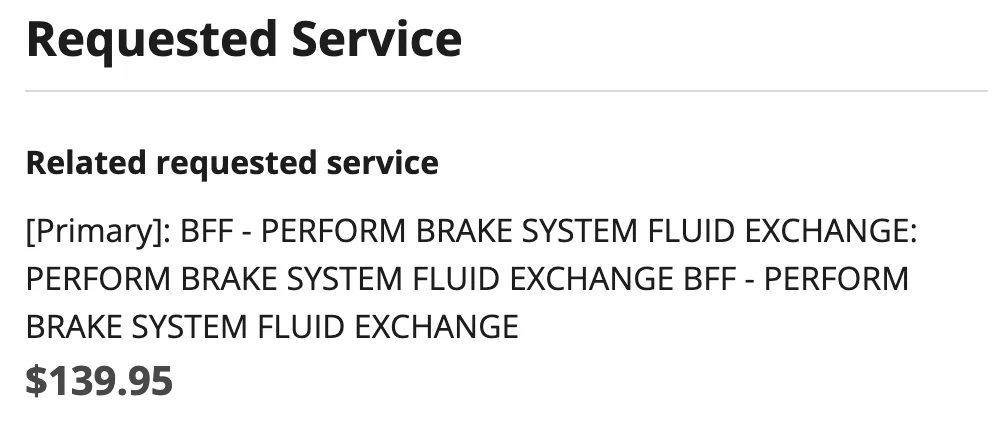
Glad to hear that your brake feel improved after the brake fluid flush. I'm curious what the dealership charged you for it?
 
OP
OP
FluxDrive

FluxDrive

2.5L Hybrid
Member
First Name
Mike
Joined
Sep 16, 2025
Threads
2
Messages
5
Reaction score
31
Location
Tennesee
Vehicle(s)
2023 Ford Maverick Hybrid XLT
Engine
2.5L Hybrid
Im sure prices vary but I trusted this particular dealership.
Every 3 years I can put aside $46.65 💪
 

Sponsored

TheSEARCH

2.5L Hybrid
Well-known member
First Name
Dan
Joined
Mar 22, 2022
Threads
26
Messages
1,475
Reaction score
1,319
Location
14150
Vehicle(s)
ford
Engine
2.5L Hybrid
Just had the brake fluid flushed and replaced on my Ford Maverick XLT Hybrid at the dealership at 64,000 miles — and I'm genuinely impressed with the result.

From the day I drove this truck off the lot brand new, it had a noticeable harsh, grabby feeling right at the very end of coming to a stop — that moment when the system transitions from the electric regenerative braking back to the friction brakes. It was subtle but consistent, and it bugged me every single time. After the flush and fresh fluid, that rough handoff is completely gone. Braking is smooth all the way through to a full stop now.

Living in Memphis, TN, the high humidity here is no joke, and brake fluid is hygroscopic — it absorbs moisture from the air over time. That moisture lowers the fluid's boiling point and can affect brake feel and performance. If you're in a humid climate like the Mid-South, degraded fluid is something that can sneak up on you without you even realizing it.

Ford's own manual recommends a brake fluid flush every 3 years, and after experiencing this firsthand, I'd say don't skip it — especially if you own a hybrid where the braking system is doing extra work blending regenerative and friction braking. It's a relatively inexpensive service that clearly makes a real difference.
At three years I will do it myself. With forscan its easy. The Mav bleeds the brakes for you. You just need to open the bleeder valve and keep the master full. Glad it worked well So you put 64 K miles in three years. More than double what I will do.
 

Cherokee

2.0L EcoBoost
Well-known member
Joined
Jan 3, 2025
Threads
51
Messages
3,813
Reaction score
7,232
Location
North Carolina
Vehicle(s)
2004 Ford Escape Platinum, 2024 Ford Maverick Lariat 2.0L AWD
Engine
2.0L EcoBoost
I usually flush it at about 75,000 or four years.
It needs to be done.

The part I cannot understand is how moisture gets into this pressurized system.

The only time the revisor gets opened is when you press the calipers In for new brake pads.

On our motorcycles in Florida we did it every other year.
 

Automan21

2.0L EcoBoost
Well-known member
First Name
Mel
Joined
Nov 30, 2023
Threads
23
Messages
1,066
Reaction score
930
Location
CT
Vehicle(s)
‘23 XLT Eco AWD 4K Tow
Engine
2.0L EcoBoost
At three years I will do it myself. With forscan its easy. The Mav bleeds the brakes for you. You just need to open the bleeder valve and keep the master full.
How does that work???
 

Darryl

2.5L Hybrid
Well-known member
First Name
Darryl
Joined
May 9, 2025
Threads
13
Messages
1,611
Reaction score
3,610
Location
Tallahassee Florida
Vehicle(s)
2025 Maverick XLT HYBRID
Engine
2.5L Hybrid
Clubs
 
I usually flush it at about 75,000 or four years.
It needs to be done.

The part I cannot understand is how moisture gets into this pressurized system.

The only time the revisor gets opened is when you press the calipers In for new brake pads.

On our motorcycles in Florida we did it every other year.
In spite of the seal on the brake cap, the system is not completely sealed in most cases.
 
Sponsored

notfast

Well-known member
Joined
Jun 25, 2021
Threads
2
Messages
932
Reaction score
1,461
Location
Los Angeles CA
Vehicle(s)
Nissan Frontier PRO-4X Lux FFV
Engine
Undecided
it had a noticeable harsh, grabby feeling right at the very end of coming to a stop — that moment when the system transitions from the electric regenerative braking back to the friction brakes.
Huh, I recently drove a '26 hybrid for a few hundred miles and didn't notice anything when the vehicle transitioned from regenerative braking to friction braking. I'll have to keep an eye out next time.

especially if you own a hybrid where the braking system is doing extra work blending regenerative and friction braking
I'd say the friction braking system is doing less work on a hybrid since they tend to only engage in the last few MPH to bring the car to a stop, or if you really step on the brakes for a quick stop. I've regularly seen Toyota and other Ford hybrids with 200,000+ miles on the original brake pads.

That's a great price in my opinion for dealership service. I'd expect that price at an independent or a chain shop.

How does that work???
That's one of the neat things about a series-parallel hybrid like the Maverick. And also one of the downsides for the average driveway mechanic. Pressing the brake pedal doesn't automatically force fluid out. It more like commands the braking system to determine how much regenerative braking versus mechanical braking to engage (don't worry, there is a mechanical failsafe where if the electronic braking system fails, the front brakes can be mechanically actuated).

Instead, to bleed the brakes/change the brake fluid on a hybrid, you use an OBD tool with bidirectional communication and that has brake bleed functionality. Just navigate to the brake bleed function, go through the setup steps, and when you're ready to bleed, hit "bleed" and crack the first bleeder it tells you to.

The OBD tool will then command the various pumps and solenoids to pump fluid out. It's definitely a one-person job. Once the fluid is sufficiently clear, close the bleeder, hit "next" on the OBD tool, and go to the wheel it tells you to. Rinse and repeat until all four wheels are done.

There may be a way to put the Maverick into a service mode by jumping pins in the OBD or some other combination of actions (seat belt buckled, door opened and closed, gear shifted, etc) but I am not sure. I know for Toyota hybrids there is, but it's by far easier to use an OBD tool.
 

Probity

2.5L Hybrid
Well-known member
Joined
Jul 6, 2021
Threads
9
Messages
329
Reaction score
551
Location
Covington LA
Vehicle(s)
'24 Silverado CCSB 2.7 (a Mav. Hybrid next time?)
Engine
2.5L Hybrid
Tell me how water enters a closed system. Specifically, tell me.
How does it ‘leak’ into the system??
If possible, site documentation from a reputable source.
Bob
I don’t know what you consider a “reputable source”. I get it that saying “well by uncle’s neighbors friend works on cars and he said….” Isn’t exactly gospel. And simple AI-generated crap doesn’t cut it either. And I don’t always consider Wikipedia a completely reliable source either. But there are plenty of tech sites, mechanics references etc online that mention potential ways water can get get into your hydraulic brake system. The lowly brake fluid reservoir cap with a diaphragm is a common potential trouble spot.

Probably a better question is – how does (moisture-laden) air get into the system? There are a number of potential leak paths, most of the following say basically the same thing (more info than you ever wished for):

Moisture in Brake Fluid: How It Gets in and Why It Matters – Drive Smart Tools
Common Paths For Moisture Entry
  • Brake fluid reservoirs are vented to equalize pressure. Imperfect seals or cracked caps allow ambient humidity to contact the fluid, accelerating moisture uptake.
  • Older or damaged seals, rubber hoses, and gland fittings can be permeable to water vapor or create micro-leaks that introduce humidity from the environment into the fluid loop.
  • Opening the system for pad/rotor service, bleeding, or fluid replacement can expose fluid to moisture in the shop air if proper procedures aren’t followed.
  • Heat from braking can cause temperature fluctuations that drive water vapor to migrate within the system, especially if the fluid is intermittently exposed to air during maintenance.
  • In humid climates, ambient moisture can diffuse into the reservoir through imperfect seals or during top-offs, particularly when using unsealed or non-original containers.
Brake Fluid Moisture: Why It Rises Even in ‘Sealed’ Systems - Fluid Fixers
Even in sealed brake systems, moisture can find its way in through various entry points over time. Rubber hoses and seals are porous, allowing water vapor to seep in gradually. Damaged or aging brake lines, along with worn seals or leaks, create additional pathways for moisture to enter. The master cylinder cover isn’t completely airtight, so moisture can infiltrate there too. Factory filling might introduce air and moisture if not properly sealed, and when you shorten or open hydraulic lines during maintenance, moisture can easily get in. Even small cracks or imperfections in fittings and joints serve as entry points. Over time, these pathways allow moisture to accumulate inside the system, despite the system being designed to be sealed. Porous materials in the brake system components facilitate moisture ingress, making it difficult to keep the system completely dry.

How do brake lines get air in them?
  • Leaks and loose fittings: Corroded steel lines, pitted flare seats, aging rubber hoses, and loosened or undertorqued banjo bolts can admit air, especially when the pedal is released and the system briefly pulls a slight vacuum. Copper crush washers reused on calipers are a frequent culprit.
  • Low fluid level in the reservoir: If the master cylinder reservoir runs low—or sloshes on a steep incline or hard cornering—ports can be uncovered, letting air enter the circuits.
  • Improper bleeding or service: Letting the master run dry, skipping a bench-bleed on a new master cylinder, using the wrong bleed sequence, or vacuum-bleeding without sealing bleeder threads can all pull air into lines. Leaving the reservoir uncapped during long service can also aerate and contaminate fluid.
  • Opening the system for repairs: Replacing calipers, hoses, wheel cylinders, or hard lines introduces air by default. ABS hydraulic control units (HCU) can trap bubbles unless their solenoids and pump are cycled with a scan tool.
  • Fluid boiling and vapor formation: Moisture contamination lowers brake fluid’s boiling point. Under heavy braking, fluid can flash to vapor (gas), which behaves like air in the line. When it cools, some vapor recondenses but microbubbles may remain.
  • Aging seals and components: Hardened caliper piston seals, wheel-cylinder cups, and master-cylinder seals can allow micro-ingress of air during pressure changes, even if visible leakage is minimal.
  • Damage or corrosion: Rusted lines can develop pinholes that admit air without obvious fluid drips, particularly after cooling cycles when the system contracts.
  • ABS events and pad service: Aggressive ABS cycling or pushing caliper pistons back without opening the bleeder can send aerated or dirty fluid upstream; ABS modulators can trap air until properly bled with the correct procedure.
  • Reservoir cap or diaphragm issues: A faulty cap won’t usually put air directly into lines, but it accelerates moisture absorption and can contribute to boiling and vapor formation under load.
Air in the Brake Lines: Symptoms, How It Happens & Fixes | AutoNation Mobile Service
When air enters the brake lines, which house and circulate brake fluid, it reduces the pressure in the brake system, leading to ineffective braking.
But how does air find its way into the brake line in the first place?
Here are a few ways it could happen:

1. Air Gets Trapped in Brake Fluid Reservoir
The brake fluid reservoir, which supplies each brake line with the brake fluid, may let air into the system.
Here’s how:

  • Wear and tear from regular use increases the distance the brake pad needs to move to make contact with the brake rotor. To maintain the distance between the brake pad and the brake rotor, the brake caliper piston has to extend further.
  • This extension causes the braking system to use more brake fluid to function, creating a void in the brake fluid reservoir.
  • Whenever you open the brake fluid reservoir, air fills the void. The trapped air then enters the brake line, leading to braking problems.
2. Water Enters the Brake Fluid
Brake lines require brake fluid that isn’t contaminated with water, dust, or dirt.
Here’s how water-contaminated brake fluid can introduce air pockets in your brake system:

  • Brake fluid is hygroscopic, meaning it absorbs water from the air. That’s why the brake fluid in your car collects moisture over time.
  • Water-saturated brake fluid reaches high temperatures due to the heat generated during braking, causing it to boil and produce steam.
  • The pressure in the braking system compresses the steam, forming large air pockets in the brake line.
Water in Brake Fluid: How It Gets in and Why It Matters – River Cities Running Board
Water can enter brake fluid through several pathways. The most common is moisture infiltration through the reservoir cap and vented reservoir design. Over time, the cap seal and reservoir neck allow tiny amounts of air and humidity to seep in, particularly in vehicles that sit for long periods or in humid climates.
Leaking or degraded rubber components, such as seals, o-rings, and brake lines, can also introduce moisture. In severe cases, external contamination from improper service or a poorly sealed master cylinder can allow water to bypass the intended closed system. Even routine brake bleeding and replacement can inadvertently introduce moisture if the new fluid isn’t compatible or if the system isn’t properly sealed afterward.
Condensation forms when the system temperature fluctuates. In cold weather, air contains moisture that can condense inside the reservoir. During heavy braking, heat raises the fluid temperature, increasing the risk that the absorbed water will reach its boiling point and form vapor pockets.


rust - What are the details regarding the cause of brake fluid contamination, and why can't an air-tight brake reservoir lid largely solve this issue? - Motor Vehicle Maintenance & Repair Stack Exchange
For the most part, the hydraulic portion of the braking system is air-tight when in good working order. The cap on the reservoir creates a seal, and then has flexibility to allow the amount of fluid in the reservoir to decrease over time without breaking the air-tight seal.
NOTE: The reason it needs to be able to do this is so as the brake pads wear on a disk/rotor setup, the caliper piston extends outward towards the rotor and stays there. The extra fluid needs to be given to the caliper to still be able to apply braking force.
While the hydraulic portion of the braking system is basically air-tight, it isn't completely air-tight. You aren't taking into consideration that the rubber or soft components of the system, such as brake lines and even the cap seal of the reservoir, are air permeable. This can allow air/moisture into the fluid. Mind you, it isn't a lot of moisture, but it adds up over time. Even if you had something on the cap to remove the air or replace it with something else, moisture ladened air will still be absorbed through the other soft parts of the braking system and the fluid will still become contaminated over time.


Brake Master Cylinder Reservoir Cap PartTerminologyID 1728 | Diaphragm and Sensor Fitment Guide — PartsAdvisory
The cap's role in controlling moisture entry into the brake fluid is more important than most buyers realize. Brake fluid is hygroscopic - it absorbs moisture from the atmosphere. Fresh DOT 3 brake fluid has a dry boiling point of approximately 401 degrees F. After absorbing 3-4% moisture (which can happen in 2-3 years with a properly sealed cap, or in under a year with a damaged cap), the boiling point drops to approximately 284 degrees F. Moisture-contaminated fluid is the root cause of caliper bore corrosion (PartTerminologyID 1704), phenolic piston swelling (PartTerminologyID 1724), and brake fade under sustained braking.
A damaged cap that allows accelerated moisture absorption does not produce an immediately noticeable symptom. The brake pedal feels normal. The brakes stop the vehicle. The damage accumulates silently over months until the fluid's boiling point has degraded enough to cause fade during a panic stop, or until the moisture has corroded enough caliper bore surface to cause piston seizure. This slow, invisible degradation is why the cap matters far more than its $10 price tag suggests
.

The Brake Fluid Reservoir Cap Isn’t “Just a Cap”—It’s a Carefully Engi
People call brake hydraulics a “sealed system,” and from a pressure standpoint that’s mostly true. But the reservoir lives in a different reality: it has to accommodate fluid level changes without creating weird pressure or vacuum conditions. That’s where the cap design earns its keep.
1) It has to vent—without inviting trouble
As brake pads wear, caliper pistons sit farther out, and more fluid stays in the calipers. That means the reservoir level gradually drops. The space above the fluid increases, and the system needs a controlled way to equalize with atmospheric pressure. The cap provides that venting path, but it’s not supposed to be a wide-open door for dust and humidity.
2) It helps slow moisture contamination (not eliminate it)
Most passenger vehicles use DOT 3, DOT 4, or DOT 5.1 brake fluid, which are glycol-based and naturally absorb moisture over time. The cap can’t change chemistry, but it can reduce how aggressively the reservoir “breathes” as temperatures rise and fall. That matters because moisture is what chips away at boiling point and encourages corrosion inside expensive brake components.
3) It’s the front line against contamination
The reservoir is a convenient access point, which also makes it an easy place to accidentally introduce debris or chemical contamination. A cap that seals correctly, with intact sealing surfaces and a properly seated diaphragm (when equipped), is what keeps the system from being exposed every time the hood is opened.
4) It supports consistent warning behavior
Many reservoirs incorporate a fluid level sensor. While the sensor is typically in the reservoir body, cap fit and sealing still matter. A cap that doesn’t belong on that reservoir can create sealing problems, contamination problems, and sometimes a general “something’s off” feeling that shows up later as a comeback.

Older vehicles often used straightforward vented caps. They did the basic job: cover the reservoir and allow pressure equalization. As under-hood environments got hotter and brake systems got more complex, that approach had to improve.
On many modern designs, you’ll find a flexible diaphragm under the cap. Think of it as a moving barrier that follows the fluid level. Instead of leaving a big pocket of air sitting above the fluid, the diaphragm reduces the amount of air in direct contact with the brake fluid. Less air exposure generally means fewer opportunities for moisture exchange.
This is the underappreciated part: that diaphragm isn’t just a gasket. It’s effectively a dynamic volume compensator. It helps reduce the in-and-out “breathing” that can otherwise happen during heat cycles.
 

Alfetta159

2.5L Hybrid
Well-known member
Joined
Jul 2, 2025
Threads
5
Messages
273
Reaction score
584
Location
Vacaville, California
Vehicle(s)
2023 Ford Maverick Lariat, 2014 Chevrolet Spark
Engine
2.5L Hybrid
It's funny because I have an appointment with the dealership for an oil change. I read in the manual that it needs a BF flush at three years, and well, mine's a 2023 as well so I thought I would see if they thought it was time.

Funny thing is that I've only got 15 thousand miles, so it seems a bit much. (Yes, I know how BF works with moisture, no need to explain...)
Sponsored


Top