
Sponsored
Loading


Maverik - Adventure's First Stop stores found throughout the west all have 88 octane Clear Gas (ethanol-free) at the pump (with the blue handle). It is perfect for the Maverick hybrid.Only non ethanol I’ve ever seen is 93 Octane.
My engine and Turbo like the real gas.
"Clear gas" is a term for non-ethanol gasoline, which is petroleum-based fuel without the renewable fuel additive ethanol. Owners report this fuel can provide benefits like improved mileage and smoother operation, especially for the hybrid model, while reducing the risk of engine damage from water absorption or corrosion.
The Ford Maverick's owner's manual specifies a minimum of 87 octane regular gas, and many drivers use non-ethanol gasoline for its advantages, particularly if the vehicle is stored for long periods.

I get what you are trying to say.Ever seen an expiration date on a bottle of water?
Did you know that water, ALL water is
FOUR BILLION years old ?
No ? I didn’t think so.
:’P
Stuff can "grow" in stale stored water.
Chemicals can leech from the container into stored water. So while inorganic, it's a good idea to have dates on stored water for good health.
A whole bunch of water is 4 billion years old. But I personally created some fresh new water today, and I destroyed some water today. You probably did too.
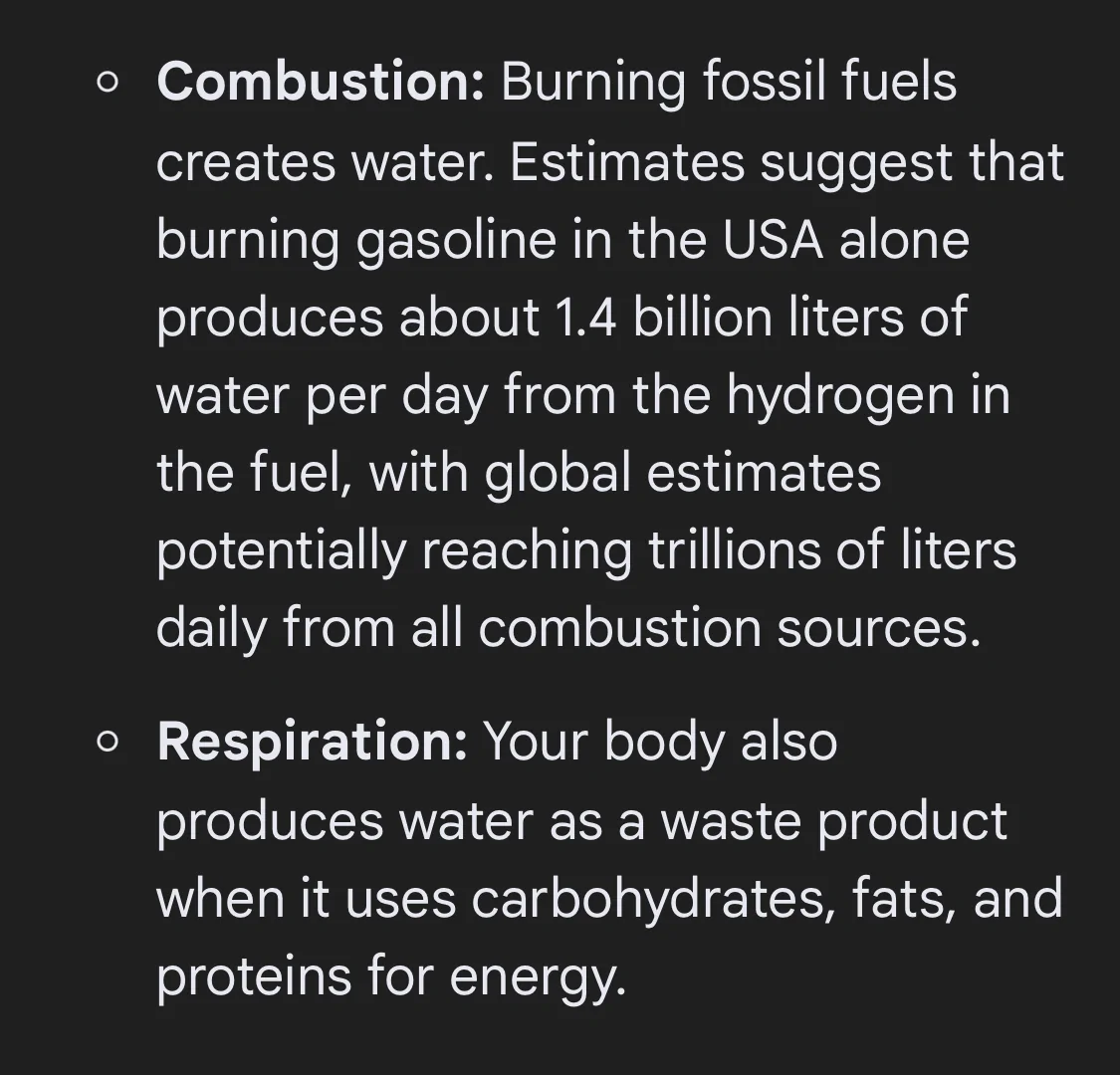
Burning fossil fuels, as one example binds hydrogen and oxygen creating new water.
Charging a wet cell battery is one example of destroying water by generating small amounts of hydrogen gas and oxygen gas.
If you drove anywhere today, you destroyed some water and made some new water.
There's literally thousands of examples of ways to make new water.
But I would agree a large fraction of the ocean is very old water.
Small amount. But true.
OP
OP


- Thread starter
- #65
Almost all EV’s in North America are powered by “Dirty Energy” - electricity generated by coal & fossil fuels.But the real geniuses will want EV grade.
If Tesla was able to build EV “pumps” using only hydro, solar, and wind - they could charge a premium & market it? Add a “Clean Energy+” sticker to “pump”?
Sponsored
OP
OP
- Thread starter
- #66
Enough to cause a puddle under your muffler’s weep hole.Small amount. But true.
In 2023, renewable energy accounted for about 21% of total U.S. utility-scale electricity generation, with wind and hydroelectric power being the largest contributors. This percentage has been growing, with wind and solar energy showing significant increases in recent years.
So 21% of EV miles are zero emission miles.
So 21% of EV miles are zero emission miles.

- First Name
- Bobby
- Joined
- Feb 5, 2022
- Threads
- 25
- Messages
- 611
- Reaction score
- 734
- Location
- Orlando fla.
- Vehicle(s)
- 2023 maverick
- Engine
- 2.0L EcoBoost
$2.86 in Orlando right now. And if you use your Costco credit card it brings it down to $2.72 a gallon because of the 5% back on card. Love COSTCOI only use Top Tier from Costco. They also happen to be the cheapest around me. No brainer.
OP
OP
- Thread starter
- #69
EV’s are made with an incredibly dirty manufacturing process. Worse than ICE. Solar Panel & Wind Turbine manufacture is filthy too.In 2023, renewable energy accounted for about 21% of total U.S. utility-scale electricity generation, with wind and hydroelectric power being the largest contributors. This percentage has been growing, with wind and solar energy showing significant increases in recent years.
So 21% of EV miles are zero emission miles.
Maybe someday the dirt to product manufacture for Solar Panels, Wind Turbines, and EVs will be powered entirely by no maintenance solar & wind power - but until then your carbon footprint is first world humongous.
Of course, our lives depend on electricity. If we lost our electric grid we would all croak. Air would be cleaner though. Silver lining.
Naw.EV’s are made with an incredibly dirty manufacturing process. Worse than ICE. Solar Panel & Wind Turbine manufacture is filthy too.
Maybe someday the dirt to product manufacture for Solar Panels, Wind Turbines, and EVs will be powered entirely by no maintenance solar & wind power - but until then your carbon footprint is first world humongous.
Of course, our lives depend on electricity. If we lost our electric grid we would all croak. Air would be cleaner though. Silver lining.
BEV are imperfect.
But incrementally a move in the right direction.
Smaller & lighter vehicles are necessary.
Ridiculous to use a big truck or SUV to move people.
A 5 Horsepower motor can move people 25 times faster than walking.
This is the key.
Git rid of excesses.
Last edited:
Sponsored

- Joined
- May 26, 2025
- Threads
- 28
- Messages
- 1,093
- Reaction score
- 1,523
- Location
- Niagara Region, ON
- Vehicle(s)
- 2025 Lariat Hyb AWD 4K, '25 Escape PHEV, Versa, T&C
- Engine
- 2.5L Hybrid
Detergent is always used in tiny quantities... for example, dish soap, a teaspoon does 20 liters, 20,000ml of water, or washing a typical family of four meals worth of dishes, so that's 5ml into 20,000 already, but it's lower than that even, because dish soap is 10% active ingredients and 90% water, salt, perfume, color and crap. Even if you give a goodass squirt for Thanksgiving pans cleanup you probably don't exceed 0.3 per thousand. Same with laundry detergent, even "concentrated" or garage hand cleaner, it's all bulked up, actual detergent content is relatively little.I LOVEthis post.
Thank you for adding it.
"1 to 3 gallons of additive is added to each 8,000 or 10,000 gallon tanker."
When you DIY and add a pint to your 15 gallon tank, I can see that doing something helpful.
15 x 128 oz per gallon = 1920 ounces
Pint = 16 oz
16/1920 = 8 parts per thousand cleaner
At the station you pay sometimes a lot extra for:
384 oz / 1,280,000 oz = 0.3 parts per thousand cleaner.
Scam.
Marketing.
But you do you.
Deleted member 45110
Guest
Would you like a cup of ancestors tea?All water is just recycled dinosaur waste water.

Deleted member 45110
Guest
First get rid of excuses!This is the key.
Git rid of excesses.
- First Name
- bill
- Joined
- Apr 30, 2025
- Threads
- 12
- Messages
- 954
- Reaction score
- 1,439
- Location
- Richmond, CA
- Vehicle(s)
- 2024 Maverick XL
- Engine
- 2.5L Hybrid
In my area, we have an optional power company called MCE (Marin Clean Energy) that buys it's power from renewable power plant sources like solar, hydro, and wind. At first they were even more expensive than PG&E, but recent price hikes by PG&E to 50+ cents/kWh have made MCE cheaper. MCE has to pay PG&E to use it's cables/infrastructure to distribute, so they still get a cut, and I'm sure they are regularly raising those fees, because they have a monopoly on the distribution infrastructure.Almost all EV’s in North America are powered by “Dirty Energy” - electricity generated by coal & fossil fuels.
If Tesla was able to build EV “pumps” using only hydro, solar, and wind - they could charge a premium & market it? Add a “Clean Energy+” sticker to “pump”?
I don't think anyone has claimed that electricity and by association EVs are "perfectly clean". Even if the generation is non-fossil fuel, the equipment to make, transport, and store it is likely made utilizing fossil fuels. The main things is reduction/elimination of tailpipe pollution. The pollution created by powerplants that burn coal, natural gas, etc. to make electricity is FAR less per kWh than those same fuels (mainly gas/diesel) used in an internal combustion engine in a vehicle. Those millions of little engines running around are harder to maintain or keep track of than just a couple mega powerplants with up to date equipment and constant monitoring.
Also of note; solar modules, wind turbines, hydroelectric turbines, etc. may be made via "dirty" processes, but they keep on producing power long after that process is over with much less pollution than equipment mfg'd to make power burning fossil fuels. And THAT equipment also has a big mfg pollution footprint. And of course there are the lithium batteries that ICE holdouts keep pointing fingers at; they also have a very long lifespan that more than negates the pollution caused by their creation. AND they can be recycled in to new materials. And there are a number of ways to make industrial batteries that do not use lithium or cobalt, they are just lower in capacity and higher in weight. Some, though, can take an almost instant charge, like a capacitor, from equipment capable of delivering it.
But yeah, Top Tier gasoline is the preferred stuff for any modern ICE vehicle.
Nice last line to keep the message "on topic"!


Sponsored
Similar threads


- Replies
- 41
- Views
- 3,238


- Replies
- 75
- Views
- 8,097


