
Sponsored

Catch Can Content Analysis?

First Name
Justin
Joined
Jul 31, 2023
Threads
4
Messages
13
Reaction score
20
Location
York PA
Vehicle(s)
2024 Maverick
Engine
2.0L EcoBoost
NOT trying to start a flame war, but this is a question I haven't seen answered anywhere in several days of searching. If your google-fu is better than mine, feel free to link me and maybe this will be a quick thread.

I realize there's a lot of passion and opinion on catch cans. With this being my first direct injection engine it's not a subject I was familiar with and I'm trying to research to make my own decision whether or not I will install one on my Maverick when it finally comes in. In my research I've seen that:

  1. Depending on your driving conditions, catch cans will collect varying amounts of "content". It seems like higher loads, higher altitudes, humidity, etc. all have an effect on how much these devices catch.
  2. Depending on your driving conditions, catch cans will collect varying distributions of "content". For those same reasons above, as well as depending on the type of engine, it seems like these devices catch different percentages of water, fuel, and oil.

I have yet to find any articles or videos where someone has sent off the contents of their catch can collections for analysis like I see people do for their oil changes. I'd be particularly interested in seeing the results for our 2.0 Ecoboost engines.

Most of the Ecoboost videos I've seen the contents SEEM visually to be mostly water and fuel, with a small amount of oil. From researching, fuel is a good thing to spray over the valves as it helps burn off the accumulated crud. And water, in moderation, seems to also have a cleansing effect.

So to me it would SEEM to me that I PERSONALLY would lean towards NOT installing a catch can as long as in MOST driving situations the Ecoboost has a very low % of oil in the catch can contents as I would ASSUME that it would for the most part be a self cleansing system. (Caveat: I'm certain over time and in certain driving conditions this WILL accumulate and necessitate walnut blasting to clean them off. I'm OK with paying for that service 100K from now as that'll be 8 years with how much I drive. However it's the horror stories of this happening far sooner that has me researching.)

I have seen some generic catch can videos where they're catching thicker, darker contents that seem to have a higher quantity of oil in them, but that has been for other makes/model engines and especially those with higher mileage.

So on to the question. Has anyone done this analysis with our 2.0 Ecoboost engine? Does anyone with a catch can installed want to do this? I'd be open to kicking in a few bucks to pay for the analysis so we'd all have more data to make our decisions on.

Thanks.
Sponsored
 

Tiger Dude

2.0L EcoBoost
Well-known member
First Name
Skip
Joined
Sep 21, 2022
Threads
2
Messages
793
Reaction score
1,212
Location
Louisiana USA
Vehicle(s)
2023 XL
Engine
2.0L EcoBoost
You are not going to find any in-depth analysis of catch cans. Catch cans are an "I feel" item, not an "I know" item. It is possible that they are needed but manufacturers don't want to put a device under the hood that requires regular service when that service involves disposing of oily waste. It's also possible they provide exactly zero (or even a negative) value.

My only suggestion is that if you put one on you do it in a way that makes it easy to return to stock if you have to take the truck in for warranty service. I can't see how they can hurt anything, unless you're doing the ones that vent to atmosphere.
 

fossil

2.0L EcoBoost
Well-known member
First Name
ernie
Joined
Aug 23, 2020
Threads
48
Messages
3,432
Reaction score
5,792
Location
ohio
Vehicle(s)
95 SVT Cobra Mustang, HPR Lariat Tremor
Engine
2.0L EcoBoost
plenty of posts about installing cans but not about emptying them 🤷‍♂️
 

Black MavRick

2.0L EcoBoost
Active member
First Name
Rick
Joined
Sep 11, 2023
Threads
4
Messages
31
Reaction score
61
Location
Huntley, IL
Vehicle(s)
2023 Maverick XLT Tremor
Engine
2.0L EcoBoost
Clubs
 
NOT trying to start a flame war, but this is a question I haven't seen answered anywhere in several days of searching. If your google-fu is better than mine, feel free to link me and maybe this will be a quick thread.

I realize there's a lot of passion and opinion on catch cans. With this being my first direct injection engine it's not a subject I was familiar with and I'm trying to research to make my own decision whether or not I will install one on my Maverick when it finally comes in. In my research I've seen that:

  1. Depending on your driving conditions, catch cans will collect varying amounts of "content". It seems like higher loads, higher altitudes, humidity, etc. all have an effect on how much these devices catch.
  2. Depending on your driving conditions, catch cans will collect varying distributions of "content". For those same reasons above, as well as depending on the type of engine, it seems like these devices catch different percentages of water, fuel, and oil.

I have yet to find any articles or videos where someone has sent off the contents of their catch can collections for analysis like I see people do for their oil changes. I'd be particularly interested in seeing the results for our 2.0 Ecoboost engines.

Most of the Ecoboost videos I've seen the contents SEEM visually to be mostly water and fuel, with a small amount of oil. From researching, fuel is a good thing to spray over the valves as it helps burn off the accumulated crud. And water, in moderation, seems to also have a cleansing effect.

So to me it would SEEM to me that I PERSONALLY would lean towards NOT installing a catch can as long as in MOST driving situations the Ecoboost has a very low % of oil in the catch can contents as I would ASSUME that it would for the most part be a self cleansing system. (Caveat: I'm certain over time and in certain driving conditions this WILL accumulate and necessitate walnut blasting to clean them off. I'm OK with paying for that service 100K from now as that'll be 8 years with how much I drive. However it's the horror stories of this happening far sooner that has me researching.)

I have seen some generic catch can videos where they're catching thicker, darker contents that seem to have a higher quantity of oil in them, but that has been for other makes/model engines and especially those with higher mileage.

So on to the question. Has anyone done this analysis with our 2.0 Ecoboost engine? Does anyone with a catch can installed want to do this? I'd be open to kicking in a few bucks to pay for the analysis so we'd all have more data to make our decisions on.

Thanks.
I seem to share many of your catch can questions and concerns. To begin with, Ford incorporates an air/oil separator at the PCV valve from the factory. Therefore, unless it is very ineffective, it would seem to me that a dirty-side catch can may not be money well spent. Also (and unfortunately I can't find the thread again on another forum) a guy in Australia experienced a seal leak after installing a catch can, and it was found to be the result of an overpressurized crank case. It seemed, from his analysis, that not all catch cans draw the vapor at the proper pace. This would suggest that before installing a catch can, one should verify that the modified system will draw at a pace at least equal to the factory setup. Anyway, if we have a Ford master technician on this forum who can address everything brought up in this thread thus far, I'm sure we would all be interested to hear your thoughts. To OP, thanks for asking the original question. I hope we get some good, objective data.
NOT trying to start a flame war, but this is a question I haven't seen answered anywhere in several days of searching. If your google-fu is better than mine, feel free to link me and maybe this will be a quick thread.

I realize there's a lot of passion and opinion on catch cans. With this being my first direct injection engine it's not a subject I was familiar with and I'm trying to research to make my own decision whether or not I will install one on my Maverick when it finally comes in. In my research I've seen that:

  1. Depending on your driving conditions, catch cans will collect varying amounts of "content". It seems like higher loads, higher altitudes, humidity, etc. all have an effect on how much these devices catch.
  2. Depending on your driving conditions, catch cans will collect varying distributions of "content". For those same reasons above, as well as depending on the type of engine, it seems like these devices catch different percentages of water, fuel, and oil.

I have yet to find any articles or videos where someone has sent off the contents of their catch can collections for analysis like I see people do for their oil changes. I'd be particularly interested in seeing the results for our 2.0 Ecoboost engines.

Most of the Ecoboost videos I've seen the contents SEEM visually to be mostly water and fuel, with a small amount of oil. From researching, fuel is a good thing to spray over the valves as it helps burn off the accumulated crud. And water, in moderation, seems to also have a cleansing effect.

So to me it would SEEM to me that I PERSONALLY would lean towards NOT installing a catch can as long as in MOST driving situations the Ecoboost has a very low % of oil in the catch can contents as I would ASSUME that it would for the most part be a self cleansing system. (Caveat: I'm certain over time and in certain driving conditions this WILL accumulate and necessitate walnut blasting to clean them off. I'm OK with paying for that service 100K from now as that'll be 8 years with how much I drive. However it's the horror stories of this happening far sooner that has me researching.)

I have seen some generic catch can videos where they're catching thicker, darker contents that seem to have a higher quantity of oil in them, but that has been for other makes/model engines and especially those with higher mileage.

So on to the question. Has anyone done this analysis with our 2.0 Ecoboost engine? Does anyone with a catch can installed want to do this? I'd be open to kicking in a few bucks to pay for the analysis so we'd all have more data to make our decisions on.

Thanks.
@limitedreality, thanks for asking this very relevant question. I too have been leery of installing a catch can on my 2.0EB. To begin with, Ford has already incorporated a factory installed oil/air separator at the PCV location. Unless it is wildly ineffective, it seems redundant and money not well spent to add an aftermarket dirty-side catch can. Further (...and I wish I could re-find the Aussie post on another forum) an owner in Australia developed a seal leak upon adding a catch can. It turned out that the aftermarket system restricted the ability of the intake to draw vapor at a sufficient pace, thus resulting in higher than normal crankcase pressure. Therefore, at a minimum, the aftermarket suppliers of these devices should certify that the modified system which incorporates their catch can, draws vapor equal to the pace at which the factory system does and that their product will not cause a factory warranty to be voided. If there is a Ford certified master tech monitoring this thread, please let us know your thoughts as to all of the above. Otherwise, congrats to all who purchased these vehicles and please proceed cautiously with any engine or emissions mods.
 

Black MavRick

2.0L EcoBoost
Active member
First Name
Rick
Joined
Sep 11, 2023
Threads
4
Messages
31
Reaction score
61
Location
Huntley, IL
Vehicle(s)
2023 Maverick XLT Tremor
Engine
2.0L EcoBoost
Clubs
 
NOT trying to start a flame war, but this is a question I haven't seen answered anywhere in several days of searching. If your google-fu is better than mine, feel free to link me and maybe this will be a quick thread.

I realize there's a lot of passion and opinion on catch cans. With this being my first direct injection engine it's not a subject I was familiar with and I'm trying to research to make my own decision whether or not I will install one on my Maverick when it finally comes in. In my research I've seen that:

  1. Depending on your driving conditions, catch cans will collect varying amounts of "content". It seems like higher loads, higher altitudes, humidity, etc. all have an effect on how much these devices catch.
  2. Depending on your driving conditions, catch cans will collect varying distributions of "content". For those same reasons above, as well as depending on the type of engine, it seems like these devices catch different percentages of water, fuel, and oil.

I have yet to find any articles or videos where someone has sent off the contents of their catch can collections for analysis like I see people do for their oil changes. I'd be particularly interested in seeing the results for our 2.0 Ecoboost engines.

Most of the Ecoboost videos I've seen the contents SEEM visually to be mostly water and fuel, with a small amount of oil. From researching, fuel is a good thing to spray over the valves as it helps burn off the accumulated crud. And water, in moderation, seems to also have a cleansing effect.

So to me it would SEEM to me that I PERSONALLY would lean towards NOT installing a catch can as long as in MOST driving situations the Ecoboost has a very low % of oil in the catch can contents as I would ASSUME that it would for the most part be a self cleansing system. (Caveat: I'm certain over time and in certain driving conditions this WILL accumulate and necessitate walnut blasting to clean them off. I'm OK with paying for that service 100K from now as that'll be 8 years with how much I drive. However it's the horror stories of this happening far sooner that has me researching.)

I have seen some generic catch can videos where they're catching thicker, darker contents that seem to have a higher quantity of oil in them, but that has been for other makes/model engines and especially those with higher mileage.

So on to the question. Has anyone done this analysis with our 2.0 Ecoboost engine? Does anyone with a catch can installed want to do this? I'd be open to kicking in a few bucks to pay for the analysis so we'd all have more data to make our decisions on.

Thanks.
Wifi glitch, sorry for the double post.
 

Sponsored

OP
OP
First Name
Justin
Joined
Jul 31, 2023
Threads
4
Messages
13
Reaction score
20
Location
York PA
Vehicle(s)
2024 Maverick
Engine
2.0L EcoBoost
This guy sent his contents out to blackstone:

Mostly water, didn't seem to give a percentage fuel surprisingly -- they said effectively it's hard to measure the other content.
 

JohnnyApplespeed

2.0L EcoBoost
Active member
First Name
John
Joined
May 3, 2023
Threads
5
Messages
42
Reaction score
54
Location
Waukesha, WI
Vehicle(s)
'23 Maverick Lariat EB
Engine
2.0L EcoBoost
I was about to ask this question in a new thread but decided to search first. Whattayaknow, this thread popped up.

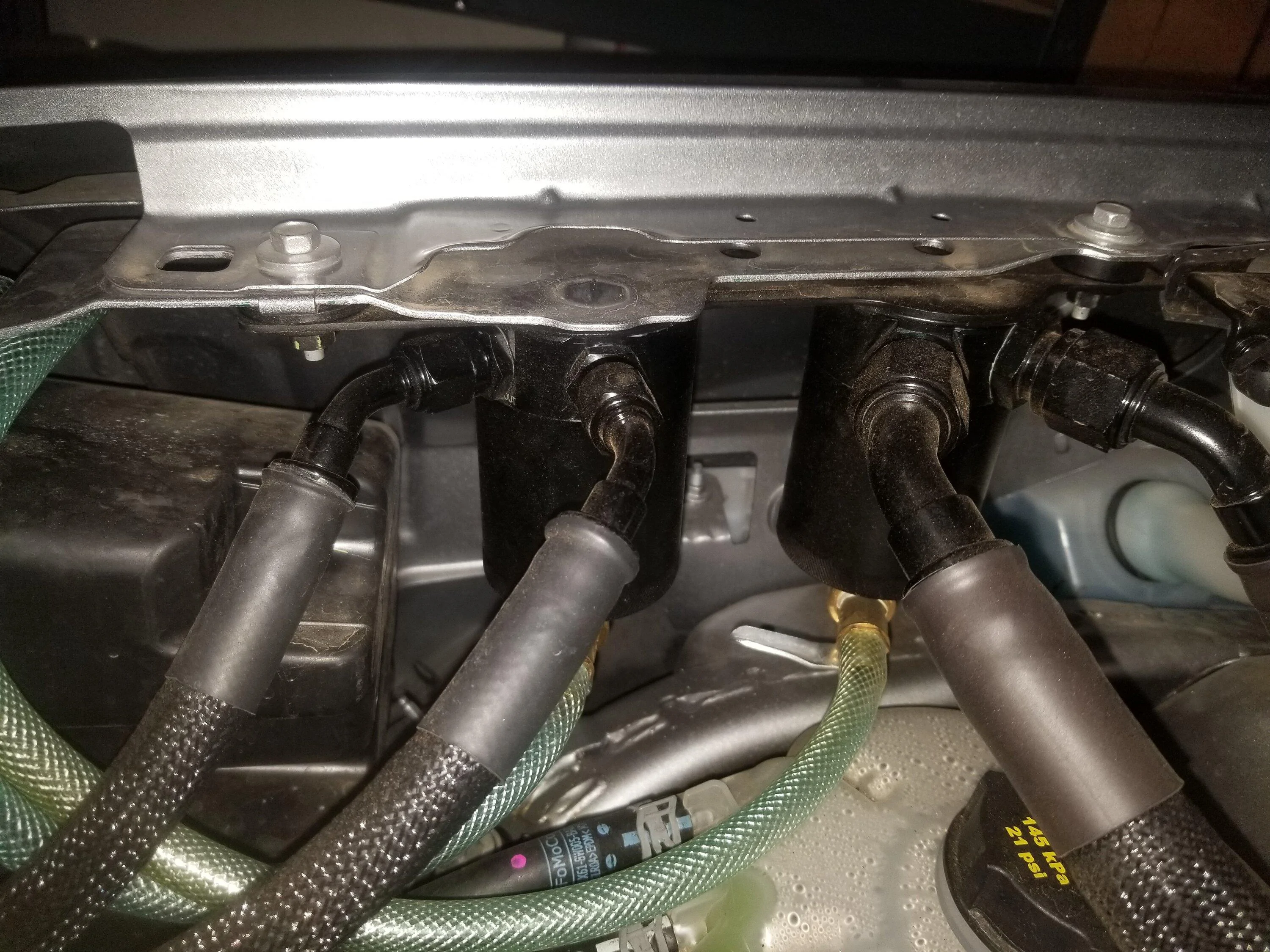
I checked each of my catch-cans (2) last weekend and was surprised to find nothing in the clean side and about 1/4 cup in the dirty side. The dirty side contents were extremely low viscosity, having basically the consistency of mostly water with the appearance of weak coffee. It didn't smell like gas, so I'm guessing it was indeed mostly water.

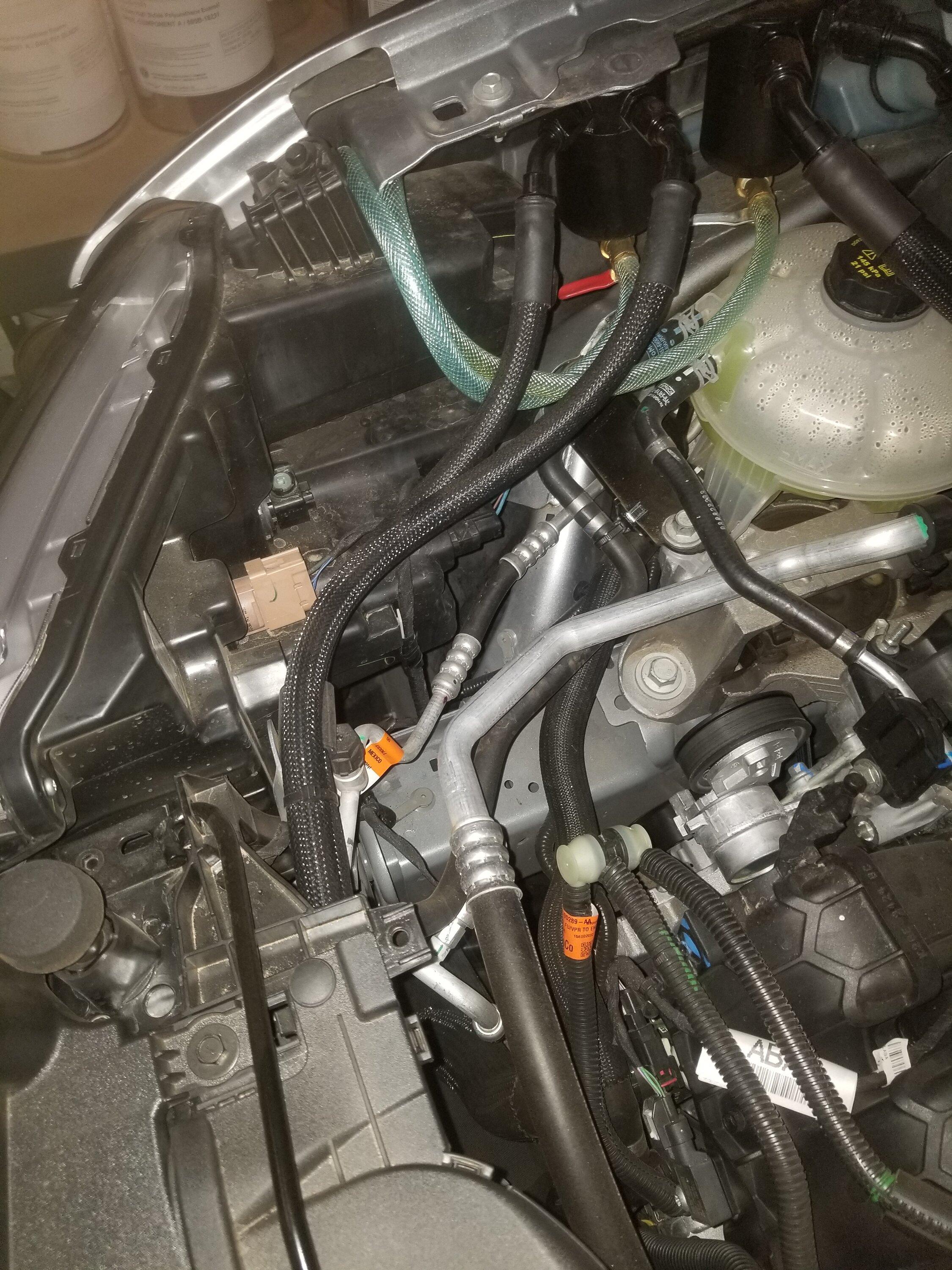
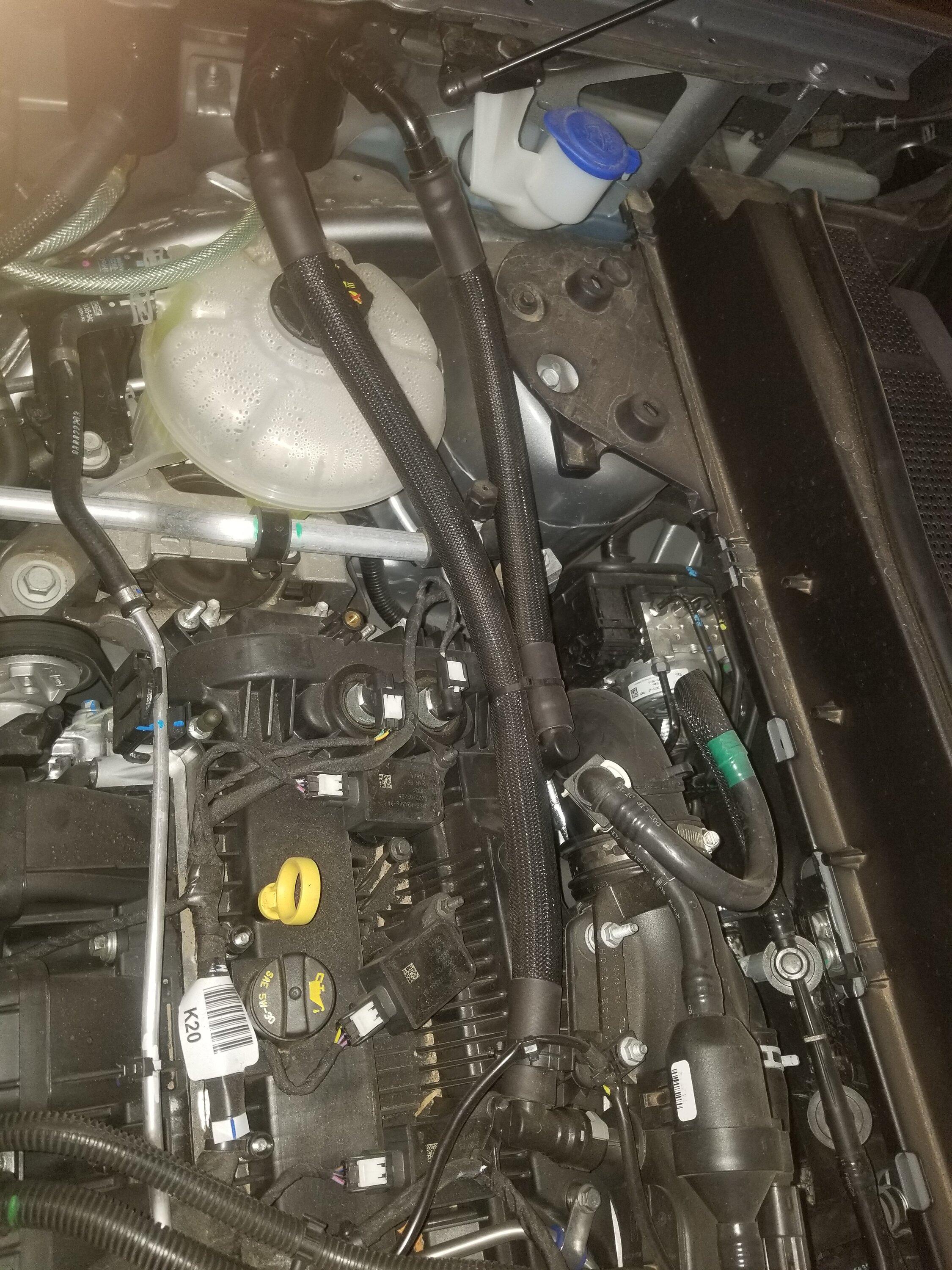
I installed this dual-can DIY setup back in July and have been checking each can periodically. Only in the past month has there been anything at all collecting in either of them. I drive mostly very short distances (5-10 minutes) and often use remote-start to let it warm up for a few minutes prior to driving. I can only speculate, but my guess is that the sudden up-tick in collection on the dirty side is from condensate coming out of the crankcase vent, bringing just a touch of oil vapor with it. Cold weather here in Wisconsin probably explains the change, given my driving habits/style have been consistent.

Anyway, just thought I'd chime in with a bit of info to add to the mix.
 

fossil

2.0L EcoBoost
Well-known member
First Name
ernie
Joined
Aug 23, 2020
Threads
48
Messages
3,432
Reaction score
5,792
Location
ohio
Vehicle(s)
95 SVT Cobra Mustang, HPR Lariat Tremor
Engine
2.0L EcoBoost
I was about to ask this question in a new thread but decided to search first. Whattayaknow, this thread popped up.

I checked each of my catch-cans (2) last weekend and was surprised to find nothing in the clean side and about 1/4 cup in the dirty side. The dirty side contents were extremely low viscosity, having basically the consistency of mostly water with the appearance of weak coffee. It didn't smell like gas, so I'm guessing it was indeed mostly water.

I installed this dual-can DIY setup back in July and have been checking each can periodically. Only in the past month has there been anything at all collecting in either of them. I drive mostly very short distances (5-10 minutes) and often use remote-start to let it warm up for a few minutes prior to driving. I can only speculate, but my guess is that the sudden up-tick in collection on the dirty side is from condensate coming out of the crankcase vent, bringing just a touch of oil vapor with it. Cold weather here in Wisconsin probably explains the change, given my driving habits/style have been consistent.

Anyway, just thought I'd chime in with a bit of info to add to the mix.
Thanks for the report. Aside from all the pro/con chatter there's been little actual results reports.
Next time set your sample aside in an old pickle jar or something to see how much evaporates off. (y)
 
OP
OP
First Name
Justin
Joined
Jul 31, 2023
Threads
4
Messages
13
Reaction score
20
Location
York PA
Vehicle(s)
2024 Maverick
Engine
2.0L EcoBoost
Agreed, thanks for sharing. I bit the bullet and will be installing a dual catch can system when mine comes in. I plan to send it off for analysis (if someone else hasn't before I do) to share with the group.
 
Sponsored

TC in MN

2.0L EcoBoost
Well-known member
Joined
Sep 14, 2021
Threads
8
Messages
240
Reaction score
252
Location
Minnesota
Vehicle(s)
2022 Ford Mav XLT, CG, 2.0, AWD, Lux, tow, 360
Engine
2.0L EcoBoost
This site (Engineering Explained) provides a good review for using oil catch cans in direct injection engines.

https://www.youtube.com/watch?v=T-B4VRxAtbw

In '22, I elected purchasing Burcher's non vented oil catch can; for separation, Buscher uses a screen, baffle and steel wool. Buscher's unit comes with hoses and as the picture below shows, fits in the engine bay without any modifications. The drain hose goes into a small cavity area and with a small somewhat flattened Campbell's soup can, the fluids can be collected without creating a mess. When on the road, I carry an empty plastic oil container to transfer the fluids for later disposal.

My experience is when the engine is working hard, fluid is collected. Day to day short trips and conservative driving on flat land, none.

Along with keeping the intake valves as clean as possible, the oil catch can also helps keeping the stuff not burnt in the combustion cycle out of the intercooler.


Ford Maverick Catch Can Content Analysis? IMG_0664
 

JohnnyApplespeed

2.0L EcoBoost
Active member
First Name
John
Joined
May 3, 2023
Threads
5
Messages
42
Reaction score
54
Location
Waukesha, WI
Vehicle(s)
'23 Maverick Lariat EB
Engine
2.0L EcoBoost
Just an FYI - I was going to write up detailed instructions on my DIY dual-can setup for others to use as a guide, but after tallying up the cost (~$250), it just doesn't make sense to go the DIY route when UPR's $300 kit only costs about $50 more than I have into my DIY assembly. So, for anyone looking to add a dual-can setup, here's what I'd get if I was starting over:

https://www.uprproducts.com/22-24-ford-maverick-2-0-plug-n-play-oil-catch-can-separator/


Note: I have no affiliation with UPR.
 

Barracuda340

2.0L EcoBoost
Banned
Banned
First Name
Matt
Joined
Dec 19, 2021
Threads
47
Messages
2,149
Reaction score
2,520
Location
Abilene Tx
Vehicle(s)
94 Silverado , 07 mustang, 69 barracuda
Engine
2.0L EcoBoost
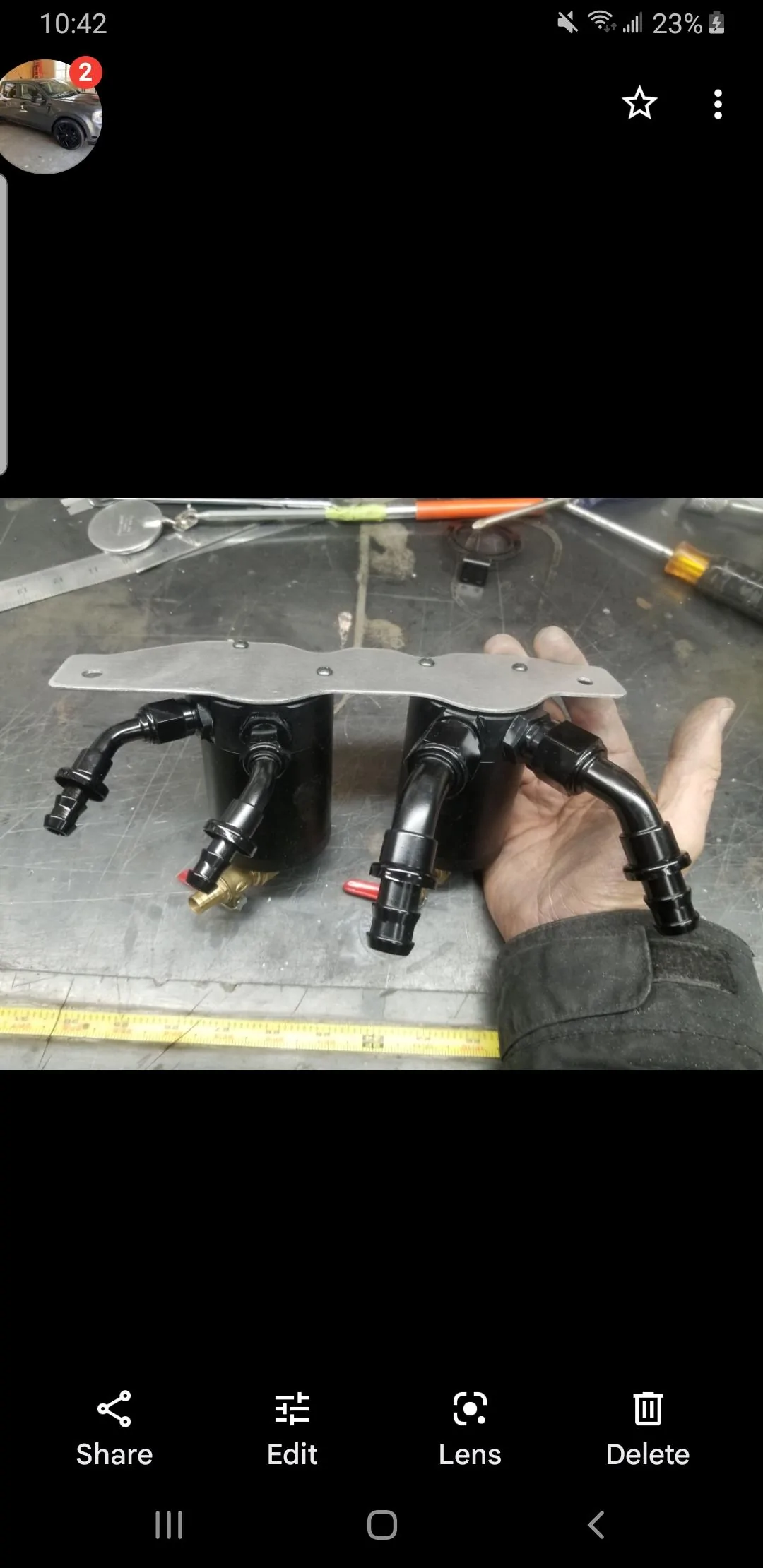
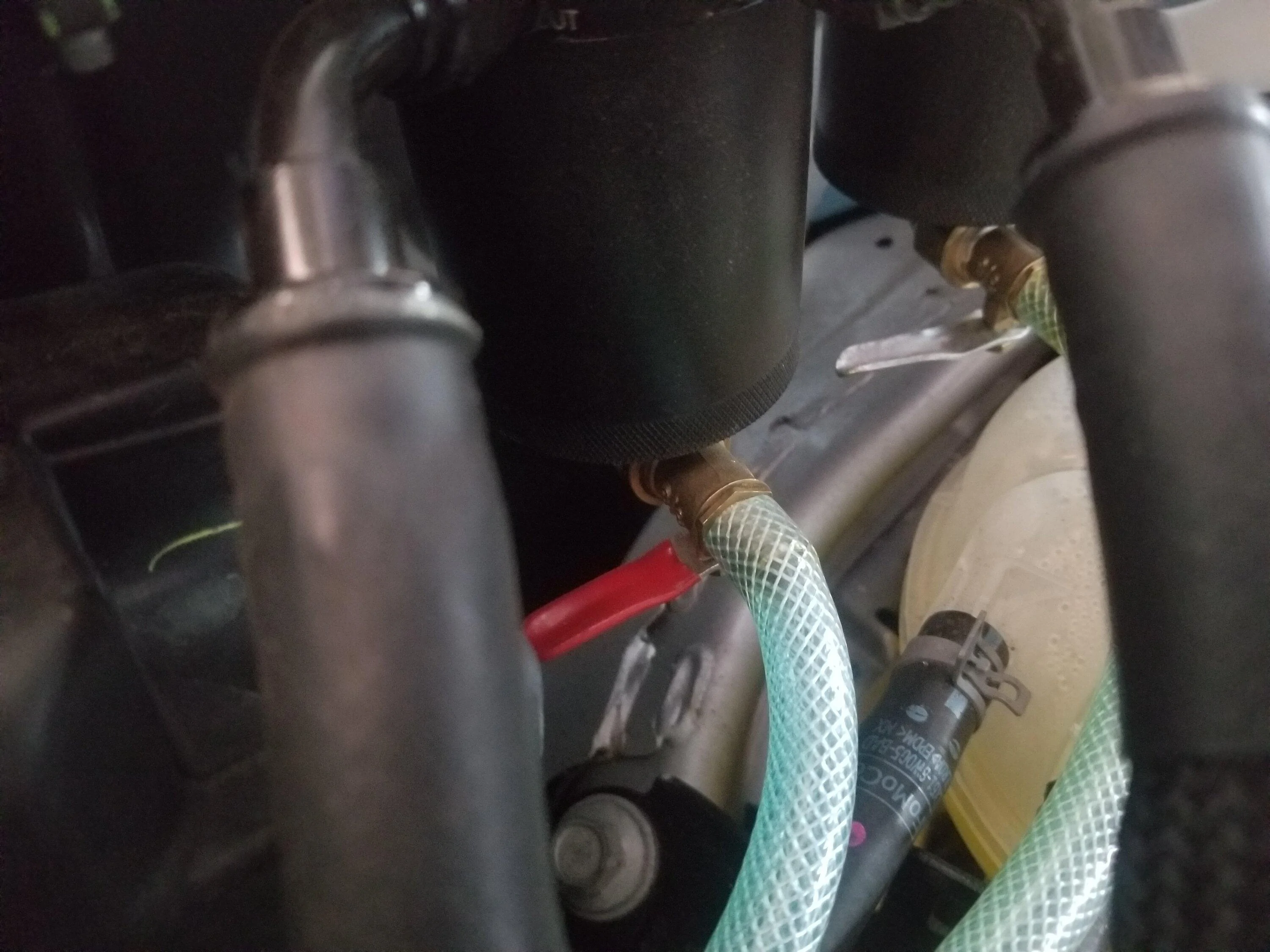
I did my dual can setup for about $150. Fabbed up my own mounting bracket. The cans i have came with drain petcocks on the bottom that I added brass 90° elbows with hoses. What I get out of them fills about 1/4 or a paper 8oz dixie cup. It has a fuel smell to it, and feels oily. I prefer to keep that mess from coating the intercooler and killing its efficiency. Some say it's not worth it, others say it is worth it. I am of the thought that it's a preventative measure just in case. I installed these at about 2,000 miles.

This is kind of like changing my oil every 4k and using full synthetic anyways and not trying to stretch it to 10K like the manual says. I dont drive my truck hard, I dont tow anything even though it has the 4k tow pak. It's a daily commuter / grocery getter.

At 20K which will be around springtime I plan on changing the RDU, and PTU fluids as well. Supposedly these are "lifetime" fluids according to Ford. As an auto mechanic/hobbiest for 41 years, and an aviation maintenance tech overlapping all that for the last 30 years, I dont buy into that B.S. All that means is a non warranty failure down the road. P.M. or preventative maintenance is a common buzz word in aviation maintenance. Fluids, and filters, and down time to change these go a long way to making my stuff last longer than most peoples stuff.

Penny wise or dollar foolish my dad used to say. What can I say I learned from the best. He could make a vehicle last "forever" lol. My 1994 silverado I bought new, I still have, and still drive frequently. It's now pushing 200K. No engine, transmission, or rear end issues. I did have to lift the bed to change a fuel pump at 150K, but that's minor.

If you size the hoses and fittings so the catch cans can allow the flow of vapor, and gasses unimpeaded like the stock system is, then there should be no crankcase pressurization issues and seals blowing out. I could care less what Blackstone has to say about someone else's soap sample. All engines are a little different. All I know is my cans are catching oily fuel smelling crap with a small amount of water in the bottom before it coats all the intake piping and intake valves downstream. That is all the proof I need.

Do what you like, or prefer. Some of you are people that trade in their cars in every few years. I'm not. I play the long game. I buy them new. Over service them before the fluids degrade, and drive them for decades. My Silverado is 30 years old. That's proof enough. I have not made a car payment on it in 27 years. I am doing the same with the Maverick. At 56 years old I will likely not buy another vehicle. I will drive this one till I'm dead lol.

Ford Maverick Catch Can Content Analysis? Screenshot_20230428-224216_Photos


Ford Maverick Catch Can Content Analysis? 20230429_113816


Ford Maverick Catch Can Content Analysis? 20230429_113842


Ford Maverick Catch Can Content Analysis? 20230429_113837


Ford Maverick Catch Can Content Analysis? 20230429_113805


Ford Maverick Catch Can Content Analysis? 20151121_204342


Ford Maverick Catch Can Content Analysis? 20181106_115358


Ford Maverick Catch Can Content Analysis? 20181031_162607
 

Montana

2.0L EcoBoost
Banned
Banned
Joined
Jun 13, 2023
Threads
24
Messages
4,094
Reaction score
6,347
Location
USA
Vehicle(s)
.
Engine
2.0L EcoBoost
I did my dual can setup for about $150. Fabbed up my own mounting bracket. The cans i have came with drain petcocks on the bottom that I added brass 90° elbows with hoses. What I get out of them fills about 1/4 or a paper 8oz dixie cup. It has a fuel smell to it, and feels oily. I prefer to keep that mess from coating the intercooler and killing its efficiency. Some say it's not worth it, others say it is worth it. I am of the thought that it's a preventative measure just in case. I installed these at about 2,000 miles.

This is kind of like changing my oil every 4k and using full synthetic anyways and not trying to stretch it to 10K like the manual says. I dont drive my truck hard, I dont tow anything even though it has the 4k tow pak. It's a daily commuter / grocery getter.

At 20K which will be around springtime I plan on changing the RDU, and PTU fluids as well. Supposedly these are "lifetime" fluids according to Ford. As an auto mechanic/hobbiest for 41 years, and an aviation maintenance tech overlapping all that for the last 30 years, I dont buy into that B.S. All that means is a non warranty failure down the road. P.M. or preventative maintenance is a common buzz word in aviation maintenance. Fluids, and filters, and down time to change these go a long way to making my stuff last longer than most peoples stuff.

Penny wise or dollar foolish my dad used to say. What can I say I learned from the best. He could make a vehicle last "forever" lol. My 1994 silverado I bought new, I still have, and still drive frequently. It's now pushing 200K. No engine, transmission, or rear end issues. I did have to lift the bed to change a fuel pump at 150K, but that's minor.

If you size the hoses and fittings so the catch cans can allow the flow of vapor, and gasses unimpeaded like the stock system is, then there should be no crankcase pressurization issues and seals blowing out. I could care less what Blackstone has to say about someone else's soap sample. All engines are a little different. All I know is my cans are catching oily fuel smelling crap with a small amount of water in the bottom before it coats all the intake piping and intake valves downstream. That is all the proof I need.

Do what you like, or prefer. Some of you are people that trade in their cars in every few years. I'm not. I play the long game. I buy them new. Over service them before the fluids degrade, and drive them for decades. My Silverado is 30 years old. That's proof enough. I have not made a car payment on it in 27 years. I am doing the same with the Maverick. At 56 years old I will likely not buy another vehicle. I will drive this one till I'm dead lol.

Screenshot_20230428-224216_Photos.webp


20230429_113816.webp


20230429_113842.jpg


20230429_113837.jpg


20230429_113805.webp


20151121_204342.webp


20181106_115358.jpg


20181031_162607.webp
Lifetime = Lifetime of the warranty. They don't care about making long lasting vehicles anymore, just long enough to keep their asses out of court.
 

JohnnyApplespeed

2.0L EcoBoost
Active member
First Name
John
Joined
May 3, 2023
Threads
5
Messages
42
Reaction score
54
Location
Waukesha, WI
Vehicle(s)
'23 Maverick Lariat EB
Engine
2.0L EcoBoost
@Barracuda340 Nice looking setup you put together. And you saved $100 over what I put together almost exclusively from Amazon parts. What catch can did you use for your assembly? I clicked around the web for a long time before choosing THIS ONE from Amazon, which looked identical to most others out there in that category. It was cheap junk (very thin walled with extremely flimsy mounting bracket) compared to the UPR model I purchased later. I found the options to be either high quality and expensive or cheap junk. You get what you pay for, so it seems.
Sponsored


Top