

Sponsored

2025 hybrid AWD XLT or 2024 XLT 4k

Scout

2.5L Hybrid
Well-known member
Joined
Jul 17, 2021
Threads
105
Messages
575
Reaction score
524
Location
Washington
Vehicle(s)
2025 XLT AWD hybrid azure grey
Engine
2.5L Hybrid
I have a 2022 XLT Hybrid. I’ve ordered a 2025 AWD XLT hybrid…
I like the mileage I get with my hybrid, but not a fan of the looks of the 2025.
I have a small boat I tow and my hybrid does fine but i worry one of these days the ramp will be too slick.. And stupidly Ford did not put tow hooks on the hybrid.
So I thinking of a 2024 XLT ecoboost with 4k.
Has anyone gone from hybrid to ecoboost?
Sponsored


 

Hunters Edge

2.0L EcoBoost
Well-known member
First Name
Sid
Joined
Jan 26, 2024
Threads
32
Messages
1,850
Reaction score
2,237
Location
Michigan
Vehicle(s)
F150 crew
Engine
2.0L EcoBoost
There isn't that much difference in highway. So I think it depends on the prominent driving a person does. Also how many miles per year can also determine if you can recoup the extra cost of the hybrid and in your scenario the hybrid and the model change price increase.

Of course that's just figuring cost and cost of fuel. There is also extra cost in maintenance long term in batteries type of oil used for oil change just a few examples. We also can't forget the performance difference 250 or 238hp vs 191 and 277 or 275 vs 155 lbs of torque depending 24, 25 or 25 hybrid. Lastly if thinking of longevity a ECVT lifespan on average is less than a transmission of course there are always exceptions to the rule.

I personally opted for the Ecoboost 2024. Instead of waiting for hybrid AWD in 2025. One was not wanting to pay for the new model price increase. The second reason I mainly drive 2 lane highway, rural. Not much difference in fuel savings for myself. Also at the time I drive about 5000 miles a year. The truck is sweet and looks like 8000 or possibly more. Anyhow I was hoping for 30mpg and I've exceeded that threshold. Any way I was figuring on a 10mpg difference and putting math to work, it would take over 9 years to recoup the 1500 difference not even figuring in the 25 price increase. So in my situation it was an easy decision.

Now if I did mostly city or mail carrier and drove 20,000 miles a year and mostly city driving. I might have decided differently but I doubt it. It still would take years to recoup the difference and I like a bird in hand is better than 2 in the bush.

I guess with all that it's a personal decision. I wouldn't want someone to make a decision for me. So I think it should be your decision.
 

Blinky

2.0L EcoBoost
Well-known member
Joined
Nov 25, 2023
Threads
7
Messages
544
Reaction score
732
Location
Alberta, Canada
Vehicle(s)
2024 Maverick, 1991 Toyota Dyna
Engine
2.0L EcoBoost
As Hunters Edge mentioned, it mostly depends on how much and where you drive. I don't drive nearly as much as I used to and I wanted AWD when I bought my '24 so it was a simple choice.
I shopped the '25 hybrid AWD but it would cost more than $5000 to upgrade to an equivalent option level, just over $45,000 Canadian and I just don't value the Maverick that high.
 

Mcluber

2.5L Hybrid
Active member
Joined
Feb 13, 2022
Threads
2
Messages
33
Reaction score
43
Location
Texas
Vehicle(s)
Hot Pepper Red
Engine
2.5L Hybrid
I had both. I don't like neither of them. Ecoboost was ok but hybrid did not have enough power imo.

Have you considered a F150? I have been seeing F150 FX4 hybrid with towing package loaners for around $50k asking price (after $9k dealer discount, $3.9k discount on sticker, and $5k rebates). Some of those already have aftermarket spray in bed liner. You could use $2,500 PCO on top of those discounts. That would bring the price down to $47k-48k for a much more capable $68k MSRP truck. F150 is also a much better build truck compared to Maverick. It is not fair to compare a little truck to a big truck. However, 2025 Maverick with similar options would be around $41k.
 
Last edited:

Scupking

2.5L Hybrid
Well-known member
First Name
Matt
Joined
Aug 13, 2021
Threads
33
Messages
2,267
Reaction score
3,342
Location
CT
Vehicle(s)
2025 Ford Maverick XLT Hybrid
Engine
2.5L Hybrid
Lastly if thinking of longevity a ECVT lifespan on average is less than a transmission of course there are always exceptions to the rule.
You are thinking of a CVT. An eCVT is one of the most reliable transmission you can get. Big differences between a CVT and eCVT.
 

Sponsored

Hunters Edge

2.0L EcoBoost
Well-known member
First Name
Sid
Joined
Jan 26, 2024
Threads
32
Messages
1,850
Reaction score
2,237
Location
Michigan
Vehicle(s)
F150 crew
Engine
2.0L EcoBoost
You are thinking of a CVT. An eCVT is one of the most reliable transmission you can get. Big differences between a CVT and eCVT.
No, I looked into ECVT and that's basically the same longevity expected similar to CVT. Yes the ECVT eliminates belts and pulleys it still doesn't add significant longevity. At least that's what I have read from others more knowledgeable on this subject, (supposedly) than myself.

Both the CVT and ECVT came about to increase fuel economy not longevity. One maybe less expensive by reducing maintenance and the cost associated with it.
 

710-oil-614

2.5L Hybrid
Well-known member
First Name
Cal
Joined
Oct 13, 2021
Threads
27
Messages
6,087
Reaction score
11,954
Location
Ohio...but I'd rather be in Boone.
Vehicle(s)
2025 Hybrid AWD Lariat
Engine
2.5L Hybrid
No, I looked into ECVT and that's basically the same longevity expected similar to CVT. Yes the ECVT eliminates belts and pulleys it still doesn't add significant longevity. At least that's what I have read from others more knowledgeable on this subject, (supposedly) than myself.

Both the CVT and ECVT came about to increase fuel economy not longevity. One maybe less expensive by reducing maintenance and the cost associated with it.
Please post your reading sources so we can all be educated by the professionals.

Its really hilarious that you point to the longevity of the eCVT when ecoboosts are mated to an 8F35….
 

710-oil-614

2.5L Hybrid
Well-known member
First Name
Cal
Joined
Oct 13, 2021
Threads
27
Messages
6,087
Reaction score
11,954
Location
Ohio...but I'd rather be in Boone.
Vehicle(s)
2025 Hybrid AWD Lariat
Engine
2.5L Hybrid
Both the CVT and ECVT came about to increase fuel economy not longevity. One maybe less expensive by reducing maintenance and the cost associated with it.
Wrong. The eCVT came about to mate power from two different sources into one transaxle.
 

Scupking

2.5L Hybrid
Well-known member
First Name
Matt
Joined
Aug 13, 2021
Threads
33
Messages
2,267
Reaction score
3,342
Location
CT
Vehicle(s)
2025 Ford Maverick XLT Hybrid
Engine
2.5L Hybrid
No, I looked into ECVT and that's basically the same longevity expected similar to CVT. Yes the ECVT eliminates belts and pulleys it still doesn't add significant longevity. At least that's what I have read from others more knowledgeable on this subject, (supposedly) than myself.

Both the CVT and ECVT came about to increase fuel economy not longevity. One maybe less expensive by reducing maintenance and the cost associated with it.
That's interesting since the Toyota Prius uses a very similar eCVT and lots of them getting 200,000 plus and some over 300,000 miles. It's a very reliable transmission.
 

Hunters Edge

2.0L EcoBoost
Well-known member
First Name
Sid
Joined
Jan 26, 2024
Threads
32
Messages
1,850
Reaction score
2,237
Location
Michigan
Vehicle(s)
F150 crew
Engine
2.0L EcoBoost
That's interesting since the Toyota Prius uses a very similar eCVT and lots of them getting 200,000 plus and some over 300,000 miles. It's a very reliable transmission.
They can but that's not the norm. Like I posted there are exceptions to the rule.

That also means a regular transmission will break or have issues before or earlier than expected.

Only thing is on the regular transmission usually is cheaper to repair and parts are easier and quicker to obtain. So there is a convenience difference as well.
 
Sponsored

Hunters Edge

2.0L EcoBoost
Well-known member
First Name
Sid
Joined
Jan 26, 2024
Threads
32
Messages
1,850
Reaction score
2,237
Location
Michigan
Vehicle(s)
F150 crew
Engine
2.0L EcoBoost
Please post your reading sources so we can all be educated by the professionals.

Its really hilarious that you point to the longevity of the eCVT when ecoboosts are mated to an 8F35….
Unfortunately couldn't find the article and or u-tube videos I watched a year ago. Googling it to try to locate it. They group the CVT and ECVT together. Or it doesn't specifically allow Electronic continuous variable transmission in it's search. Possibly because they are both continuous variable transmissions.
 

710-oil-614

2.5L Hybrid
Well-known member
First Name
Cal
Joined
Oct 13, 2021
Threads
27
Messages
6,087
Reaction score
11,954
Location
Ohio...but I'd rather be in Boone.
Vehicle(s)
2025 Hybrid AWD Lariat
Engine
2.5L Hybrid
Unfortunately couldn't find the article and or u-tube videos I watched a year ago. Googling it to try to locate it. They group the CVT and ECVT together. Or it doesn't specifically allow Electronic continuous variable transmission in it's search. Possibly because they are both continuous variable transmissions.
I kind of figured you would struggle to produce articles grouping eCVTs with CVTs and questioning eCVT longevity.

They are not the same, not even close, and they were designed for two different reasons.

Can you paraphrase these sources then, what is the failure or weak point for the eCVTs?

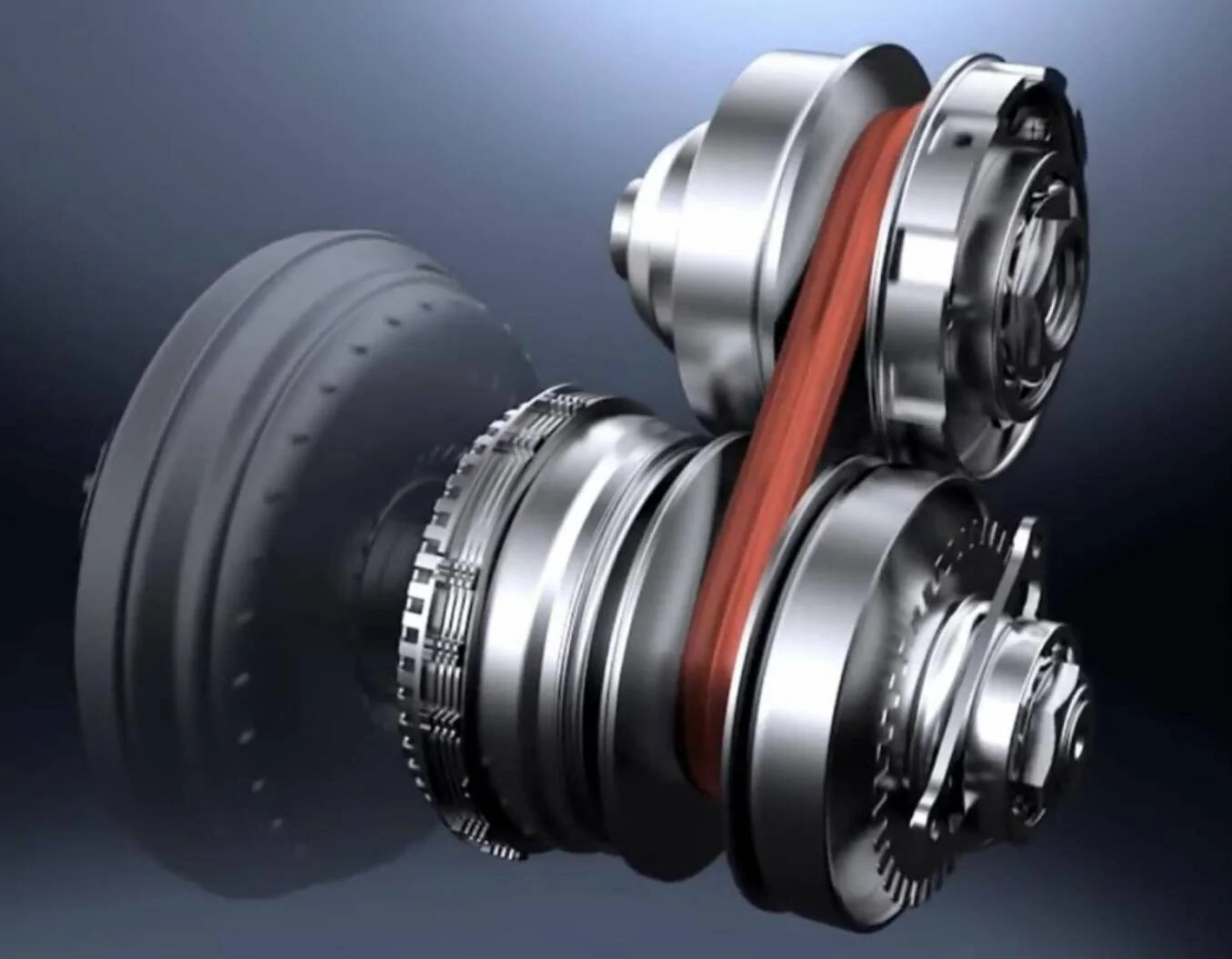
CVTs almost exclusively fail with their steel belts or chains and cause catastrophic transmission failure:


Ford Maverick 2025 hybrid AWD XLT or 2024 XLT 4k 1731080412724-f
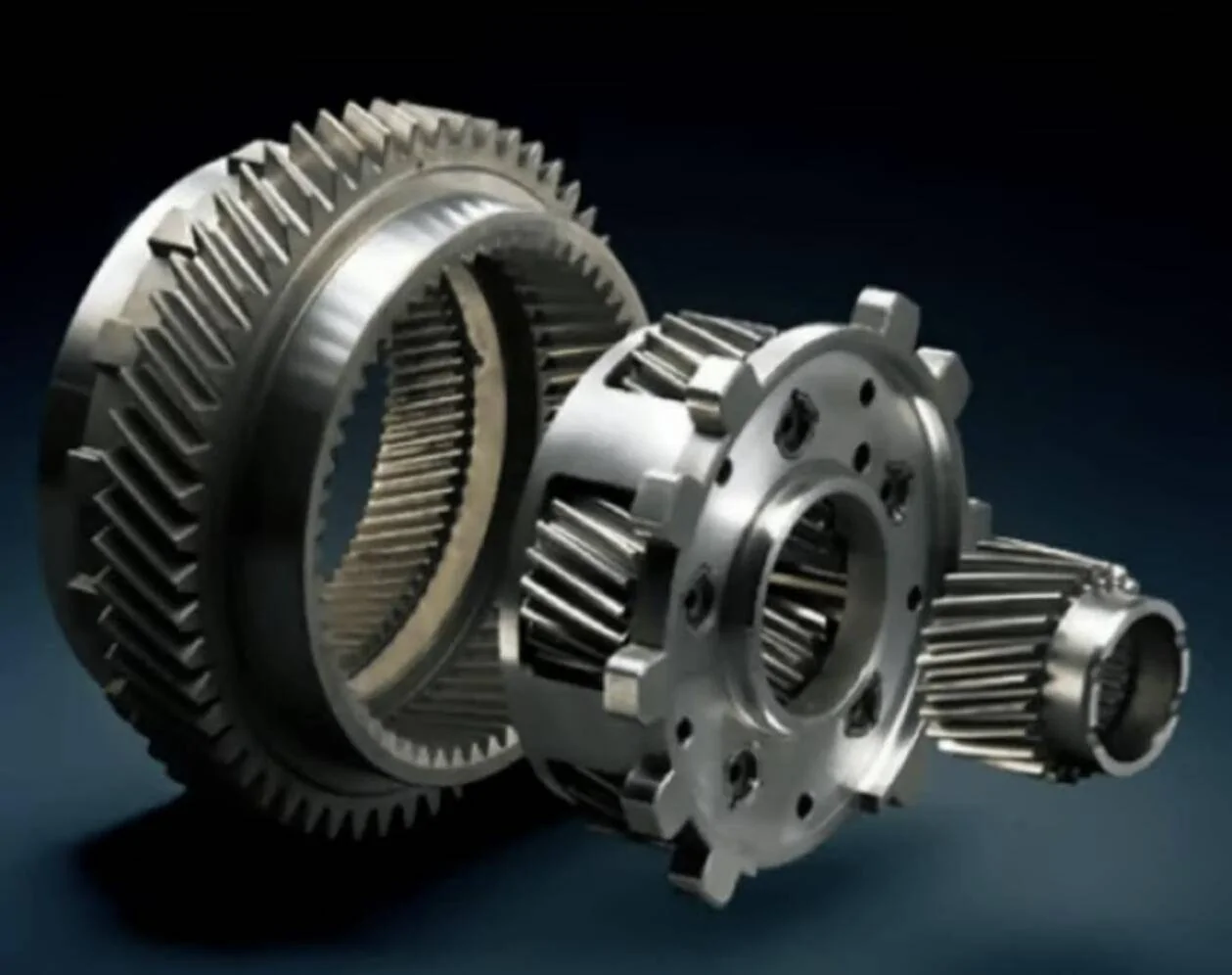
eCVTs use planetary gearsets and do not have belts, clutches, hydraulics, etc that traditional automatics or CVTs do. They have fewer parts than a traditional transmission and significantly less parts than a CVT. The parts they do have are robust and unlikely to fail

Ford Maverick 2025 hybrid AWD XLT or 2024 XLT 4k 1731080505193-43


Here is a quick video of a traditional CVT failure with the belt. Something an eCVT will never encounter:

 
Last edited:
OP
OP
Scout

Scout

2.5L Hybrid
Well-known member
Joined
Jul 17, 2021
Threads
105
Messages
575
Reaction score
524
Location
Washington
Vehicle(s)
2025 XLT AWD hybrid azure grey
Engine
2.5L Hybrid
There isn't that much difference in highway. So I think it depends on the prominent driving a person does. Also how many miles per year can also determine if you can recoup the extra cost of the hybrid and in your scenario the hybrid and the model change price increase.

Of course that's just figuring cost and cost of fuel. There is also extra cost in maintenance long term in batteries type of oil used for oil change just a few examples. We also can't forget the performance difference 250 or 238hp vs 191 and 277 or 275 vs 155 lbs of torque depending 24, 25 or 25 hybrid. Lastly if thinking of longevity a ECVT lifespan on average is less than a transmission of course there are always exceptions to the rule.

I personally opted for the Ecoboost 2024. Instead of waiting for hybrid AWD in 2025. One was not wanting to pay for the new model price increase. The second reason I mainly drive 2 lane highway, rural. Not much difference in fuel savings for myself. Also at the time I drive about 5000 miles a year. The truck is sweet and looks like 8000 or possibly more. Anyhow I was hoping for 30mpg and I've exceeded that threshold. Any way I was figuring on a 10mpg difference and putting math to work, it would take over 9 years to recoup the 1500 difference not even figuring in the 25 price increase. So in my situation it was an easy decision.

Now if I did mostly city or mail carrier and drove 20,000 miles a year and mostly city driving. I might have decided differently but I doubt it. It still would take years to recoup the difference and I like a bird in hand is better than 2 in the bush.

I guess with all that it's a personal decision. I wouldn't want someone to make a decision for me. So I think it should be your decision.
Thank you. Very helpful.. I too only put about 5000 miles a year on my truck.
I kind of figured.

They are not the same, not even close, and they were designed for two different reasons.

Can you paraphrase these sources then, what is the failure or weak point for the eCVTs?
How do you like your Raptor?
 

Scupking

2.5L Hybrid
Well-known member
First Name
Matt
Joined
Aug 13, 2021
Threads
33
Messages
2,267
Reaction score
3,342
Location
CT
Vehicle(s)
2025 Ford Maverick XLT Hybrid
Engine
2.5L Hybrid
They can but that's not the norm. Like I posted there are exceptions to the rule.

That also means a regular transmission will break or have issues before or earlier than expected.

Only thing is on the regular transmission usually is cheaper to repair and parts are easier and quicker to obtain. So there is a convenience difference as well.
That's the complete opposite of have what I have read about eCVTs. eCVTs are very simple with a lot less parts than a traditional transmission.
 

Hunters Edge

2.0L EcoBoost
Well-known member
First Name
Sid
Joined
Jan 26, 2024
Threads
32
Messages
1,850
Reaction score
2,237
Location
Michigan
Vehicle(s)
F150 crew
Engine
2.0L EcoBoost
I kind of figured you would struggle to produce articles grouping eCVTs with CVTs and questioning eCVT longevity.

They are not the same, not even close, and they were designed for two different reasons.

Can you paraphrase these sources then, what is the failure or weak point for the eCVTs?
When or at the time I was researching to make my decision. It was the longevity difference between the ECVT vs the regular transmission. This alone was enough, they didn't go in to detail or I can't remember. Again guessing about 10 or 12 months ago.

I did come across several articles just recently that getting parts for the ECVT was difficult. I believe they were discussing the Toyota so I didn't mention it before.

I do remember when trying to make a decision that the ECVT vs the CVT was more reliable. Specifically because of less moving parts or removing belts a pulleys.

No matter what transmission you get they all advise routine maintenance to increase longevity. That is also something I remember.

So let me ask you something. Show me were the average life expectancy of longevity for a ECVT is over 200,000 miles. Not how long some have gone but average life expectancy.

Vehicles I have in the past usually keep over 200,000 miles and have yet to have an issue personally with a regular transmission. So this was another deciding factor.

Also from what I have been told. When a CVT or ECVT goes it's usually replaced not repaired so more costly. Besides both the CVT and ECVT you have to get use to the shifting and often times sound. This also was another determining factor for myself.
Sponsored


Top