
- First Name
- Chris
- Joined
- Mar 13, 2022
- Threads
- 5
- Messages
- 42
- Reaction score
- 29
- Location
- On, Canada
- Vehicle(s)
- 2015 Honda CRV, 1997 Subaru Sambar, 1983 Mustang GLX Convertible 5.0L
- Engine
- 2.5L Hybrid
- Thread starter
- #1
This will be my first winter with my 2023 Hybrid Maverick.
After discovering the temperature requirements to get into hybrid full electric mode and possible exhaust gas heat exchanger issues I started to wonder how I could warm up my hybrid faster during the colder seasons. I'm not located in a deep freeze area but it does get cold here - hybrid systems seem to be more sensitive to cold which makes sense with my basic experience with batteries.
I've been taking some data points on the ICE coolant temperatures using an ODBII reader - not to the level of @MaveRichard and @GPSMan in the High Voltage Battery Heating - NOT Possible cause of 12v battery drain thread. I wish my scanner had the battery and coolant data but I haven't dug that far in. I can confirm an offset of ambient (46F) and coolant temperatures (52F) after sitting all night in my last test. My best guess was that the coolant wasn't loosing heat as quickly as the air.
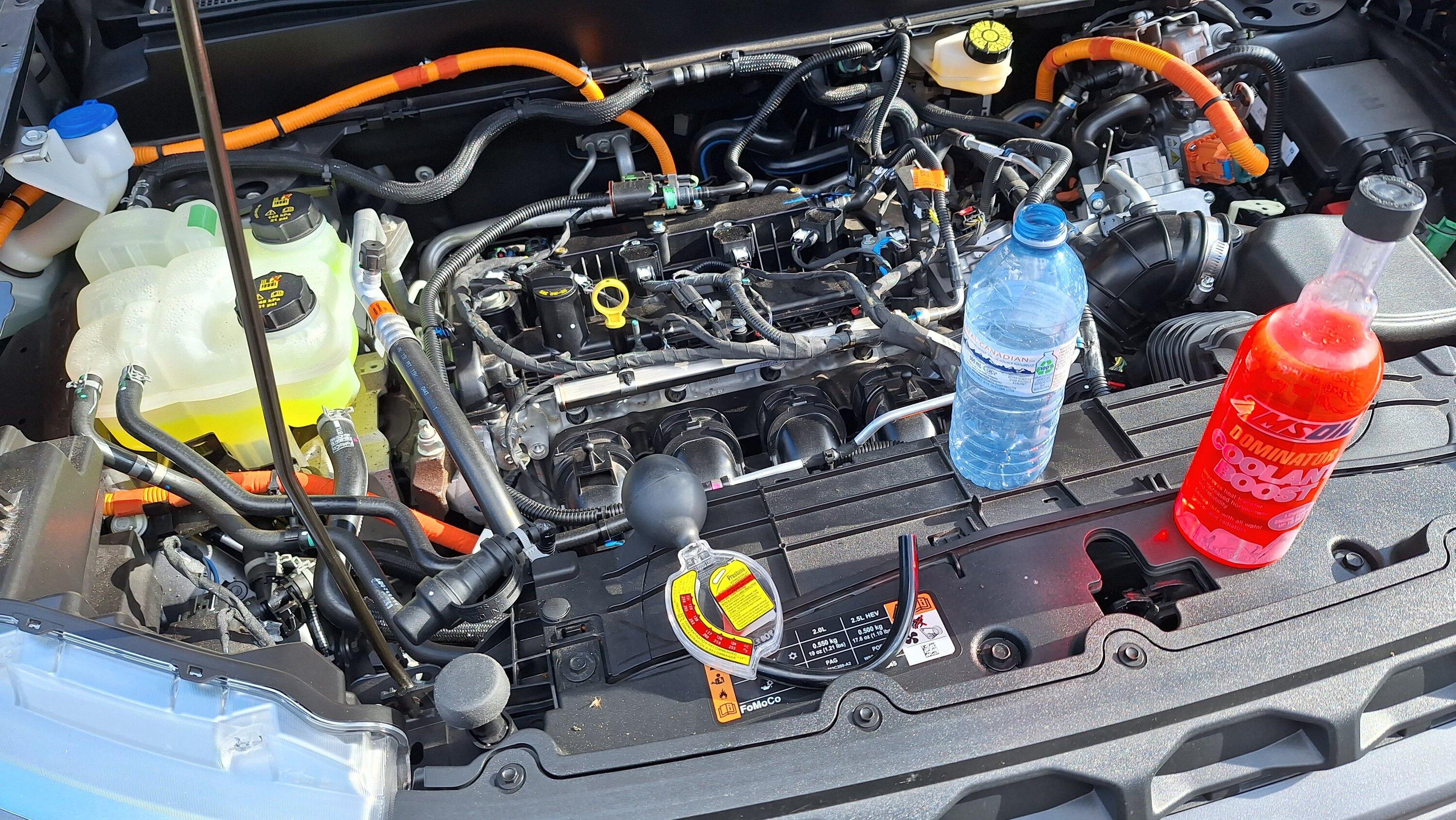
I didn't have any concerns using the additive in the ICE pressurized loop - it's exactly what it's meant to be used for. I wasn't so sure about the "everything else" battery loop since one of the benefits is reducing operating temperatures of non-thermostat controlled cooling applications. Reached out the to manufacturer and they said it would work great in a hybrid battery application. I believe the increased warm up should overcome a minor reduction in operating temperature - which I expect is computer controlled instead of mechanically controlled with a thermostat - so I'm giving it a shot.
The coolant additive I'm using claims to:
Any thoughts on using a surfactant additive in the coolant loops on the hybrid before I get some tests run with the additive installed?
Is it a waste of $20 or worth it? Gas is ~$1.50/L right now. That is ~13.3L of fuel to break even during the year or ~3.5 US gallons for me. Hard to quantify how much I'd pay for the possibility to get full heat in half the time after a cold start which is the suggested best case outcome. Everybody will be different there. I'd certainly assign more value to faster heat during a -30C morning than 0C.
After discovering the temperature requirements to get into hybrid full electric mode and possible exhaust gas heat exchanger issues I started to wonder how I could warm up my hybrid faster during the colder seasons. I'm not located in a deep freeze area but it does get cold here - hybrid systems seem to be more sensitive to cold which makes sense with my basic experience with batteries.
I've been taking some data points on the ICE coolant temperatures using an ODBII reader - not to the level of @MaveRichard and @GPSMan in the High Voltage Battery Heating - NOT Possible cause of 12v battery drain thread. I wish my scanner had the battery and coolant data but I haven't dug that far in. I can confirm an offset of ambient (46F) and coolant temperatures (52F) after sitting all night in my last test. My best guess was that the coolant wasn't loosing heat as quickly as the air.
I didn't have any concerns using the additive in the ICE pressurized loop - it's exactly what it's meant to be used for. I wasn't so sure about the "everything else" battery loop since one of the benefits is reducing operating temperatures of non-thermostat controlled cooling applications. Reached out the to manufacturer and they said it would work great in a hybrid battery application. I believe the increased warm up should overcome a minor reduction in operating temperature - which I expect is computer controlled instead of mechanically controlled with a thermostat - so I'm giving it a shot.
The coolant additive I'm using claims to:
- more efficent heat transfer, decreasing time to get to operating temperature - heat and electric hybrid available sooner - still need to measure and validate this
- reduce operating temperatures - the thermostat in the pressurized loop makes that difficult to validate - looks like a slight reduction in coolant vs straight water applications in manufacturer results
- additional corrosion protection beyond the coolant
- Let the vehicle sit all night
- Capture the ambient temperature - in theory the lower the better the additive should do. I'm still above freezing but that should change in November.
- Key on, turn off HVAC if it was on, I don't bother with the radio
- Press the gas pedal down to start the engine in park
- Let the engine idle until it gets to operating temperature and the engine goes off
- Record the duration of time
Any thoughts on using a surfactant additive in the coolant loops on the hybrid before I get some tests run with the additive installed?
Is it a waste of $20 or worth it? Gas is ~$1.50/L right now. That is ~13.3L of fuel to break even during the year or ~3.5 US gallons for me. Hard to quantify how much I'd pay for the possibility to get full heat in half the time after a cold start which is the suggested best case outcome. Everybody will be different there. I'd certainly assign more value to faster heat during a -30C morning than 0C.
Sponsored




 . WAIT AGAIN = How about a manually wound coocoo clock placed where the door trips a relay when the bird chirps (save that electricity)?