
- First Name
- Steve
- Joined
- Jul 21, 2021
- Threads
- 57
- Messages
- 2,756
- Reaction score
- 4,706
- Location
- coppell tx
- Vehicle(s)
- 2023 Ford Maverick Hybrid
- Engine
- 2.5L Hybrid
- Thread starter
- #1
Ford's Dynamic Driving Simulator Compresses Months of Vehicle Testing Into a Single Day
It is cool that this was used on the Maverick.Ford has invented a time machine of sorts. Rather than permitting time travel, Ford’s driving simulator allows time compression, with the device letting engineers perform months of real-world testing in a single day in the virtual world. “We can run ten times as many tests in a tenth of the time,” observed Louis Jamail, Vehicle Dynamics Core Methods and Simulation Supervisor at Ford.
Jamail used to work at Ford Performance, which used a simulator to improve the performance of Ford vehicles at the race track. Upon moving into vehicle dynamics, he sought to apply that same capability to production vehicles. That was in 2018. By 2021, Ford opened the Dynamic Driving Simulator in Dearborn.
“We were developing this on the racing side, and I saw huge potential to use it for mainstream product development at the same time,” said Jamail. The Dynamic Driving Simulator is larger and has a greater range of motion than the original motorsports simulator in Charlotte, providing increased fidelity.
“We started developing a process around building models and looking at how they compared to real vehicles, because the simulator is just your conduit into the [vehicle dynamics] model for a person to drive,” he said. That model is really what runs everything.”
Refining that model is how the simulator has become increasingly valuable to Ford. “We started building that foundation many years ago on how to create a process on building the model, correlating them, making sure they were growing and becoming more accurate as we learned more,” he said.
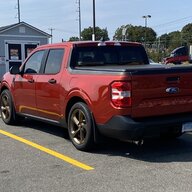
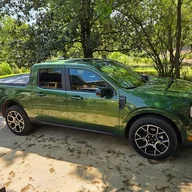
“Jumping through a few years, we had enough work and enough justification to build a facility in Dearborn, so that came online in 2021, and we, along the way, had already started developing programs,” Jamil explained. “Maverick was done on the simulator, Mach E, the Lightning, many, many vehicles had already been started going through that process.” It is also crucial for testing specific features, such as adaptive cruise control, lane centering, Blue Cruise, and Active Glide.
Once Ford reached the point where all of the vehicles it developed were tested in the simulator, then the process was to move the simulation earlier in the development process. “The earlier you can look at a vehicle in its totality and its parts, the better you're going to influence quality, performance, customer targets; all of those things,” said Jamail.
“You're then not having to wait to build cobbled prototypes to find out a suspension type or something else didn't work for the targets that you're setting. We can evaluate that stuff much earlier now. We can iterate through it at ten times the speed that we could by cobbling parts on a vehicle.”
And the simulator can instantly switch the parts being tested for comparisons, so mechanics don’t have to physically swap parts on real prototypes. Damage to vehicles is repaired by a simple reset, again, rather than having to fix a prototype.
It is also safer for the drivers, who can’t be injured in a real-world crash while testing. However, simulators are notorious for their ability to induce motion sickness in drivers using them. The Ford simulator has been able to minimize that effect, Jamail reported.
“Latency is a huge driver of motion sickness, so the lower that is, the better,” he said. “We went from probably 60% to 70% of people who were okay, so we had about 30-40% of the people who were starting to get a little bit queasy on the earlier version. We're probably well over 90 to 95% now, where nobody gets ill.”
The reduced latency that aids in the elimination of motion sickness also makes the experience more realistic for drivers. “In your vestibular system, everything that you use as a person to sense things, the faster that happens based on what you put into the simulator, let's say you steer, the faster that happens, the more real you feel,” he said.
Ford’s simulator not only accelerates time: it can also control the weather. This lets engineers test vehicles and systems under identical circumstances in the virtual world, regardless of changing temperatures or conditions in the real world. The proposed alternative parts can all be tested at the same simulated temperature. This presents another area where it is expanding its capabilities: inclement weather.
With the simulator providing such beneficial information already, the areas for improvement are in more challenging driving conditions, according to Jamail. “Probably our next frontiers are all what I would call the inclement weather or other conditions we're developing things now,” he said. “This hard pavement, what we call high-mu, is pretty darn good. So, what we're trying to explore and get into more and more are off-road, low-grip situations, things like that. I wouldn't call them limitations: they're more of the next hurdle.”
Sponsored