Sponsored
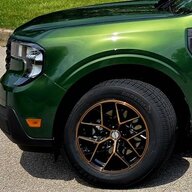

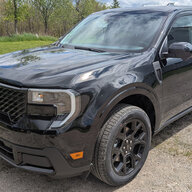
"I'll have you know this is the big block edition of the Maverick" (referring to the hybrid)  funny guys! 2/10ths on the 1/4 EB vs. Hybrid, about one and a half truck lengths, nice.
funny guys! 2/10ths on the 1/4 EB vs. Hybrid, about one and a half truck lengths, nice.- Joined
- Oct 17, 2021
- Threads
- 10
- Messages
- 78
- Reaction score
- 106
- Location
- Moncure, nc
- Vehicle(s)
- 2025 Maverick XLT, 2022 Toyota Rav4 Hybrid
- Engine
- Undecided
Was it a drag race? They should do a few laps at the race track too!
That's a good point, Autocross or rallycross would be where slow cars like these really shine, and I bet the Lobo would stand out much more in comparison playing to its strengths on those fields!


- First Name
- Donald
- Joined
- Dec 6, 2021
- Threads
- 23
- Messages
- 1,156
- Reaction score
- 1,126
- Location
- Sapulpa, Oklahoma
- Vehicle(s)
- 2022 Maverick XL
- Engine
- 2.0L EcoBoost
Test at a mile high, so a bit slower than low altitude.
 So where is this mile high track at ???
Sponsored

- First Name
- Retired
- Joined
- Oct 8, 2021
- Threads
- 15
- Messages
- 2,522
- Reaction score
- 4,325
- Location
- SE Ohio 🇺🇸
- Website
- sunsetridgecabinhockinghills.com
- Vehicle(s)
- '24 Mustang Mach-E P4X, '24 Bronco Big Bend 2Dr Sasquatch, Hot Rods
- Engine
- 2.0L EcoBoost
lol... If the Lobo would've had 91/93 fuel, it wouldn't have been nearly as close.
Octane makes significantly less difference at elevation, engines don't knock as readily with a lighter air charge in the cylinders, which is why they still sell ultra low 85 octane up there in the nose bleed states  Doubtful the Lobo was pulling timing at a mile high, but they didn't say what fuel was in it. Either way, 87 is basically 91 in those conditions, and 91, 93.
Doubtful the Lobo was pulling timing at a mile high, but they didn't say what fuel was in it. Either way, 87 is basically 91 in those conditions, and 91, 93.
- First Name
- Retired
- Joined
- Oct 8, 2021
- Threads
- 15
- Messages
- 2,522
- Reaction score
- 4,325
- Location
- SE Ohio 🇺🇸
- Website
- sunsetridgecabinhockinghills.com
- Vehicle(s)
- '24 Mustang Mach-E P4X, '24 Bronco Big Bend 2Dr Sasquatch, Hot Rods
- Engine
- 2.0L EcoBoost
Forced induction creates basically the same cylinder pressure at various elevations, so octane still makes a significant difference. I would wager a full second reduction off their reported times with proper fuel.Octane makes significantly less difference at elevation, engines don't knock as readily with a lighter air charge in the cylinders, which is why they still sell ultra low 85 octane up there in the nose bleed states
Nope, not exactly, bit it would be nice if they didn't lose performance. They do lose less performance than a naturally aspirated vehicle, though. There's a lot of basic primers on the subject, this was just the first one I came across, it describes it fairly simply:
- First Name
- Retired
- Joined
- Oct 8, 2021
- Threads
- 15
- Messages
- 2,522
- Reaction score
- 4,325
- Location
- SE Ohio 🇺🇸
- Website
- sunsetridgecabinhockinghills.com
- Vehicle(s)
- '24 Mustang Mach-E P4X, '24 Bronco Big Bend 2Dr Sasquatch, Hot Rods
- Engine
- 2.0L EcoBoost
I'm not sure what you think that post illustrates? Power loss at altitude is fractional for a forced induction engine. Octane still plays a major role in performance for a FI engine because, as I said previously, cylinder pressure remains consistent under boost, regardless of altitude. Cylinder pressure creates heat, heat requires octane, octane allows full timing. It's not difficult.Nope, not exactly, bit it would be nice if they didn't lose performance. They do lose less performance than a naturally aspirated vehicle, though. There's a lot of basic primers on the subject, this was just the first one I came across, it describes it fairly simply:
Sponsored
Close, but not exactly. Heat doesn't require octane, heat-induced pre-igniton requires higher octane. Cylinder heat and charge air temperatures can actually be higher at altitude, because the air is thinner, so our intercoolers don't work as well, plus turbine speeds must increase to develop the same manifold pressure, etc. But, the critical part that suppresses knock at altitude in both NA and FI engines is the charge air, while the density is increased with FI, the charge air mass is decreased due to higher temperatures generated by the induction system. The mass flow equation used to calculate fuel injected pulls fuel out commensurate with the total reduction of mass of oxygen in the cylinder, this reduces BSFC and pulls the engine away from the spark advance knock limit. The minimum octane requirements for each engine and charge induction will vary, but the effects of altitude are non-trivial. Either way we don't conclusively know if TFL's engine pulled timing or not on the run.I'm not sure what you think that post illustrates? Power loss at altitude is fractional for a forced induction engine. Octane still plays a major role in performance for a FI engine because, as I said previously, cylinder pressure remains consistent under boost, regardless of altitude. Cylinder pressure creates heat, heat requires octane, octane allows full timing. It's not difficult.
Regardless, the hybrid was at a larger total disadvantage at altitude, we should run a test at a lower elevation, with the premium fuels, and see what happens!
- Joined
- May 28, 2023
- Threads
- 30
- Messages
- 1,496
- Reaction score
- 1,280
- Location
- California
- Vehicle(s)
- 2022 Hybrid XL, 2023 XLT Tremor
- Engine
- Undecided
BooyahTest at a mile high, so a bit slower than low altitude.


BIG Block 2.5L Hybrid.
- First Name
- Terry
- Joined
- Apr 27, 2021
- Threads
- 101
- Messages
- 4,235
- Reaction score
- 7,848
- Location
- West Chicago, IL
- Vehicle(s)
- 2024 Edge SEL, 2024 Lariat Tremor
- Engine
- 2.0L EcoBoost
There's no replacement for displacement!Booyah
BIG Block 2.5L Hybrid.
Hahaha, HRG
Welcome back sir, so sorry to hear about what you've been thru.
Sponsored
Similar threads


- Replies
- 68
- Views
- 15,625

- Replies
- 0
- Views
- 3,145

