

Sponsored

Hybrid Maverick Cooling Systems

SuperDave71

2.5L Hybrid
Well-known member
First Name
Dave
Joined
Sep 19, 2022
Threads
2
Messages
238
Reaction score
301
Location
Carthage IN
Vehicle(s)
Ford F-350 CCSB 6.7
Engine
2.5L Hybrid
There was some discussion in another thread recently that got me thinking, so I did some research and wanted to post some info i found for further discussion.

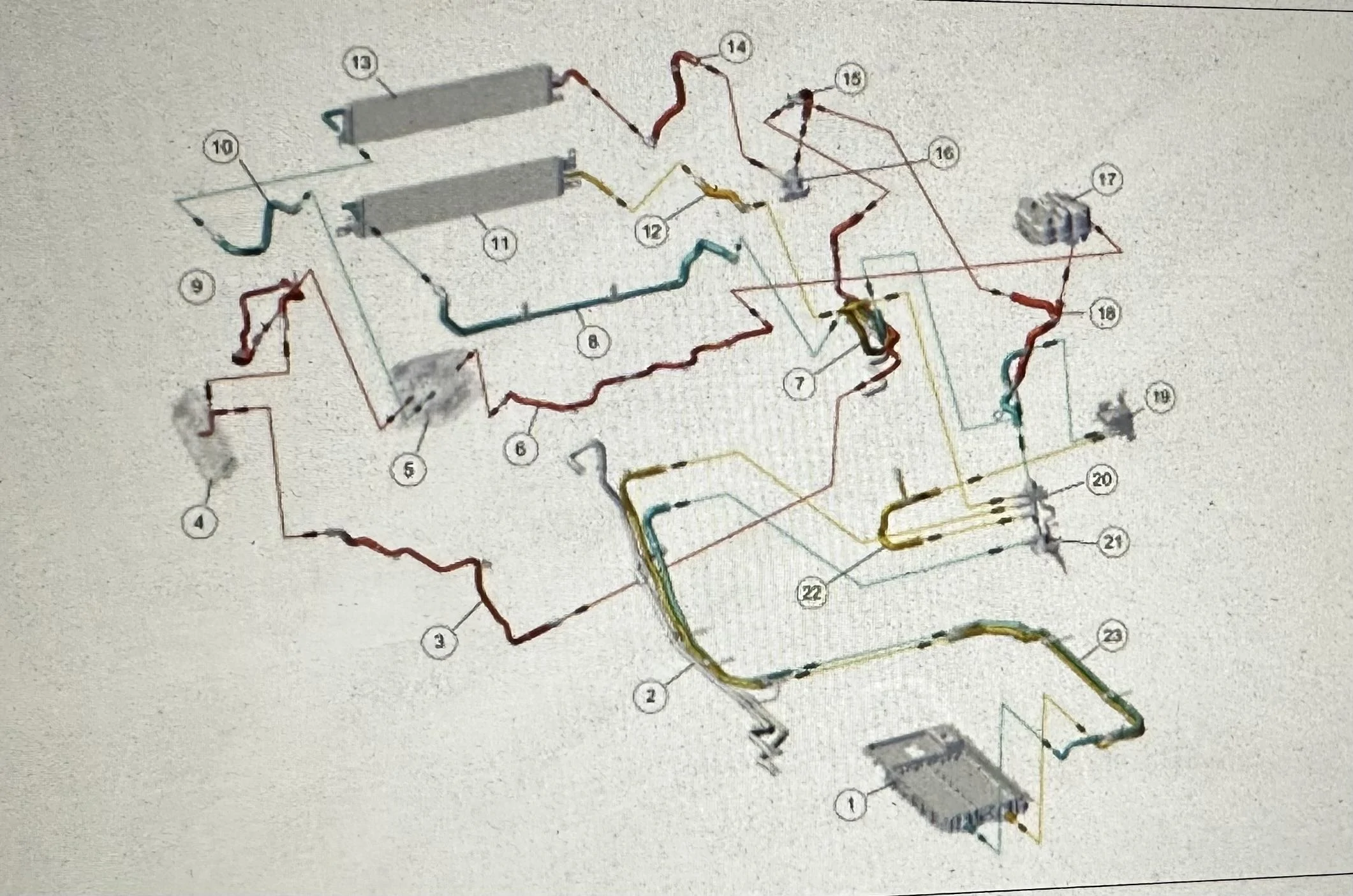
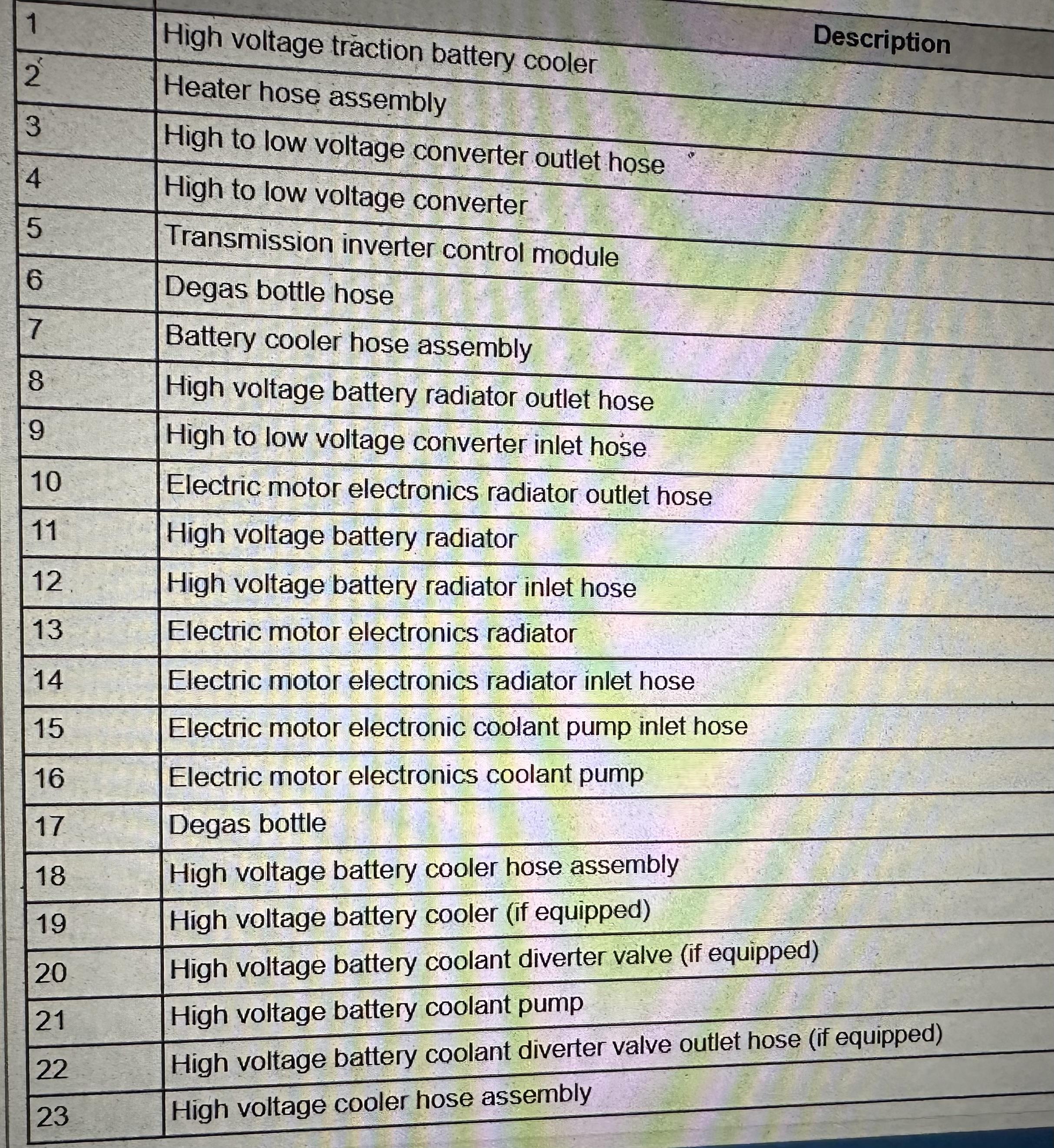
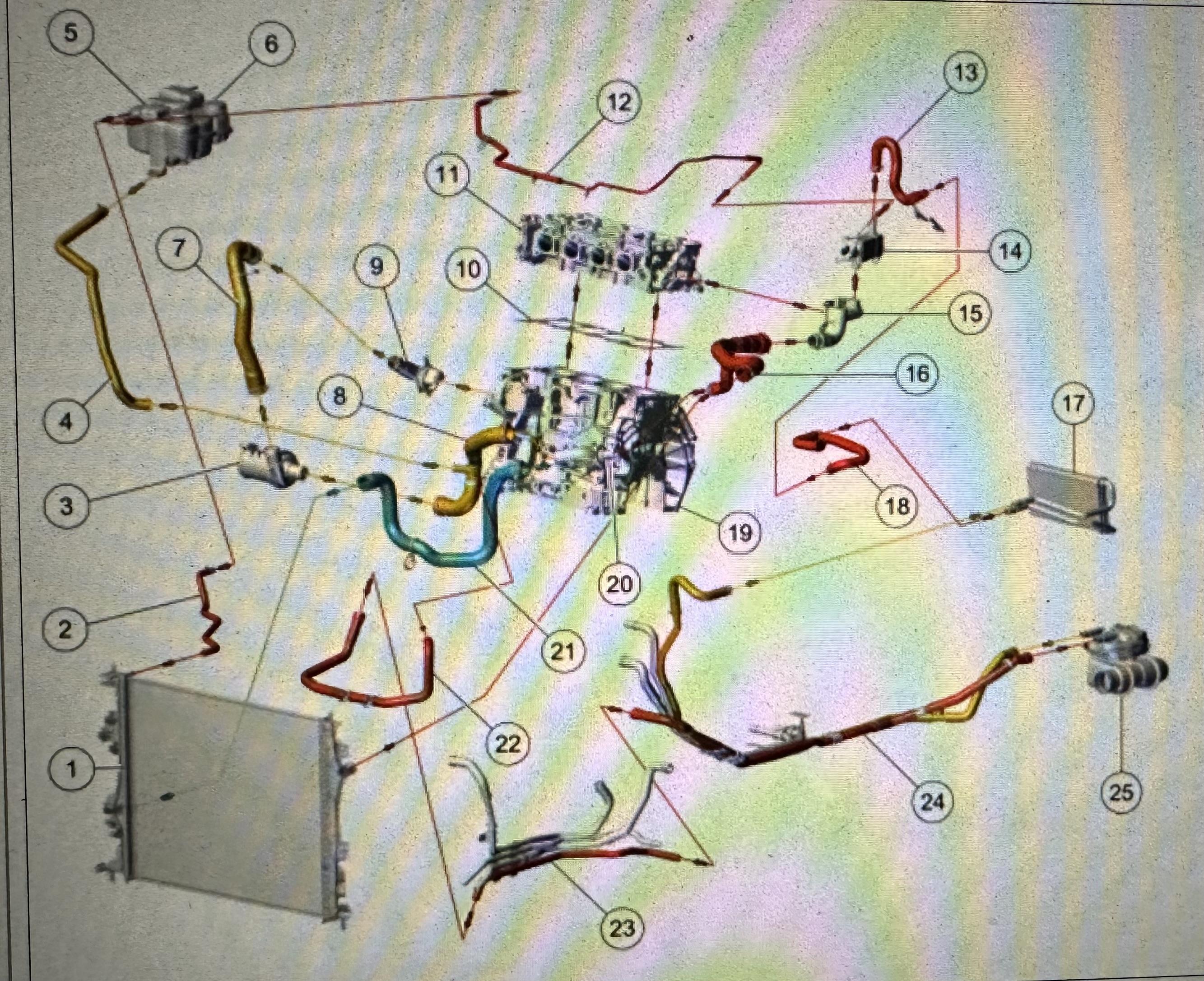
I tracked down diagrams for both of the hybrid cooling systems. The pictures are from a friend who works at a local ford dealership. He provided me with diagrams for both systems as well as a general description of the components. The comment that got me thinking was that there is at times the possibility of cross flow between the two systems for heat management/mitigation. The Ford hybrid drivetrain is relatively new to me. I have a lot of knowledge of Fords diesels, most recently the 6.7 powerstroke. It also has two cooling systems, and it seems there is a lot in common. Both are independent of each other. Separate heat exchangers, pumps and reservoirs. They are not interconnected and operate at different design temperatures to accomplish different tasks. The primary ultimately handles engine cooling and cabin temperature. The secondary handles other component temperature management.

In my first Maverick hybrid I had a failure of the exhaust heat exchanger. It was covered under warranty. While I waited months for a replacement I was under the assumption that its purpose was to warm the battery in cold weather. That is NOT the case. The exhaust heat exchanger is in the primary cooling system and is responsible for keeping and getting as much heat as possible into the primary system in cold weather to keep the engine temperature warm and stable, and keep heat in the cabin. All heat in the secondary system comes from electrical components in that system. The secondary system (battery mostly) can also be cooled via a heat exchanger that interfaces with the HVAC system in hot weather. There are two coolant pumps in the secondary system, and those pumps can independently regulate the temperature of motor electronics and battery temperature with out the use of valves. The only valve in the system is on the battery coolant loop that brings the coolant cooler (HVAC) online.

I’m sure I might have some minor errors in here, but I think for the most part this is a good overview, feel free to add other sources to help increase all of our knowledge.

Dave
Ford Maverick Hybrid Maverick Cooling Systems IMG_7509
Ford Maverick Hybrid Maverick Cooling Systems IMG_7510
Ford Maverick Hybrid Maverick Cooling Systems IMG_7511
Ford Maverick Hybrid Maverick Cooling Systems IMG_7512
Sponsored

 
Last edited:

GPSMan

2.5L Hybrid
Well-known member
Banned
First Name
John
Joined
Jul 28, 2022
Threads
52
Messages
4,325
Reaction score
5,340
Location
CA
Vehicle(s)
Many
Engine
2.5L Hybrid
Clubs
 
Yes.

But

Look at hose 23 and hose 24

It's not really clear but looks like exhaust heat CAN help warm the battery. But I'm gonna say from experience it does not at least at 32°F and above.
 
Last edited:

Oscarcat

2.5L Hybrid
Well-known member
First Name
Eric
Joined
Sep 18, 2022
Threads
12
Messages
1,428
Reaction score
1,459
Location
Encinitas California
Vehicle(s)
'24 Lariat, Lexus NX 300, PT Cruiser 5 spd. C172P
Engine
2.5L Hybrid
My take-away is, given the importance of cooling to the ICE and hybrid components, changing the coolant with factory spec coolant at recommended intervals is very important to get the max life out of various components.
 

BlueSpec1

2.5L Hybrid
Well-known member
First Name
Gene
Joined
Jul 10, 2022
Threads
3
Messages
779
Reaction score
794
Location
Texas
Vehicle(s)
23 XLT 2.5L, 22 Escape Plug In, 23 Bolt EUV
Engine
2.5L Hybrid
Saw mention of Motor Cooling in the DC/DC module's operation:
The DCDC is liquid cooled by the electric motor cooling system circuit. The electric motor cooling circuit uses an electric motor diverter valve that acts as a system thermostat, allowing the coolant to flow within the motor circuit while the motor warms. As the coolant warms, the diverter valve slowly opens to allow coolant flow to the radiator.
 

Sponsored

svogt302

2.5L Hybrid
Well-known member
First Name
Tom
Joined
Apr 16, 2021
Threads
3
Messages
271
Reaction score
183
Location
NJ
Vehicle(s)
2012 Mustang Boss 302, 2019 Ranger
Engine
2.5L Hybrid
Interesting information, Thanks.
I put an OBD2 gauge on mine & find even after a long run, mine runs very cool, like 150-160 degrees & haven't found a spec as what it should be.
Any thoughts?
 

GreyCacti

2.5L Hybrid
Well-known member
First Name
Jake
Joined
Aug 29, 2023
Threads
5
Messages
111
Reaction score
71
Location
new England
Vehicle(s)
21 Prius prime
Engine
2.5L Hybrid
So there is no active heating for the battery in the winter? The hoses only cool parts, not heat them?
 

GPSMan

2.5L Hybrid
Well-known member
Banned
First Name
John
Joined
Jul 28, 2022
Threads
52
Messages
4,325
Reaction score
5,340
Location
CA
Vehicle(s)
Many
Engine
2.5L Hybrid
Clubs
 
Interesting information, Thanks.
I put an OBD2 gauge on mine & find even after a long run, mine runs very cool, like 150-160 degrees & haven't found a spec as what it should be.
Any thoughts?
You need to be more specific. What is 150-160?

Example:
Engine coolant runs 180 to 190 when fully warmed up on the highway. But with short trips and city drive it rarely gets that warm.

Transmission eCVT of 140 to 160 is normal for mine.

HV Battery runs 90-100°F most of the time city driving, cooler on the highway (battery does not do much work in highway conditions).

Motor and Generator are all over the map depending on load.
 
Last edited:

Clarence Roller

2.5L Hybrid
Active member
First Name
Clarence
Joined
Dec 25, 2023
Threads
0
Messages
27
Reaction score
14
Location
Lima, Ohio
Vehicle(s)
22 Maverick, hybrid, 1st edition
Engine
2.5L Hybrid
There was some discussion in another thread recently that got me thinking, so I did some research and wanted to post some info i found for further discussion.

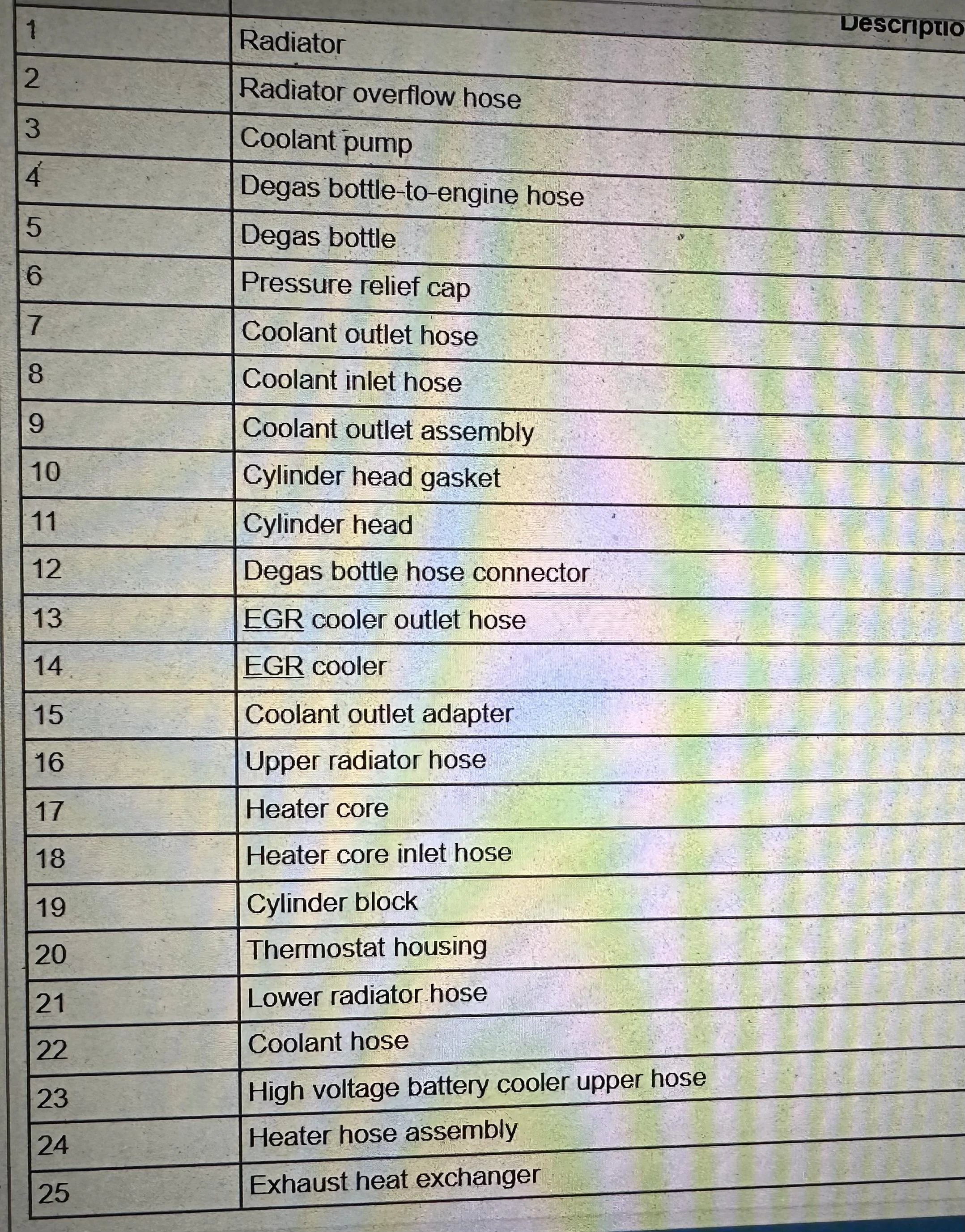
I tracked down diagrams for both of the hybrid cooling systems. The pictures are from a friend who works at a local ford dealership. He provided me with diagrams for both systems as well as a general description of the components. The comment that got me thinking was that there is at times the possibility of cross flow between the two systems for heat management/mitigation. The Ford hybrid drivetrain is relatively new to me. I have a lot of knowledge of Fords diesels, most recently the 6.7 powerstroke. It also has two cooling systems, and it seems there is a lot in common. Both are independent of each other. Separate heat exchangers, pumps and reservoirs. They are not interconnected and operate at different design temperatures to accomplish different tasks. The primary ultimately handles engine cooling and cabin temperature. The secondary handles other component temperature management.

In my first Maverick hybrid I had a failure of the exhaust heat exchanger. It was covered under warranty. While I waited months for a replacement I was under the assumption that its purpose was to warm the battery in cold weather. That is NOT the case. The exhaust heat exchanger is in the primary cooling system and is responsible for keeping and getting as much heat as possible into the primary system in cold weather to keep the engine temperature warm and stable, and keep heat in the cabin. All heat in the secondary system comes from electrical components in that system. The secondary system (battery mostly) can also be cooled via a heat exchanger that interfaces with the HVAC system in hot weather. There are two coolant pumps in the secondary system, and those pumps can independently regulate the temperature of motor electronics and battery temperature with out the use of valves. The only valve in the system is on the battery coolant loop that brings the coolant cooler (HVAC) online.

I’m sure I might have some minor errors in here, but I think for the most part this is a good overview, feel free to add other sources to help increase all of our knowledge.

Dave
IMG_7509.jpeg
IMG_7510.jpeg
IMG_7511.jpeg
IMG_7512.jpeg
I read all of this and the comments, Even more than before, I want my 1964 Galaxie 500, 390, four barrel, four speed back. I could pass everything but gas stations!
 

GPSMan

2.5L Hybrid
Well-known member
Banned
First Name
John
Joined
Jul 28, 2022
Threads
52
Messages
4,325
Reaction score
5,340
Location
CA
Vehicle(s)
Many
Engine
2.5L Hybrid
Clubs
 
Today was the coldest my Maverick has been 32°F (0°C).

Using the ScanGauge there was no external heat added to the HV Battery. The HV battery fluid did not circulate, and just driving in stop n go city traffic the battery warmed via internal resistance from 34°F to 84°F in 30 minutes.
 

basicUse

2.5L Hybrid
Well-known member
Joined
Jul 19, 2025
Threads
1
Messages
101
Reaction score
76
Location
United States
Vehicle(s)
25 HyBird
Engine
2.5L Hybrid
I am guessing here, but I think the engine does whatevery engine does and operate in "closed loop" mode when cold. The coolant is NOT flowing pumps are off until the engine heats its coolant enough then the pumps open the heat the rest of the fluid in cold with fans off, then at temp the fans are on and cooling as usual. They have specific bypasses and controls in engine to do this. I also think with the 2 reservoirs next to each other that the engine reservoir coolant might heat it's neighbor the battery coolant reservoir.
As for coolant life it really lasts 10-15 years and beyond. P-OAT coolant is a long life coolant. the oat Toyota stuff i have seen go for over 20 years on used cars never changed. but I would change it too if I ever keep something that long and figure out how to burp it. The days of DEXCOOL are long gone thank god.
Sponsored


Top