


Sponsored

Consumer Reports tests show nitrogen in tires not worth the cost or inconvenience

JanTheSexyVektan

2.5L Hybrid
Well-known member
Joined
Oct 28, 2021
Threads
4
Messages
170
Reaction score
364
Location
Virginia
Vehicle(s)
Ford Maverick XLT
Engine
2.5L Hybrid
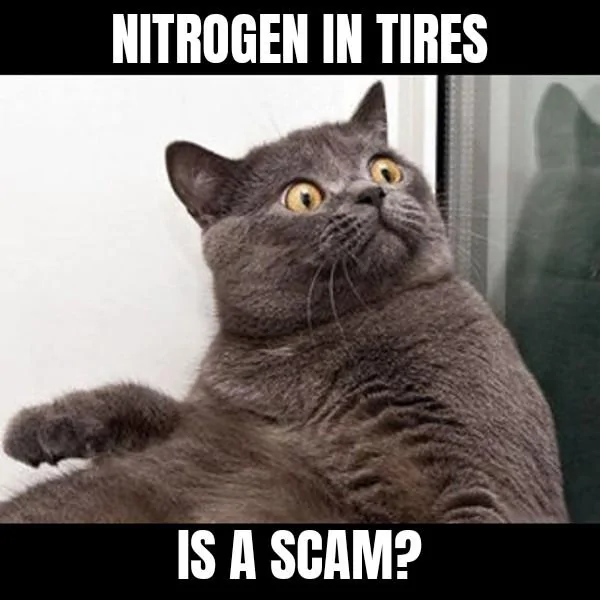
After reading the report, I'm thinking how I roll and skid the outside of the tire on gravel, asphalt, and the bones of my enemies, but I'm supposed to massage the inside of the tire with nitrogen "to make them last longer?" Forget it. It does sound like a bunch of hokum.
Sponsored
 

mamboman777

2.5L Hybrid
Well-known member
First Name
Josh
Joined
Aug 3, 2021
Threads
111
Messages
3,476
Reaction score
11,812
Location
NRH, TX
Vehicle(s)
2012 Ford Focus, 2022 Ford Maverick
Engine
2.5L Hybrid

Tuckinnuts

Member
First Name
Zach
Joined
Dec 19, 2021
Threads
0
Messages
10
Reaction score
6
Location
Usa
Vehicle(s)
Maverick
We do it for free at my work every new car gets it. Then if want the road hazard warranty you pay for that.
 

Fredvon4

Banned
Banned
First Name
Fred
Joined
Nov 7, 2021
Threads
3
Messages
77
Reaction score
80
Location
Central Texas
Vehicle(s)
Jeep grand cherokee
Not necessarily a scam but for low pressure car/truck tires only reason to do so would be if free

Most aviation tires are filled with 99.9 DRY Nitrogen to 300~5000 PSI

Mostly low volume and very high pressure. Two reasons: Lower expansion contraction coefficient ratio vs "air" and, less loss due to casing permeability over time. Of course a airplane tire can be over 100+F on the ground and at 31,000 feet be below zero F.

Tire age aging really depends on casing materiel and tread rubber compounds. The auto consumer industry depends on an acceptable (to us consumer's) life expectancy. Not in their best (profit) interest to use slightly more expensive compounds that last 2 to 3 times longer before degradation. Of course they use different compounds depending on rated mileage advertising. Harder compounds last longer (tread life) vs higher Traction rated tires with softer compounds that wear faster.

Different rubber compounds are affected differently by many things in their environment. That this aging/deterioration seems to be from inside out is really a myth. Direct exposure to bright sunlight (UV) does negatively affect most compounds. And Ozone also degrades most rubbers not blended to account for a high Ozone environment Like found in any welding shop or an area with big electric motors. In both cases this deterioration is on the outside exposed rubber

I was a Quality control guy in a former life for Haliburton owned Oil States Industries. A Specialty or Custom molding plant here in Lampasas.

We mostly made rubber things for the Oil field industry but frequently got military contracts

Lots of chemistry and physics

The thing I laugh about on Dealers hawking Nitrogen and laud the DRY and 99.9% pure FOR A FEE is: You would have to evacuate 100% of the Earth "air" to claim the tires now are moisture free with 99.9 Nitrogen
 

jbpoole

Well-known member
Joined
Sep 17, 2021
Threads
8
Messages
439
Reaction score
860
Location
Southeast
Vehicle(s)
Ford F-150
Engine
Undecided
Not necessarily a scam but for low pressure car/truck tires only reason to do so would be if free

Most aviation tires are filled with 99.9 DRY Nitrogen to 300~5000 PSI

Mostly low volume and very high pressure. Two reasons: Lower expansion contraction coefficient ratio vs "air" and, less loss due to casing permeability over time. Of course a airplane tire can be over 100+F on the ground and at 31,000 feet be below zero F.

Tire age aging really depends on casing materiel and tread rubber compounds. The auto consumer industry depends on an acceptable (to us consumer's) life expectancy. Not in their best (profit) interest to use slightly more expensive compounds that last 2 to 3 times longer before degradation. Of course they use different compounds depending on rated mileage advertising. Harder compounds last longer (tread life) vs higher Traction rated tires with softer compounds that wear faster.

Different rubber compounds are affected differently by many things in their environment. That this aging/deterioration seems to be from inside out is really a myth. Direct exposure to bright sunlight (UV) does negatively affect most compounds. And Ozone also degrades most rubbers not blended to account for a high Ozone environment Like found in any welding shop or an area with big electric motors. In both cases this deterioration is on the outside exposed rubber

I was a Quality control guy in a former life for Haliburton owned Oil States Industries. A Specialty or Custom molding plant here in Lampasas.

We mostly made rubber things for the Oil field industry but frequently got military contracts

Lots of chemistry and physics

The thing I laugh about on Dealers hawking Nitrogen and laud the DRY and 99.9% pure FOR A FEE is: You would have to evacuate 100% of the Earth "air" to claim the tires now are moisture free with 99.9 Nitrogen
Could you break this down to a meaningful algebraic expression at the molecular level for us non-scientific types?
 

Sponsored

Woody27

Active member
Joined
Jan 11, 2022
Threads
2
Messages
33
Reaction score
38
Location
No thanks
Vehicle(s)
No thanks
Fredvon4 said "Lots of chemistry and physics"
‐-------------

So then pure N2 (which has a lower molecular weight than O2) should leak faster than a mix of N2 and O2 not slower. Sort of blows a hole in the report. Hmmm, I wonder if instead of leaking the O2 is simply reacting and forming chemical compounds that result in the observed decrease in pressure (and subsequent deterioration of the tire). N2 may there for be of benefit for tires that need to be replaced due to age rather than tread wear.
 

bombast

2.5L Hybrid
Well-known member
Joined
Aug 24, 2021
Threads
4
Messages
663
Reaction score
1,377
Location
Pennsyltucky
Vehicle(s)
2022 Ford Maverick XL, Hybrid
Engine
2.5L Hybrid
Did this Nitrogen tire fad start before or after they started putting helium in hard drives? Because that's what this reminds me of (Though helium hard drives actually do work and the helium is super important).
 

Woody27

Active member
Joined
Jan 11, 2022
Threads
2
Messages
33
Reaction score
38
Location
No thanks
Vehicle(s)
No thanks
Fredvon4 said "Lots of chemistry and physics"
‐-------------

So then pure N2 (which has a lower molecular weight than O2) should leak faster than a mix of N2 and O2 not slower. Sort of blows a hole in the report. Hmmm, I wonder if instead of leaking the O2 is simply reacting and forming chemical compounds that result in the observed decrease in pressure (and subsequent deterioration of the tire). N2 may there for be of benefit for tires that need to be replaced due to age rather than tread wear.
Sorry, ignore the above. The report stated N2 did leak faster as would be expected. My excuse is that I just got back from the gym and my O2 level was depleted.
 

jbpoole

Well-known member
Joined
Sep 17, 2021
Threads
8
Messages
439
Reaction score
860
Location
Southeast
Vehicle(s)
Ford F-150
Engine
Undecided
Fredvon4 said "Lots of chemistry and physics"
‐-------------

So then pure N2 (which has a lower molecular weight than O2) should leak faster than a mix of N2 and O2 not slower. Sort of blows a hole in the report. Hmmm, I wonder if instead of leaking the O2 is simply reacting and forming chemical compounds that result in the observed decrease in pressure (and subsequent deterioration of the tire). N2 may there for be of benefit for tires that need to be replaced due to age rather than tread wear.
That's exactly what I was thinking.
 

snowcatxx87

2.5L Hybrid
Well-known member
Joined
Oct 5, 2021
Threads
9
Messages
664
Reaction score
1,239
Location
Calgary
Vehicle(s)
1290SDR EVO / Tiger 900RP / 300cc Grom / Surron
Engine
2.5L Hybrid
We used it in aviation (moisture/ice in tires/condensation etc), and race cars/bikes. Air is almost 80% nitrogren. If anyone can't figure that out, they deserve to pay it.
 
Sponsored

TimmH

Well-known member
Joined
Mar 18, 2022
Threads
0
Messages
71
Reaction score
108
Location
Southwest Florida
Vehicle(s)
2018 Jeep Wrangler
I did Nitrogen on my last set of Mustang tires. Here in Florida, the large temperature swings in a single day in spring and fall affect tires a lot. In my Jeep I can come home with 32psi, and wake up to 25, my wife's Challenger can be even worse at times.

So I tried Nitrogen in the Mustang , and honestly in the 5 years I had those tires I NEVER had to top them off.

That's just my experience, but that was a vehicle that became a Sunday driver 2 years after purchasing those tires, so the last 3 years it didn't see much road time.

That all being said, I don't think I would do it again, as putting a little ir in the tires here and there is not a big deal, especially when you have a compressor and air-hose reel in the garage.
 

Champ

Banned
Banned
First Name
ML
Joined
Sep 24, 2021
Threads
8
Messages
214
Reaction score
292
Location
Florida
Vehicle(s)
Mustang GT, Miatas, Z06, Outback
I did Nitrogen on my last set of Mustang tires. Here in Florida, the large temperature swings in a single day in spring and fall affect tires a lot. In my Jeep I can come home with 32psi, and wake up to 25, my wife's Challenger can be even worse at times.

So I tried Nitrogen in the Mustang , and honestly in the 5 years I had those tires I NEVER had to top them off.

That's just my experience, but that was a vehicle that became a Sunday driver 2 years after purchasing those tires, so the last 3 years it didn't see much road time.

That all being said, I don't think I would do it again, as putting a little ir in the tires here and there is not a big deal, especially when you have a compressor and air-hose reel in the garage.
Hit reset release button on your air gauge, no way in 5 years any normal tire at 30+/-4 lbs wouldn't change. We actually only use nitrogen on pit lane as it is moisture free, just like our shop compressed air is through the H2O filter, and we only used the, delivered to us at the track, nitrogen tanks mainly for the air guns and to adjust tire pressures as just very conveniently available . We don't expect those tires to be on very long and leakage through the rubber isn't the problem, but moisture content is.. Just another money grabbing scam with as "used by racers" story behind it!
 

rlhdweman

2.0L EcoBoost
Well-known member
First Name
Dan
Joined
Nov 1, 2021
Threads
4
Messages
1,182
Reaction score
1,405
Location
Random Lake Wisconsin
Vehicle(s)
64 Caddy Fleetwood,73 Caddy Sedan,75 Eldorado Conv
Engine
2.0L EcoBoost
It has never been anything BUT a way for car dealerships to scam you for more money, no different than sealant, undercoating or any of the other "lifetime" snake oil they sell.
Every time I see those green caps I think "snake air"
Sponsored


Top