
Sponsored

87 vs 89 vs 93 octane on 2.0 EB?

Area51BS

2.0L EcoBoost
Well-known member
First Name
Ron
Joined
Oct 11, 2021
Threads
92
Messages
800
Reaction score
1,112
Location
Florida
Vehicle(s)
Maverick
Engine
2.0L EcoBoost
Horsepower and torque ratings based on premium fuel per SAE J1349® standard. Your results may vary.

I’ve only run 89. Anyone run premium and notice a difference? Or is it minimal.
Sponsored

 

spuds_mackenzie

2.0L EcoBoost
Well-known member
Joined
Oct 19, 2021
Threads
14
Messages
243
Reaction score
424
Location
Landrum SC
Vehicle(s)
2022 Ford Maverick Lariat Hot pepper red
Engine
2.0L EcoBoost
Horsepower and torque ratings based on premium fuel per SAE J1349® standard. Your results may vary.

I’ve only run 89. Anyone run premium and notice a difference? Or is it minimal.
The only thing ive noticed is a bit better gas mileage. I average about 2-3 mpg better on 93. Or at least I seem to.
 

Enderet

Well-known member
Joined
Oct 30, 2021
Threads
5
Messages
299
Reaction score
434
Location
Alabama
Vehicle(s)
Maverick
I have only filled the Maverick up twice so far. First with 83. Then I read the manual and waited eagerly for that 83 to be used up. Then filled it up with 93. I dont feel any difference.
 

Big Kahuna

2.0L EcoBoost
Well-known member
Joined
Aug 17, 2021
Threads
80
Messages
761
Reaction score
1,417
Location
WA
Vehicle(s)
Maverick
Engine
2.0L EcoBoost
From everything I've read everywhere it sounds like you get better mpg with 93 but since it's more expensive it's a wash on cost BUT your car will like you better for the 93 in the long run :)
 

Darksider

Well-known member
Banned
Joined
Oct 24, 2021
Threads
4
Messages
330
Reaction score
388
Location
Here
Vehicle(s)
Two
You wont get better milage from 93 itself. 93 without ethanol yes. Around here only ethanol free gas is 93 for a couple of stations.

Plus you cant go by mpg displayed, its been posted on here to be 4 to 15% off... For entertainment purposes only.

The advertised hp is with the recommended 93 octane and as a general tuning rule you will loose about 3hp for every octane dropped since it will be pulling timing to prevent knock. So about 12hp loss from 93 to 89.. Will you feel this driving around, no. Will you loss some time on a lap at the track, yes.
 

Sponsored

jc888888888

2.0L EcoBoost
Well-known member
First Name
Joe
Joined
Nov 3, 2021
Threads
12
Messages
377
Reaction score
465
Location
Saint Augustine Florida
Vehicle(s)
Lariat eco boost, Mustang Mach E , Porsche Boxster
Engine
2.0L EcoBoost
how do folks feel about using non ethanol fuel? another words old school fuel
 

Barracuda340

2.0L EcoBoost
Banned
Banned
First Name
Matt
Joined
Dec 19, 2021
Threads
47
Messages
2,149
Reaction score
2,520
Location
Abilene Tx
Vehicle(s)
94 Silverado , 07 mustang, 69 barracuda
Engine
2.0L EcoBoost
Higher octane fuel is only really needed if you are going to tow with it, or drag race it, or just have a heavy foot and drive it like an animal everywhere. If just commuting with it, then you are wasting your money. I noticed no difference driving with 87 and 91. Well maybe 1 mph or 2. Not enough to warrant the extra cost.

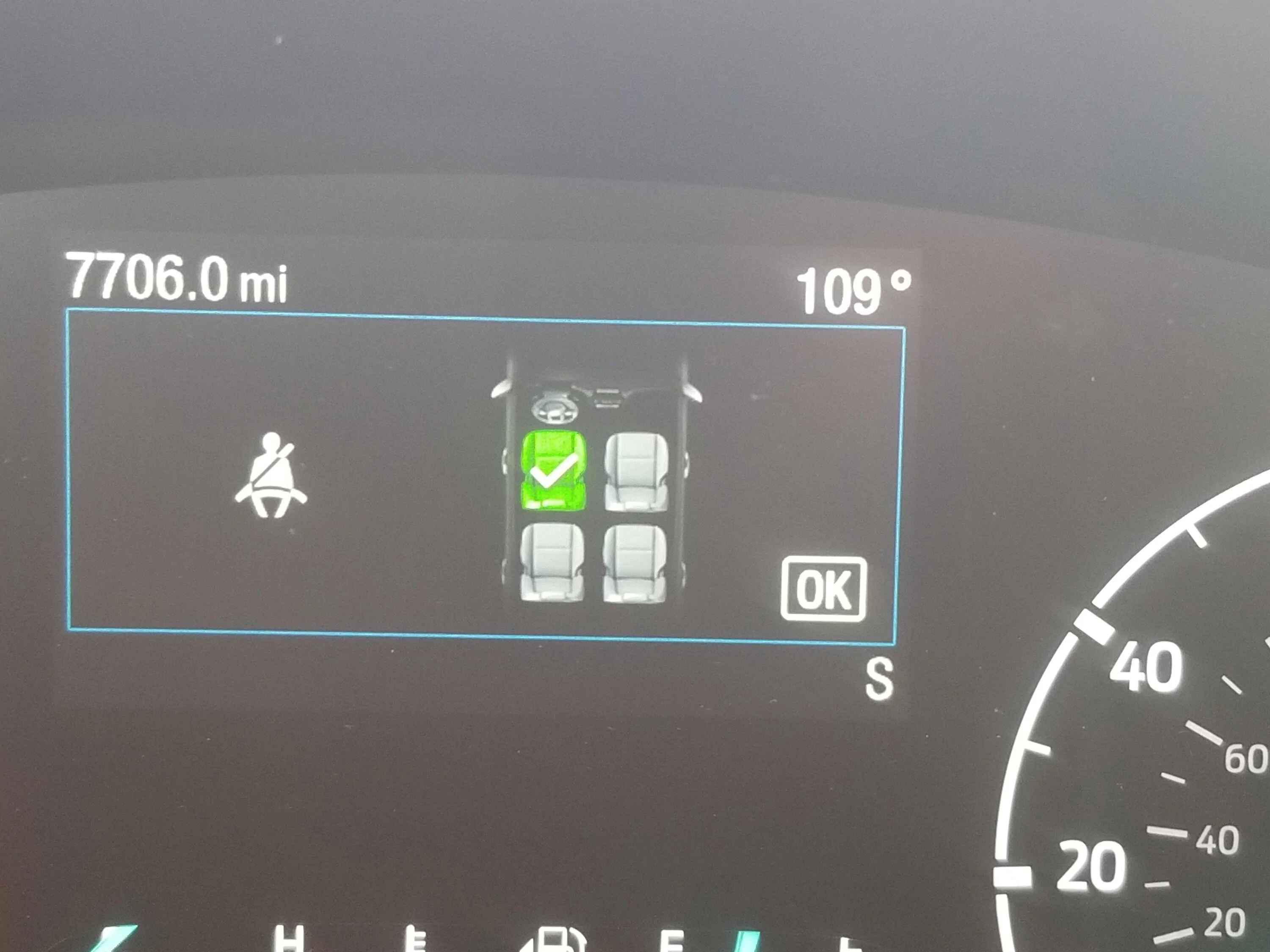
I bought mine with the 4K tow not because I plan to tow that much with it, or drag race it, but for the bigger radiator and auxiliary transmission cooler. At $700 added to the cost of the 4wd it was worth it. This will help component longevity especially in summertime heat in west Texas. Pic below was yesterday at 5:45pm in covered parking at my work. 109°F.

I am planning a small road trip with my son. I will run 87 the whole trip. Moderate acceleration onto the freeways, set the cruise at 75 mph. No problem. Turbo will not be working the engine hard enough to warrant the higher fuel grade.

The higher grades are needed when that turbo is going to go hard into boost, and for a length of time as in pulling a trailer. Forced induction from the turbo is what's increasing your compression ratio. That's when its needed. Higher CR, higher the octane to prevent detonation or ping. Light demand, not necessary. Select your fuel based on what your intended purpose for it is.

I have a light utility trailer that maxes out around 2,000 lbs. If I have to use it, I will pump 91 into my tank before I hook up and tow with it.

Hope this helps y'all out
Matt

Ford Maverick 87 vs 89 vs 93 octane on 2.0 EB? 20230712_175333
 

OleFordGuy

2.0L EcoBoost
Well-known member
First Name
Craig
Joined
Dec 5, 2021
Threads
38
Messages
3,772
Reaction score
5,912
Location
Alabama
Vehicle(s)
11 F150 Lariat, 24 Expedition Limited, 22 Mav Lariat AWD
Engine
2.0L EcoBoost
I only use 93 so I don't know what difference there may or may not be between 89 vs 93. Can tell ya it was very noticeable difference in throttle response and power and mpg from the free tank of 87 from the dealer vs 93. Everybody has their own opinion on this topic, ranks right up there with the oil brand and change interval heated discussions on the forum. I just do my things my way and others can do theirs imo. Makes me no difference.
 

Bhdreadnaught

2.5L Hybrid
Active member
First Name
Brian
Joined
Jul 25, 2022
Threads
0
Messages
33
Reaction score
35
Location
Lakeland
Vehicle(s)
2019 Ford Expedition Max
Engine
2.5L Hybrid
I’ve played with this on my big expedition max—never noticed a huge move from octane changes—that said, give the engine ethanol free gas and it’s ecstatic. Have seen mileage boosts that make me scratch my head if the 10% ethanol we are forced to buy with our gas generates anything meaningful when ran.
 

TxMike64

2.0L EcoBoost
Well-known member
First Name
Mike
Joined
Jul 17, 2023
Threads
0
Messages
52
Reaction score
82
Location
Hill Country, TX
Vehicle(s)
'17 OB, '11 A4, '33 HR, '22 FX4
Engine
2.0L EcoBoost
Higher octane fuel is only really needed if you are going to tow with it, or drag race it, or just have a heavy foot and drive it like an animal everywhere. If just commuting with it, then you are wasting your money. I noticed no difference driving with 87 and 91. Well maybe 1 mph or 2. Not enough to warrant the extra cost.

I bought mine with the 4K tow not because I plan to tow that much with it, or drag race it, but for the bigger radiator and auxiliary transmission cooler. At $700 added to the cost of the 4wd it was worth it. This will help component longevity especially in summertime heat in west Texas. Pic below was yesterday at 5:45pm in covered parking at my work. 109°F.

I am planning a small road trip with my son. I will run 87 the whole trip. Moderate acceleration onto the freeways, set the cruise at 75 mph. No problem. Turbo will not be working the engine hard enough to warrant the higher fuel grade.

The higher grades are needed when that turbo is going to go hard into boost, and for a length of time as in pulling a trailer. Forced induction from the turbo is what's increasing your compression ratio. That's when its needed. Higher CR, higher the octane to prevent detonation or ping. Light demand, not necessary. Select your fuel based on what your intended purpose for it is.

I have a light utility trailer that maxes out around 2,000 lbs. If I have to use it, I will pump 91 into my tank before I hook up and tow with it.

Hope this helps y'all out
Matt
I agree with you for the most part, but GDIT (Gasoline Direct Injection Turbo) engines operate a little different than what you are explaining. Your ideas are correct about conventional turbocharged engines: boost at higher RPMs. But GDIT engines use boost differently, specifically at lower throttle angles and lower RPM; that low RPM roll into the throttle on the interstate onramp would use quite a bit of boost. It's how these little engines develop the torque curve that they do!

The ECU can control injection timing and volume, as well as spark timing effectively enough to prevent pre-ignition when using almost any octane-rated top-tier gasoline. Higher octane will improve performance with high ambient temps. What the ECU cannot control, and can be a factor to pre-ignition is using the wrong oil which can cause Low Speed Pre Ignition (LSPI). Read about it here: motor.com/LSPI

All this concern of octane when people should be more concerned about oil!
 
Sponsored

Barracuda340

2.0L EcoBoost
Banned
Banned
First Name
Matt
Joined
Dec 19, 2021
Threads
47
Messages
2,149
Reaction score
2,520
Location
Abilene Tx
Vehicle(s)
94 Silverado , 07 mustang, 69 barracuda
Engine
2.0L EcoBoost
I agree with you for the most part, but GDIT (Gasoline Direct Injection Turbo) engines operate a little different than what you are explaining. Your ideas are correct about conventional turbocharged engines: boost at higher RPMs. But GDIT engines use boost differently, specifically at lower throttle angles and lower RPM; that low RPM roll into the throttle on the interstate onramp would use quite a bit of boost. It's how these little engines develop the torque curve that they do!

The ECU can control injection timing and volume, as well as spark timing effectively enough to prevent pre-ignition when using almost any octane-rated top-tier gasoline. Higher octane will improve performance with high ambient temps. What the ECU cannot control, and can be a factor to pre-ignition is using the wrong oil which can cause Low Speed Pre Ignition (LSPI). Read about it here: motor.com/LSPI

All this concern of octane when people should be more concerned about oil!
I agree. This is why I use Quaker State 5w30 full synthetic and ford motorcraft filters. Change it between 3 to 4 K.
 

TxMike64

2.0L EcoBoost
Well-known member
First Name
Mike
Joined
Jul 17, 2023
Threads
0
Messages
52
Reaction score
82
Location
Hill Country, TX
Vehicle(s)
'17 OB, '11 A4, '33 HR, '22 FX4
Engine
2.0L EcoBoost
I agree. This is why I use Quaker State 5w30 full synthetic and ford motorcraft filters. Change it between 3 to 4 K.
I'm not sure which flavor of QS you are using so I don't know the specs, but just for discussion and information with the other readers: For GDIT (Gasoline Direct Injection Turbo) engines like the EcoBoost, low-NOACK low-SAPS oil should be used that meet Ford WWS specs - not just "synthetic is good".

This is essential to prevent LSPI and intake valve carbon buildup, as well as standing up to cold start cylinder wash-down (oil/gas contamination). Lots of oils meet the Ford WSS and GM Dexos specs, also look to VW 50X.00 specs as VAG has been building GDIT engines for a looong time (see Euro spec oils).

Castrol Magnatec was preferred for EcoBoosts, but now this has been replaced by Castrol GTX Full Syn or Castrol Edge, but there are a lot of options out there.
Sponsored

 
Last edited:


Top