

- Thread starter
- #1

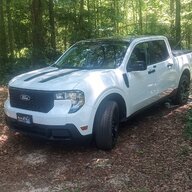
That's the trailer and truck as configured for the trip, before WDH adjustment. 521 miles from Northern Michigan down into Ohio I-75S/MI 23S. Cruising speeds of ~70 MPH, passing at up to 82 MPH. Winds 10-15 MPH. Tow/haul mode used. Excellent performance, acceleration, handling and road manners, far better than the SUV it replaced! The trailer is a Karavan 5.5x9 from Tractor Supply with brakes added. Hitch is the Andersen weight distributing.
3 tanks of 87 regular:
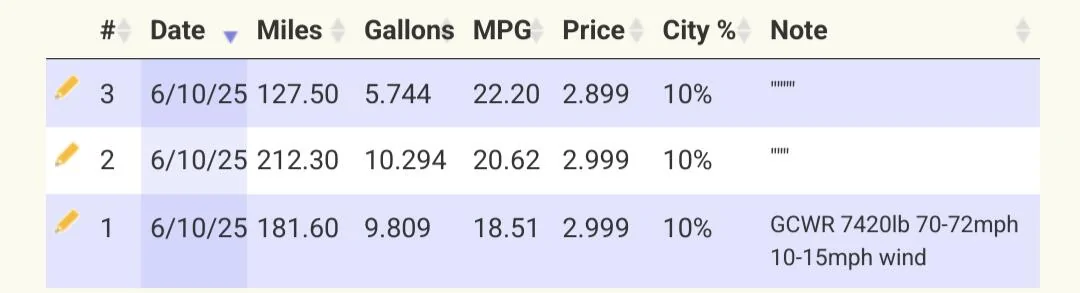
Mileage improved as the hills leveled out and daytime temperatures rose. Final tank has about 40 miles of urban rural mix, further improving that tanks result. Overall average 20.2 MPG.
CAT Scale weights:
Steer 2420 lb
Drive 2800 lb
Trailer 2200 lb
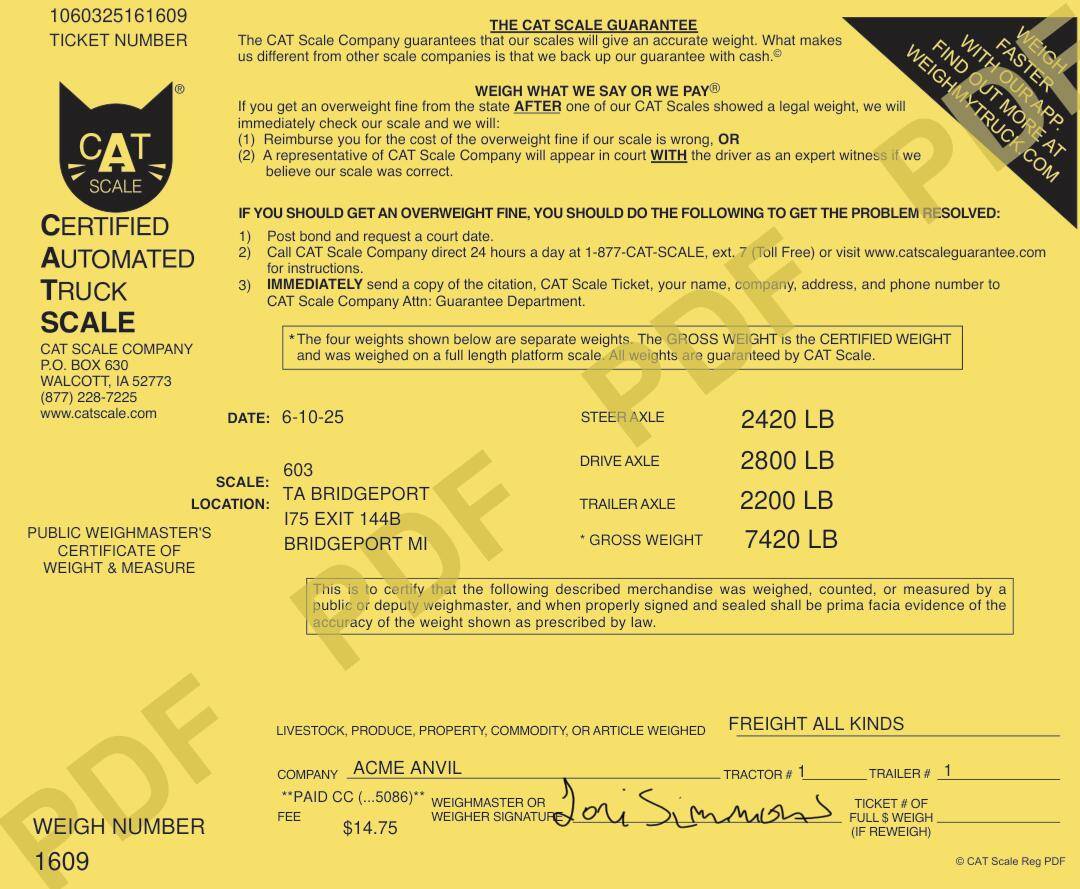
Taking into account a heavy tongue load this trip, total trailer weight was likely 2600-2700 lb. Overall weight for the rig was 7420 lb. with a mostly empty fuel tank. ~3360 payload+trailer, 4060 truck curb weight (GVWR-payload capacity)
This load was easy and comfortable for the truck and the driver. Average torque demand 20-30% ("power meter"), merge and interstate hill climb unremarkable, not difficult, full throttle never required.
The rear axle was right at the factory limit specification - without the WDH it would have been over by a few hundred pounds most likely. I set the WDH with less tension than I normally would use for the first trip shakedown, front fenders still had about 1/4" rise from unladen height.
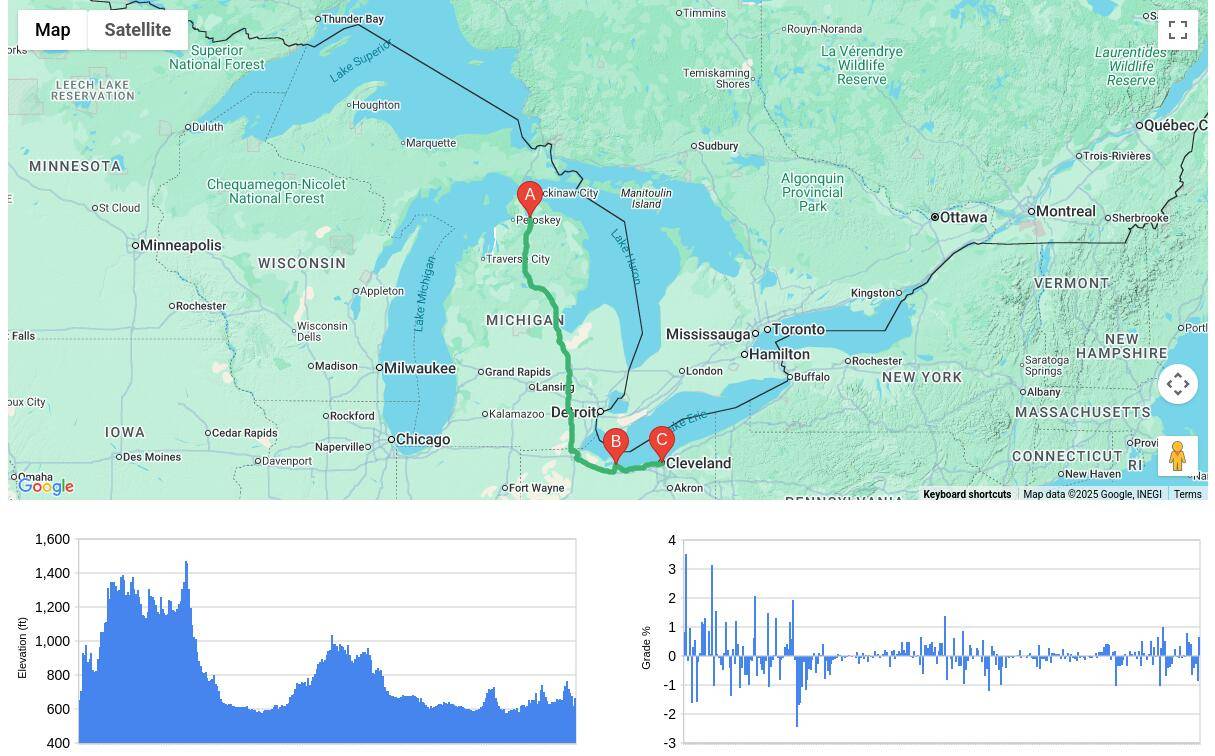
*edit: I thought I'd throw in a highway grade chart to explain a bit of the difference in MPG from the first third of the trip compared to the last third. The beginning of the trip I-75 has a decent amount of 1% - 3.5% grades, while the latter part is much flatter. This is just a snapshot of the partial trip from https://flattestroute.com that makes viewing the elevation and grade % fairly easy.
Sponsored
Last edited: