
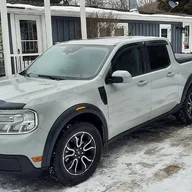

Don't post AI pleaseYep, that brings back memories. Many years ago I had a very similar experience. Out of curiosity i did a google search and was a little surprised on the result i got (cut/pasted below)
AI Overview
Small objects, like rocks, crack windshields more easily than large, heavy objects because of pressure concentration (P=F/A). A tiny stone concentrates high-velocity force into a minute area, exceeding the glass's localized strength, whereas a large, blunt object spreads its force over a wider surface area.
- Pressure over Force: The key factor is 20,000 to 24,000 psi of pressure, which is roughly 60 pounds of force, needed to crack a windshield. A small, fast-moving object concentrates this force to create a fracture, often causing a "bulls-eye" or "star break".
- Mass vs. Velocity: Small pebbles, often from construction zones, have high velocity and small mass, concentrating energy at a sharp point. A large object might hit with higher overall force, but if the impact area is broad, the force is distributed, reducing the chance of breaking the laminated glass.
- Weak Points: Tiny chips from small debris act as, which can grow into large cracks due to heat or vibration, according to this Reddit post.
- Laminated Structure: Windshields are made of laminated safety glass, designed to dent or absorb impact from larger, blunt objects rather than shattering immediately, as described in this Anthony Volk Glass article

Sponsored


