

- First Name
- Mike
- Joined
- May 3, 2024
- Threads
- 5
- Messages
- 5,177
- Reaction score
- 4,891
- Location
- KC Metro area
- Vehicle(s)
- 2005 Toyota RAV4, 2024 XLT Hybrid
- Engine
- 2.5L Hybrid
Actually - I'd consider it to be silly to believe they haven't fixed a sloshing potential by now.Only silly until you receive your repair bill for EVAP system repair.
Shaking & burping your truck - sloshing liquid gas into the EVAP system - now that IS silly
The EVAP system stays most robust if you never let your tank get below 1/4 tank (cooling) or above 3/4 tank (sloshing).

Considering they have all these other controls to keep the liquid where it belongs.
And the line isn't under vacuum that it would be pulling liquid in if it sloshed and touched the opening.
I think if you all saw the shape of the tank - look on eBay - and saw that it fills from the bottomish area - so it ONLY can raise the level in the tank as high as the weight of the fuel in the filler tube goes up at speed, so there is a natural block unless you have one very slow pump, there isn't as much to be concerned.
You'd have to have some serious sideways tilt to passenger side to allow truly overfilling the tank with the speed of any normal fuel pump.
It's why the EVAP tests can only be run with the tank below and above a certain % - otherwise it can't build up pressure.
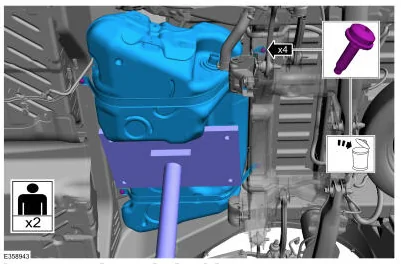
From shop manual - of course more throw-away bolts! so can see the fuel inlet disconnected above the fuel pump deep well area, and all the lines going to the top:
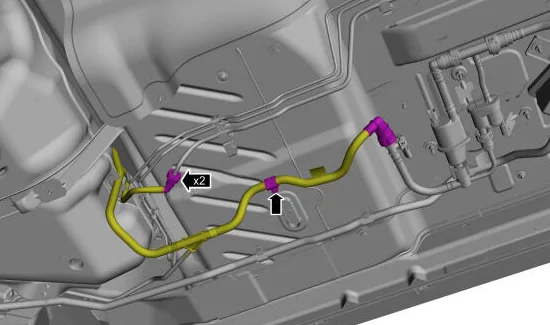
At least they put most the valves and such in easy spot in front of the tank under protectors, not on top of tank, only the hoses coming from the tank top.
Not highlighted here, but visible to right.
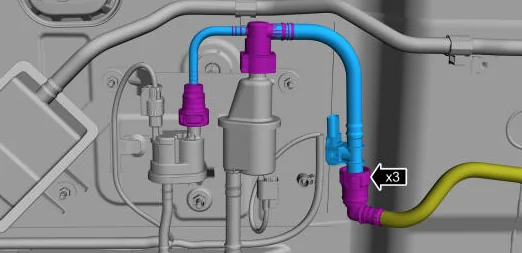
Isolation valve, vapor vent valve , pressure sensor.
Sponsored