

- Thread starter
- #1
So I made another thread about this annoying rattle I had that was driving me crazy. I fixed the issue (well, so far 2 days of driving and not a single noise). I decided to write down my issue for anyone impatient enough to deal with a rattle, patient enough to go through all the trouble to fix it, and brave/crazy enough to do what i did to fix it. First, the backstory.
I had a rattle that was just infuriating me to no end. I call it a rattle because there's not a better way to describe it: maybe a rattle/drone. It was persistent. A little bump would trigger it, but it would last a good 10 seconds after the trigger and sometimes longer before it would die out. I determined it was coming from the rear passenger side door.
I took apart the door panel and inspected for anything obvious. There wasn't a telltale sign, but my guess was it was coming from where the plastic parts are "riveted" together. I have no other way to describe how this type of fastening looks. Other people have also claimed to have had issues with this and the plastic pieces rattling against each other. Tapping it with the palm of my hand seemed to recreate the sound.
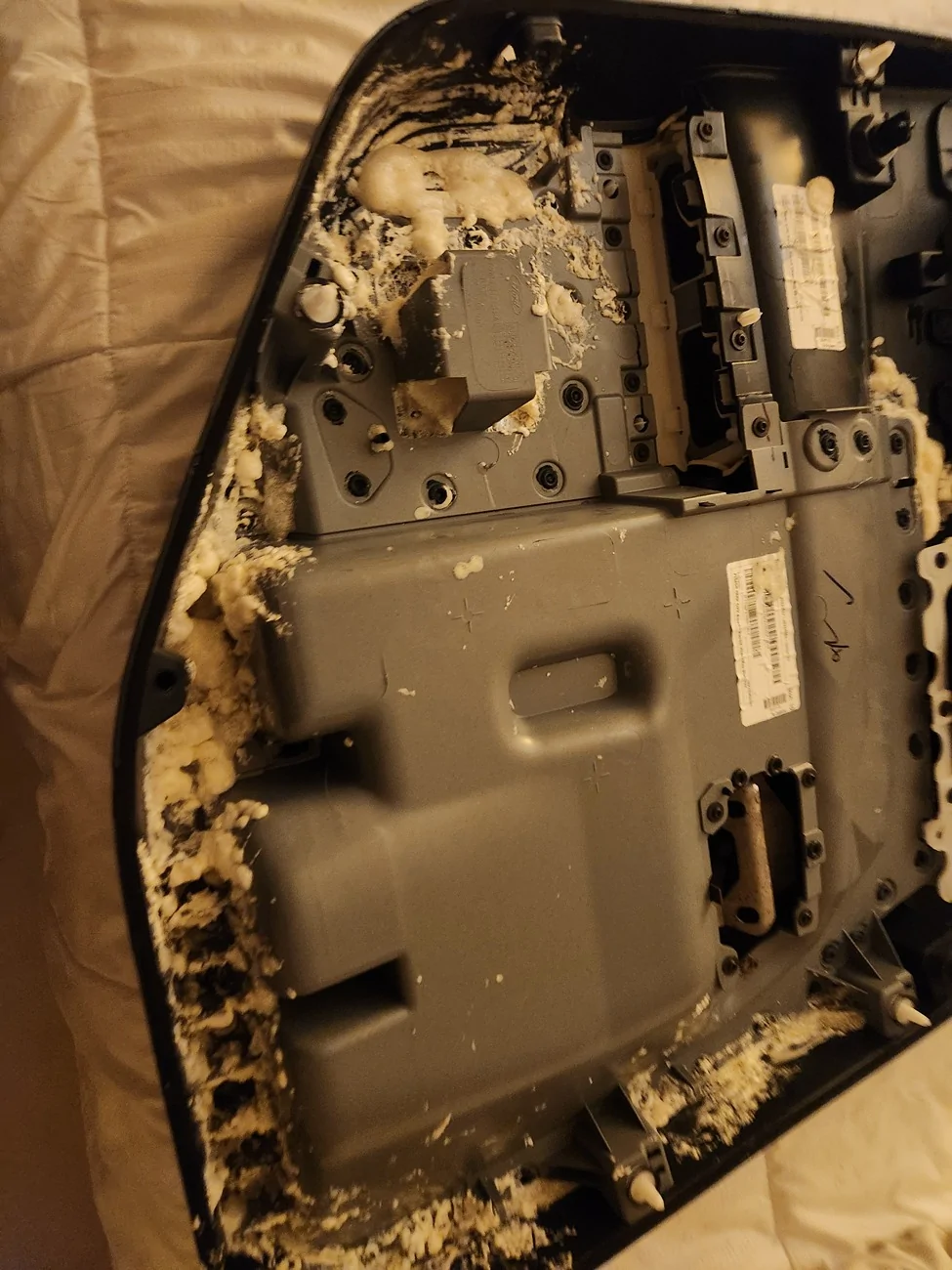
I had leftover 2 part marine foam from a boat I restored. I took a risk and mixed the two part liquid and slowly poured into whatever gaps I could, slowly tilting the door panel to get it into the little crevices. I let it cure overnight in the garage to harden and let the stench of the chemical dissipate and then attached closed cell foam on all the parts I could that would not interfere with the fasteners on installation to prevent plastic panel on metal vibration. I then put killmat on the outer door skin, put some closed cell marine foam on top of the killmat, reattached the vapor barrier and then reattached the door panel. Problem solved.
If anyone is brave enough or dumb enough to do what I did, some notes:
1. Use 2lb density foam. You don't need anything stronger and if you use something stronger, it may separate the joined plastic pieces.
2. Be VERY CAREFUL. Use gloves, go fast, but slow - you don't have much time before the liquid turns to foam.
3. Keep in mind the foam expands to 25 times its liquid state. I ended up using too much. To give you an idea, mixing 1 ounce of each liquid part together will give you 2 ounces or 1/4 of a small cup of coffee. When it expands, it will now be over 6 cups.
4. I had some expansion seep into the other side of the door panel in the tray. First thing's first, avoid any mistakes like pouring too much or having the foam go where you don't want it to go. If the foam goes to where you don't want it go on the door panel, it is easier to remove it when it first hardens as opposed to trying to take it off when it's a gooey mess. You can just snap it off the panel. As long as you don't leave it a day to fully cure, you'll be ok. The exception being if the foam is very thick or has buried something (like fasteners). You might want to remove that before it hardens with heavy duty disposable gloves. Using a disposable spoon or some similar utensil can help for sure.
5. Even though I used this on the door panel that's interior, I still recommend going with closed cell foam. It doesn't absorb water.
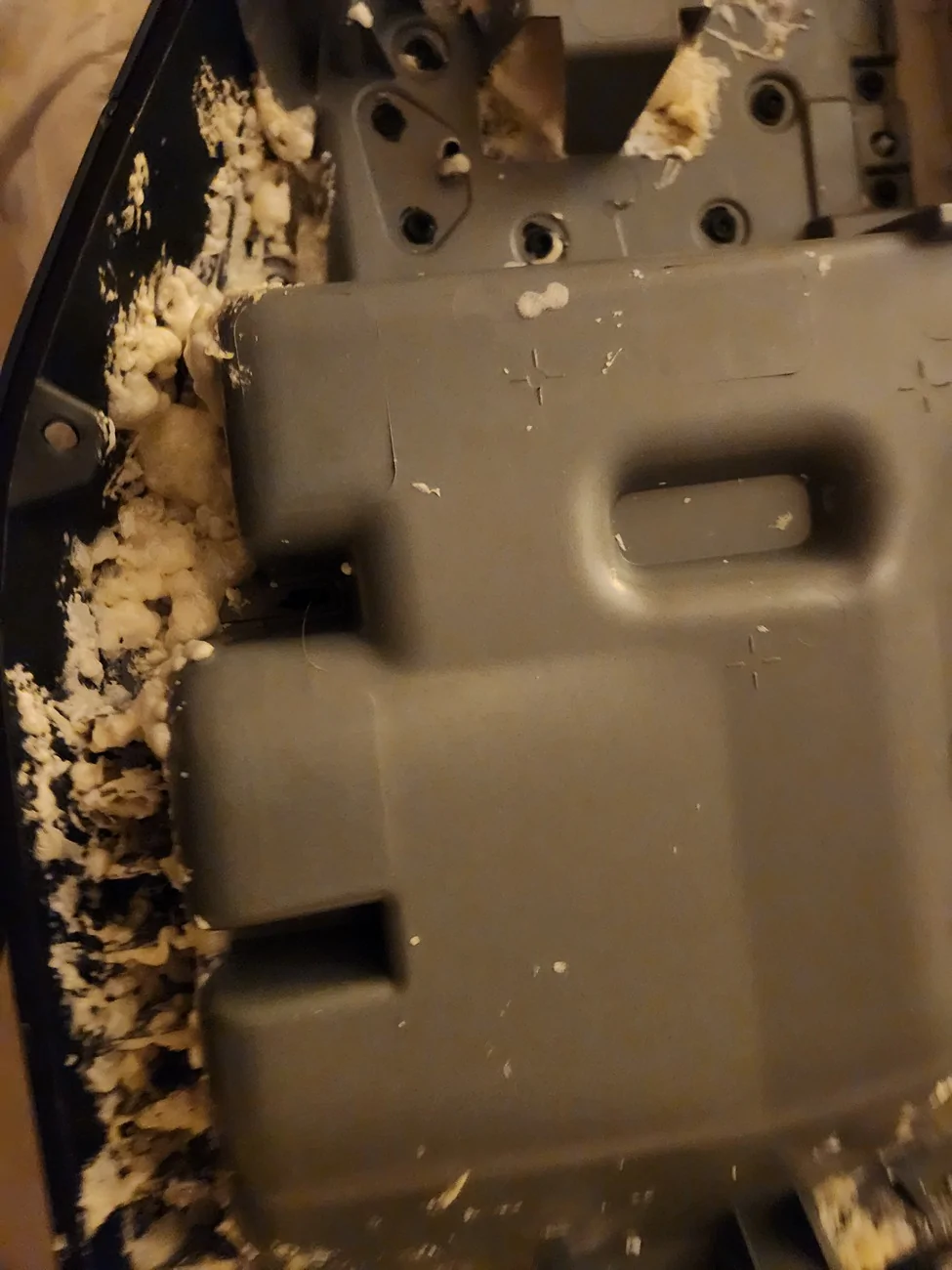
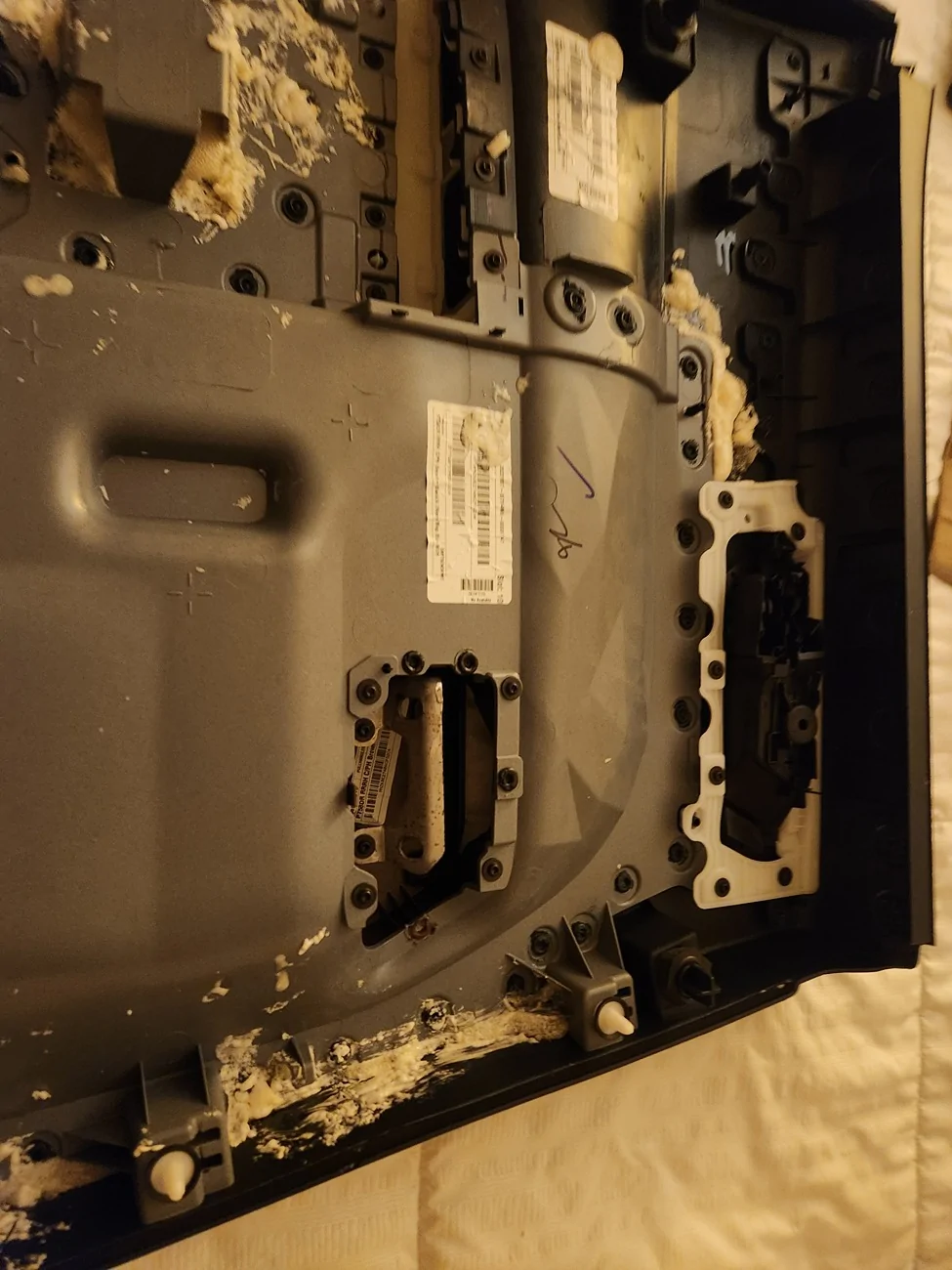
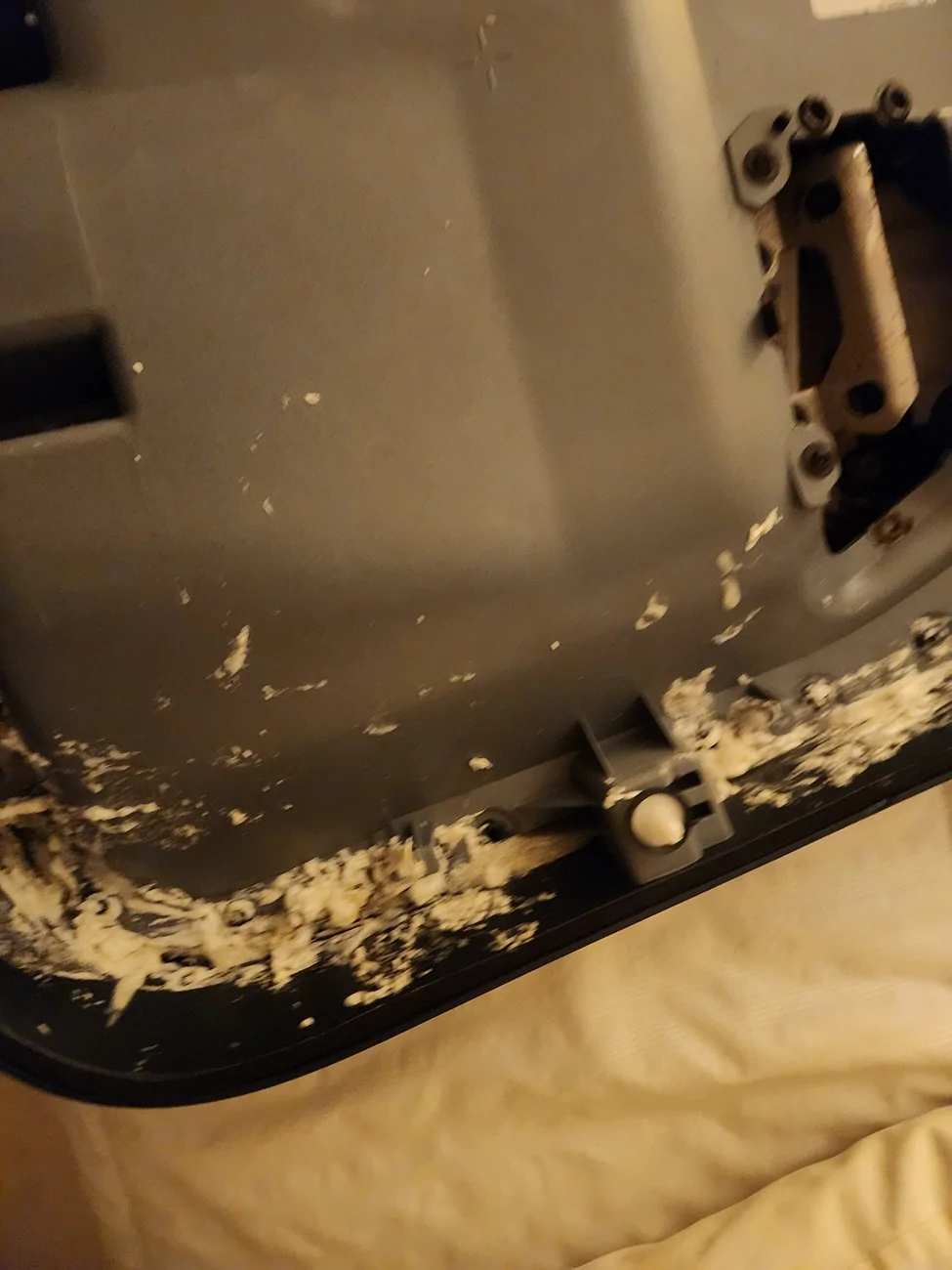
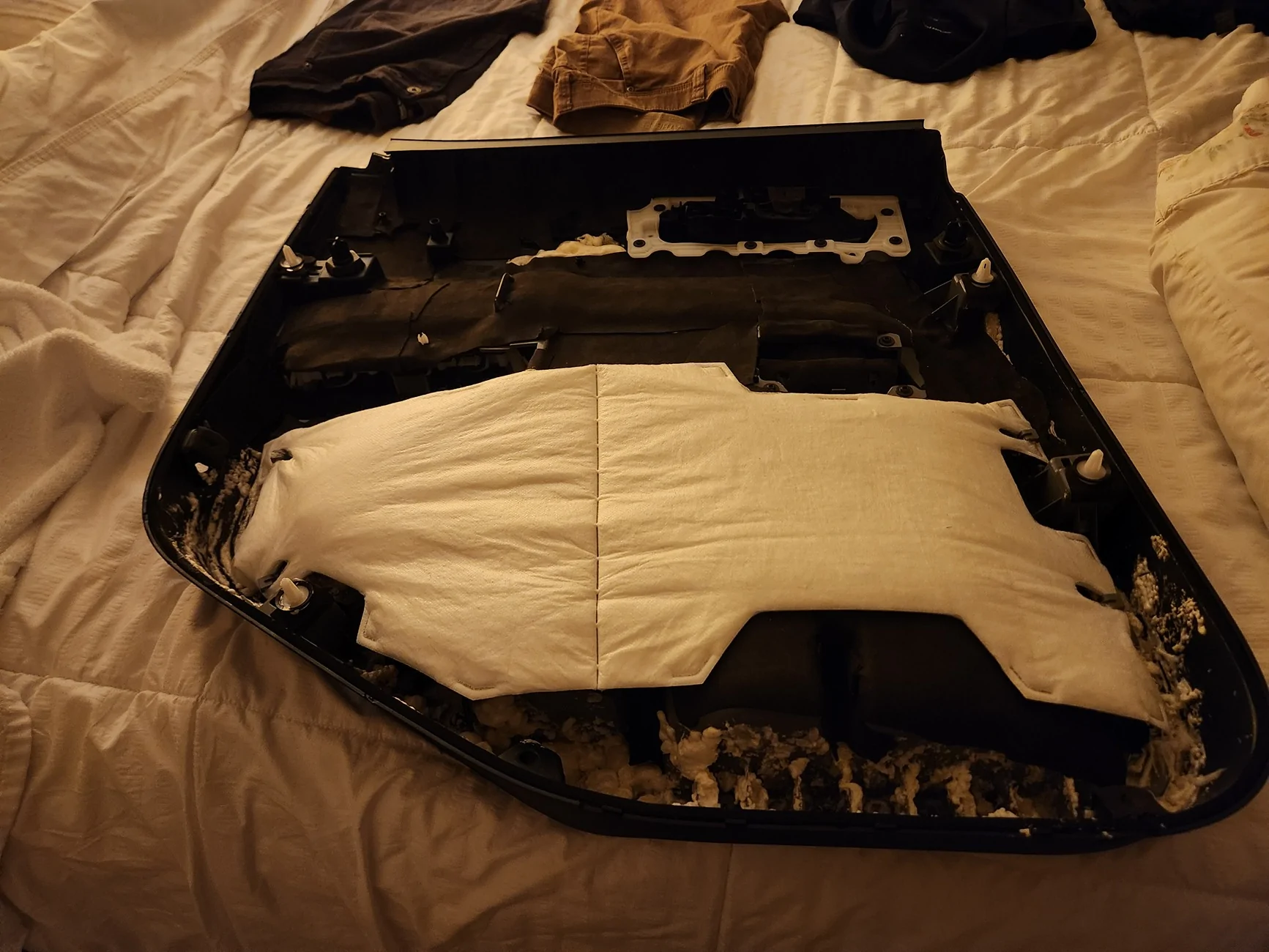
I had a rattle that was just infuriating me to no end. I call it a rattle because there's not a better way to describe it: maybe a rattle/drone. It was persistent. A little bump would trigger it, but it would last a good 10 seconds after the trigger and sometimes longer before it would die out. I determined it was coming from the rear passenger side door.
I took apart the door panel and inspected for anything obvious. There wasn't a telltale sign, but my guess was it was coming from where the plastic parts are "riveted" together. I have no other way to describe how this type of fastening looks. Other people have also claimed to have had issues with this and the plastic pieces rattling against each other. Tapping it with the palm of my hand seemed to recreate the sound.
I had leftover 2 part marine foam from a boat I restored. I took a risk and mixed the two part liquid and slowly poured into whatever gaps I could, slowly tilting the door panel to get it into the little crevices. I let it cure overnight in the garage to harden and let the stench of the chemical dissipate and then attached closed cell foam on all the parts I could that would not interfere with the fasteners on installation to prevent plastic panel on metal vibration. I then put killmat on the outer door skin, put some closed cell marine foam on top of the killmat, reattached the vapor barrier and then reattached the door panel. Problem solved.
If anyone is brave enough or dumb enough to do what I did, some notes:
1. Use 2lb density foam. You don't need anything stronger and if you use something stronger, it may separate the joined plastic pieces.
2. Be VERY CAREFUL. Use gloves, go fast, but slow - you don't have much time before the liquid turns to foam.
3. Keep in mind the foam expands to 25 times its liquid state. I ended up using too much. To give you an idea, mixing 1 ounce of each liquid part together will give you 2 ounces or 1/4 of a small cup of coffee. When it expands, it will now be over 6 cups.
4. I had some expansion seep into the other side of the door panel in the tray. First thing's first, avoid any mistakes like pouring too much or having the foam go where you don't want it to go. If the foam goes to where you don't want it go on the door panel, it is easier to remove it when it first hardens as opposed to trying to take it off when it's a gooey mess. You can just snap it off the panel. As long as you don't leave it a day to fully cure, you'll be ok. The exception being if the foam is very thick or has buried something (like fasteners). You might want to remove that before it hardens with heavy duty disposable gloves. Using a disposable spoon or some similar utensil can help for sure.
5. Even though I used this on the door panel that's interior, I still recommend going with closed cell foam. It doesn't absorb water.
Sponsored
Last edited:


