
Sponsored

Thoughts on the Lightning?

Old Ranchero

2.0L EcoBoost
Well-known member
Joined
Apr 1, 2021
Threads
26
Messages
2,587
Reaction score
3,511
Location
CO
Vehicle(s)
2018 F-150 2013 Jeep Grand Cherokee 2022 Maverick
Engine
2.0L EcoBoost
I see the F-150 Lightning more as a symbol than a mainstream vehicle. Don't get me wrong; it's very impressive, especially the commercial oriented Lightning Pro. However, I believe the bigger point is Ford showing commitment to EV development and infrastructure while still holding the Ford style. I know the Mustang Mach-E looks nothing like a Mustang, but the new F-150 Lightning looks like and acts like a truck. As tech develops and cost decreases, we'll see it spread into the Ranger, Super Duty, and other trucks. Maybe even the Maverick one day.
spot on. They are virtue signaling and trying to up their fleet MPG to make gov't happy while still selling millions of ICE Mustangs, SUVs, and F-150s. Nobody talks about it, but I think the real reason manufacturers are falling all over themselves to go "all electric" is to be the leader in EV repairs and conversions globally when the market for them explodes after all other choices are taken from us. Follow the $...
Sponsored


Old Ranchero

2.0L EcoBoost
Well-known member
Joined
Apr 1, 2021
Threads
26
Messages
2,587
Reaction score
3,511
Location
CO
Vehicle(s)
2018 F-150 2013 Jeep Grand Cherokee 2022 Maverick
Engine
2.0L EcoBoost
Any serviced RV campsite will have 30 amp or 50 amp power. At 50 amp that's 6*24=144Kwh a day. A lot of the cost of a Class B or class C RV is generator/battery/solar. A class C RV with, say, just 200mi of range allows for a six hour drive with a stop for lunch between campsites.

Even when boon docking such a vehicle with a 5KW diesel or propane generator will charge the batteries enough to get you to the next charging station.

It's coming and coming sooner than you think.
not gonna happen my friend 🙃 The RV industry is 1 of many that will cease to exist after the gov't forces us prematurely off fossil fuels. There simply won't be any way to profitably build a comparable RV to what we have today- unless you want it Vanagon sized. There also won't be any diesel or propane generators either. Travel trailers will survive and probably grow because they are towed instead of being self-propelled by engine and drivetrain.

 

Old Ranchero

2.0L EcoBoost
Well-known member
Joined
Apr 1, 2021
Threads
26
Messages
2,587
Reaction score
3,511
Location
CO
Vehicle(s)
2018 F-150 2013 Jeep Grand Cherokee 2022 Maverick
Engine
2.0L EcoBoost
I'm always surprised by the hate for electric vehicles. I am no "new green deal" guy...not by any stretch (I currently own vehicles totaling 32 cylinders) but it is obvious that the future of transportation will be electric. I look forward to never going to a gas station again, to instant torque, to quieter interiors. Sure, battery technology has to improve to bring down the cost and extend the range - but there is no denying that electric vehicles by and large are mature technology. Embracing technology is all part of enjoying cars and car culture.
what I hate is my choice being taken away. EVs will be forced upon us as opposed to being an organically driven free market competition offering better value vs. what we have now. EV sales are only 3% of US market- and probably 1% of that is only novelty or because of gov't $ incentives to buy. In a straight up fair competition vs. ICE vehicles EV market will not grow to levels people are predicting- or it would be happening already with "mature technology". I don't see massive pent up demand for them. If people looked at the TRUE cost to build, own, recycle EVs instead of glorifying the idea of it, the forced switch is a horrible idea and will result in unimaginable amounts of wasted taxpayer $ before there is ever any comparable scenario for ease of personal travel and commerical transportation of goods and neccesities we take for granted now. I predict total implosion of our economy with lack of access to basic requirements of life as we know it coming unless they can prove the infrastructure is in place and proven to work before banning ICE propulsion. I'd like to see real life testing on a smaller scale- say convert the trucking industry, USPS, and gov't fleet to prove conclusively the lofty claims are true and will seamlessly replace what we have now before I jump on board.

/rant off
 
OP
OP

MontanaEd

Well-known member
First Name
Ed
Joined
Apr 8, 2021
Threads
3
Messages
93
Reaction score
172
Location
Montana, USA
Vehicle(s)
PHEV- Volt
For everyone who thinks the switch to EVs is being forced on them by the government, you are right. But you are wrong about what government it is. US car makers have to be competitive on a global scale. Where does GM sell the most Buicks? It ain't the USA, it's China. Horrible pollution there means government regulations that force the switch to electric. Ever seen an electric Buick? They sell them in China but not the US. Sure some European markets are pushing the change too. But Uncle Sam? No, not really. Don't believe me? Check the tax on gas in the EU. It is way higher as a percentage of the price paid at the pump than in the US. If Ford wants to sell F150s in China they need to be electric. We get the benefit of both ICE and electric until it is no longer viable financially for Ford to produce both.
 

Old Ranchero

2.0L EcoBoost
Well-known member
Joined
Apr 1, 2021
Threads
26
Messages
2,587
Reaction score
3,511
Location
CO
Vehicle(s)
2018 F-150 2013 Jeep Grand Cherokee 2022 Maverick
Engine
2.0L EcoBoost
I dunno about that. IMO, the Lightning is intended to keep a leg up on the North America market and help with CAFE fleet standards. Does Ford even sell ANY F-150s or full size trucks in China? Their ecomony is different from ours and tightly controlled by their government that can shut a foreign business down at any minute- or never allow them to start up in the 1st place. Maybe I missed it, but do they even have millions of independent contractors depending on full size work trucks to make a living like in the US? That is intended market for Lightning Pro coming out the gate. As far as I know any car company wanting to do business in China has to actually build them there in partnership with the Chinese goverment who then steals all their secrets and makes sure they are always at a disadvantage to similar home grown companies. Yes, there used to be GM products (usually high end Cadillacs, Buicks, etc.) and it is the world's biggest market but Chinese companies dominate sales. There are at least 3 car companies including Neo, Cherry, etc that make up the bulk of sales. This is true for cell phones too where Xiomi, Huawei, and a couple others dominate the market (a lot of my career was in hi tech with some involving world wide compliance for export). I could be wrong, but US made auto technology products sold in China probably make up a fraction of the global total. Maybe somebody with time to research can confirm or correct that? Another facet I think would be a costly obstacle is trying to mass import vehicles from USA to China- again I don't have numbers to confirm, but I would expect American company car imports would come from Spain and elsewhere if not made in-country.
 

Sponsored

eRock92

Well-known member
Joined
May 24, 2021
Threads
11
Messages
199
Reaction score
310
Location
Virginia
Vehicle(s)
2020 Ford Escape SE
Engine
Undecided
Call me crazy or ignorant, but I believe most people are at least aware that electric technology is still a long ways from replacing the ICE. We are still lacking 3 main milestones before the Reaper can make is way toward gas engines:

Average battery storage/range greater than or equal to the average consumer gas powered automobiles. This milestone will most likely be achieved first. I'm still looking into how solid state batteries will work and the advantages and disadvantages. The F-150 Lightning has a range up to 300 miles for the top battery. We're close. What remains to be seen is how long and/or how many miles these batteries will last. Time will have to answer that one.

Battery charge time less than or equal to the average consumer gas powered automobile. Not everyone has the convenience or willingness to wait for a full charge. Not everyone has the ability to fully charge at home. Not everyone's commute actually benefits from fully charging at home (there are people who drive almost well over 150 miles round trip to work in the DC area). I'm only referencing desk jobs with that. However, if someone can go to a charging station and "fill up" in roughly the same time it takes to fill up your average consumer automobile, it would make the transition to charging that much more complimentary to people's daily lives.

An organized EV charging infrastructure. Charging stations are just scattered about, and this is just only in dense urban/suburban areas. I just did a trip this past weekend from the DC area to central Ohio. Out of curiosity, I looked up the charging stations along the way. For the middle leg of the trip, there were locations with charging stations scattered randomly throughout. The last thing I want to do is stop at a charging point in some obscure spot in middle-of-nowhere north WV or southwest PA for Lord knows how long. We currently don not have the equivalent to an EV Wawa or Sheetz or Flying J. Purposely built places for EV charging, as opposed to random stations in random shopping centers or slapped in the corner of a gas station, can help with consumer confidence in EV's.

I'm not ready to invest into an EV until I see those three milestones achieved listed above. There are some people who enjoy being in the forefront on new technological movements. In my current season of life, I don't have that luxury. Also, keep in mind that my points only apply to consumer automobiles. We are a long ways away before EV tech can apply practically to industries like heavy civil construction, logistics services, airlines (very long ways off), and public transit services. Electric technology is on it's way. Large businesses and companies are taking notice to it. EV technology is popular due to recent advancements. However, we have a ways to go before EV hums replace the ICE growls of our highways and byways.
 

Old Ranchero

2.0L EcoBoost
Well-known member
Joined
Apr 1, 2021
Threads
26
Messages
2,587
Reaction score
3,511
Location
CO
Vehicle(s)
2018 F-150 2013 Jeep Grand Cherokee 2022 Maverick
Engine
2.0L EcoBoost
again, spot on. The rush to convert 100% now is premature, political, and a fools errand with no appreciable benefits to the vast majority. Just yesterday there was an article by the CEC California Energy Commission (in charge of implementing Governor's vision to BAN sales of all ICE vehicles by 2035) in which the chairperson stated they know for a fact there will NOT be enough charging stations or EV infrastructure by then- including hundreds, if not thousands of miles of power lines need to upgrade their electrical grid. These projects always meet mass opposition from many quarters take decades to implement- if ever. See CA "bullet train" as prime example. I grew up in CA and saw this all my life.

Here's a very timely article I just came across and a thoughtful discussion with no obvious biases on display 1 way or the other. Just food for thought: https://thehill.com/opinion/energy-environment/555936-lets-not-put-all-our-cars-in-the-ev-basket

In 1900, one-third of the 8,000 vehicles on American roads were battery electric (EV). Today, about one-half of 1 percent of 276 million operating vehicles are battery electric. However, every major automobile company in the U.S. and abroad is now manufacturing, or planning to produce, electric vehicles.

The Biden administration sees EVs as the future of ground transportation and a critical component of a strategy to lower greenhouse gas emissions. To this end, it wants to spend $174 billion on EV investments, including 500,000 charging stations and vehicle purchase incentives. In addition, Senate Majority Leader Chuck Schumer (D-N.Y.) wants Congress to approve $392 billion for 10 years of tax credits and vouchers for those who replace gasoline-powered vehicles with EVs.

If the past is prologue, the bulk of these credits and subsidies will go to high-income families. For example, a 2014 Internal Revenue Service study of existing EV subsidies found that the biggest beneficiaries were households with adjusted gross incomes of at least $100,000. Only 1 percent went to households earning less than $50,000.

Policymakers should think twice about putting all future cars and light trucks in the EV basket. First, it’s not clear that “zero-emission vehicles” are environmentally benign, mainly because electric cars use far more critical minerals — lithium, cobalt, graphite, copper, nickel and rare-earths — than those powered by internal combustion engines. According to a recent report by the International Energy Agency, a typical electric vehicle requires six times the mineral inputs of a conventional car. Producing the battery for an electric car can emit almost a quarter of the greenhouse gases that a gasoline car will emit across its entire lifetime. What is more, the mining of these energy transition materials (ETMs) is energy and water intensive and occurs primarily in areas of high water stress, posing contamination risks through acid mine drainage, wastewater discharge, and the disposal of tailings.

Today, the bulk of ETMs are produced and processed abroad, with China alone controlling virtually all the critical minerals used in battery production. Of the 136 lithium-ion battery plants in the pipeline to 2029, 101 are based in China. Though the U.S. has some of the world’s largest lithium reserves, only one mine is currently in operation, producing less than 2 percent of the world’s supply. Projects to mine lithium from the Salton Sea in California and a dormant volcano in northern Nevada have met with pushback from Native Americans, ranchers and environmentalists. So heavy dependence on imports of the metals used to build electric vehicles will likely continue.

With the ongoing hype over electric vehicles, hybrid-electrics and hydrogen fuel cells have been virtually ignored. Hybrids, which have been in use since 1997, pair a gasoline engine with a separate electric motor. The on-board battery is relatively small and can be charged by the engine or the power generated when the vehicle is coasting or braking. Fuel economy is typically twice that of a conventional car. Nearly 6 million hybrid electric automobiles and sport utility vehicles have been sold in the country through 2020, dwarfing the number of plug-in electrics.

Hydrogen fuel cells are another promising technology. Put simply, a fuel cell combines hydrogen and oxygen to produce electricity through an electrochemical reaction. Because the byproducts are only water and heat, there are no carbon emissions. Small-scale fuel cells have been used by some automobile manufacturers for more than a decade, and Daimler plans to replace diesel with hydrogen in its heavy trucks within 15 years.

Toyota, Hyundai and Honda currently sell vehicles that combine hydrogen and oxygen to generate electricity which powers the drive train. But unlike battery electric vehicles, fuel cell cars boast driving ranges comparable to those of gasoline or diesel vehicles, 300 to 350 miles. Average mileage per gallon for fuel cell cars is 58, compared to 23 for gasoline-powered cars. Refueling can be done in less than 10 minutes, whereas it can take several hours to recharge a battery powered vehicle. The only negative, at present, is the limited number of fueling stations selling pressurized hydrogen.

Finally, the internal combustion engine gets a bad rap. Personal vehicles powered by gasoline and diesel account for less than 10 percent of all greenhouse gas emissions in the U.S., and that percentage continues to fall as both American and foreign car manufacturers focus on improving fuel economy to reduce tailpipe emissions.

Focusing on a single transportation mode such as EVs may discourage innovation and competition that can bring about greater reductions in greenhouse gas emissions at a lower cost. If the ultimate policy goal is improved air quality, mandating vehicle electrification may, ironically, turn out to be both inefficient and expensive.

Bernard L. Weinstein is an emeritus professor of applied economics at the University of North Texas and a fellow of Goodenough College in London.
 
OP
OP

MontanaEd

Well-known member
First Name
Ed
Joined
Apr 8, 2021
Threads
3
Messages
93
Reaction score
172
Location
Montana, USA
Vehicle(s)
PHEV- Volt
Just going to point out that folks opposed to electric vehicles often point out the lack of charging infrastructure as a barrier. Then bring up hydrogen as an alternative. Last time I checked there were two states that had hydrogen stations open to the public. I also don't have a hydrogen dispenser on the wall in my garage.

Right now, for my use, the perfect vehicle is a plug in hybrid that is primarily electric. I can zip around town on electric power and then put some gas in the tank for longer trips. Yes, that's what I own. But I'd like one that is not a small sedan.

But back to the point of this thread. I think that from the future looking back the reveal of the Lightening will be seen as an important point in automotive evolution. Either the tipping point that pushed us toward electric vehicles in the mass market. Or, the beginning of the end of a failed experiment. If the lightening does not work as a mass market electric vehicle, I can't imagine something that would.
 

eRock92

Well-known member
Joined
May 24, 2021
Threads
11
Messages
199
Reaction score
310
Location
Virginia
Vehicle(s)
2020 Ford Escape SE
Engine
Undecided
Just going to point out that folks opposed to electric vehicles often point out the lack of charging infrastructure as a barrier. Then bring up hydrogen as an alternative. Last time I checked there were two states that had hydrogen stations open to the public. I also don't have a hydrogen dispenser on the wall in my garage.

Right now, for my use, the perfect vehicle is a plug in hybrid that is primarily electric. I can zip around town on electric power and then put some gas in the tank for longer trips. Yes, that's what I own. But I'd like one that is not a small sedan.

But back to the point of this thread. I think that from the future looking back the reveal of the Lightening will be seen as an important point in automotive evolution. Either the tipping point that pushed us toward electric vehicles in the mass market. Or, the beginning of the end of a failed experiment. If the lightening does not work as a mass market electric vehicle, I can't imagine something that would.
Hydrogen was a failed experiment but was also a victim of misinformation to a small degree (I know, it's a word overused in society these days). EV's have been legitimized thanks to Tesla successfully becoming an EV brand. It has big enough of a cult following to stay for the long term.

I do agree that PHEV's are the perfect balance. It gives people the best of both worlds. I won't be surprised if PHEV's become the new base model, especially with what Ford has done with the Maverick.
 

balucipher

Well-known member
First Name
Balu
Joined
Jun 9, 2021
Threads
4
Messages
493
Reaction score
953
Location
Coral Springs, FL
Vehicle(s)
2021 Gladiator, 2021 Tesla Model Y
I have my reservation in. Based on pricing, I'll probably get a standard range Pro with as many options as I can because the supposed upcharge for XLT and Lariat seem steep
 
Sponsored

SuckLemons

2.5L Hybrid
Well-known member
Joined
Mar 29, 2021
Threads
8
Messages
356
Reaction score
537
Location
Tennessee
Vehicle(s)
2022 Toyota Tacoma 🌮
Engine
2.5L Hybrid
I have my reservation in. Based on pricing, I'll probably get a standard range Pro with as many options as I can because the supposed upcharge for XLT and Lariat seem steep
That was my thought as well. Have a reservation (immediately when announced), but I don’t know if I’ll even do it now that the Maverick was released and I ordered it. We will see how the Mav fits our needs, but if I do order the Lightning I would do the base as well because the value seems to be there.
 

technolithic

Well-known member
Joined
Jun 14, 2021
Threads
5
Messages
88
Reaction score
183
Location
USA
Vehicle(s)
NA
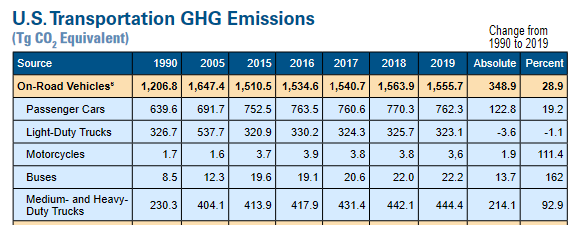
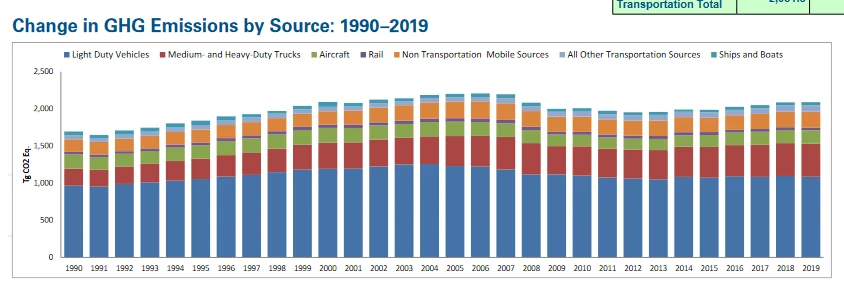
Finally, the internal combustion engine gets a bad rap. Personal vehicles powered by gasoline and diesel account for less than 10 percent of all greenhouse gas emissions in the U.S., and that percentage continues to fall as both American and foreign car manufacturers focus on improving fuel economy to reduce tailpipe emissions.
Transportation accounts for 29% of overall US GHG emissions, with 82% categorized as light or medium/heavy duty vehicles. Seems to me like the biggest GHG reductions to be had are in the transportation piece of the pie.

Also, not sure where his noted reduction is coming from.

Ford Maverick Thoughts on the Lightning? 1624300313617

Ford Maverick Thoughts on the Lightning? 1624300486137


It should be noted that he's affiliated with the Heartland Institute, a pro-O&G think-tank that simultaneously rejects climate science and argues that it could be beneficial.
 

Old Ranchero

2.0L EcoBoost
Well-known member
Joined
Apr 1, 2021
Threads
26
Messages
2,587
Reaction score
3,511
Location
CO
Vehicle(s)
2018 F-150 2013 Jeep Grand Cherokee 2022 Maverick
Engine
2.0L EcoBoost
update: CA this week asked people NOT to charge their EVs to save energy and not overburden the grid during the heatwave. So, we'll force you to only have electric cars by eliminating all your other choices, then tell you when and how much you can use them. Had enough Government yet? :ROFLMAO:
 

OleFordGuy

2.0L EcoBoost
Well-known member
First Name
Craig
Joined
Dec 5, 2021
Threads
38
Messages
3,769
Reaction score
5,898
Location
Alabama
Vehicle(s)
11 F150 Lariat, 24 Expedition Limited, 22 Mav Lariat AWD
Engine
2.0L EcoBoost
Well this is not encouraging : https://www.msn.com/en-us/money/com...-as-shares-drop-by-half/ar-AAX6NPM?li=BBnb7Kz

" InsideEVs recently reported a number of Lightnings have come off the assembly line but have not been shipped to dealers. The report speculates that Ford does not have the chips it needs so they can be delivered to customers. "

Sounds like another Bronco and Maverick launch/release scenario
Sponsored


Top