
- Thread starter
- #1
Hey MTC,
First, I want to say that it's never a good idea to exceed manufacturer ratings. These are made by engineers through serious testing, many of them written in blood, keep you/others safe on the road, and limits personal liability.
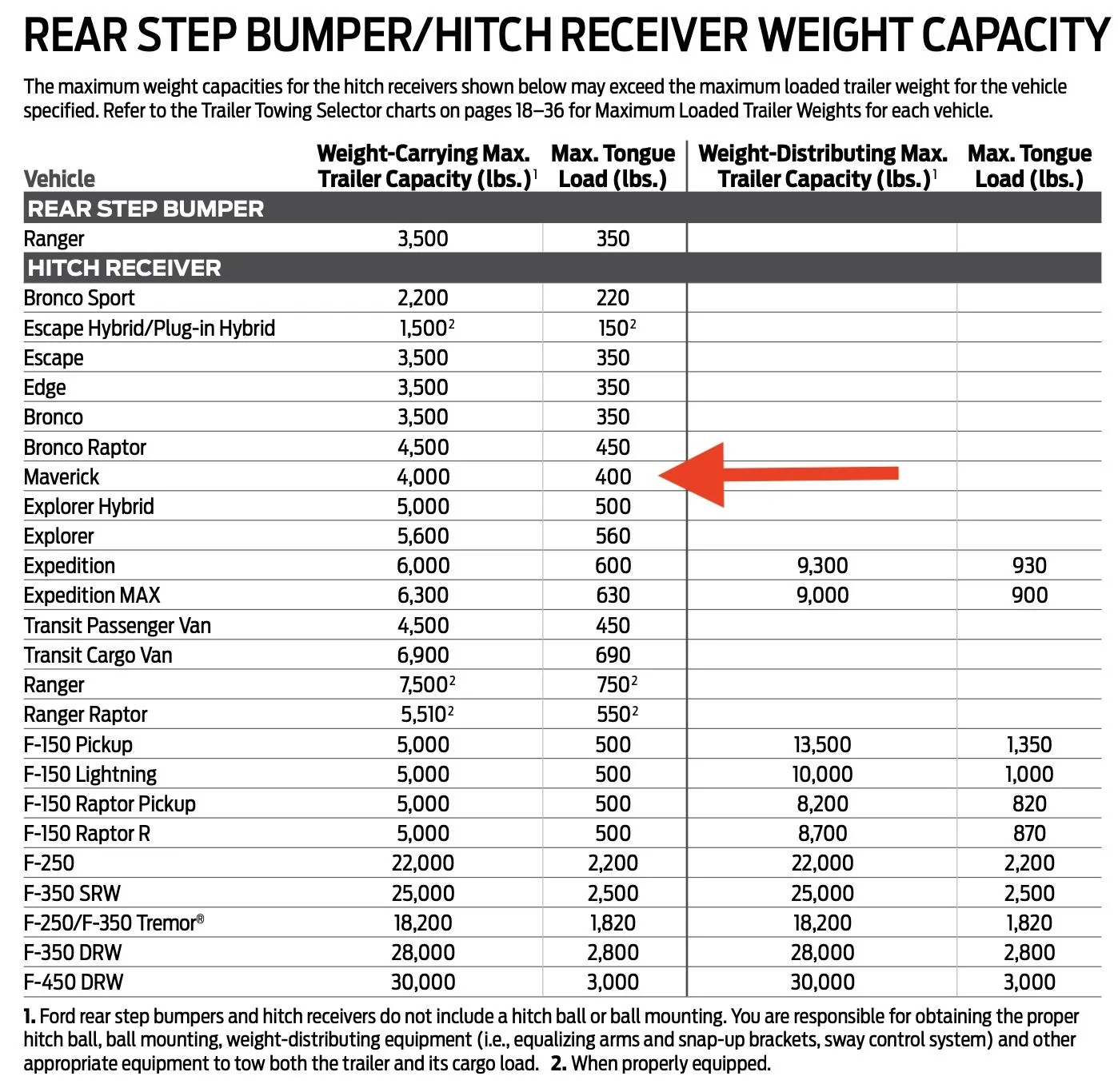
That being said, how important is tongue weight, and can you do something about it?
I love the KZ Escape e17 hatch. It comes in exactly at 4,000 GVWR (I know, super heavy for the Mav), but the "hatch" design makes it have a heavy tongue weight of 520 lbs.
From what I understand, if you're under your maximum weight ratings, trailer sway is primarily caused by weight distribution; either too heavy up front or in the back (obviously, we're leaving out all the other sway caused by wind/road/etc.). Too much rear weight introduces instability in the system (issues compensating lateral weight movement). Weight at the front (tongue) mainly hurts the stability/capabilities of the tow vehicle and not so much the trailer. You'll see squat, issues breaking, problems maneuvering and emergency steering. These are similar to what a heavy loaded truck will do, but much worse with a heavy, swaying trailer.
Since I planned on towing in my truck, I put a lot of rear suspension upgrades: air lift bags, timbren SES rubber springs, front/rear anti-sway bars (more details). I also have a Weigh Safe hitch that shows the real hitch weight when attached to the trailer.
My plan is to monitor the actual hitch weight when loading up the trailer, then rely on the aftermarket parts above to limit the impact of the trailer (assuming I might exceed my ratings).
Those who tow a lot, am I a fool considering this trailer?
First, I want to say that it's never a good idea to exceed manufacturer ratings. These are made by engineers through serious testing, many of them written in blood, keep you/others safe on the road, and limits personal liability.
That being said, how important is tongue weight, and can you do something about it?
I love the KZ Escape e17 hatch. It comes in exactly at 4,000 GVWR (I know, super heavy for the Mav), but the "hatch" design makes it have a heavy tongue weight of 520 lbs.
From what I understand, if you're under your maximum weight ratings, trailer sway is primarily caused by weight distribution; either too heavy up front or in the back (obviously, we're leaving out all the other sway caused by wind/road/etc.). Too much rear weight introduces instability in the system (issues compensating lateral weight movement). Weight at the front (tongue) mainly hurts the stability/capabilities of the tow vehicle and not so much the trailer. You'll see squat, issues breaking, problems maneuvering and emergency steering. These are similar to what a heavy loaded truck will do, but much worse with a heavy, swaying trailer.
Since I planned on towing in my truck, I put a lot of rear suspension upgrades: air lift bags, timbren SES rubber springs, front/rear anti-sway bars (more details). I also have a Weigh Safe hitch that shows the real hitch weight when attached to the trailer.
My plan is to monitor the actual hitch weight when loading up the trailer, then rely on the aftermarket parts above to limit the impact of the trailer (assuming I might exceed my ratings).
Those who tow a lot, am I a fool considering this trailer?
Sponsored