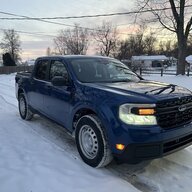
To get the screen, use the menu button on your steering wheel. You then can select screens to display. You may have to remove one if you have too many already selected. I almost exclusively leave it on the AWD screen and over the last year, I have noticed some trends.
Put it in tow mode when towing. In low speed situations, the truck will put power to all four wheels. I know this because I had to do an uphill j-turn pulling a 3K trailer and I could feel the truck bearing down. At no point, did any wheel slip. Yes, you lose gas mileage in tow mode. But you also won't tear up your transmission as quickly.
Normal and Eco modes will drop the rear wheel power fairly quickly unless climbing or accelerating rapidly. Normal usually starts reducing the power to the rear wheels once I cross 20 mph when accelerating and will almost never kick them back in even if I drop below that speed unless I drop below 5 mph. It will kick them on if it detects major slippage on one of the front wheels.
Wet/Slippery mode will power the rear wheels up to closer to 30 before they drop off. But on wet roads, it is a little quicker to put power back on the rear wheels when it notices slippage. Whenever it is raining, I put it in this mode. Acceleration is slower, but the drive feels more stable.
Sport and Tow will keep the rear wheels powered longer when accelerating but will still drop off the rear wheels once up to highway speeds. In fact, I've had Sport power all four wheels up to 60 mph before it started backing off the rear wheels.
When towing, it's just those low-speed, high-torque situations where the truck seems to use the rear wheels. Otherwise, it will default to FWD. Driving up to the mountains of North Carolina towing that 3K trailer, I almost never had power to the rear wheels once up to speed.